Saipan Cruising Guide
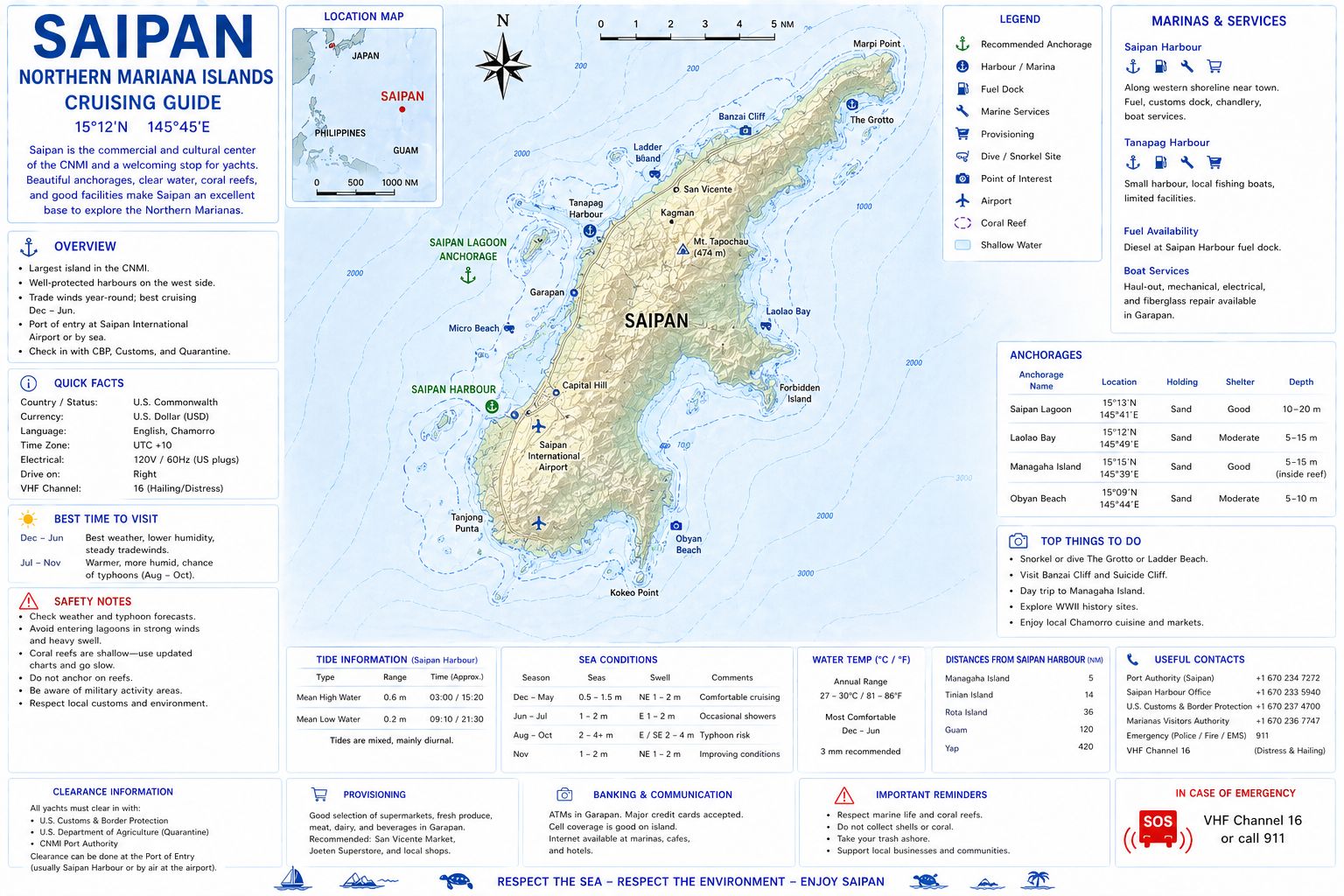
The Saipan Cruising Guide and Saipan is the administrative and logistical center of the Northern Mariana Islands (NMI) and the only legal port of entry for foreign yachts entering the NMI. For most crews, Saipan functions as the primary stop for clearance, moderate provisioning, and short‑term rest before continuing north to Tinian and Rota or south to Guam. The island has a single commercial harbor, limited anchoring options, and a modest supply chain that depends heavily on shipments from Guam.
Saipan is not a recreational cruising ground; it is a functional waypoint where crews complete formalities, top up supplies, and move on. The island’s western coastline provides the only workable maritime access, with the eastern side fully exposed to swell and unsuitable for anchoring. The following sections outline the operational realities of sailing to and operating around Saipan.
Saipan Cruising Guide - Entry Formalities
Saipan is the only port of entry for the Northern Mariana Islands. All foreign yachts must clear in here before visiting Tinian or Rota. Even though Guam and the NMI are both U.S. jurisdictions, movement between them is treated as an international arrival.
Clearance is conducted in Saipan Commercial Port. Yachts must contact port control on VHF before entering and follow instructions regarding anchoring or berthing for inspection. Immigration, Customs, and Quarantine officers handle clearance in a structured, predictable manner. Documentation requirements include passports, vessel registration, crew list, and prior port clearance. Once cleared, movement within the NMI is domestic, and no further formalities are required for Tinian or Rota. The Courtesy Flag is the same for all Micronesian states.

Saipan Cruising Guide - Navigation
Saipan’s western side provides the only safe maritime access. The commercial harbor has a dredged channel with clear marks and predictable depths. Approaches should be made in daylight due to coral shelves and isolated shoals near the entrance.
The anchorage outside the commercial port is workable in settled conditions but becomes uncomfortable when winds back into the west or southwest. Holding varies between sand and patches of coral rubble. Inside the harbor, maneuvering room is limited, and yachts must remain aware of commercial traffic.
The eastern coast is steep, exposed, and unsuitable for anchoring. The northern and southern tips of the island can produce confused seas during strong trades.
Saipan Cruising Guide - Ocean Currents
Saipan Cruising Guide - Weather
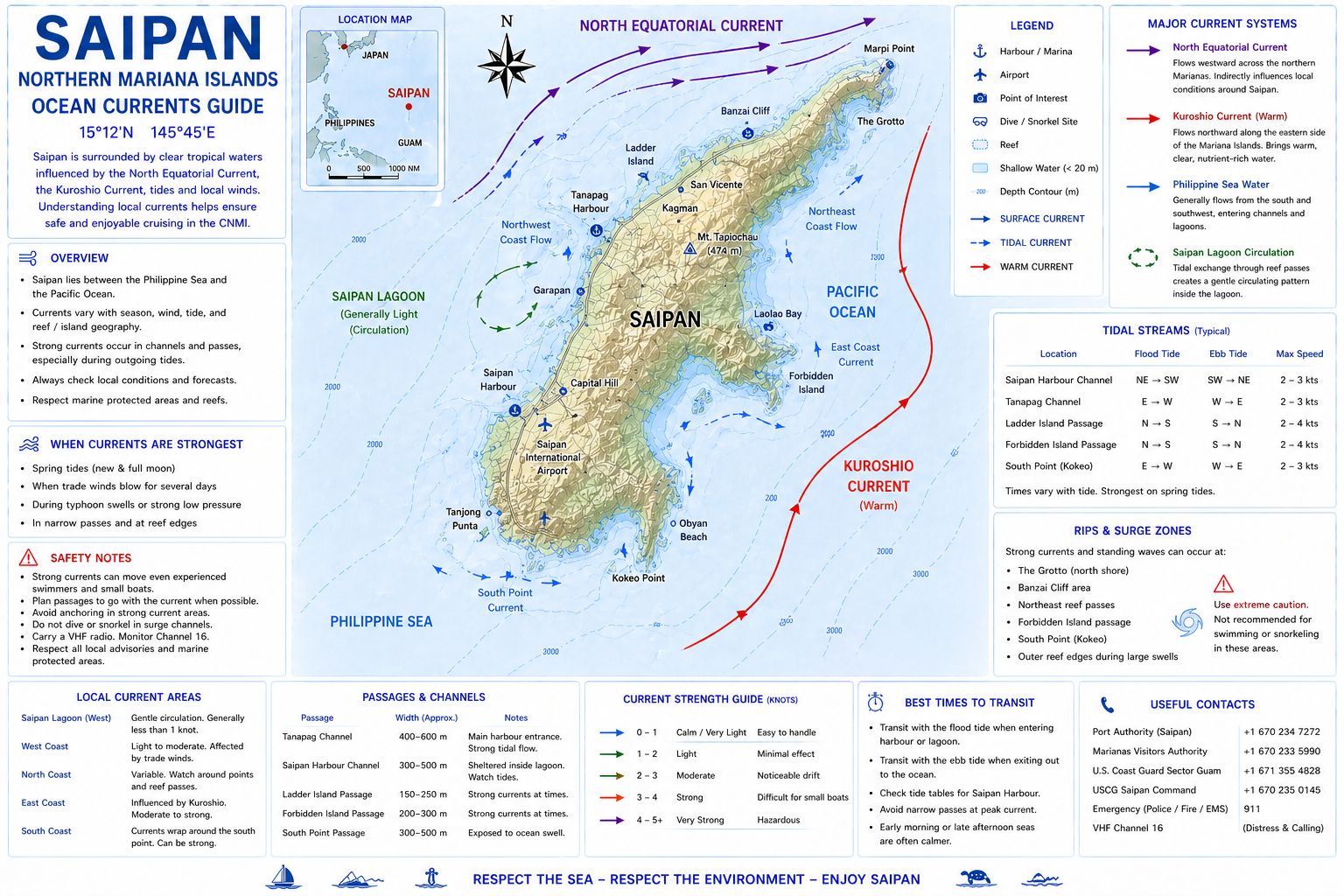
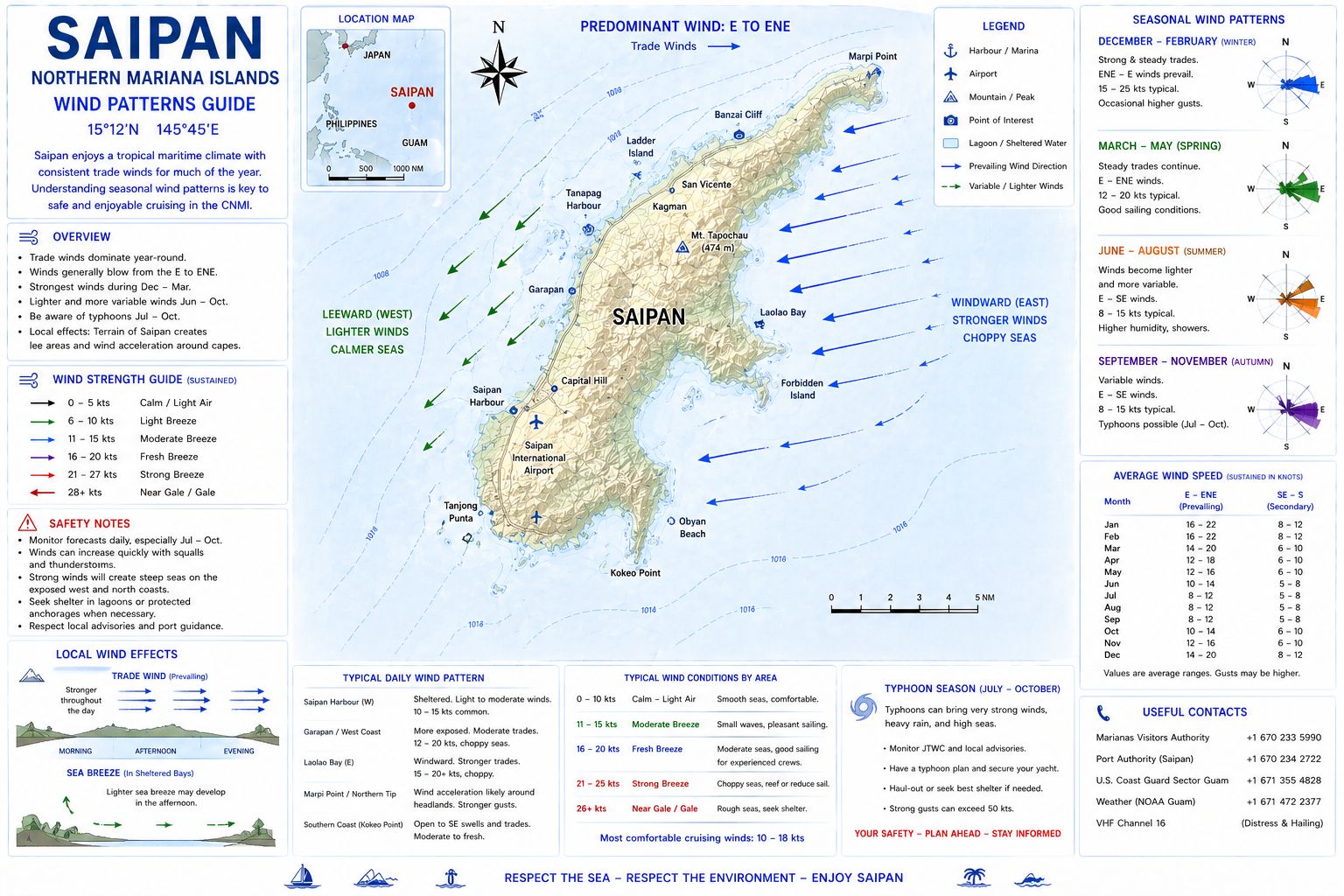
Saipan experiences consistent northeast trade winds from December through June, providing stable conditions for approaches and anchoring. During the wet season, winds become more variable, and squalls are common. Westerly weather makes the anchorage outside the harbor uncomfortable or untenable. Typhoons remain a seasonal risk from July to November. Saipan does not offer cyclone‑grade shelter for yachts, and crews should avoid long stays during periods of increased activity. Local effects include gusts along the western coast and funneling winds between Saipan and Tinian.
Saipan Cruising Guide - Provisioning
Provisioning on Saipan is workable but more limited than Guam. The island has several mid‑sized supermarkets and small produce and fish vendors. Supplies depend heavily on shipments from Guam, and availability fluctuates.
Supermarkets. Saipan’s supermarkets are smaller than Guam’s but adequate for topping up general supplies. The main stores used by visiting yachts are Joeten Superstore (Garapan) which is the island’s primary full‑size supermarket. It carries imported U.S., Japanese, and Filipino goods, along with a modest selection of fresh produce. This is the most reliable place on Saipan for packaged foods, dry goods, dairy, and frozen items. Joeten Susupe is a second branch of the same chain, smaller than the Garapan store but useful for basic staples. Stock levels are generally consistent, though the range is narrower. 99 Cents Supermarket (various locations) are budget‑oriented store with a rotating mix of dry goods, snacks, and household items. Not suitable for full provisioning but useful for inexpensive top‑ups.
Markets. Fresh produce on Saipan comes from a mix of small markets and local vendors. The main practical sources are Garapan Street Vendors with small produce sellers set up along the Garapan area, especially in the mornings. They offer bananas, papayas, cucumbers, eggplants, leafy greens, and seasonal items. Quantities are small but turnover is steady. Susupe Roadside Produce Stands area cluster of small stands along the main road in Susupe. These are used by local residents and often have fresher items than the supermarkets, though availability varies day‑to‑day. Koblerville Local Markets are a handful of small family‑run produce shops in Koblerville. These are reliable for hardy vegetables and local fruit, especially after shipment days.
Fish & Seafood. Saipan’s fish supply comes from small‑scale local fishermen rather than a formal commercial market. The main practical sources are the Garapan Fish Stalls (near the fishing dock. These are a small group of vendors selling fresh local catch early in the morning. Availability depends entirely on weather and fishing conditions. Tuna, wahoo, mahi‑mahi, and reef fish appear regularly when conditions allow. Susupe Fish Vendors where occasional fish sellers operate near the shoreline in Susupe, especially after good fishing days. Supply is inconsistent but can be excellent when available. Supermarket Seafood Sections (Joeten). When local catch is limited, the supermarkets carry frozen fish and imported seafood.
Saipan Cruising Guide - Diesel Supplies
Diesel is available on Saipan but requires transporting jerry cans from vehicle fuel stations. There is no dedicated marine fuel dock. Supply is generally reliable, though occasional shortages occur depending on shipments. Crews should refuel in Guam if possible before heading north.
Supermarkets. Saipan’s supermarkets are smaller than Guam’s but adequate for topping up general supplies. The main stores used by visiting yachts are Joeten Superstore (Garapan) which is the island’s primary full‑size supermarket. It carries imported U.S., Japanese, and Filipino goods, along with a modest selection of fresh produce. This is the most reliable place on Saipan for packaged foods, dry goods, dairy, and frozen items. Joeten Susupe is a second branch of the same chain, smaller than the Garapan store but useful for basic staples. Stock levels are generally consistent, though the range is narrower. 99 Cents Supermarket (various locations) are budget‑oriented store with a rotating mix of dry goods, snacks, and household items. Not suitable for full provisioning but useful for inexpensive top‑ups.
Markets. Fresh produce on Saipan comes from a mix of small markets and local vendors. The main practical sources are Garapan Street Vendors with small produce sellers set up along the Garapan area, especially in the mornings. They offer bananas, papayas, cucumbers, eggplants, leafy greens, and seasonal items. Quantities are small but turnover is steady. Susupe Roadside Produce Stands area cluster of small stands along the main road in Susupe. These are used by local residents and often have fresher items than the supermarkets, though availability varies day‑to‑day. Koblerville Local Markets are a handful of small family‑run produce shops in Koblerville. These are reliable for hardy vegetables and local fruit, especially after shipment days.
Fish & Seafood. Saipan’s fish supply comes from small‑scale local fishermen rather than a formal commercial market. The main practical sources are the Garapan Fish Stalls (near the fishing dock. These are a small group of vendors selling fresh local catch early in the morning. Availability depends entirely on weather and fishing conditions. Tuna, wahoo, mahi‑mahi, and reef fish appear regularly when conditions allow. Susupe Fish Vendors where occasional fish sellers operate near the shoreline in Susupe, especially after good fishing days. Supply is inconsistent but can be excellent when available. Supermarket Seafood Sections (Joeten). When local catch is limited, the supermarkets carry frozen fish and imported seafood.
Saipan Cruising Guide - Water Supplies
Potable water is available in Garapan and Susupe, but quality varies. Yachts may fill jerry cans from public taps or local businesses, though filtration is recommended. There are no marina‑grade water facilities.
Mechanical and Electrical Repairs
Resource
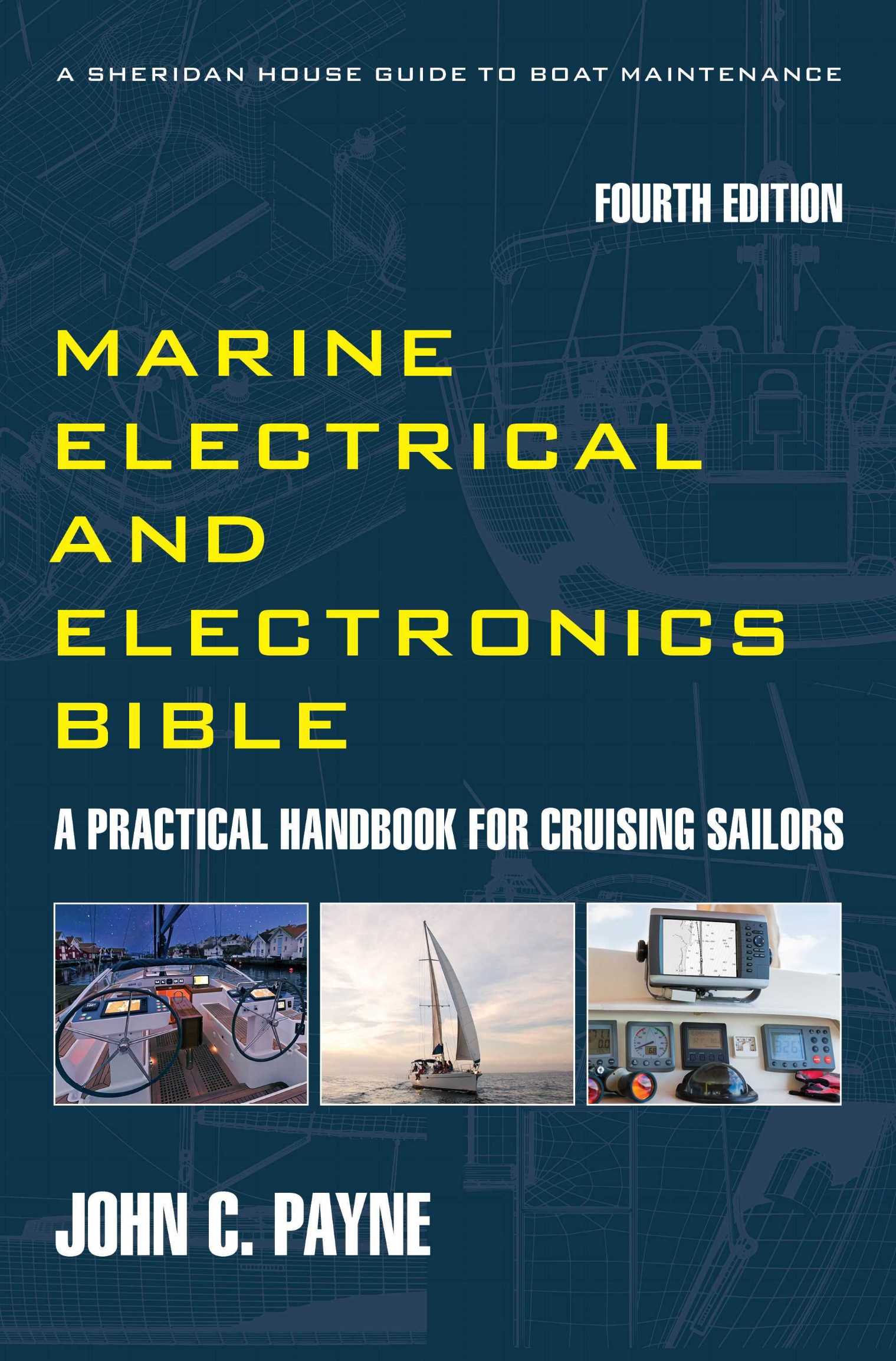
If you are headed somewhere remote consider the need to expand your knowledge base or have an information resource on board. Why not get a copy of my book The Marine and Electrical and Electronics Bible 4th Edition. By and for yachties, with everything from batteries and charging, solar and wind, diesel engines and marine electronics and so much more. Your complete systems guide. 650 pages of practical advice. In Australia and New Zealand order a copy through Boat Books. UK and European boats can buy the UK Edition Here. US and Canadian boats can get the US Edition Order Here. Marine systems are my profession so let me help you. By a liveaboard boat owner for other boat owners


Saipan Cruising Guide - Local Marine Services
Marine services on Saipan are limited. Small workshops can assist with basic mechanical or electrical issues, but there are no haul‑out facilities, no boatyards, and no marine‑specific technicians. Any significant maintenance must be handled in Guam.
Saipan Cruising Guide - Local Culture
Saipan has a mixed population of Chamorro, Carolinian, Filipino, Japanese, Korean, and U.S. residents. English is widely spoken, and interactions with visitors are straightforward. The island has a more urban feel than Tinian or Rota, with most activity centered around Garapan and Susupe. Visitors should be respectful in residential areas and mindful of local customs in public spaces.
Saipan Cruising Guide - Local Cuisine
Food options include small eateries serving simple meals based on rice, grilled meats, noodles, and local vegetables. Availability depends on shipments and local supply. Fresh fish is available when local fishermen have a good catch, but quantities are inconsistent.
Saipan Cruising Guide -
Summary
Sailing to Saipan is a straightforward, functional passage for crews moving through the Northern Marianas. Approaches are made on the island’s western side, where the commercial harbor provides the only safe entry point and a workable anchorage in settled weather. Clearance is efficient and predictable, and the island offers enough provisioning and fuel access to support onward travel. Sailing to Saipan serves as a practical waypoint rather than a cruising ground, giving yachts a stable base before continuing to Tinian, Rota, or Guam.