Pancake Creek Sailing Guide
Pancake Creek Sailing Guide. Pancake Creek is one of the most reliable and sheltered coastal anchorages on the Queensland coast, offering a secure stop in almost all conditions and functioning as a natural staging point for vessels heading north toward Gladstone or south toward 1770 and the Bunker Group. The entrance is wide, deep and forgiving, with no bar and no significant shoaling, making it a welcome contrast to the tidal complexity of Round Hill Creek. The creek extends inland behind Bustard Head, forming a long, protected waterway with multiple anchoring basins, each with its own depth profile, wind behaviour and tidal characteristics. For skippers moving along this stretch of coast, Pancake Creek is the dependable, low‑stress anchorage that allows for rest, weather waiting and safe overnighting.
Despite its simplicity, Pancake Creek still demands awareness. The tidal stream is gentle but present, the basins vary in depth, and the northern arm shallows quickly. The entrance is straightforward, but the skipper must remain alert for vessels transiting in and out, especially during peak cruising season. The surrounding hills create localised gusts in strong south‑easterlies, and the anchorage can become busy, reducing swing room. Pancake Creek is not complex, but it rewards skippers who anchor with care and understand the subtle differences between its basins.
Pancake Creek Sailing Guide - Location
Pancake Creek lies immediately south of Bustard Head and its lighthouse, positioned on the Curtis Coast between Gladstone and the Town of 1770. The entrance sits just west of the Bustard Head headland, opening into a deep, sheltered inlet that runs inland behind the hills. From seaward, Bustard Head Lighthouse is the dominant landmark, standing high above the headland and clearly marking the northern arm of the entrance. The creek mouth lies directly below the lighthouse, with the coastline to the south flattening into low dunes. Pancake Creek sits roughly halfway between Gladstone and 1770, making it a natural stop for vessels transiting this section of coast. Approximate position: 23°51.0’S 151°28.0’E
Pancake Creek Sailing Guide - Approach
The approach is uncomplicated, with 10–20 m of water right up to the entrance. The headland and Bustard Head lighthouse provide clear visual references, and the entrance channel is wide, deep and free of bar behaviour. Depths remain consistent at 8–12 m through the entrance, and the skipper can shape a direct line into the creek without concern for breaking waves or shifting shoals. In fresh south‑easterlies, the sea state outside can be lumpy, but the entrance itself remains calm. The colour change is clear in good light, and the creek mouth is easy to identify from seaward.
Pancake Creek Sailing Guide - Inside
Once inside, the creek opens into a long, sheltered waterway with several anchoring areas. The outer basin offers 5–8 m of depth at mid‑tide with excellent sand holding and predictable behaviour. Further inside, the creek bends behind the hills, creating a more enclosed anchorage with 4–7 m of depth and protection from all directions. The tidal stream is gentle, usually less than 0.5 knots, and vessels will lie mostly to the wind rather than the current. The northern arm shallows rapidly to 1–2 m and is suitable only for shallow‑draft vessels or dinghy exploration. The creek edges shelve gradually, and the skipper must anchor with enough scope to allow for swing without drifting into the shallows.
Pancake Creek Sailing Guide - Wind,
Weather and Tide
Pancake Creek is well protected from ocean swell, and the anchorage remains calm even when the sea outside is uncomfortable. Strong south‑easterlies funnel through the hills and can create gusty conditions, especially in the outer basin, but the holding is reliable and the fetch is short. Northerly winds are also well managed, with the inner basins providing excellent shelter. The tidal range is moderate, and the stream is gentle, rarely affecting anchoring or manoeuvring. The creek is one of the few anchorages on this stretch of coast that remains comfortable in almost all wind directions, making it a dependable weather refuge.
Pancake Creek Sailing Guide - Navigation
Hazards
The primary considerations in Pancake Creek are the shallow northern arm, the narrowing channel further inside and the limited swing room during busy periods. The creek edges shelve gradually from 4 m to 1 m, and the skipper must avoid anchoring too close to the mangroves. The entrance is free of hazards, and there are no bars, reefs or breaking shoals to contend with. The main risk is anchoring too far inside without adequate depth or swinging room, particularly when the anchorage is crowded.
Pancake Creek Sailing Guide - Anchoring
Anchoring is straightforward, with sand holding throughout the main basins. Depths of 4–8 m provide ample room for scope, and the creek’s protection allows for comfortable overnighting in almost any conditions. The skipper should choose a basin based on wind direction and crowding, with the inner basin offering the best all‑round shelter. The vessel will lie mostly to the wind, and the tidal swing is gentle. Pancake Creek is one of the most forgiving anchorages on the Queensland coast, but the skipper must still anchor with care, especially during peak season when space becomes limited
Pancake Creek Sailing Guide - Departure
and Routing
Departing Pancake Creek is simple, with 8–12 m of water in the entrance and a wide channel that remains calm in all but the strongest conditions. The skipper can shape a course south toward 1770 and the Bunker Group or north toward Gladstone and the Curtis Coast. The entrance is navigable at all tides, and there is no need to time departure around tidal windows. Pancake Creek’s reliability makes it an ideal staging point for offshore legs, weather waiting or rest before tackling more complex entrances such as Round Hill Creek.
Bustard Head Lighthouse
Bustard Head Lighthouse stands on the high headland immediately north of Pancake Creek and is the defining landmark for the entire area. The tower sits at an elevation of roughly 100 m above sea level, giving it a long visual range from offshore. Its white-painted structure contrasts sharply with the surrounding bushland, making it easy to identify in daylight. At night, the light displays a white flash every 4.5 seconds, providing a clear navigational reference for vessels approaching from seaward. The lighthouse marks the northern arm of the Pancake Creek entrance, and its position above the headland makes it the primary visual cue for locating the creek mouth in all conditions.
Mechanical and Electrical Repairs
Resource
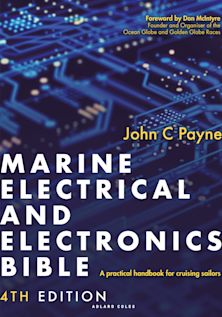
If you are headed somewhere remote consider the need to expand your knowledge base or have an information resource on board. Why not get a copy of my book The Marine and Electrical and Electronics Bible 4th Edition. By and for yachties, with everything from batteries and charging, solar and wind, diesel engines and marine electronics and so much more. Your complete systems guide. 650 pages of practical advice. In Australia and New Zealand order a copy through Boat Books. UK and European boats can buy the UK Edition Here. US and Canadian boats can get the US Edition Order Here. Marine systems are my profession so let me help you. By a liveaboard boat owner for other boat owners

Pancake Creek Sailing Guide Summary
Pancake Creek is one of the most dependable and sheltered anchorages on the Queensland coast, offering deep water, excellent holding and protection from all directions. The entrance is simple, the basins are predictable and the anchorage remains comfortable in almost any weather. For skippers moving between 1770, the Bunker Group and Gladstone, Pancake Creek is the natural place to rest, wait for weather or break a passage. It is not complex, but it rewards good anchoring practice and situational awareness, especially when busy. The Pancake Creek Sailing Guide is here to help.