North Percy Island Sailing Guide
North Percy Island sailing guide. North Percy Island is the largest and most rugged of the Percy group, sitting north of Middle Percy and forming one of the most reliable offshore anchorages on the central Queensland coast. The island is steep, heavily reef‑fringed, and deeply indented on its western side, where a large, protected bay provides excellent shelter in the trade‑wind regime. The eastern and southern sides are exposed to Coral Sea swell, with steep drop‑offs and narrow reef shelves. North Percy is uninhabited, with no facilities, and all anchorages are used solely for overnight shelter, staging, and weather waiting.
The underwater profile around North Percy is deep and abrupt, with offshore depths of 30–50 m reducing to 14–20 m near the shoreline. Inside the anchoring zone, depths settle into 8–14 m over firm sand. Fringing reef rises from 3–6 m into the reef flat, restricting swing room near headlands. The western side provides the only reliable shelter in SE–E winds, while all other sides of the island are exposed and only workable in calm conditions.
North Percy Island Sailing Guide
North Percy Island lies north of Middle Percy and forms the northern anchor of the group. Its western bay is one of the most dependable offshore anchorages between the Whitsundays and Shoalwater Bay, offering deep, predictable holding and strong protection from the trade‑wind regime. Offshore depths remain consistently 30–50 m, reducing to 14–20 m near the shoreline. Inside the anchoring area, depths sit in 8–14 m over firm sand. The eastern and southern sides are steep, reef‑bound, and unsuitable except in light conditions.
West Bay (Primary
Anchorage – Western Side)
West Bay is the main anchorage on North Percy and one of the most secure in the entire region. Approaches are straightforward, with offshore depths of 30–40 m reducing to 14–20 m as you enter the bay. Inside, anchoring depths sit in 8–14 m over firm sand, with the central basin offering the cleanest holding. The seabed slopes gently toward the beach, and the anchorage remains mostly free of coral except near the northern and southern headlands.
West Bay provides excellent protection in SE–E winds, with the high ridges of North Percy blocking both wind and swell. It remains comfortable even in strong trade‑wind conditions. It becomes exposed in N winds and develops a light roll in NW–W winds depending on swell direction. Swing room is generous, and the bay can accommodate multiple vessels. Dinghy access is straightforward at all tides, with 1–1.5 m at the shoreline.
North‑West Pocket
(Secondary Anchorage – Fair‑Weather Only)
A small pocket on the north‑western side provides a secondary anchorage in calm conditions. Offshore depths of 32–46 m reduce to 16–20 m near the shoreline. Inside, anchoring depths sit in 8–12 m over sand with isolated coral. The fringing reef rises from 3–6 m, and coral heads lifting into 2–3 m are scattered across the northern margin.
This pocket is workable only in light W–SW winds and becomes untenable in any SE–E wind. Dinghy landing is limited by reef shelves and tidal height.
Eastern Side (No
Anchorage)
The eastern side of North Percy is fully exposed to Coral Sea swell and unsuitable for anchoring. Offshore depths of 36–50 m reduce to 18–24 m near the shoreline, but the seabed drops steeply and anchoring bands are extremely narrow. Fringing reef rises from 3–6 m, and coral heads lifting into 2–3 m are common along the eastern margin. This side is used only for transit.
Southern Side
(Transit Only)
The southern side is steep, exposed, and not suitable for anchoring. Offshore depths of 30–40 m drop quickly into deeper water, and the fringing reef rises abruptly from 3–6 m. Swell wraps around the headlands in SE–E winds, and the shoreline offers no protection. This area is used only for transit between North Percy and Middle Percy.
North Percy Island
Sailing Guide - Navigation
Notes
Navigation around North Percy Island is straightforward but requires attention to reef shelves and steep depth transitions.
Depths and Seabed
- Offshore depths: 30–50 m
- Near‑shore depths: 14–20 m
- Anchoring depths: 8–14 m
- Fringing reef: 3–6 m, extensive around headlands
- Coral heads: 2–3 m, common in fair‑weather pockets
Operational Considerations
- Tidal streams are moderate, with noticeable set between the islands.
- Reef edges are easy to identify in settled conditions.
- Low sun angles can obscure coral heads; late‑day arrivals require caution.
- The safest entry line is a central approach into West Bay.
Approaches from both the Whitsundays and Shoalwater Bay are deep and unobstructed.
North Percy Island Sailing Guide
- Weather
North Percy Island is strongly influenced by the SE trade‑wind regime, with winds commonly 15–25 knots during the season.
- Best shelter: West Bay
- Fair‑weather only: North‑West Pocket
- Exposed: All anchorages in N winds
- Swell: Minimal on western side; immediate intrusion on eastern side
- Tidal range: Moderate, with predictable streams in inter‑island channels
West Bay remains comfortable even in strong trades, making it a preferred weather‑waiting anchorage for vessels staging between Middle Percy and the Whitsundays.
Mechanical and Electrical Repairs
Resource
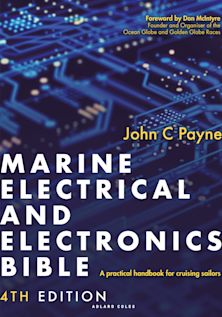
If you are headed somewhere remote consider the need to expand your knowledge base or have an information resource on board. Why not get a copy of my book The Marine and Electrical and Electronics Bible 4th Edition. By and for yachties, with everything from batteries and charging, solar and wind, diesel engines and marine electronics and so much more. Your complete systems guide. 650 pages of practical advice. In Australia and New Zealand order a copy through Boat Books. UK and European boats can buy the UK Edition Here. US and Canadian boats can get the US Edition Order Here. Marine systems are my profession so let me help you. By a liveaboard boat owner for other boat owners

North Percy Island Sailing Guide – Fishing
Fishing around North Percy Island is shaped by the steep reef edges that fall quickly into deep blue water, giving yachts a clean mix of reef species tight to the structure and pelagics working the pressure lines offshore. Coral trout, sweetlip, tuskfish, and cod sit along the bommies on the eastern and southern faces, while Spanish mackerel, queenfish, trevally, and tuna move through the channels between North, Middle, and South Percy when the tide turns. The western side often holds bait in the lee of the trades, making it a reliable spot to drift or work lures from the dinghy without getting too close to the reef. As with the rest of the central Queensland reef belt, ciguatera risk exists in larger reef fish, so most skippers favour smaller trout and pelagics. Overall, North Percy offers a compact, productive fishery best worked around tide changes and best approached with mobility rather than anchoring near the reef.
North Percy Island Sailing Guide
- Summary
North Percy Island provides one of the most dependable anchorages in the Percy Islands, with clean sand bottoms, predictable depth profiles, and strong protection in SE–E winds. West Bay is the primary anchorage and one of the most reliable offshore stops on the central Queensland coast, while the north‑west pocket is strictly fair‑weather. The eastern and southern sides are exposed and unsuitable for anchoring. North Percy functions as a key overnight stop for yachts transiting between the Whitsundays, Middle Percy, Shoalwater Bay, and the Capricorn Coast. The North Percy Island Sailing Guide is here to help you.