North Molle Island Sailing Guide
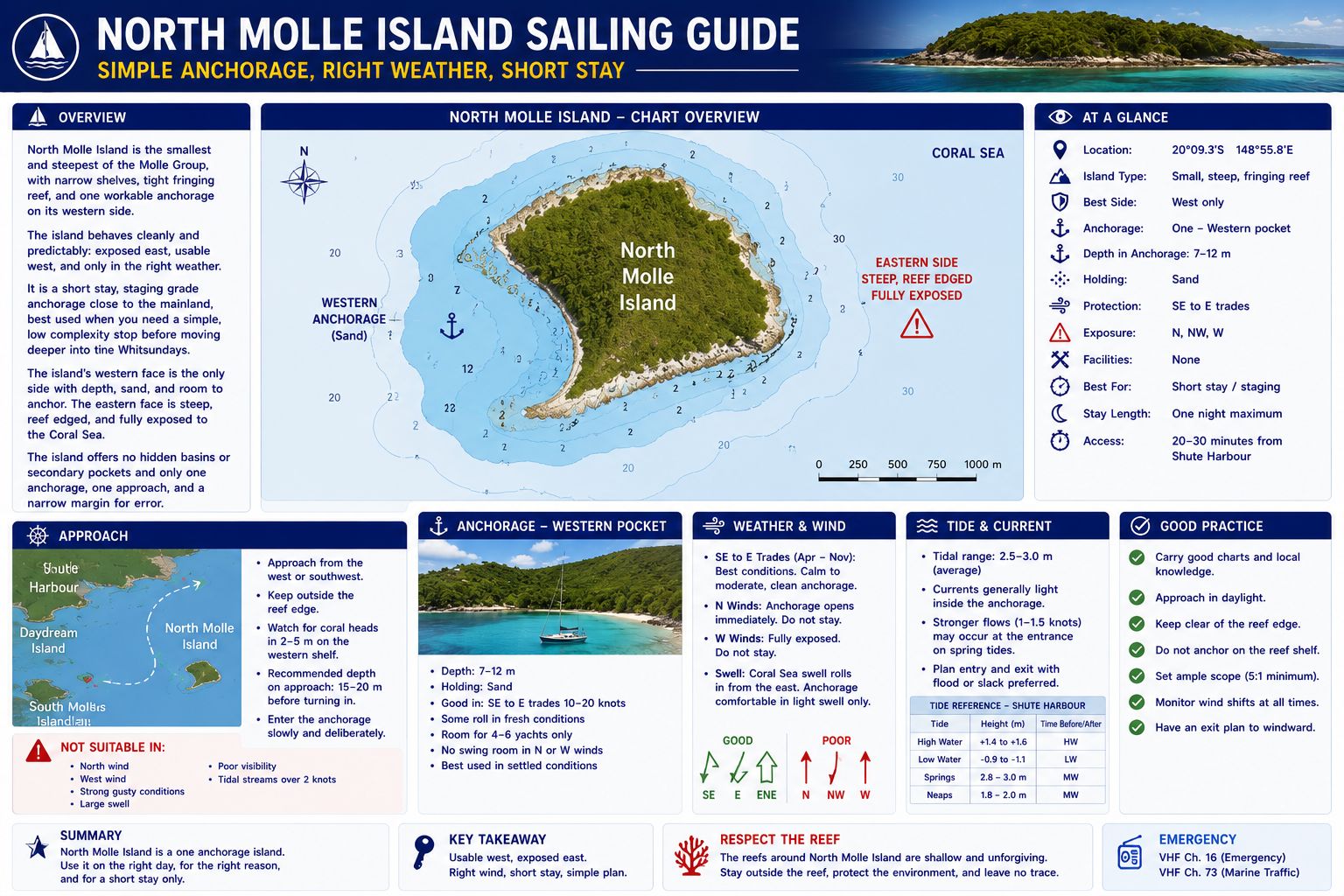
North Molle Island Sailing Guide. North Molle Island is the smallest and steepest of the Molle Group, with narrow shelves, tight fringing reef, and one workable anchorage on its western side. The island behaves cleanly and predictably: exposed east, usable west, and only in the right weather. It is a short‑stay, staging‑grade anchorage close to the mainland, best used when you need a simple, low‑complexity stop before moving deeper into the Whitsundays.
The island’s western face is the only side with depth, sand, and room to anchor. The eastern face is steep, reef‑edged, and fully exposed to the Coral Sea. The island offers no hidden basins or secondary pockets and only one anchorage, one approach, and a narrow margin for error. When the trades are moderate, the western pocket settles into a small but reliable basin. When the wind shifts north or west, the anchorage opens immediately and loses its protection.
North Molle Island
Sailing Guide - Approaches
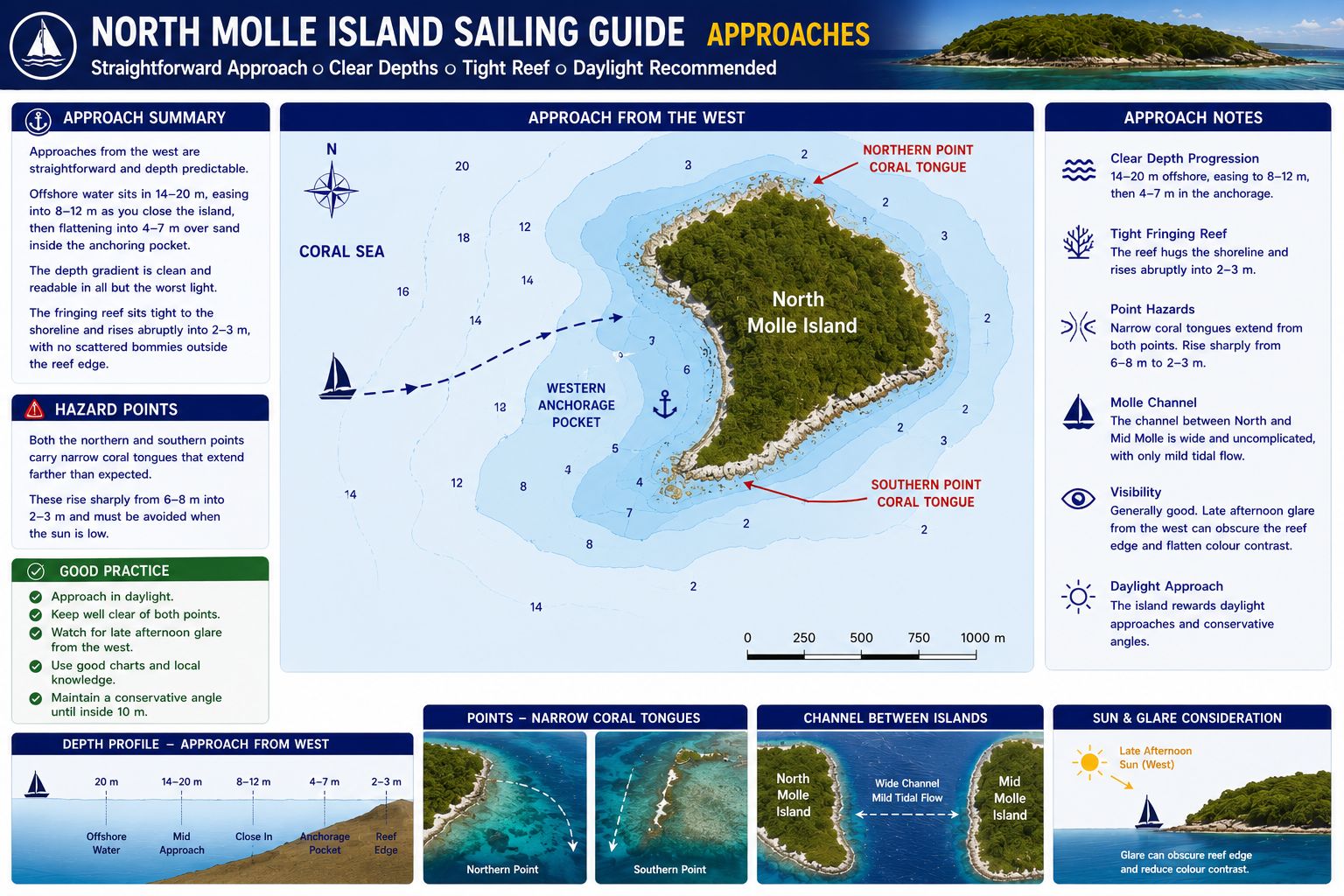
Approaches from the west are straightforward and depth‑predictable. Offshore water sits in 14–20 m, easing into 8–12 m as you close the island, then flattening into 4–7 m over sand inside the anchoring pocket. The depth gradient is clean and readable in all but the worst light. The fringing reef sits tight to the shoreline and rises abruptly into 2–3 m, with no scattered bommies outside the reef edge.
Both the northern and southern points carry narrow coral tongues that extend farther than expected. These rise sharply from 6–8 m into 2–3 m and must be avoided when the sun is low. The channel between North and Mid Molle is wide and uncomplicated, with only mild tidal flow. Visibility is generally good, but late‑afternoon glare from the west can obscure the reef edge and flatten the colour contrast. The island rewards daylight approaches and conservative angles.
North Molle Island
Sailing Guide - Anchorage
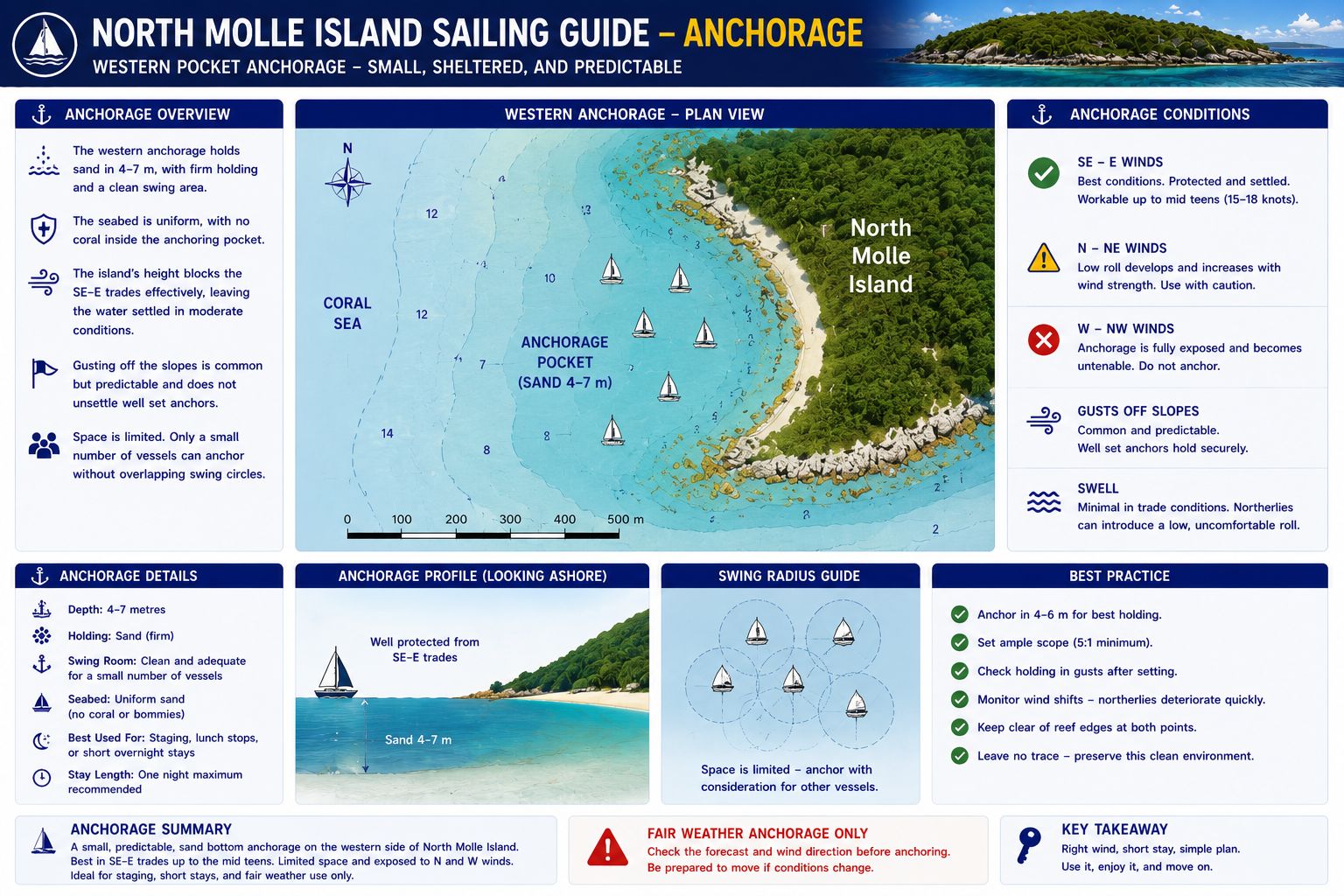
The western anchorage holds sand in 4–7 m, with firm holding and a clean swing area. The seabed is uniform, with no coral inside the anchoring pocket. The island’s height blocks the SE–E trades effectively, leaving the water settled in moderate conditions. Gusting off the slopes is common but predictable and does not unsettle well‑set anchors.
Space is limited. Only a small number of vessels can anchor without overlapping swing circles. The anchorage is workable in SE–E winds up to the mid‑teens. Northerlies introduce a low roll that worsens quickly as the breeze increases. Westerlies expose the anchorage completely and make it untenable. This is a fair‑weather anchorage, best used for staging, lunch stops, or short overnight stays in stable trade‑wind patterns.
North Molle Island
Sailing Guide - Navigation
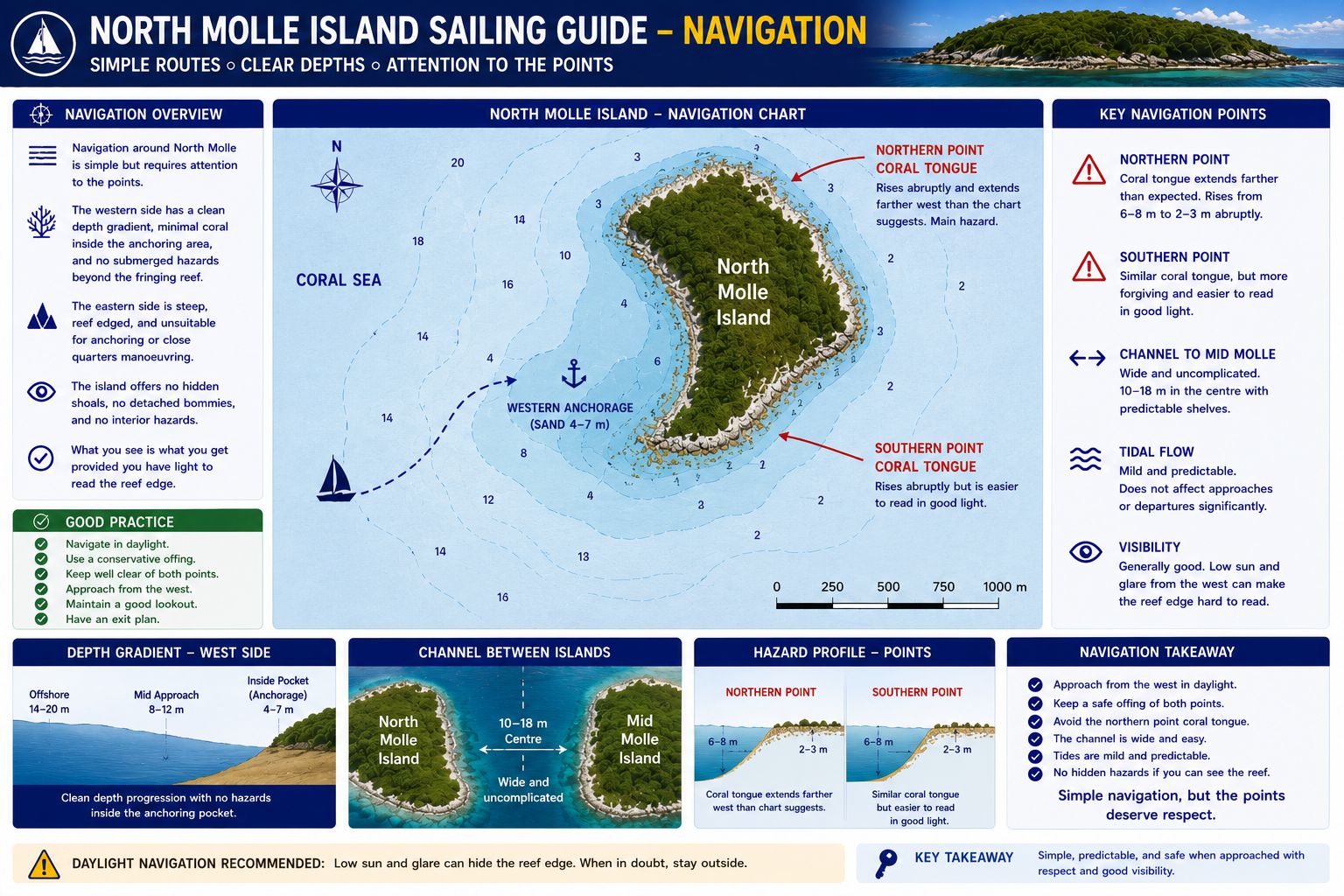
Navigation around North Molle is simple but requires attention to the points. The western side has a clean depth gradient, minimal coral inside the anchoring area, and no submerged hazards beyond the fringing reef. The eastern side is steep, reef‑edged, and unsuitable for anchoring or close‑quarters manoeuvring.
The northern point is the most prominent hazard, with a coral tongue that rises abruptly and extends farther west than the chart suggests. The southern point behaves similarly but is easier to read in good light. The channel between North and Mid Molle is wide, with 10–18 m in the centre and a predictable shelf on the North Molle side. Tidal flow is mild and does not complicate approaches or departures.
The island offers no hidden shoals, no detached bommies, and no interior hazards. What you see is what you get provided you have light to read the reef edge.
North Molle Island
Sailing Guide - Weather
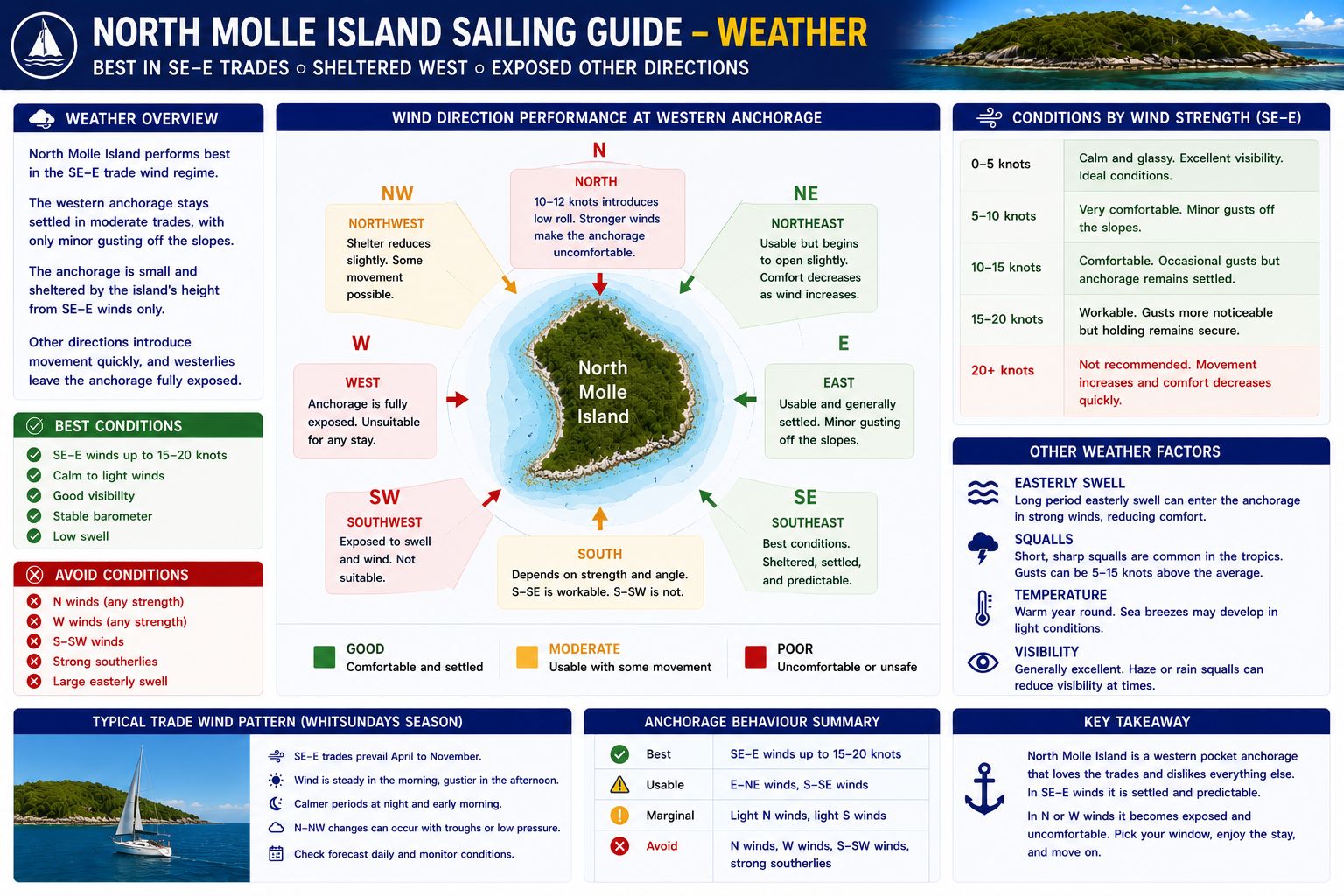
North Molle performs best in the SE–E trade‑wind regime. The western anchorage remains settled in moderate trades, with only minor gusting off the slopes. In 15–20 knots SE, the anchorage stays workable, though the gusts become more noticeable. In E–NE winds, the anchorage remains usable but begins to open slightly.
Northerlies introduce movement immediately. Even 10–12 knots N is enough to create a low roll, and anything stronger makes the anchorage uncomfortable. Westerlies expose the anchorage fully and make it unsuitable for any stay. Southerlies wrap into the anchorage depending on angle and strength; S–SE is workable, S–SW is not.
Calm conditions transform the anchorage into a quiet, predictable basin with excellent visibility and easy access to the surrounding islands.
North Molle Island
Sailing Guide - Fishing
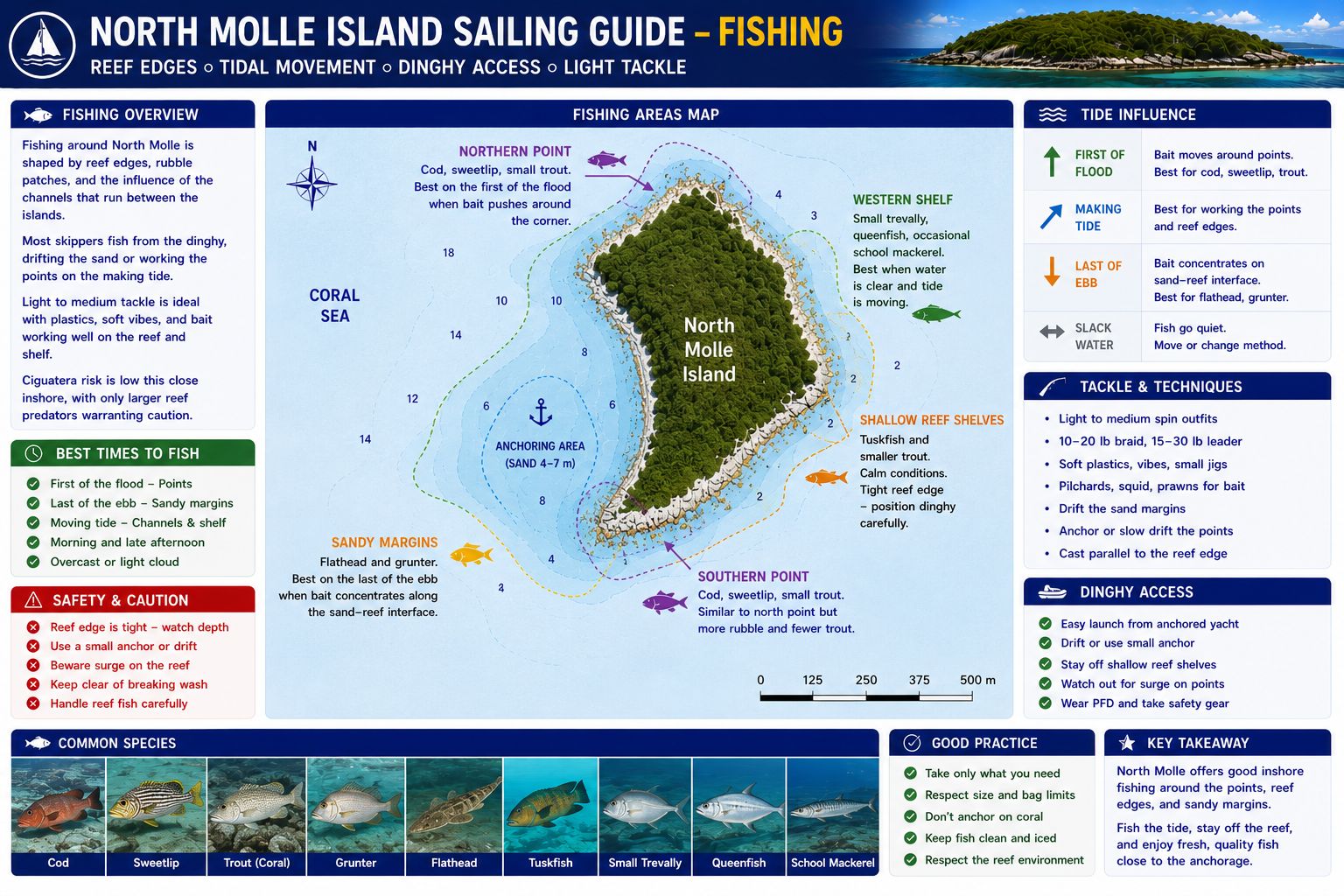
Fishing around North Molle is shaped by reef edges, rubble patches, and the influence of the channels that run between the islands. The northern point holds cod, sweetlip, and small trout, especially on the first of the flood when bait pushes around the corner. The southern point behaves similarly but with slightly more rubble and fewer trout.
The sandy margins inside the anchoring area produce flathead and grunter, particularly on the last of the ebb when bait concentrates along the sand‑reef interface. The deeper water off the western shelf holds small trevally, queenfish, and occasional school mackerel when the water is clear and the tide is moving. The shallow reef shelves offer tuskfish and smaller trout in calm conditions, though the reef edge is tight and requires careful dinghy positioning.
Ciguatera risk is low this close inshore, with only larger reef predators warranting caution. Most skippers fish from the dinghy, drifting the sand or working the points on the making tide.
Mechanical and Electrical Repairs
Resource
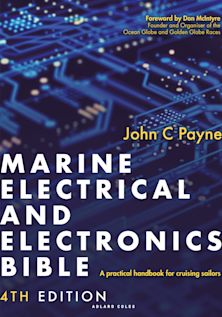
If you are headed somewhere remote consider the need to expand your knowledge base or have an information resource on board. Why not get a copy of my book The Marine and Electrical and Electronics Bible 4th Edition. By and for yachties, with everything from batteries and charging, solar and wind, diesel engines and marine electronics and so much more. Your complete systems guide. 650 pages of practical advice. In Australia and New Zealand order a copy through Boat Books. UK and European boats can buy the UK Edition Here. US and Canadian boats can get the US Edition Order Here. Marine systems are my profession so let me help you. By a liveaboard boat owner for other boat owners


North Molle Island
Sailing Guide - Summary
North Molle Island is a compact, predictable anchorage with one usable pocket on its western side. Approaches are simple, the seabed is clean, and the anchorage performs reliably in the trades. It is best used as a staging point or short‑stay stop rather than a primary overnight location. The island offers straightforward navigation, clear weather behaviour, and modest but consistent fishing shaped by reef edges, sand flats, and channel flow. The North Molle Island Sailing Guide is here to help.