Las Palmas Yacht Cruising Guide
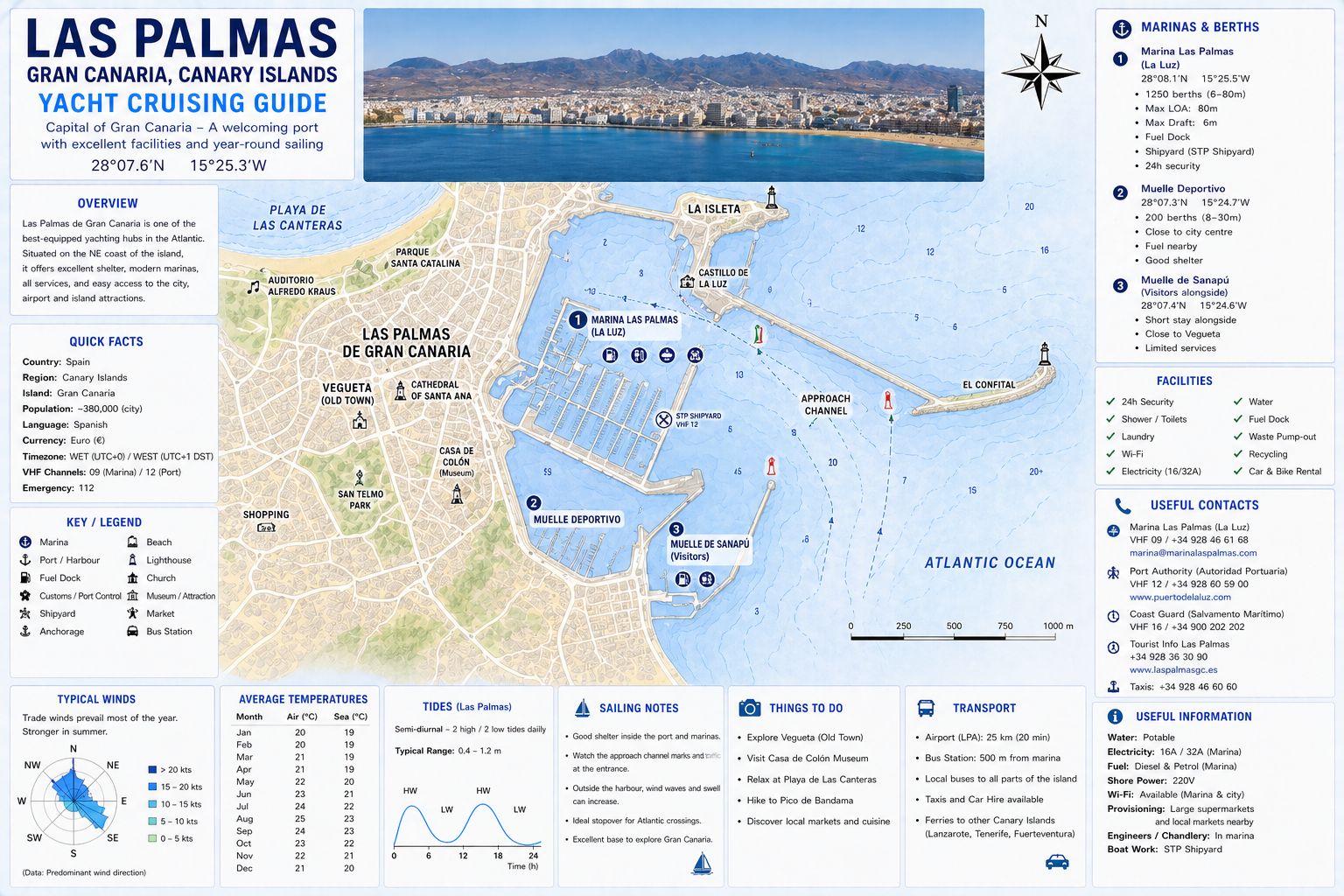
Las Palmas yacht cruising guide. Las Palmas de Gran Canaria is the largest harbour complex in the Canary Islands and the primary operational base for yachts preparing for Atlantic passages. The port combines a major commercial harbour with an extensive marina basin, creating a sheltered environment with deep‑water access, predictable conditions and a concentration of marine services unmatched elsewhere in the archipelago. The city sits on the northeastern coast of Gran Canaria, exposed to the NE trade‑wind regime but protected by engineered breakwaters that maintain workable conditions even during periods of strong wind and long‑period swell. The harbour’s scale, infrastructure and supply chain reliability make it the central staging point for independent yachts and organised rallies preparing for westbound crossings.
The marina occupies a large basin adjacent to the commercial port, with deep berths, wide fairways and consistent shelter. The surrounding city provides the broadest provisioning footprint in the Canary Islands, with multiple large supermarkets, municipal markets and specialist outlets within walking distance. Marine services include mechanical, electrical and rigging workshops, haul‑out facilities, sailmakers and marine electronics technicians, supported by a steady flow of parts through the commercial port. The combination of infrastructure, accessibility and service density makes Las Palmas the most dependable technical base in the eastern Atlantic.
Las Palmas Yacht Cruising
Guide - Approaches
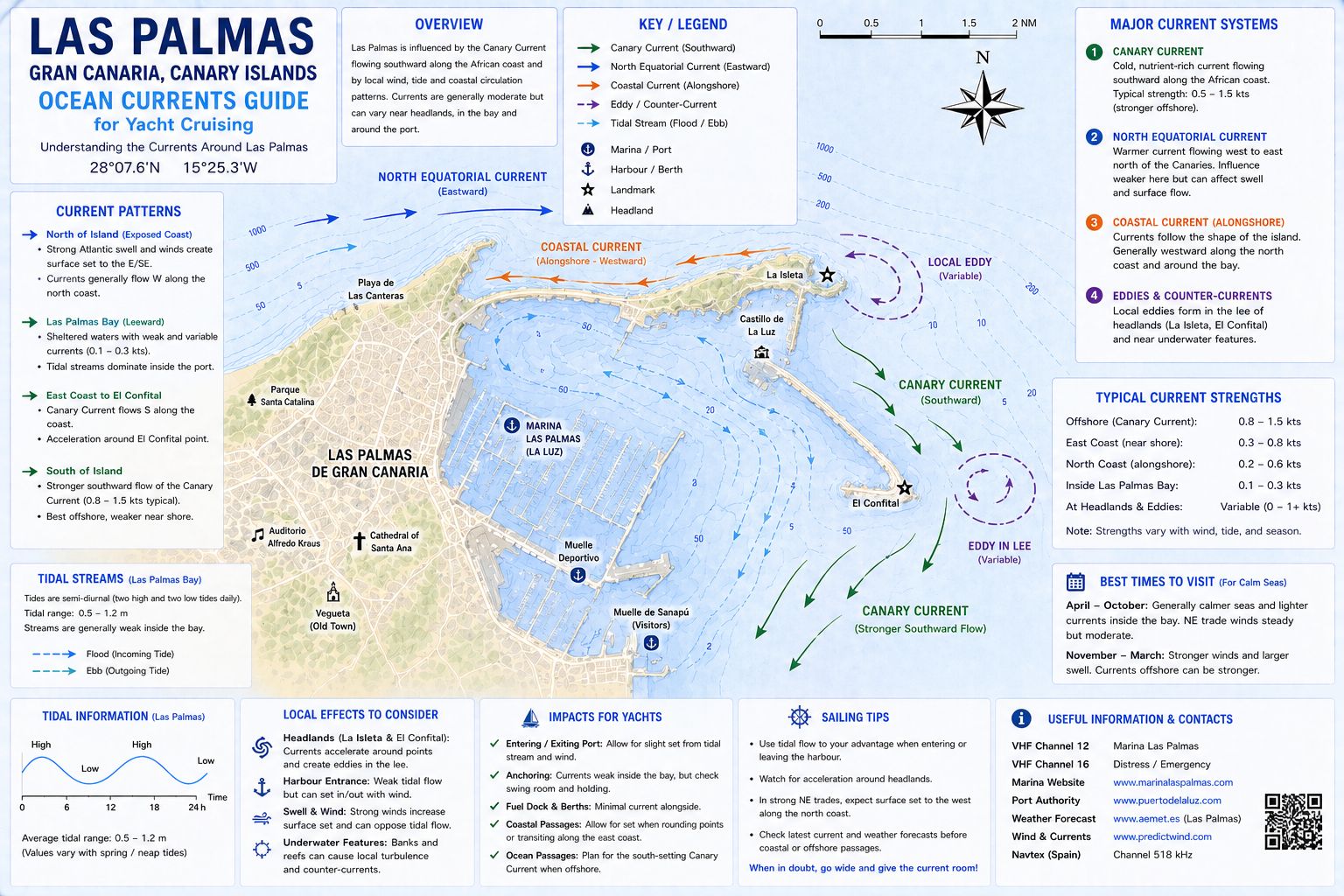
Approaches to Las Palmas are straightforward, with deep water close to the coastline and a wide, clearly defined entrance channel. Depths remain above 40 m until close in, shoaling to 20–25 m on final approach. The entrance to the commercial harbour maintains published depths of 14–16 m, with the marina accessed through an internal channel that remains sheltered in all conditions. The NE trade‑wind regime accelerates along the eastern side of Gran Canaria, and yachts approaching from the north or northeast encounter wind speeds and sea states that exceed forecast values, particularly in the acceleration zone between Gran Canaria and Tenerife. Long‑period swell from the north and northwest can create cross‑set and confused seas outside the harbour, but the engineered breakwaters maintain a stable entrance. Traffic density is high, with commercial shipping, ferries and fishing vessels operating continuously, and radar is useful when approaching in reduced visibility or haze.
Las Palmas Yacht Cruising
Guide - Anchorage
Anchoring off Las Palmas is possible but limited by exposure, swell and traffic. The anchorage lies south of the marina in 12–15 m over sand, with variable holding and frequent rolling caused by long‑period swell and ferry wake. The area is affected by commercial traffic movements, and yachts must remain clear of designated channels. Swell wrap from northerly systems can create uncomfortable conditions, and the anchorage is not recommended during periods of strong trade winds or heavy swell. Most yachts use the marina rather than anchor, as the basin provides reliable shelter and avoids the persistent roll that affects the open roadstead.
Las Palmas Yacht Cruising
Guide - Entry Formalities
Entry procedures follow Spanish and Canary Islands regulations. Yachts report to the marina office with vessel registration, passports and crew list. Schengen rules apply. Firearms must be declared, and pets require EU‑compliant veterinary documentation. Waste‑management rules are enforced, and black‑water containment is required in some areas. Formalities are efficient, and staff are accustomed to handling large numbers of yachts preparing for Atlantic passages
Las Palmas Yacht Cruising
Guide - Marina Facilities
The marina in Las Palmas has an entrance channel with published depths of 8–10 m and basin depths of 3–5 m alongside. The basin is large and remains sheltered even during strong trade‑wind periods, with wide fairways and deep berths suitable for yachts of varying sizes. Facilities include fuel, potable water, electricity, showers, laundry and Wi‑Fi. Technical services are extensive, with mechanical and electrical workshops, rigging specialists, sailmakers, marine electronics technicians and well‑stocked chandleries. Haul‑out facilities are available in the adjacent commercial port area, with travel‑lift capacity suitable for a wide range of vessels. The proximity to the commercial port ensures reliable supply chains and consistent availability of parts and materials.
Las Palmas Yacht Cruising
Guide - Local Weather
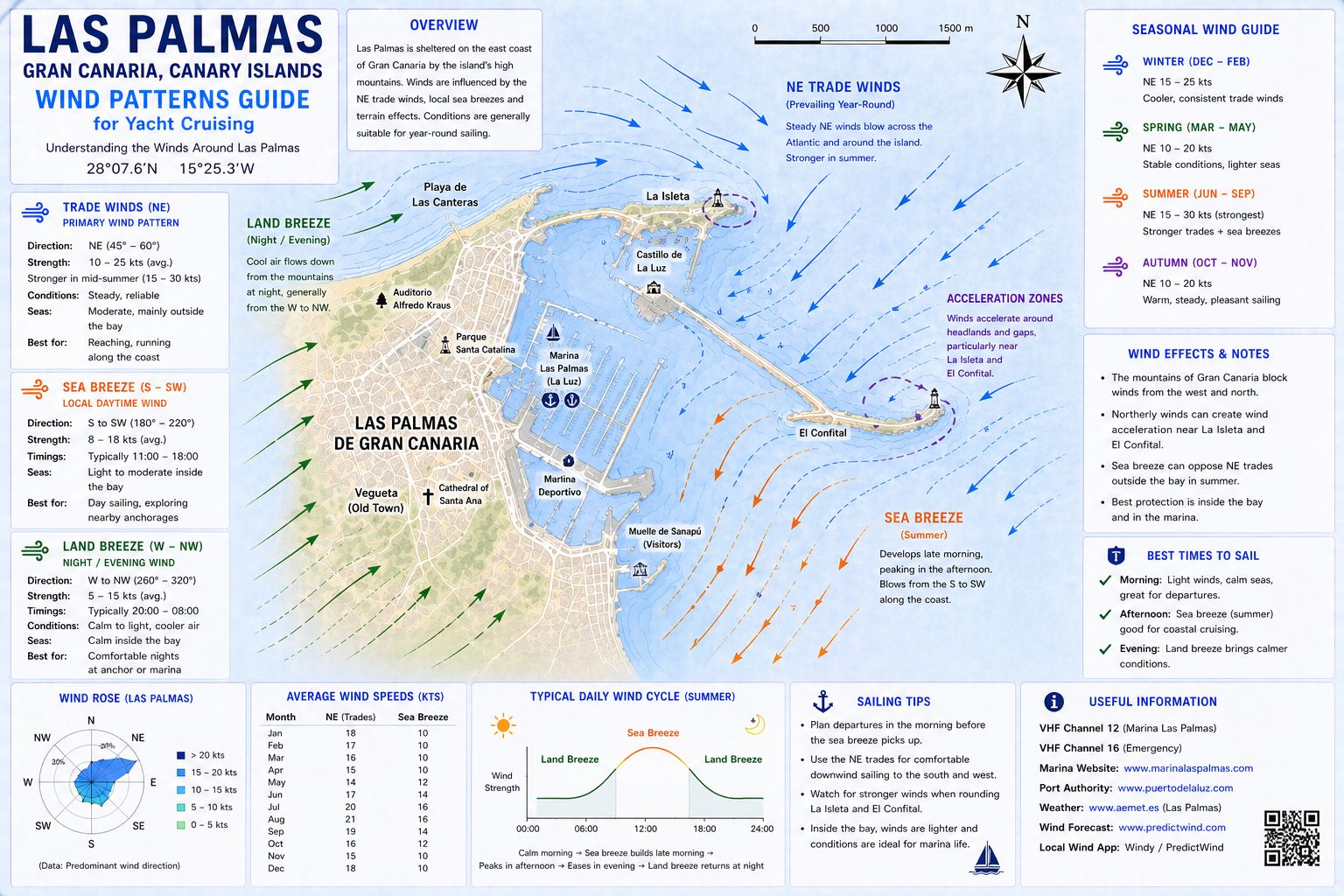
Weather in Las Palmas is dominated by the NE trade‑wind regime for most of the year. The harbour remains sheltered, but the outer approaches experience strong acceleration as wind flows along the eastern side of Gran Canaria. Long‑period swell from the north and northwest can affect the outer harbour but does not compromise the entrance. Winter introduces more variable winds and occasional southerly systems, though conditions remain manageable. Haze from Saharan dust events can reduce visibility and affect approaches.
Las Palmas Yacht Cruising Guide - Provisioning
Supermarkets. Hiperdino Mesa y López stocks fresh produce, meat, dairy, bakery, dry goods, long‑life items and bulk formats; Mercadona Mesa y López stocks fresh produce, bakery, dairy, meat and packaged dry goods; Carrefour Las Arenas stocks dry goods, long‑life items, oils, tins, beverages and international products; Hiperdino in the port district stocks fresh produce, dairy, meat and dry goods in smaller volumes; local specialty products across all outlets include Canarian potatoes, gofio, island cheeses, honey and olive oil.
Markets. Mercado Central contains stalls selling vegetables, fruit, herbs, pulses, cheeses, cured meats, gofio, honey and island potatoes; Mercado de Vegueta contains vegetables, fruit, herbs, cheeses and regional products.
Fish Markets. The fish hall of Mercado Central sells tuna, vieja, sardines, mackerel, octopus and seasonal Atlantic species; the fish area of Mercado de Vegueta sells tuna, vieja, sardines, mackerel and octopus; fish counters around the commercial port sell locally landed tuna, vieja and mixed Atlantic species.
Las Palmas Yacht Cruising
Guide - Local Cuisine
Local cuisine in Las Palmas is based on coastal fish, preserved staples, and simple Canarian preparations. Papas arrugadas are small local potatoes boiled in heavily salted water and served with mojo rojo (red pepper, garlic, oil, vinegar) or mojo verde (coriander, garlic, oil, vinegar). Sancocho canario is salted white fish, usually cherne or corvina, boiled with potatoes and sweet potato and served with mojo. Ropa vieja is a chickpea stew made with shredded beef or chicken, onions, peppers, and tomatoes. Gofio escaldado uses toasted maize flour mixed with fish stock to form a thick paste eaten with onions or fish.
Local fish dishes include vieja (parrotfish) grilled whole, dorado (mahi‑mahi) pan‑fried or grilled, and atun (tuna) served seared or stewed. Caldo de pescado is a simple fish broth made from local coastal species. Pulpo guisado is octopus stewed with onions, peppers, and spices. Local cheeses, particularly queso fresco and queso semicurado, are widely available.
Las Palmas Yacht Cruising
Guide - Fuel Supplies
Fuel is available at the marina fuel dock and at commercial berths within the port, with stable supply and straightforward access. Swell does not affect fuelling operations inside the harbour, and supply interruptions are rare. This is a major bunkering port for commercial vessels.
Las Palmas Yacht Cruising
Guide - Water Supplies
Potable water is available at all marina berths and fuel docks, with consistent quality and no rationing. Tank filling is straightforward, and supply is reliable throughout the year.
Mechanical and Electrical Repairs
Resource
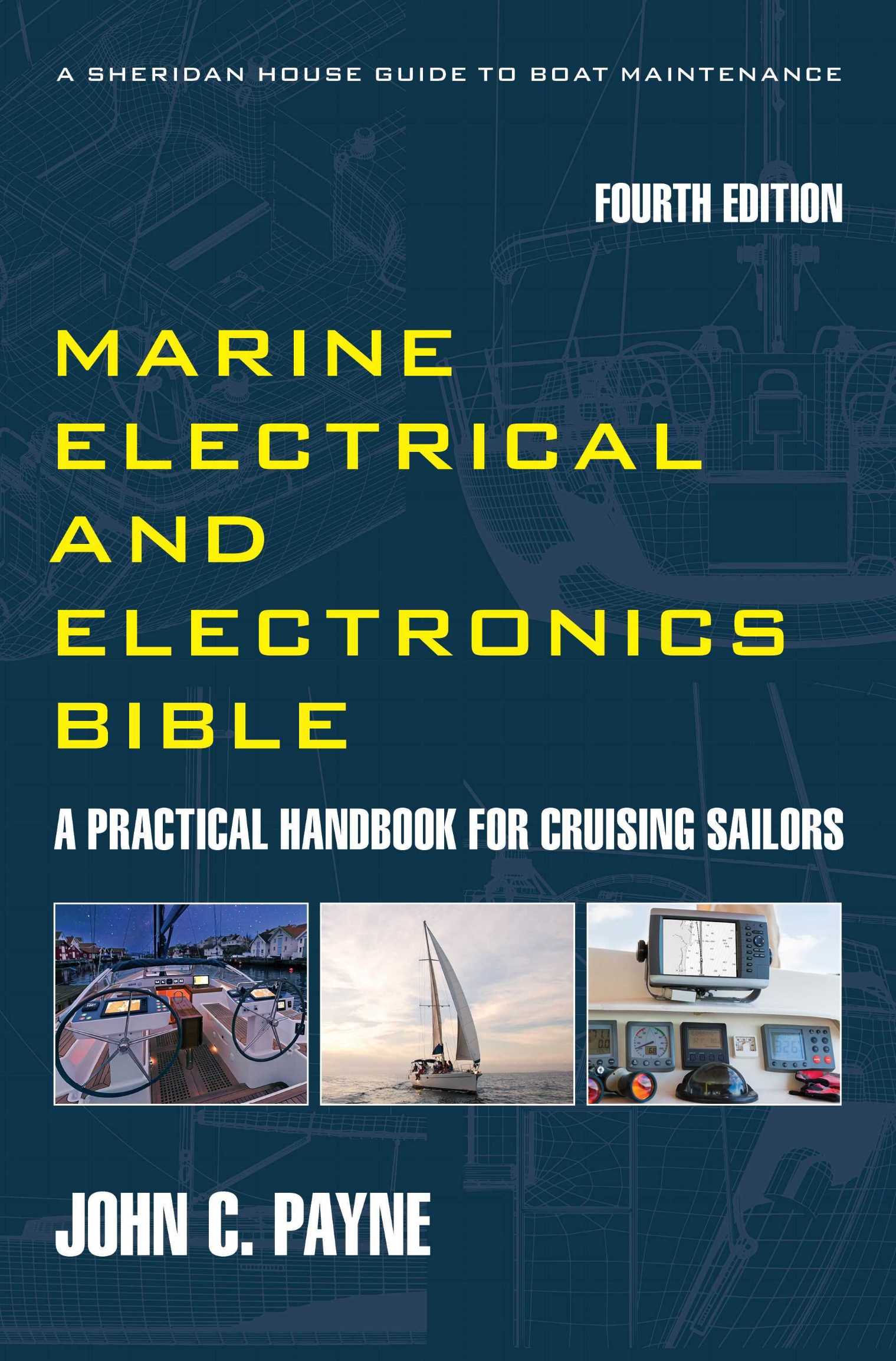
If you are headed somewhere remote consider the need to expand your knowledge base or have an information resource on board. Why not get a copy of my book The Marine and Electrical and Electronics Bible 4th Edition. By and for yachties, with everything from batteries and charging, solar and wind, diesel engines and marine electronics and so much more. Your complete systems guide. 650 pages of practical advice. In Australia and New Zealand order a copy through Boat Books. UK and European boats can buy the UK Edition Here. US and Canadian boats can get the US Edition Order Here. Marine systems are my profession so let me help you. By a liveaboard boat owner for other boat owners


Las Palmas Yacht Cruising Guide - Marine Services
Las Palmas provides the most comprehensive marine‑service network in the Canary Islands. Mechanical, electrical and rigging workshops operate within the marina and adjacent port areas, supported by sailmakers, marine electronics technicians and chandleries. Haul‑out facilities in the commercial port accommodate a wide range of vessels, and the steady flow of commercial shipping ensures reliable access to parts and materials. The port is well suited to pre‑Atlantic maintenance, and many yachts complete final checks and upgrades here.
Las Palmas Yacht Cruising
Guide - Local Customs
Harbour operations are structured and predictable, with clear authority control and enforced waste‑management rules. Environmental restrictions apply in protected areas, and compliance checks are routine. Visiting yachts are expected to follow instructions precisely.
Las Palmas Yacht Cruising
Guide - Summary
Las Palmas is the primary operational base for yachts in the Canary Islands, offering deep‑water access, extensive marina infrastructure, strong provisioning and comprehensive marine services. Approaches are influenced by acceleration zones and long‑period swell, anchorages are limited by exposure and traffic, and the marina provides the most reliable shelter. The port functions as the central technical and logistical hub for Atlantic passage preparation. Las Palmas Yacht Cruising Guide for all you need to know.