Keswick Island Sailing
Guide
Keswick Island sailing guide. Keswick Island sits south of Brampton and Carlisle Islands and north of St Bees Island, forming the central island of the Cumberland group. It provides several reliable anchorages on its western and northern sides, with deep, protected water in Egremont Passage and smaller fair‑weather pockets along the shoreline. The island’s eastern side is steep, reef‑bound, and exposed to Coral Sea swell. Keswick is partially developed, but all anchorages remain used solely for overnight shelter and staging for vessels transiting between the Whitsundays and Mackay.
The underwater profile around Keswick Island is consistent, with offshore depths of 22–36 m reducing evenly to 12–18 m near the shoreline. Inside the anchoring zones, depths settle into 6–12 m over firm sand. Fringing reef is confined to headlands and rises from 3–6 m into the reef flat. The western and northern sides offer the most reliable shelter in SE–E winds, while the eastern side is exposed and only workable in calm conditions.
Keswick Island Sailing
Guide - Approaches
Keswick Island lies south of Brampton and Carlisle Islands and forms a sheltered anchoring system with St Bees Island via Egremont Passage. The island’s western and northern sides provide the most dependable anchoring options, with clean sand bottoms and predictable depth gradients. Offshore depths remain consistently 22–36 m, reducing to 12–18 m near the shoreline. Inside the anchoring areas, depths sit in 6–12 m over firm sand. The eastern side is exposed to Coral Sea swell and unsuitable except in light conditions.
Egremont Passage
(Primary Anchorage – Between Keswick & St Bees)
Egremont Passage is the primary anchorage for Keswick Island and one of the most reliable anchorages in the entire Cumberland region. Approaches are straightforward, with offshore depths of 24–36 m reducing to 14–18 m as you enter the passage. Inside, anchoring depths sit in 8–12 m over firm sand, with the central basin offering the cleanest holding. The seabed slopes gently toward both islands, and the anchorage remains free of coral except near the headlands.
Egremont Passage provides excellent protection in SE–E winds, with minimal swell intrusion. It becomes exposed in N winds and develops a light roll in SW winds depending on swell direction. Tidal streams are moderate but predictable, with a noticeable set through the passage during springs. Dinghy access to Keswick Island is straightforward at all but the lowest tides, with 1–1.5 m at the shoreline.
Keswick North
(North‑West Anchorage)
Keswick North sits on the north‑western side and offers a workable anchorage in moderate conditions. Offshore depths of 22–30 m reduce to 12–14 m near the shoreline. Inside, anchoring depths sit in 6–10 m over sand with isolated coral. The fringing reef rises from 3–6 m, and coral heads lifting into 2–3 m are scattered across the northern margin. This bay is workable in SE–S winds but becomes exposed in W–N winds. Dinghy landing is possible at mid‑tide, though reef shelves restrict access at lower water.
Keswick Island West
(South‑West Anchorage)
Keswick West lies on the south‑western side and provides a small, calm anchorage in settled conditions. Offshore depths of 24–32 m reduce to 14–16 m approaching the shoreline. Inside, anchoring depths sit in 6–8 m over sand. The fringing reef rises from 3–6 m, with coral heads lifting into 2–3 m near the southern point. This bay is workable in light SE–S winds but becomes exposed in N winds and sloppy in NE winds. Dinghy access is straightforward at mid‑to‑high tide.
Keswick Island Eastern Side (Fair‑Weather
Only)
The eastern side of Keswick Island is exposed to the Coral Sea and only suitable in calm conditions. Offshore depths of 26–36 m reduce to 14–18 m near the shoreline. The seabed drops steeply, and anchoring bands are narrow, typically 10–14 m over sand with scattered coral. Fringing reef rises from 3–6 m, and coral heads lifting into 2–3 m are common along the eastern margin. This side is untenable in SE–E winds and only workable in light W–SW winds. Swell intrusion is immediate when wind shifts east of south.
Keswick Island Southern Side
(Transit Only)
The southern side of Keswick Island is steep, exposed, and not suitable for anchoring. Offshore depths of 24–32 m drop quickly into deeper water, and the fringing reef rises abruptly from 3–6 m. This area is used only for transit between Keswick and St Bees Islands. Swell wraps around the headlands in SE–E winds, and the shoreline offers no protection.
Keswick Island Sailing
Guide - Navigation Notes
Navigation around Keswick Island is straightforward, with predictable depth transitions and clear reef definition.
- Depth transitions are even, from 22–36 m offshore to 12–18 m near the shoreline.
- Fringing reef is confined to headlands and rises from 3–6 m into the reef flat.
- Coral heads lifting into 2–3 m are common near the eastern and southern points.
- Tidal streams are moderate in Egremont Passage, with a noticeable set during springs.
- Visibility is generally good, and reef edges are easy to identify in settled conditions.
- Low sun angles can obscure coral heads; late‑day arrivals require caution.
The safest entry lines are central approaches into Egremont Passage and Keswick North, avoiding the reef shelves on the eastern and southern sides.
Keswick Island Sailing
Guide - Weather
Keswick Island’s western and northern anchorages are reliable in SE–E trade winds, with winds commonly 15–22 knots during the trade season. Egremont Passage remains comfortable in these conditions, with minimal swell intrusion. N winds render all anchorages exposed and uncomfortable, and NE winds can introduce a light roll. S–SW winds remain workable but may produce a gentle swell depending on direction. Tidal range is moderate, and streams set predictably through Egremont Passage.
Mechanical and Electrical Repairs
Resource
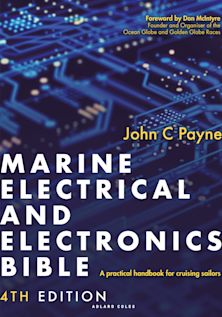
If you are headed somewhere remote consider the need to expand your knowledge base or have an information resource on board. Why not get a copy of my book The Marine and Electrical and Electronics Bible 4th Edition. By and for yachties, with everything from batteries and charging, solar and wind, diesel engines and marine electronics and so much more. Your complete systems guide. 650 pages of practical advice. In Australia and New Zealand order a copy through Boat Books. UK and European boats can buy the UK Edition Here. US and Canadian boats can get the US Edition Order Here. Marine systems are my profession so let me help you. By a liveaboard boat owner for other boat owners

Keswick Island Sailing
Guide - Summary
Keswick Island provides several dependable anchorages on its western and northern sides, with clean sand bottoms, predictable depth profiles, and strong protection in SE–E winds. Egremont Passage is the primary anchorage and one of the most reliable in the Cumberland region, while Keswick North and Keswick West offer workable alternatives in moderate conditions. The eastern and southern sides are exposed and only suitable in calm weather. Keswick Island functions as a practical overnight stop for yachts transiting between Brampton, Carlisle, St Bees, and the Mackay region. The Keswick Island Sailing Guide for all you need to know.