Great Keppel Island Sailing Guide
The Great Keppel island sailing guide. Great Keppel Island is the primary anchorage hub of the Capricorn Coast, providing multiple bays with reliable depths, predictable holding and straightforward approaches in daylight. The island sits close to the mainland, and its western anchorages are used as staging points for vessels moving between Rosslyn Bay, the Keppel Group and the outer Capricorn reefs. Navigation is uncomplicated when visibility is good, but the combination of fringing reef, sand tongues and swell wrap requires conservative pilotage close to shore. Depths vary significantly between bays, and several approaches demand attention to abrupt shoaling near the 5 m contour. Skippers treat the island as a practical stop rather than a destination, selecting anchorages based on wind direction, swell behaviour and depth requirements rather than amenities.
The island’s western side provides the most reliable shelter, with depths generally between 5 m and 10 m over sand and clear approaches from Rosslyn Bay. The northern and southern sectors are more exposed and require good visibility due to reef proximity and irregular seabed contours. The eastern side is fully exposed to ocean swell and is not used as an anchorage. Depths offshore remain generous, but the fringing reef on the north‑east and south‑east headlands lies close to the surface and demands daylight approaches. The island’s anchorages are functional and predictable when approached with accurate depth awareness, and the holding is consistent across the sand‑based seabed.
Great Keppel Island Sailing Guide
Approaches
Approach from Rosslyn Bay (North‑West Sector)
This is the most common approach and carries 10–20 m over sand and rubble until closing the island. The seabed shoals gradually, with 5–8 m depths within half a nautical mile of the western bays. There are no major hazards in this sector, and the approach is straightforward in daylight. Swell can wrap around the island and create cross‑set when approaching anchorages, particularly in fresh south‑easterlies. The western side is free of reef, and the 10 m contour lies well offshore, giving ample room for manoeuvring. Depths remain consistent across the approach, and the seabed is uniform sand.
Great Keppel Island Sailing Guide Approaches
Approach from the North / North‑East
The northern approach is deeper offshore, with 15–25 m over sand and coral rubble. Fringing reef extends from the north‑eastern headlands, and the reef line is visible in good light. Depths shoal rapidly inside the 10 m contour, and vessels maintain a conservative offing until the anchorage is identified. The 5 m contour lies close to the reef edge, and the seabed rises abruptly. This sector is exposed to northerly swell and wind, and the approach is avoided in fresh northerlies. In settled conditions, the approach is workable, but daylight is essential for identifying the reef edge and sand tongues.
Great Keppel Island Sailing Guide Approaches
Approach from the South / South‑East
The southern and south‑eastern approaches are reef‑affected. Depths remain 12–20 m offshore but shoal abruptly near the fringing reef. The reef edge is irregular, and the 5 m contour lies close to the visible reef line. This approach is only used in settled conditions with good visibility. Swell refracts around the island and can create confused seas near the headlands. The seabed transitions from sand to coral rubble near the reef, and depths can drop from 12 m to 4 m within a short distance. Skippers maintain a wide berth off the south‑eastern headland and only close the island once the anchorage is clearly identified.
Wind‑Specific Anchorage Selection
Logic
Great Keppel Island anchorages are selected strictly on wind direction, swell behaviour, and depth reliability. The island’s western side provides the only consistently workable anchorages; the northern and southern bays are conditional; the eastern side is not used.
SE Trade Winds (Prevailing)
- Primary: Svendsen’s Beach — 5–8 m, clean approach, minimal swell wrap.
- Secondary: Monkey Beach — 6–10 m, workable but with coral rubble patches.
- Avoid: Long Beach (open to SE swell), Putney Beach (swell wrap).
E to NE Winds
- No fully protected anchorage on GKI.
- Svendsen’s remains the least exposed but becomes uncomfortable in fresh NE.
- Monkey Beach and Fisherman’s Beach become rolly.
- In strong NE, relocate to Rosslyn Bay.
N to NW Winds
- All western anchorages become exposed.
- Svendsen’s is the last workable option in light northerlies but deteriorates quickly.
- Monkey Beach becomes untenable.
- Fisherman’s Beach becomes uncomfortable even in moderate N.
- In fresh N–NW, return to Rosslyn Bay.
W to SW Winds
- Primary: Monkey Beach — best shelter from W–SW.
- Secondary: Fisherman’s Beach — workable in moderate W–SW.
- Avoid: Leeke’s Beach and Long Beach (fully open).
S to SSW Winds
- Primary: Svendsen’s Beach — least affected by S swell wrap.
- Secondary: Fisherman’s Beach — acceptable in moderate S.
- Avoid: Long Beach and Monkey Beach (swell wrap).
Rosslyn Bay → Great Keppel Island
Approach Bearings & Depth Cues
Departure from Rosslyn Bay
Clear the marina and follow the leads out the entrance channel. Depths increase from 3–4 m inside the harbour to 8–12 m immediately outside. Once clear of the leads, steer 090–100° to open distance from the headland and avoid the shallow inshore patches.
Mid‑Passage
Once abeam of the harbour entrance, alter to 110–120° toward the western side of Great Keppel Island. Depths remain 10–20 m over uniform sand and rubble. The seabed shoals gradually as you close the island; no mid‑passage hazards. Swell wrap from the SE can create a slight cross‑set toward the island in fresh trades.
Closing the Island (Western Sector)
At 1 NM off the island, depths reduce to 8–12 m. At 0.5 NM, depths reduce to 5–8 m depending on anchorage. The western side is free of reef; the 10 m contour lies well offshore. Identify your anchorage visually before altering course toward shore.
Rosslyn Bay → Great Keppel Island Approach Bearings & Depth Cues
Approach to Svendsen’s Beach
Steer 120–130° from mid‑passage. Depths: 12–15 m at 0.7 NM, 8–10 m at 0.5 NM, 5–8 m in the anchoring area. Uniform sand, no reef influence.
Approach to Monkey Beach
Steer 130–140° toward the northern headland. Depths: 12–18 m offshore, 8–12 m at 0.5 NM, 6–10 m in the anchoring area. Fringing reef lies close to the 5 m contour; daylight essential.
Approach to Fisherman’s Beach
Steer 115–125° toward the centre of the western shoreline. Depths: 10–15 m offshore, 6–10 m at 0.5 NM, 4–7 m in the anchoring area. Uniform sand, no reef influence.
Approach to Long Beach
Steer 140–150° toward the south‑western corner. Depths: 12–18 m offshore, 10–12 m at 0.5 NM, 6–10 m in the anchoring area. Fully open to S–SE swell.
Anchorages – Depth‑Specific,
Operational Detail
Svendsen’s Beach (North‑West)
Depths 5–8 m over sand, consistent holding, clean approach, minimal reef influence. Best anchorage in SE trades.
Monkey Beach (North‑West)
Depths 6–10 m over sand with coral rubble patches. Fringing reef near the 5 m contour. Requires daylight.
Fisherman’s Beach (West)
Depths 4–7 m over sand. Exposed to swell wrap. Straightforward approach.
Long Beach (South‑West)
Depths 6–10 m over sand. Fully open to S–SE swell. Only used in settled conditions.
Leeke’s Beach (West)
Depths 5–8 m over sand. Exposed to SW swell. Alternative to Fisherman’s in moderate SE.
Putney Beach (North‑West)
Depths 4–6 m over sand. More exposed to swell than Svendsen’s. Straightforward approach.
Mechanical and Electrical Repairs Resource
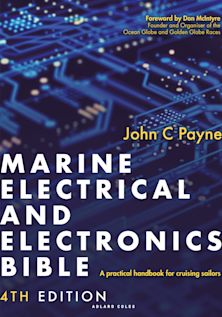
If you are headed somewhere remote consider the need to expand your knowledge base or have an information resource on board. Why not get a copy of my book The Marine and Electrical and Electronics Bible 4th Edition. By and for yachties, with everything from batteries and charging, solar and wind, diesel engines and marine electronics and so much more. Your complete systems guide. 650 pages of practical advice. In Australia and New Zealand order a copy through Boat Books. UK and European boats can buy the UK Edition Here. US and Canadian boats can get the US Edition Order Here. Marine systems are my profession so let me help you. By a liveaboard boat owner for other boat owners

Great Keppel Island Sailing Guide - Summary
Great Keppel Island provides practical, depth‑reliable anchorages for vessels operating along the Capricorn Coast. The western bays offer the most consistent conditions, with 5–10 m depths over sand and clear approaches from Rosslyn Bay. The northern and southern sectors require daylight and good visibility due to fringing reef and abrupt shoaling. With accurate depth awareness, wind‑based anchorage selection and conservative pilotage, the island provides dependable shelter and straightforward navigation for yachts moving through the region. Great Keppel Island Sailing Guide has a lot of useful information.