East Australian
Current Sailing Guide – For NSW Sailors
East Australian Current sailing guide. The East Australian Current (EAC) is the dominant oceanographic system shaping offshore conditions along the New South Wales coastline, and any yacht undertaking a southbound passage must understand how this current behaves. Although often described as a warm south‑flowing current along the NSW coast, the EAC is not a uniform stream. It is a dynamic, shifting system that changes position, strength, and structure over short distances. For sailors planning a coastal passage from Queensland to Sydney or continuing toward Bass Strait, the EAC’s influence on sea state, vessel speed, and routing decisions is significant. A yacht that misjudges the current’s position may find itself battling several knots of adverse flow or encountering steep, confused seas where wind opposes current.
The EAC originates in the Coral Sea and intensifies as it moves south, forming a narrow jet along the continental shelf. South of Port Stephens, this jet becomes unstable and breaks into large eddies that drift into the Tasman Sea. These eddies, along with inshore counter‑currents, create a constantly changing environment for offshore sailing. Understanding the EAC’s seasonal patterns, its typical offshore location, and the hazards created by wind‑against‑current conditions is essential for safe and efficient coastal cruising along the NSW coast.
East Australian Current
Sailing Guide – Formation
The EAC forms as warm tropical water is pushed southward by large‑scale Pacific circulation, creating a western boundary current similar to the Gulf Stream. Along the NSW coastline, the current typically flows strongest along the continental shelf break, where depths transition rapidly from 200 metres to more than 1000 metres. This is where the main jet of the EAC is usually found, often running at two to three knots and occasionally stronger. For sailors using offshore routing strategies, this zone is where the most significant adverse current is encountered.
East Australian Current
Sailing Guide – Location
The position of the EAC varies considerably. North of Port Macquarie, the core of the current may sit only five to ten nautical miles offshore, while south of Sydney it often lies thirty or forty miles out to sea. This variability means that yachts hugging the coast may avoid the strongest flow, but meanders can push the current much closer inshore. This is why many sailors use real‑time ocean current charts or satellite sea‑surface temperature maps when planning a southbound passage along the NSW coast.
East Australian Current
Sailing Guide – Southern Flow
South of Port Stephens, the EAC becomes increasingly unstable and sheds large warm‑core eddies. These eddies can exceed 100 kilometres in diameter and significantly alter the flow along their boundaries. A yacht on the western edge of a warm‑core eddy may encounter strong south‑setting current, while a vessel only a few miles further east may find a north‑setting counter‑current. Cold‑core eddies, though less common, can draw cooler water from the south and create favourable north‑setting flow close to shore. This complex eddy field is a defining feature of offshore sailing conditions between Port Stephens and Eden.
East Australian Current
Sailing Guide – Seasonal
Patterns
Seasonality plays a major role in the behaviour of the EAC. During late spring, summer, and early autumn, the current strengthens and moves closer to the coast. This is when southbound yachts are most likely to encounter strong adverse current even inside the 50‑metre contour. The jet becomes more coherent and energetic, and eddy formation increases, creating a more turbulent offshore environment. This is also the period when sailors often report steep seas off Smoky Cape and Seal Rocks due to strong current interacting with southerly winds.
In winter, the EAC weakens and shifts further offshore. Inshore counter‑currents become more common, particularly south of Sydney, and yachts hugging the coast may experience neutral or even favourable north‑setting flow. These seasonal patterns are not absolute, but they provide a useful framework for planning a southbound coastal passage, especially for sailors timing a voyage from Queensland to Sydney or onward to Bass Strait.
East Australian Current
Sailing Guide – Sea state and Wind
The most important operational consideration for sailors is the sea state created when wind opposes the current. A strong southerly blowing against a two‑to‑three‑knot south‑setting EAC can produce steep, breaking seas that are uncomfortable and potentially hazardous. This effect is most pronounced near the continental shelf edge, where the current is strongest, but it can also occur closer inshore when meanders push the flow toward the coast. Areas such as Smoky Cape, Seal Rocks, and the Sydney Canyon are known for particularly energetic conditions, where the combination of current acceleration and wind‑against‑current interaction can create chaotic seas.
Long‑period swell also behaves differently in the warm, less dense water of the EAC. Swell can steepen or refract in unexpected ways, contributing to the overall complexity of offshore sailing conditions along the NSW coast. While this effect is subtle compared to wind‑against‑current interactions, it is noticeable on longer offshore legs, particularly for yachts making multi‑day passages.
East Australian Current
Sailing Guide – Southbound
Most southbound yachts choose to stay inshore, often within three to five nautical miles of the coast and inside the 50‑metre contour. This strategy generally avoids the strongest adverse flow and provides easier access to ports if conditions deteriorate. However, the inshore route requires careful navigation around headlands, reefs, and traffic, and it offers less sea room in sudden weather changes. Offshore routing can be advantageous in certain wind patterns, but it exposes yachts to the full strength of the EAC and the complex eddy field. Without up‑to‑date current data, an offshore passage can become significantly slower and more uncomfortable.
Modern satellite products, such as sea‑surface temperature charts, altimetry‑derived current maps, and real‑time oceanographic data, allow sailors to identify the position of the main jet, locate eddy boundaries, and find inshore counter‑currents. With this information, a yacht can often gain one or two knots of favourable flow or avoid the worst of the adverse current. For sailors planning a southbound passage from Queensland to Sydney, or preparing for the crossing toward Bass Strait, this data is invaluable.
East Australian Current
Sailing Guide – Northbound
Northbound sailors experience the EAC very differently, because the prevailing south‑setting flow generally provides a speed advantage offshore. However, this benefit comes with its own operational challenges. The strongest favourable current is usually found near the continental shelf break, but this is also where the sea state becomes most energetic when the wind shifts northerly. A yacht riding the EAC northward in a fresh northerly can encounter steep, uncomfortable seas that reduce the advantage of the current. Inshore routes offer more predictable conditions and easier access to harbours, but the favourable flow is often weaker or absent inside the 50‑metre contour. Northbound sailors planning longer offshore legs—such as passages from Sydney to Coffs Harbour or from Port Stephens toward Queensland—often position themselves on the western boundary of the main jet, where the current remains strong but the sea state is more manageable. As with southbound routing, real‑time current charts and sea‑surface temperature maps are essential tools for identifying the most efficient corridor and avoiding the turbulent edges of warm‑core eddies.
Mechanical
and Electrical Repairs Resource
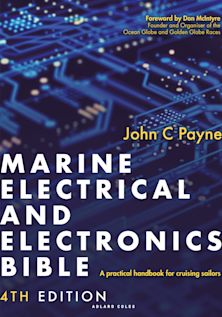
If you are headed somewhere remote consider the need to expand your knowledge base or have an information resource on board. Why not get a copy of my book The Marine and Electrical and Electronics Bible 4th Edition. By and for yachties, with everything from batteries and charging, solar and wind, diesel engines and marine electronics and so much more. Your complete systems guide. 650 pages of practical advice. In Australia and New Zealand order a copy through Boat Books. UK and European boats can buy the UK Edition Here. US and Canadian boats can get the US Edition Order Here. Marine systems are my profession so let me help you. By a liveaboard boat owner for other boat owners

East Australian Current
Sailing Guide – Summary
For sailors voyaging along the NSW coast, the East Australian Current is a critical factor in passage planning. Its strength, variability, and interaction with wind and swell can dramatically affect speed, comfort, and safety. Understanding the structure of the main jet, recognising the influence of eddies and counter‑currents, and anticipating seasonal changes all contribute to more effective routing decisions. With accurate ocean current data and a conservative approach to wind‑against‑current conditions, skippers can navigate the NSW part with confidence. The East Australian Current Sailing Guide, all you need to know.