East Australian Current
Queensland Sailing
East Australian Current Queensland sailing. The East Australian Current (EAC) begins its formation in the Coral Sea and becomes a defining feature of offshore sailing along the Queensland coast, particularly from Fraser Island to the NSW border. In this region the current is at its most coherent and energetic, forming a warm, south‑setting jet that can significantly influence vessel speed, sea‑state behaviour, and routing decisions. For sailors transitioning from the protected waters of Hervey Bay or Moreton Bay into the open Tasman Sea, understanding how the EAC behaves off Queensland is essential for safe and efficient passage planning.
Unlike the more fragmented, eddy‑dominated EAC system further south, the Queensland section is comparatively organised. The current flows close to the continental shelf, accelerates around major capes, and interacts with the wide, shallow shelf of southern Queensland in ways that can create abrupt sea‑state transitions. While the EAC can provide a valuable boost for southbound yachts, it can also generate steep, uncomfortable seas when northerly winds oppose the flow. This guide outlines the EAC’s structure, seasonal patterns, and operational considerations for sailors navigating offshore Queensland routes.
East Australian Current
Queensland Sailing - Formation
The EAC begins as a broad, warm flow fed by the South Equatorial Current before narrowing and intensifying as it approaches the Queensland coast. Between Fraser Island, Cape Moreton, and the NSW border, the current forms a well‑defined jet that typically runs along the continental shelf break. In this region the EAC often reaches two to three knots, making it one of the strongest and most predictable sections of the current system.
The continental shelf off southern Queensland is wide and shallow, and this bathymetry shapes the current’s position. The EAC usually sits just outside the 200‑metre contour, but meanders can push it closer inshore, particularly off Fraser Island and the Sunshine Coast. These shifts can create narrow corridors of strong flow that yachts may either exploit or avoid depending on their direction of travel. Although the Queensland section of the EAC is more stable than the NSW section, the boundaries between the core flow and surrounding water can still produce sharp changes in sea state, especially near the shelf edge.
East Australian Current
Queensland Sailing – Behaviour
Seasonal patterns strongly influence the EAC’s strength and position in Queensland waters. During late spring and summer, the current intensifies as warm Coral Sea water is driven southward by stronger trade‑wind patterns and large‑scale Pacific circulation. This is when the EAC is most likely to sit close to the coast, sometimes only a few nautical miles outside the surf zone off Fraser Island or Cape Moreton. Southbound yachts may experience a noticeable speed increase, while northbound vessels must account for strong adverse flow.
In winter, the EAC weakens and shifts further offshore. The core of the current may lie well beyond the shelf break, and inshore waters often experience slack or weakly north‑setting flow. This seasonal shift is particularly relevant for yachts rounding Breaksea Spit or exiting Hervey Bay, where winter conditions can offer more predictable seas and reduced current influence. Although the EAC remains present year‑round, its impact on routing decisions is greatest during the warmer months when the current is strongest and closest to the coast.
East Australian Current
Queensland Sailing - Sea‑State & Wind Impacts
The interaction between the EAC and local wind patterns is one of the most important operational considerations for sailors along the Queensland coast. When the south‑setting current meets a fresh northerly, the sea state steepens quickly, producing short, uncomfortable waves that can slow a yacht’s progress and increase motion. This effect is most pronounced near the shelf break, where the current is strongest, but it can also occur closer inshore when meanders push the flow toward the coast.
The wide continental shelf off southern Queensland amplifies this behaviour. As swell and wind waves propagate across the shelf, they interact with the current in ways that can create abrupt transitions between smooth and steep water. Areas such as Cape Moreton, Point Lookout, and the offshore waters east of Fraser Island are known for these sharp sea‑state boundaries. Even moderate northerlies can become uncomfortable when combined with a strong south‑setting EAC, particularly for yachts making longer offshore legs or planning a passage from Queensland to NSW.
East Australian Current
Queensland Sailing – Southbound
Southbound sailors often benefit from the EAC’s strong, coherent flow along the Queensland coast. A yacht positioned near the western boundary of the current can gain one or two knots of additional speed, significantly improving passage times toward NSW. However, this advantage must be balanced against the risk of steep seas when northerly winds oppose the flow. Many skippers choose to remain inside the 50‑metre contour when northerlies are forecast, using the inshore corridor to avoid the worst of the current while maintaining manageable sea conditions.
For yachts departing Hervey Bay or Moreton Bay, the transition from protected waters to the offshore EAC zone requires careful planning. The current often sits close to the shelf edge east of Cape Moreton, and a yacht shaping a course toward the NSW border may encounter strong flow earlier than expected. Real‑time sea‑surface temperature charts, altimetry‑derived current maps, and oceanographic routing tools are valuable for identifying the position of the main jet and selecting the most efficient offshore sailing route.
East Australian Current
Queensland Sailing – Northbound
Northbound sailors face a different set of challenges. The strong south‑setting EAC can slow progress significantly, particularly during summer when the current is closest to the coast. A yacht attempting to make ground northward in a fresh northerly may find itself battling both wind and current, resulting in slow, uncomfortable conditions. Many northbound skippers choose to remain well inshore, often inside the 30‑metre contour, where the current influence is weakest. This strategy reduces adverse flow and provides easier access to harbours and anchorages along the Sunshine Coast and Fraser Island.
For longer offshore passages, such as from the NSW border to the southern Great Barrier Reef, positioning becomes critical. A yacht that strays too far offshore may encounter the full strength of the EAC, while one that remains too close to shore may face increased traffic and coastal hazards. The most efficient corridor is often a narrow band between these extremes, identified through real‑time current data and careful observation of sea‑state transitions.
Mechanical
and Electrical Repairs Resource
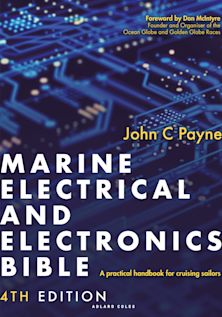
If you are headed somewhere remote consider the need to expand your knowledge base or have an information resource on board. Why not get a copy of my book The Marine and Electrical and Electronics Bible 4th Edition. By and for yachties, with everything from batteries and charging, solar and wind, diesel engines and marine electronics and so much more. Your complete systems guide. 650 pages of practical advice. In Australia and New Zealand order a copy through Boat Books. UK and European boats can buy the UK Edition Here. US and Canadian boats can get the US Edition Order Here. Marine systems are my profession so let me help you. By a liveaboard boat owner for other boat owners

East Australian Current
Queensland Sailing – Summary
The East Australian Current is a defining feature of offshore sailing along the Queensland coast, shaping sea state, vessel speed, and routing decisions from Fraser Island to the NSW border. Its strong, coherent flow can provide significant advantages for southbound yachts, but it can also create steep, uncomfortable seas when wind opposes the current. Understanding the EAC’s structure, seasonal behaviour, and interaction with local wind patterns allows sailors to plan safer, more efficient passages. With accurate oceanographic data and a conservative approach to wind‑against‑current conditions, skippers can navigate Queensland’s offshore waters with confidence and prepare effectively for the more complex EAC system further south. The East Australian Current Queensland Sailing and all you need to know.