Aruba Yacht Cruising Guide
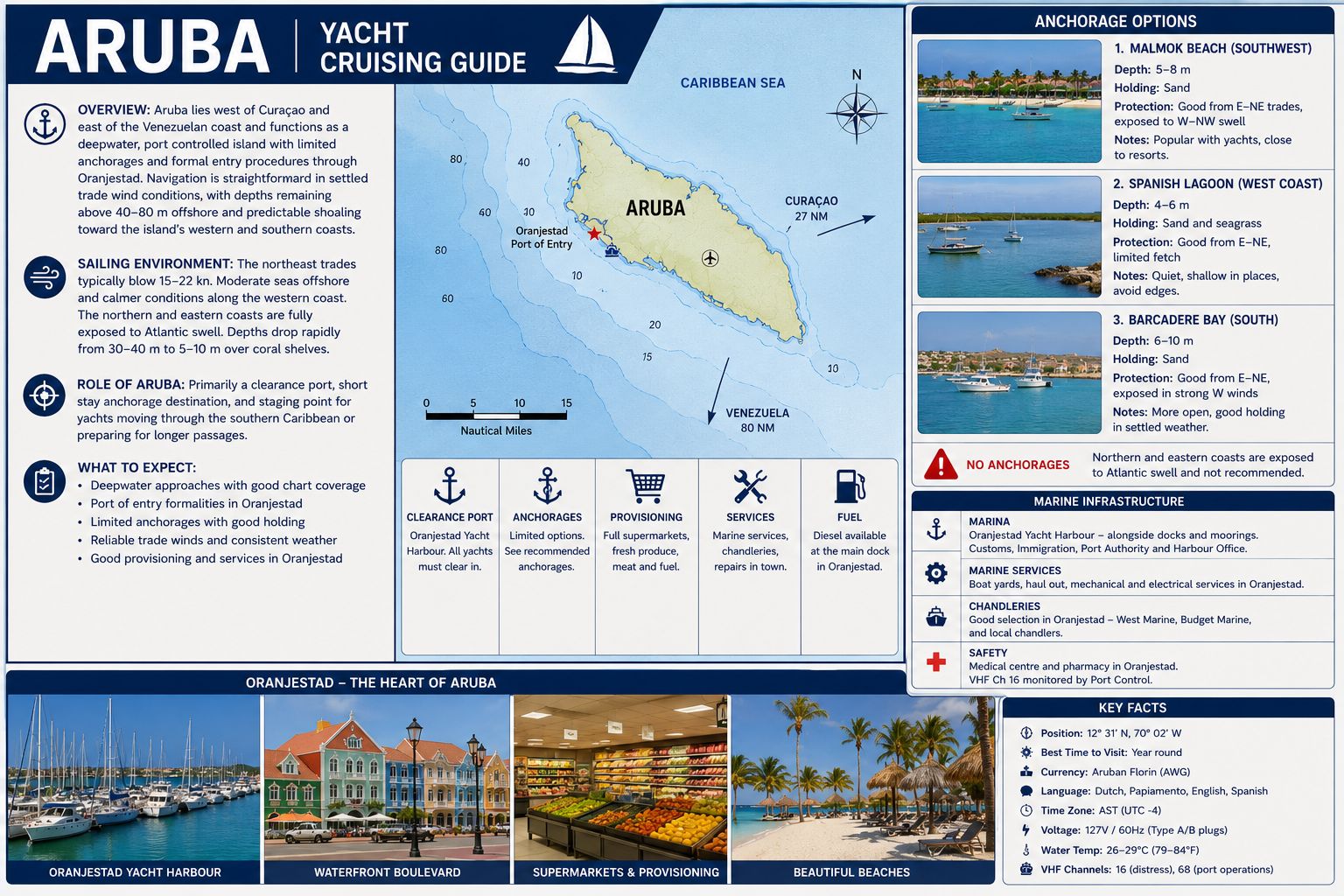
Aruba Yacht Cruising Guide. Aruba lies west of Curaçao and east of the Venezuelan coast and functions as a deepwater, port‑controlled island with limited anchorages and formal entry procedures through Oranjestad. Navigation is straightforward in settled trade‑wind conditions, with depths remaining above 40–80 m offshore and predictable shoaling toward the island’s western and southern coasts. The island is used primarily as a clearance port, short‑stay anchorage destination, and staging point for yachts moving through the southern Caribbean or preparing for longer passages.
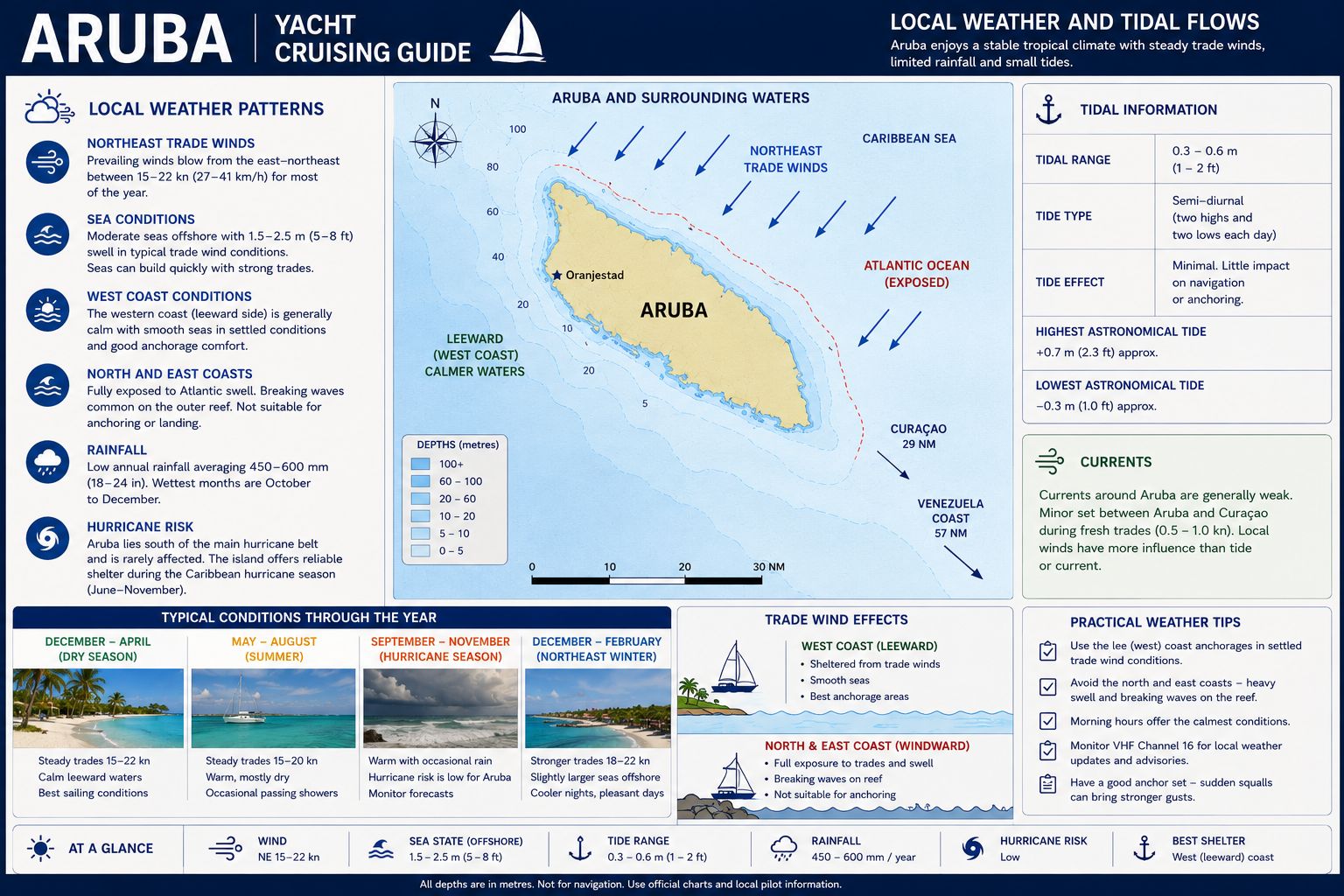
The sailing environment is shaped by the northeast trades, typically 15–22 kn, with moderate seas offshore and calmer conditions along the western coast. The northern and eastern coasts are fully exposed to Atlantic swell, with depths dropping rapidly from 30–40 m to 5–10 m over coral shelves. Marine infrastructure is moderate, with shore access concentrated around Oranjestad and limited anchorage options elsewhere. Aruba’s role is operationally focused on clearance, provisioning, and short‑term shelter.
Aruba Yacht
Cruising Guide - Approaches
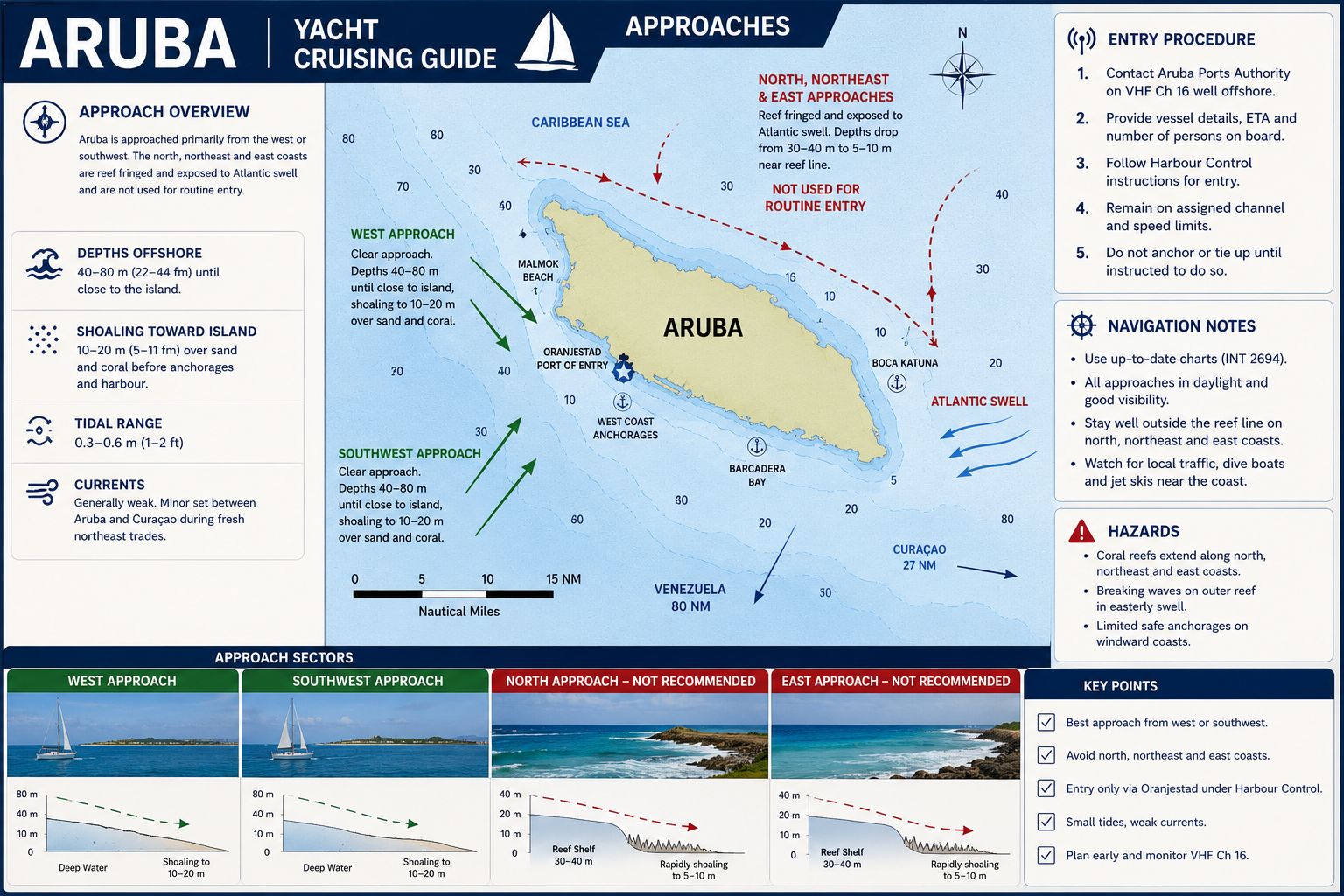
Approaches from the west and southwest are clear, with depths above 40–80 m until close to the island, shoaling to 10–20 m over sand and coral before reaching Oranjestad or the western anchorages. Approaches from the north, northeast, and east are reef‑fringed and exposed to Atlantic swell, with depths dropping from 30–40 m to 5–10 m near the reef line; these sectors require daylight and visual navigation and are not used for routine entry. Entry into Oranjestad requires contacting Aruba Ports Authority on VHF 16 and following harbour‑control instructions. Tidal range is small at 0.3–0.6 m, and currents are weak, with minor set between Aruba and Curaçao during fresh trades.
Aruba Yacht
Cruising Guide - Anchorage
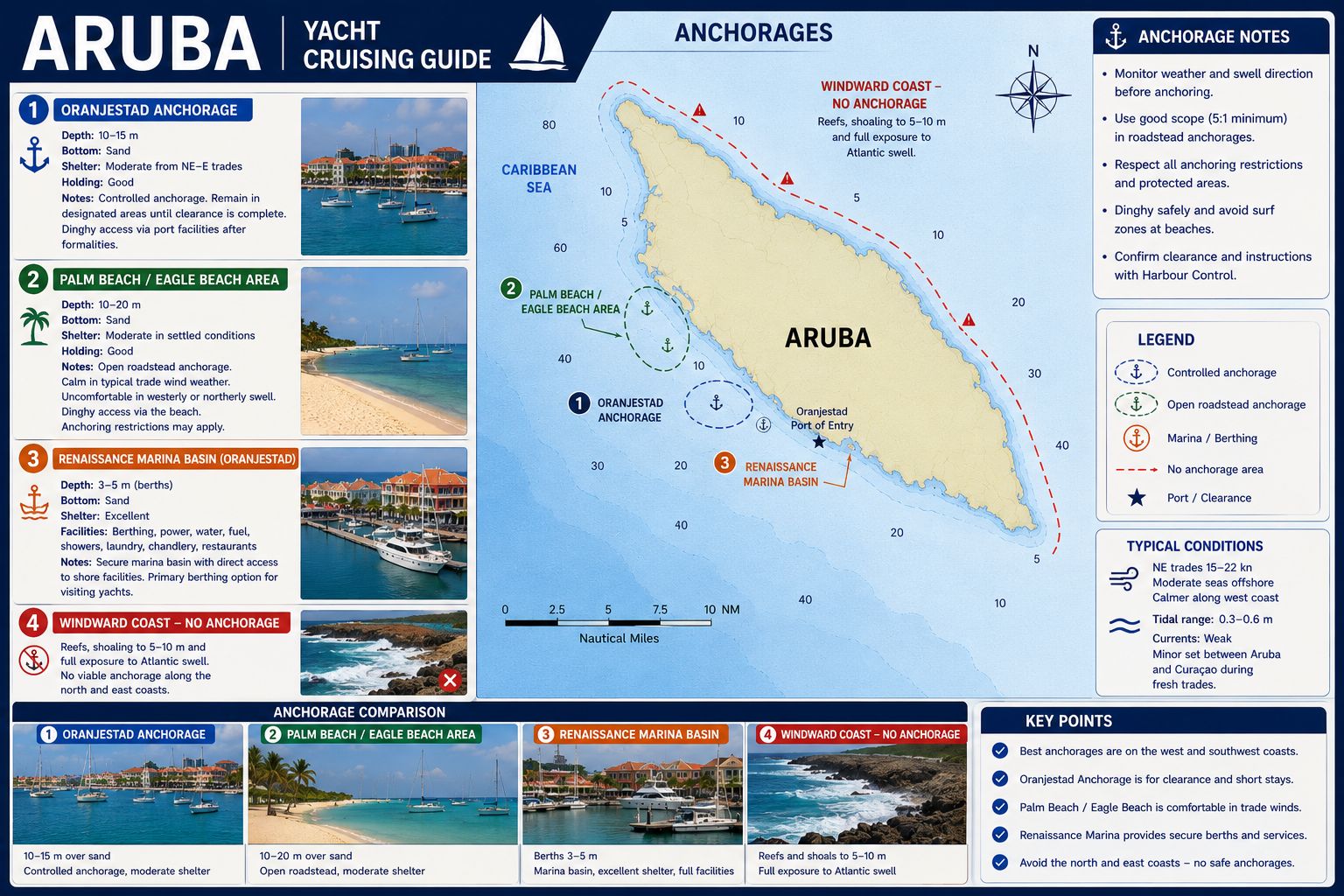
Oranjestad Anchorage. Oranjestad provides 10–15 m over sand with moderate shelter from the prevailing trades. The anchorage is controlled, and vessels must remain in designated areas until clearance is complete. Holding is generally reliable, and dinghy access is via the port facilities once formalities are completed.
Palm Beach / Eagle Beach Area. The western beaches offer 10–20 m over sand with moderate shelter in settled conditions. These open‑roadstead anchorages are calm in typical trade‑wind weather but become uncomfortable during westerly or northerly swell. Dinghy access is via the beach, and anchoring restrictions may apply depending on local regulations.
Renaissance Marina Basin (Oranjestad). The marina basin provides berths with depths of 3–5 m, offering secure shelter and direct access to shore facilities. This is the primary berthing option for visiting yachts requiring fuel, water, or extended stays.
Windward Coast. The northern and eastern coasts offer no viable anchorage due to reefs, shoaling to 5–10 m, and full exposure to Atlantic swell.
Aruba Yacht
Cruising Guide - Marina
Facilities
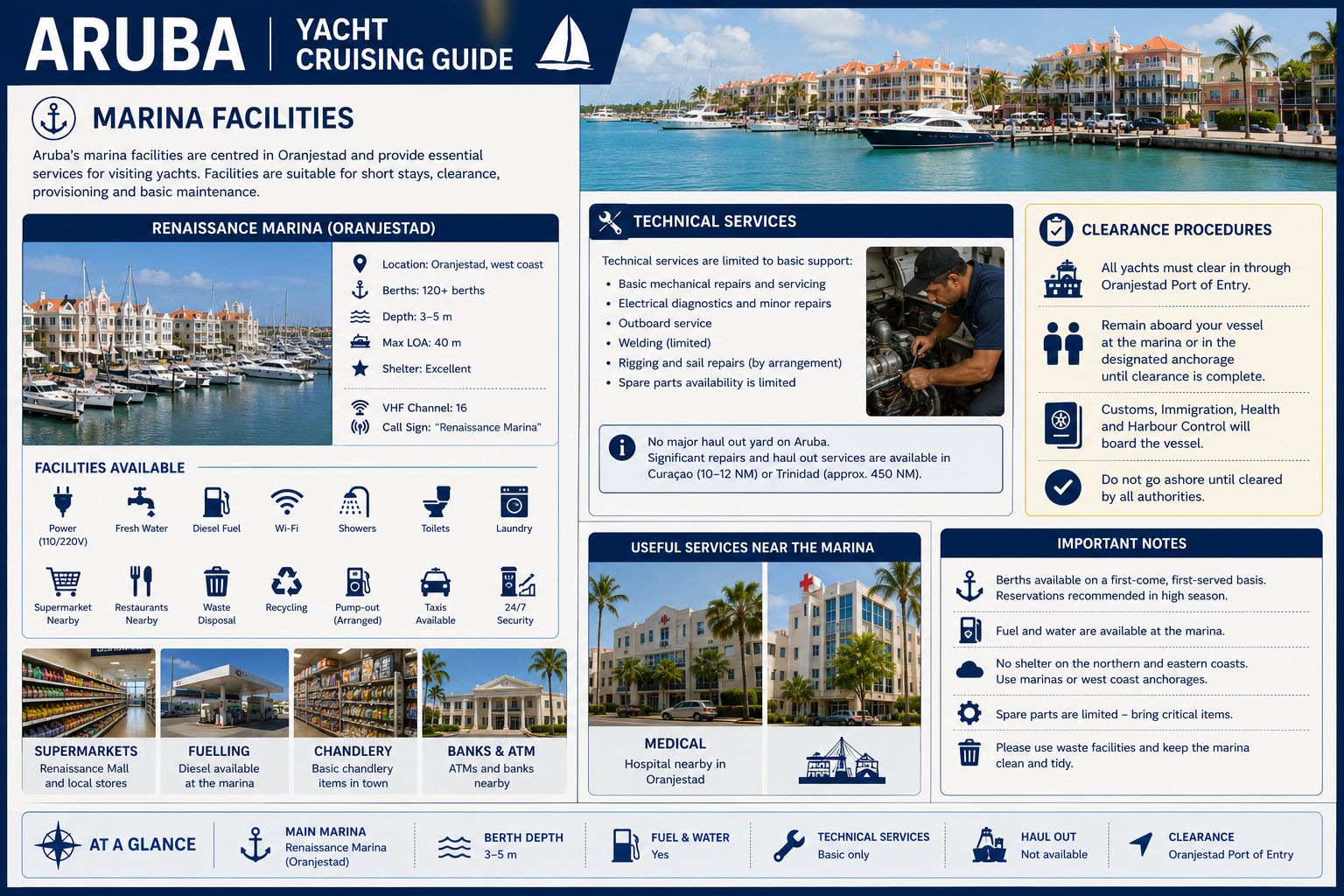
Aruba hosts moderate marina facilities centred around Oranjestad, including berths with 3–5 m depths, fuel, water, power, and shore access. Technical services are limited to basic mechanical and electrical support. There is no major haul‑out yard on the island; significant repairs are handled in Curaçao or Trinidad. Clearance procedures require remaining aboard until customs and immigration formalities are complete.
Aruba Yacht
Cruising Guide - Local Weather
Weather in Aruba follows the southern Caribbean pattern, with northeast trades between 15–22 kn and moderate seas offshore. The western coast is calm in settled conditions, while the northern and eastern coasts are fully exposed to swell. Rainfall is low and seasonal. Aruba lies outside the main hurricane belt, offering reliable shelter during the season, though caution remains essential.
Aruba Yacht
Cruising Guide - Provisioning
Aruba has well‑stocked supermarkets in Oranjestad offering full provisioning, including fresh produce, meat, dairy, frozen goods, beverages, and packaged staples. Stock levels are reliable and suitable for long‑range provisioning.
Supermarkets. The Super Food Plaza is popular and located in Bubali between Oranjestad and Palm Beach area. Other supermarkets include Cen’s Supermarket, Ling and Sons which have a good range and New Morning Supermarket.
Markets. The Santa Rosa farmers market is the first Sunday every month. Fresh‑produce vendors operate in Oranjestad, supplying fruit, vegetables, herbs, and local staples. Availability is consistent and suitable for routine provisioning.
Seafood. You can get seafood from Daily Fish and from the trawlers and they are a fair distance away from town. Fresh fish is available from local fishermen in Oranjestad, depending on weather and catch.
Aruba Yacht Cruising Guide - Local Cuisine
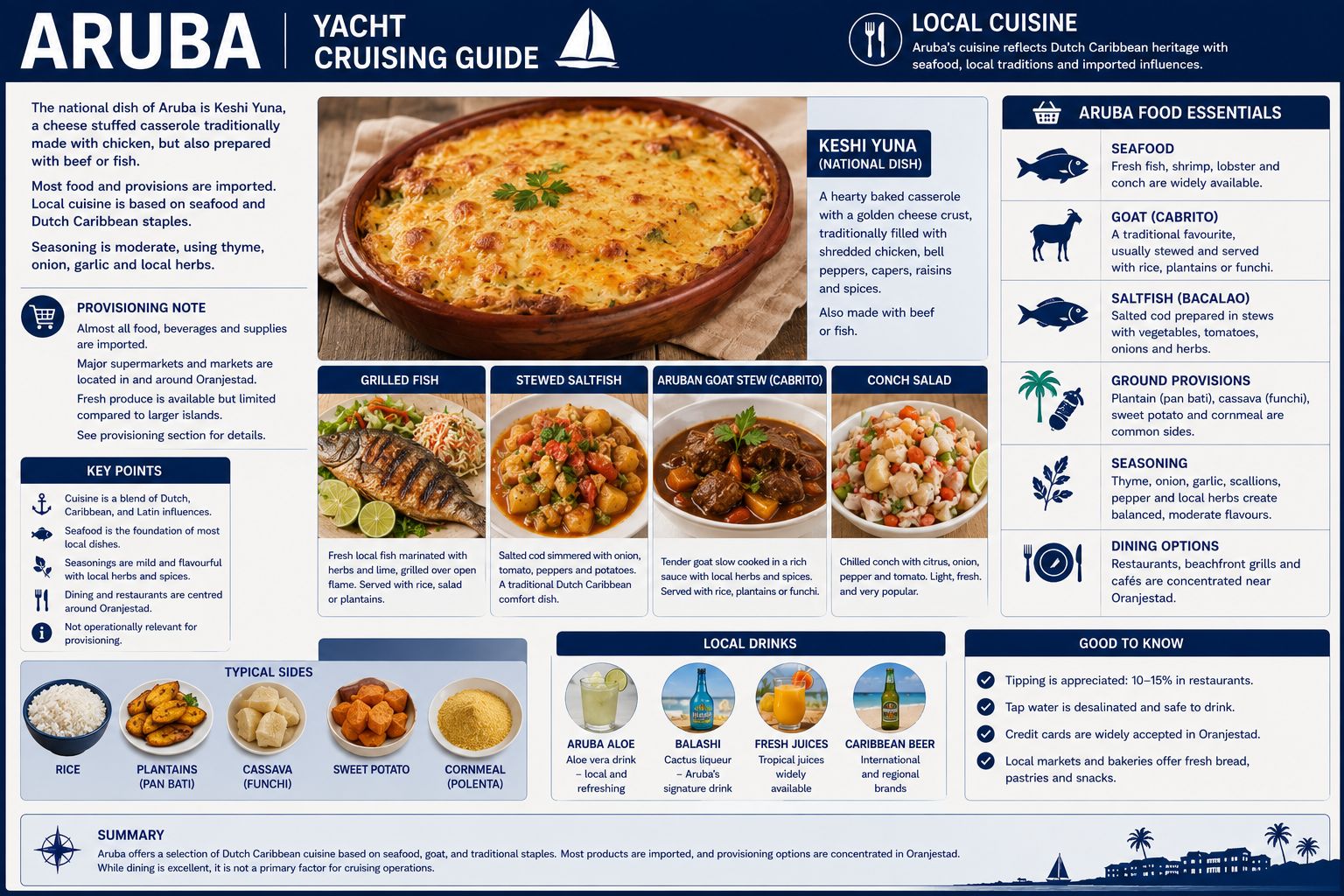
The national dish of Aruba is Keshi Yuna which is a cheese stuffed casserole. Most food and provisions are imported. Local cuisine is based on seafood and Dutch‑Caribbean staples. Grilled fish, stewed saltfish, and goat dishes are common, served with rice, plantains, or ground provisions. Seasoning is moderate, using thyme, onion, garlic, and local herbs. Dining options are concentrated near Oranjestad but are not operationally relevant for provisioning.
Aruba Yacht
Cruising Guide Fuel Supplies
Fuel is available at marinas in Oranjestad, where diesel and petrol can be taken directly at marina fuel docks. Supply is reliable, and larger volumes can be arranged through marina offices.
Aruba Yacht
Cruising Guide Water Supplies
Potable water is available at marina docks through hose connections. Yachts at anchor take water by jerry can. Water makers reduce reliance on shore supply but are not essential for short stays.
Mechanical and Electrical Repairs
Resource
If you are headed somewhere remote consider the need to expand your knowledge base or have an information resource on board. Why not get a copy of my book The Marine and Electrical and Electronics Bible 4th Edition. By and for yachties, with everything from batteries and charging, solar and wind, diesel engines and marine electronics and so much more. Your complete systems guide. 650 pages of practical advice. Order a copy through Barnes and Noble or check out Amazon. Marine systems are my profession so let me help you. By a liveaboard boat owner for other boat owners. UK based boats can order here


Aruba Yacht
Cruising Guide Marine Services
Marine services include basic mechanical and electrical support, with parts and repairs available through local operators. There are no large haul‑out yards on the island; major repairs are handled in Curaçao or Trinidad.
Aruba Yacht
Cruising Guide - Local Customs
Local behaviour is courteous and direct. Respect for port‑control procedures, controlled dinghy speeds near shore, and proper waste disposal are expected. Clearance rules are strictly enforced, including remaining aboard until immigration and customs formalities are complete.
Aruba Yacht
Cruising Guide - Summary
Aruba provides deepwater approaches, controlled anchorages with 10–20 m depth profiles, and moderate provisioning and marine services. Oranjestad serves as the operational centre, with marina berths and formal entry procedures. Navigation is straightforward in settled conditions, and operational demands are modest for a self‑sufficient yacht. Aruba Yacht Cruising Guide for all you need to know