What is Engine Hydrolock
What is Engine Hydrolock? Hydrolock is also known as hydraulic lock, is a serious and often catastrophic event in marine diesel engines. It occurs when incompressible fluid, usually seawater but sometimes coolant or fuel, enters one or more cylinders and prevents the piston from completing its stroke. The sudden obstruction can bend connecting rods, crack pistons, blow head gaskets, or destroy the starter motor.
Because yachts and small marine diesels operate in an environment where seawater is introduced into the exhaust system by design, the risk of hydrolock is significantly higher than in automotive engines. Understanding how hydrolock happens, how to detect it early, and how to prevent it is fundamental for safe and reliable engine operation.
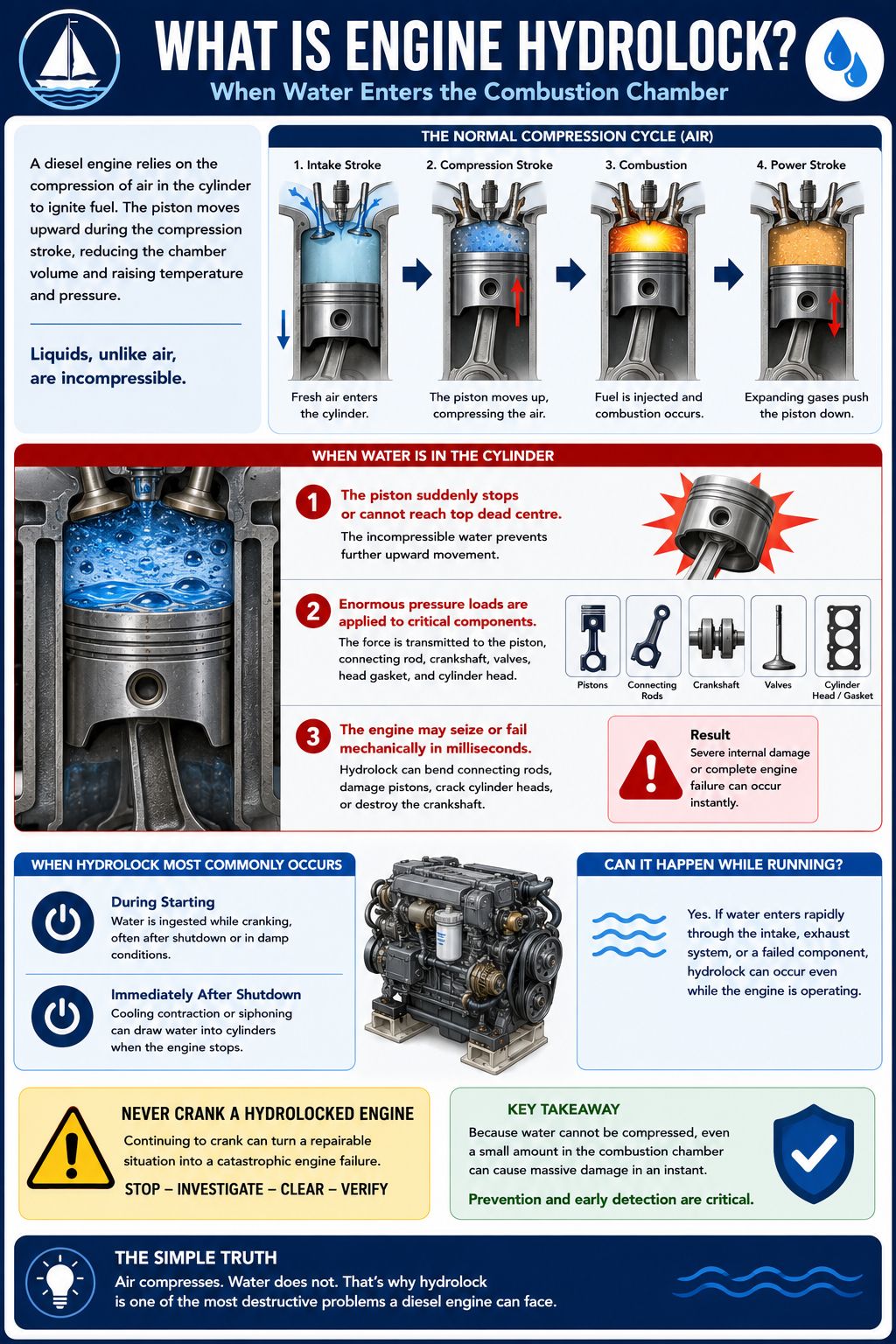
What is Engine Hydrolock?
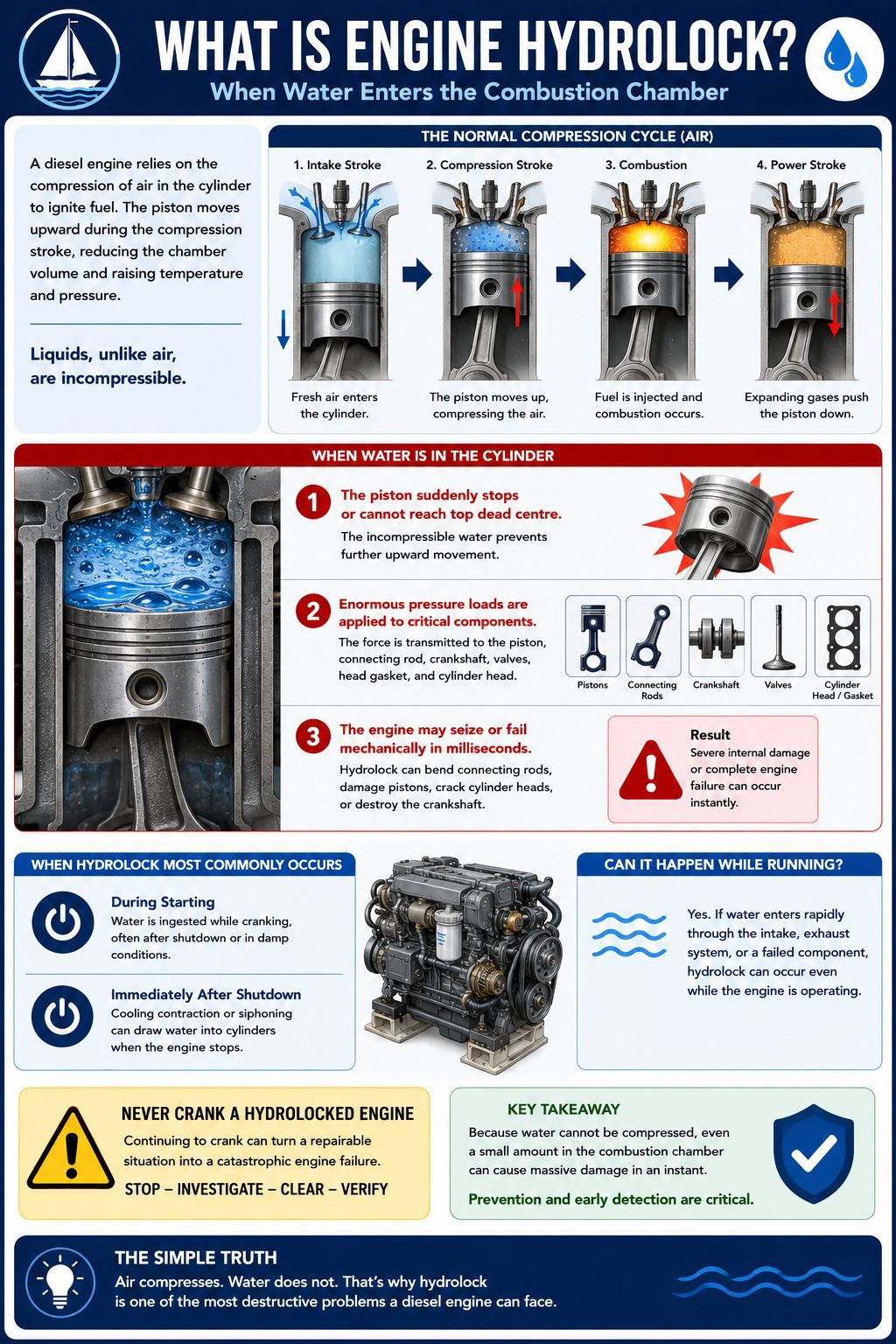
A diesel engine relies on the compression of air in the cylinder to ignite fuel. The piston moves upward during the compression stroke, reducing the chamber volume and raising temperature and pressure. Liquids, unlike air, are incompressible. If water is present in the combustion chamber:
- The piston suddenly stops or cannot reach top dead centre.
- Enormous pressure loads are applied to the piston, connecting rod, crankshaft, valves, and cylinder head.
- The engine may seize or fail mechanically in milliseconds.
Hydrolock almost always occurs during starting or immediately after shutdown, but can occur during operation if water ingress is rapid.
Primary Causes of Hydrolock in Diesel Engines
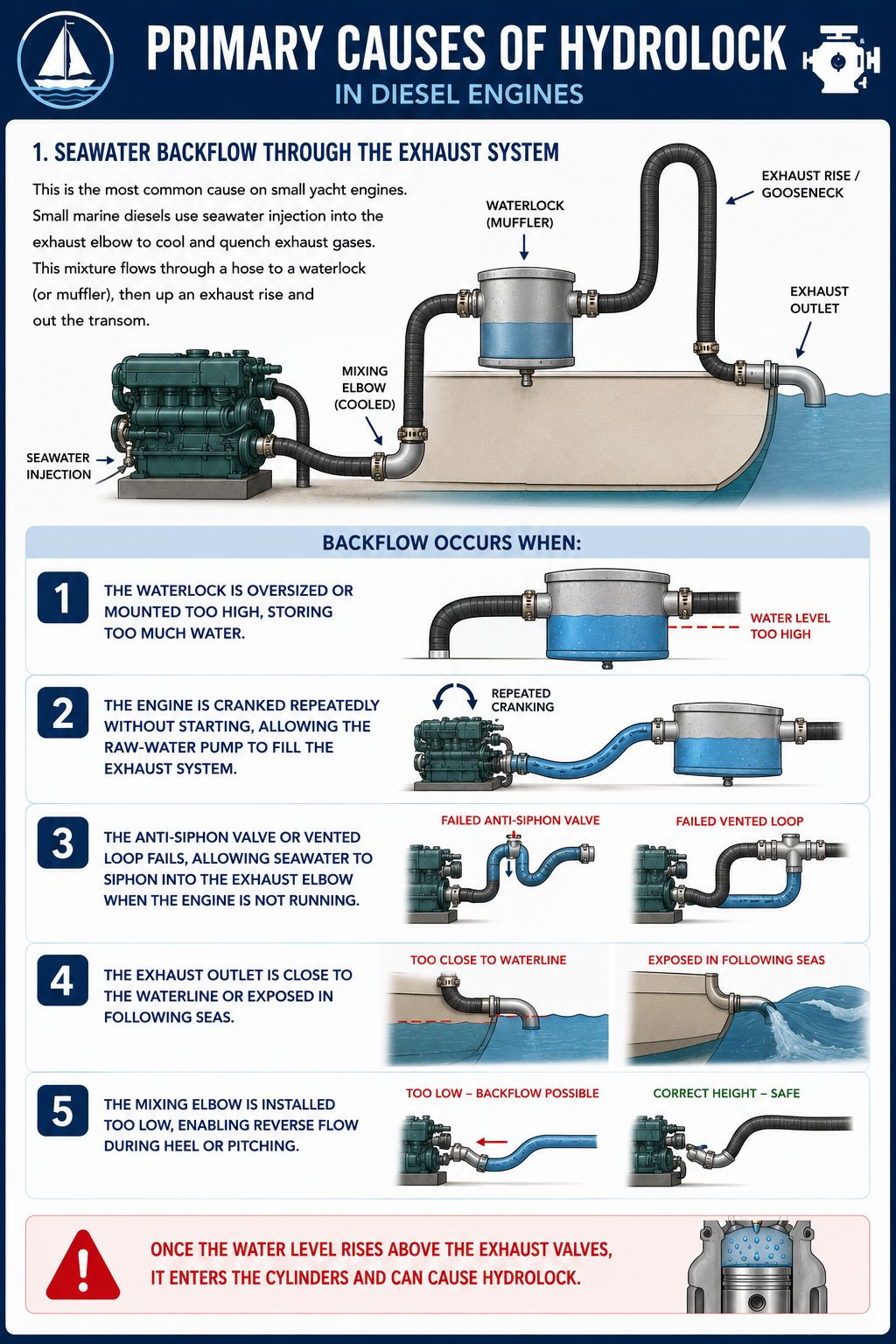
Seawater Backflow Through the Exhaust System. This is the most common cause on small yacht engines. Small marine diesels use seawater injection into the exhaust elbow to cool and quench exhaust gases. This mixture flows through a hose to a waterlock (or muffler), then up an exhaust rise and out the transom. Backflow occurs when:
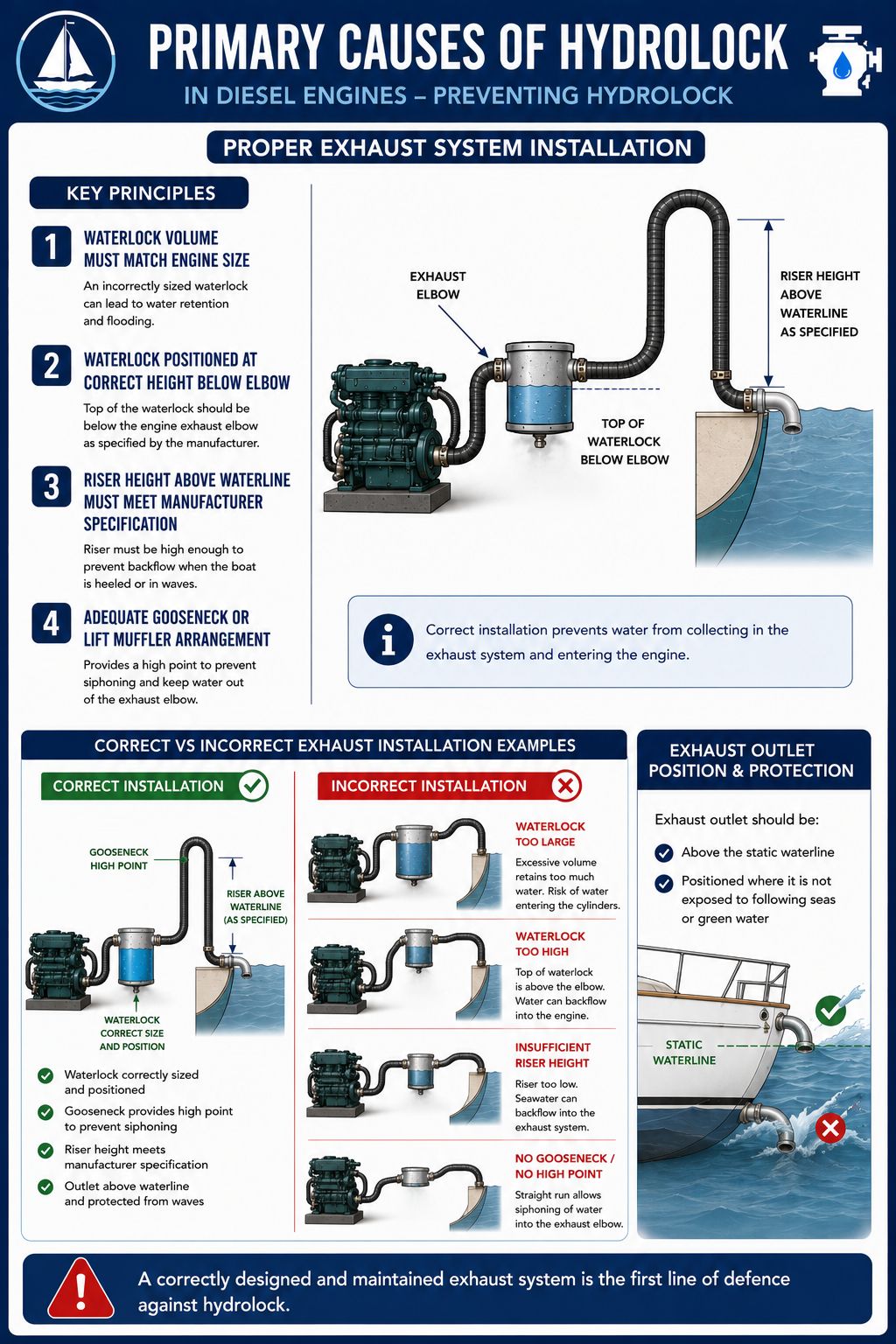
- The waterlock is oversized or mounted too high, storing too much water.
- The engine is cranked repeatedly without starting, allowing the raw-water pump to fill the exhaust system.
- The anti-siphon valve/vented loop fails, allowing seawater to siphon into the exhaust elbow when the engine is not running.
- The exhaust outlet is close to the waterline or exposed in following seas.
- The mixing elbow is installed too low, enabling reverse flow during heel or pitching.
Once the water level rises above the exhaust valves, it enters the cylinders.
Cooling System Failures
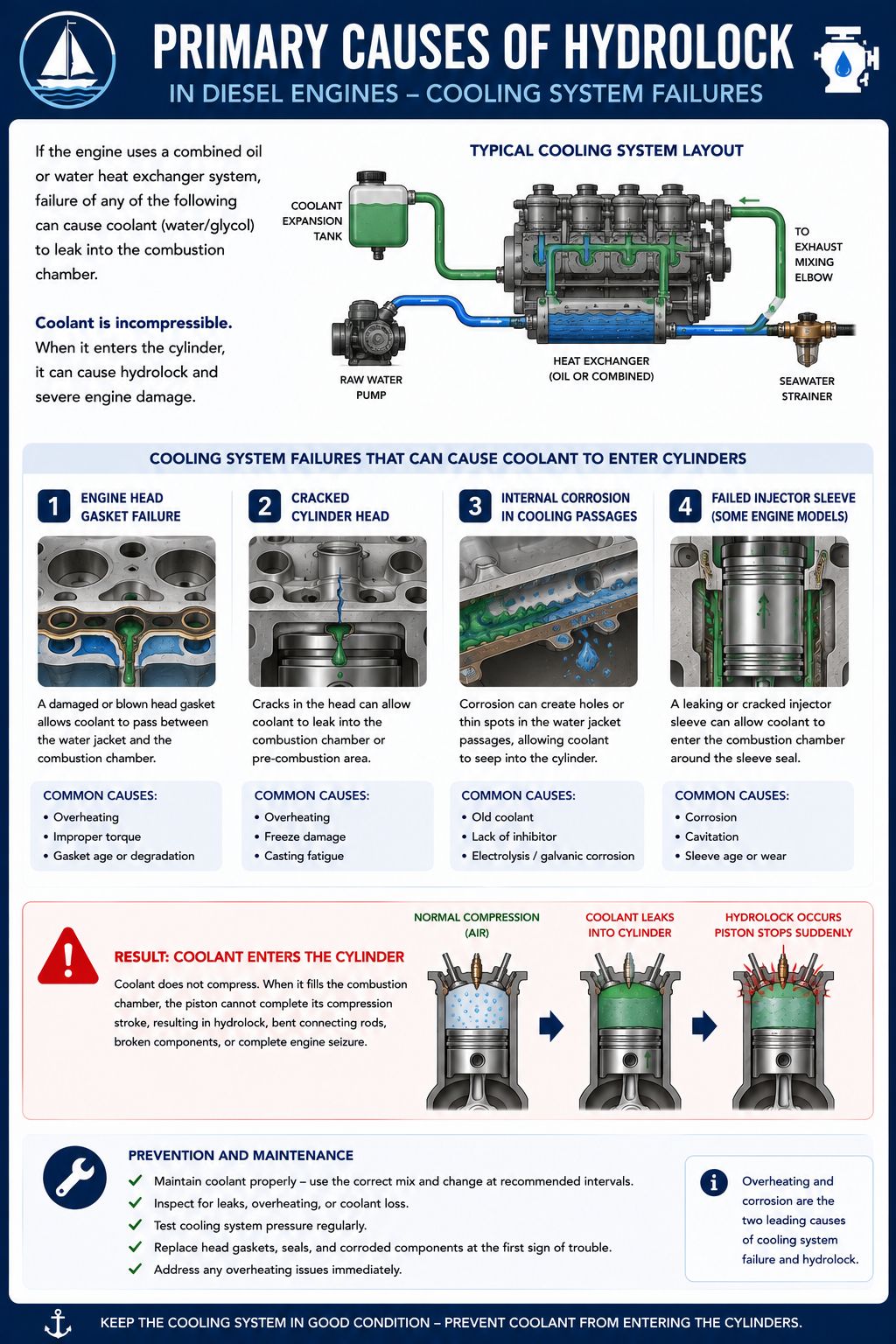
If the engine uses a combined oil/water heat exchanger system, failure of the following:
- Head gasket
- Cracked cylinder head
- Internal corrosion in cooling passages
- Failed injector sleeve (common on some engines)
It can lead to coolant being forced directly into the cylinder.
Ingress Through Air Intake. Less common but possible:
- Heavy seas washing over deck
- Inadequate air intake routing
- Failed air intake water traps
Fuel System Faults. Excessive fuel delivery, such as from a stuck injector, can theoretically cause hydrolock, though diesel fuel is more compressible than water and usually causes "runaway" symptoms rather than lock.
Mechanical
and Electrical Repairs Resource
If you are headed somewhere remote consider the need to expand your knowledge base or have an information resource on board. Why not get a copy of my book The Marine and Electrical and Electronics Bible 4th Edition. By and for yachties, with everything from batteries and charging, solar and wind, diesel engines and marine electronics and so much more. Your complete systems guide. 650 pages of practical advice. In Australia and New Zealand order a copy through Boat Books. UK and European boats can buy the UK Edition Here. US and Canadian boats can get the US Edition Order Here. Marine systems are my profession so let me help you. By a liveaboard boat owner for other boat owners

How Hydrolock Happens Step-by-Step
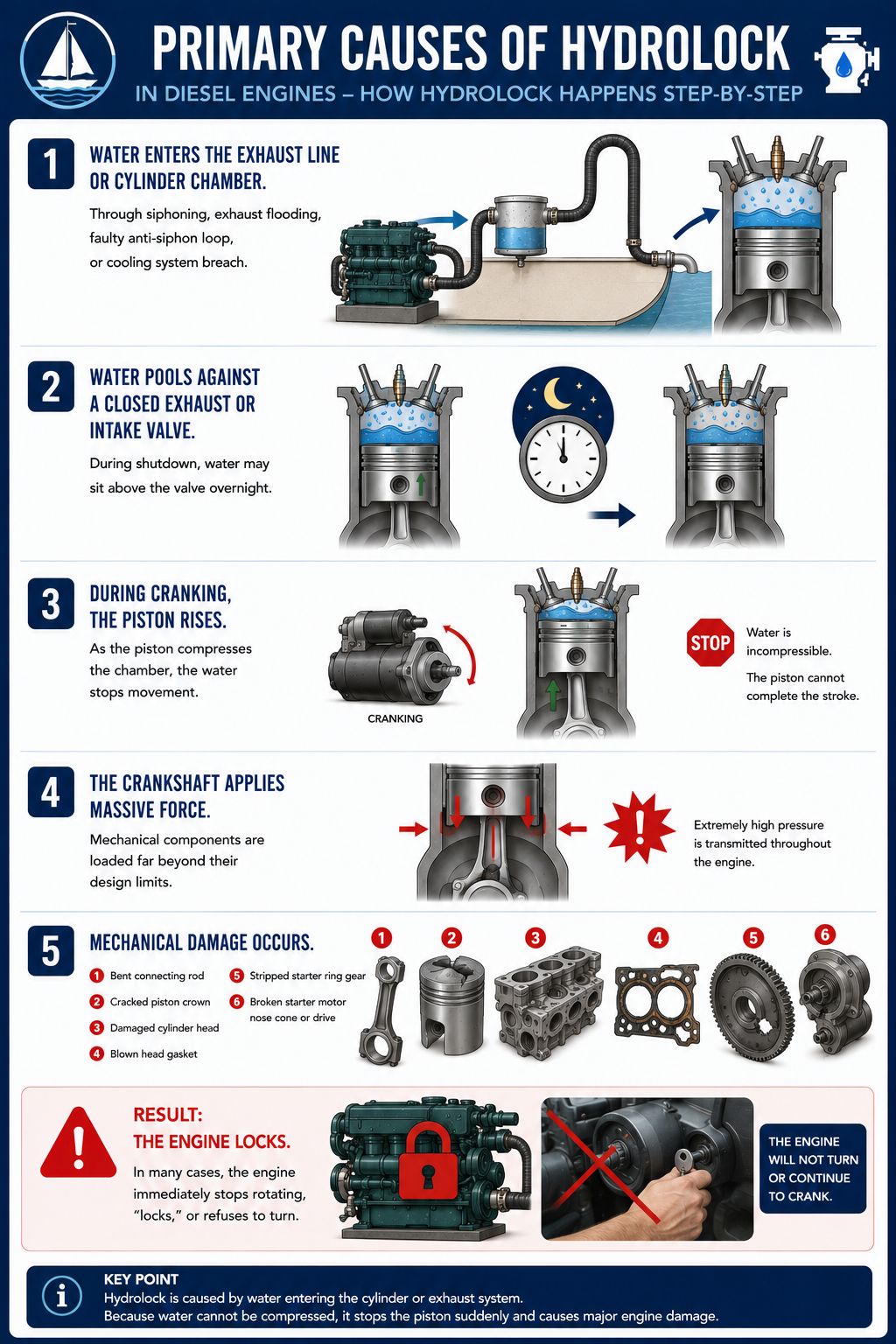
Water enters the exhaust line or cylinder chamber. Through siphoning, exhaust flooding, faulty anti-siphon loop, or cooling system breach.
Water pools against a closed exhaust or intake valve. During shutdown, water may sit above the valve overnight.
During cranking, the piston rises. As the piston compresses the chamber, the water stops movement.
The crankshaft applies massive force. Mechanical components are loaded far beyond their design limits.
- Mechanical damage occurs
- Bent connecting rod
- Cracked piston crown
- Damaged cylinder head
- Blown head gasket
- Stripped starter ring gear
- Broken starter motor nose cone or drive
In many cases, the engine immediately stops rotating, “locks,” or refuses to turn.
Symptoms of Hydrolock
Symptoms During Starting
- Engine cranks briefly then stops abruptly
- Starter struggles, stalls, or clunks
- Unusually fast cranking that suddenly stops
- No compression on one or more cylinders after the event
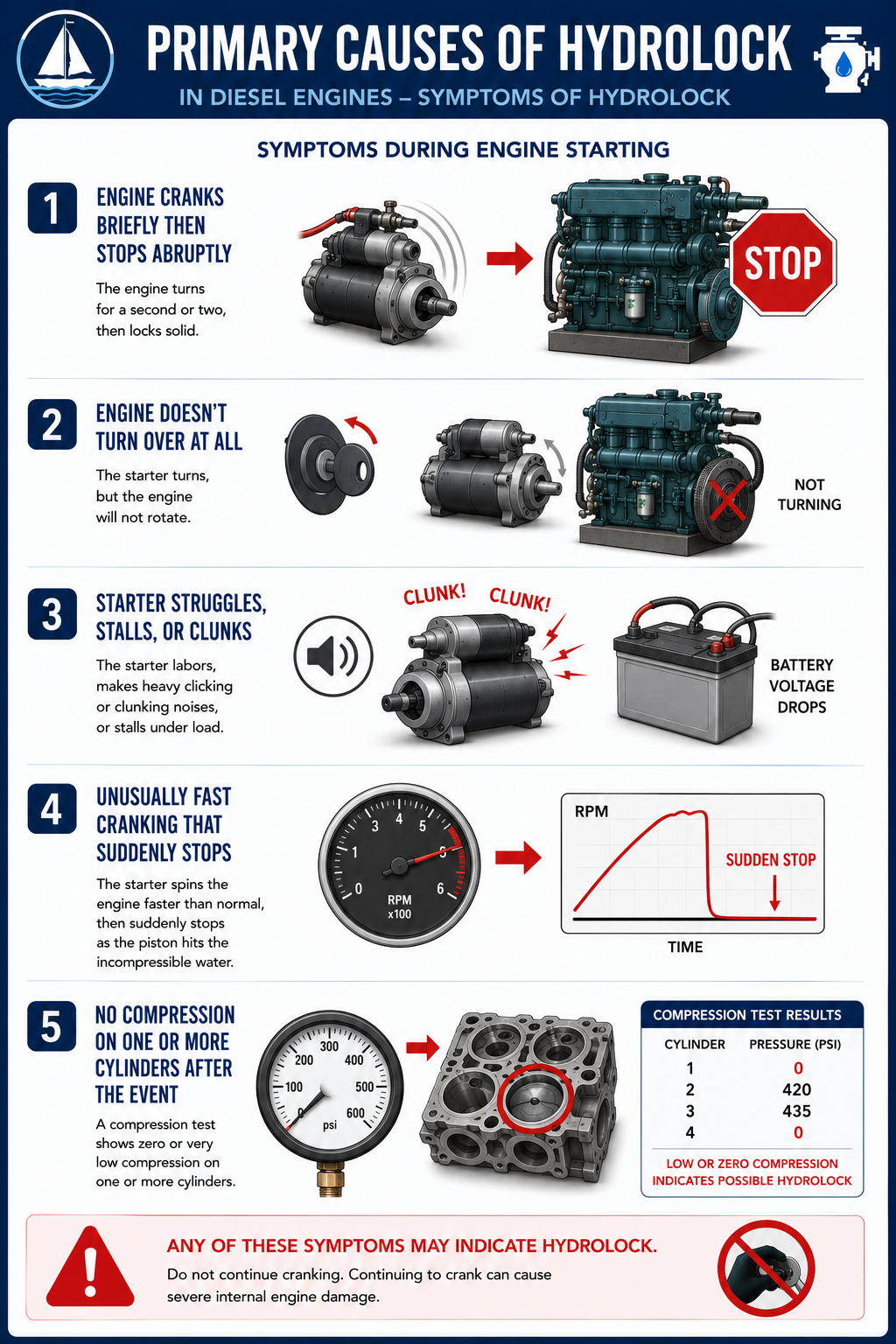
Symptoms of Hydrolock
Symptoms After Running. If hydrolock occurs during operation:
- Immediate engine seizure
- Sudden power loss
- Loud mechanical knock before stopping
- White steam from exhaust prior to lock (if water ingress is progressive)
Visual Indicators
- Water sprayed from injectors/plugs upon removal
- Water in cylinders visible via borescope
- Water or emulsified oil in the sump or breather
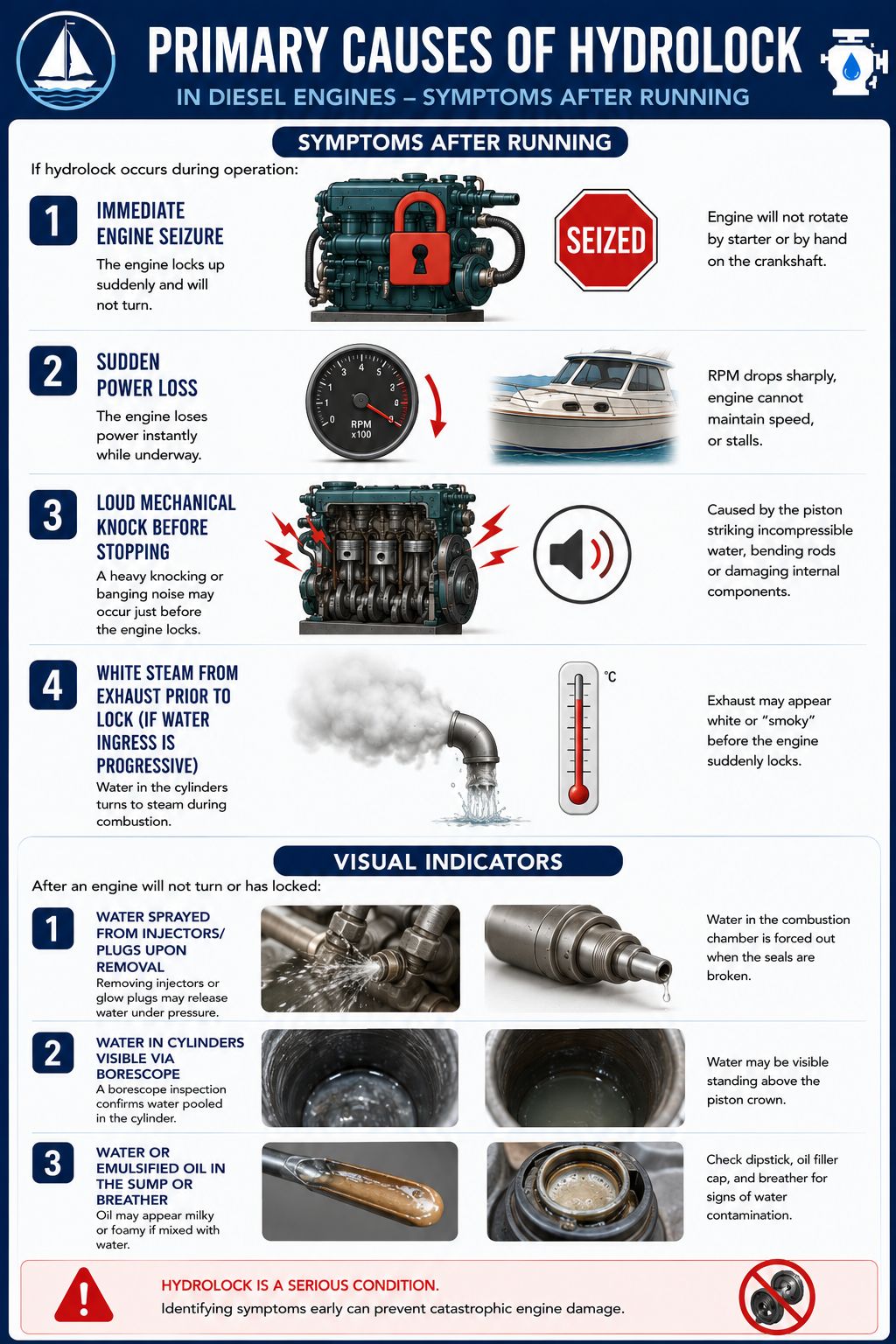
Immediate Actions If Hydrolock Is Suspected
Do not attempt to crank the engine again. This is critical. Isolate Water Source. Before clearing the cylinders:
- Close raw-water seacock
- Inspect anti-siphon valve for blockage
- Check exhaust waterline routing
Remove Injectors or Glow Plugs. This allows pressure release and gives access for water evacuation.
Rotate the Engine by Hand. Using a breaker bar:
- Rotate slowly in normal direction
- Water will eject through injector holes
- If the crankshaft cannot be moved by hand, internal damage may already exist
Pump Out, Drain, and Dry
- Use absorbent wicks or compressed air to remove remaining water
- Apply fogging oil to cylinder walls
- Change the lube oil and filter immediately
If contamination occurred, repeat oil change after 1–2 hours of running
Assessing and Repairing Damage
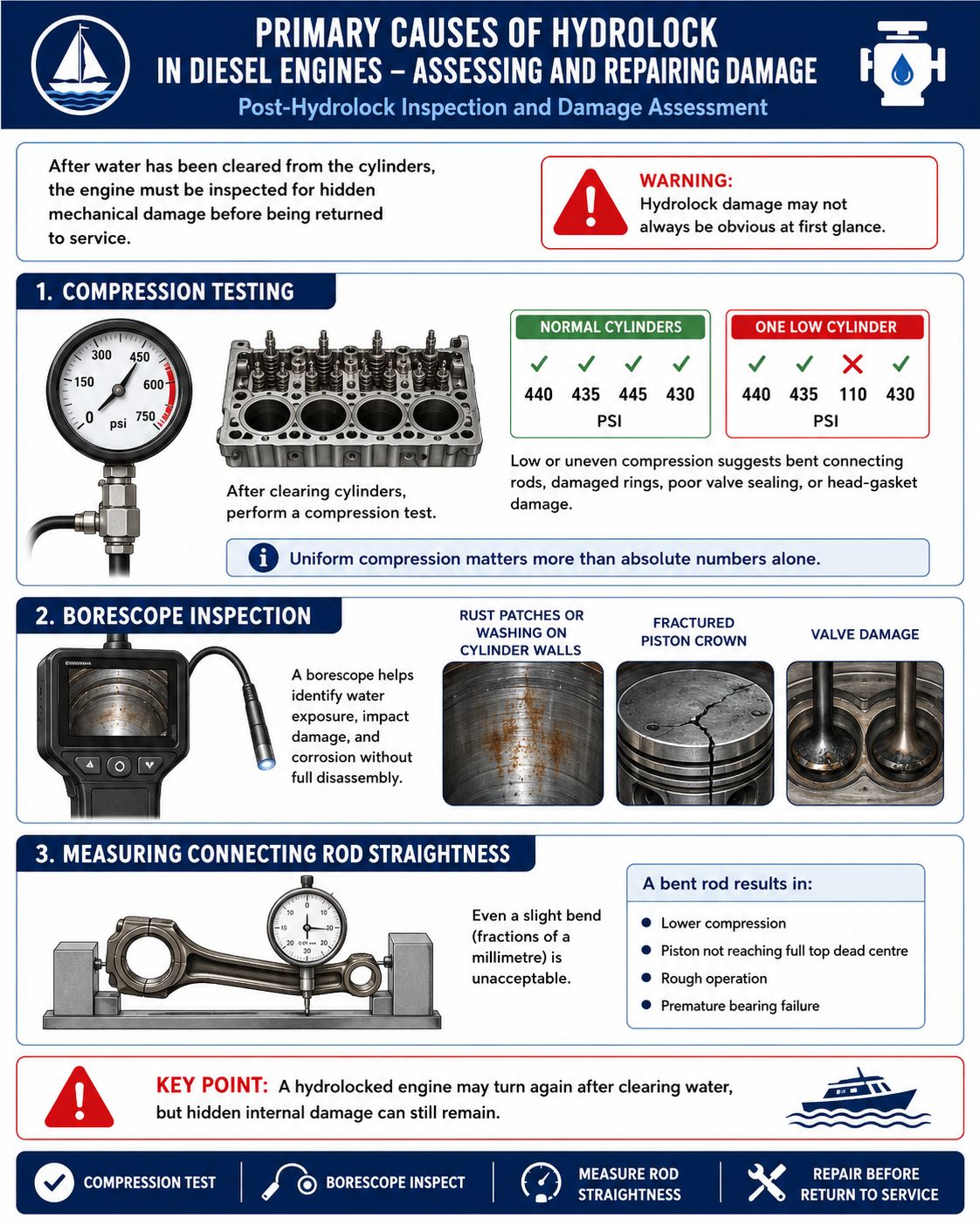
Compression Testing. After clearing cylinders:
- Low or uneven compression suggests bent rods or damaged rings.
Borescope Inspection. Check for:
- Rust patches or washing on cylinder walls
- Fractured piston crowns
- Valve damage
Measuring Connecting Rod Straightness. Even a slight bend (fractions of a millimetre) is unacceptable. A bent rod results in:
- Lower compression
- Piston not reaching full top dead centre
- Rough operation
- Premature bearing failure
Inspecting the Starter. The starter may show:
- Bent pinion
- Cracked nose casting
- Sheared drive components
Rebuilding. Depending on the extent of damage:
- Replace bent rods
- Hone or re-sleeve damaged cylinders
- Replace pistons
- Replace head gasket
- Remove, clean, or rebuild cylinder head if valves were struck
Severe cases may require a complete overhaul or engine replacement
Preventing Hydrolock
Proper Exhaust System Installation
Key principles:
- Waterlock volume must match engine size
- Waterlock positioned at correct height below elbow
- Riser height above waterline must meet manufacturer specification
- Adequate gooseneck or lift muffler arrangement
Exhaust outlet ideally above waterline and protected from following seas
Anti-Siphon Valve Maintenance
- Clean and test the valve every few months
- Ensure the vent line is unobstructed
- Mount the vented loop at the highest point recommended
Cranking Procedures
- Avoid long or repeated cranking attempts
- Close raw-water seacock during troubleshooting
- Open seacock only once engine starts
Monitor Coolant Loss. Persistent coolant loss may indicate internal leaks into cylinders.
Check After Heavy Seas. If waves have submerged the exhaust outlet:
- Inspect waterlock level
- Check for water in cylinders before starting
Regular Inspection of Exhaust Elbow
- Replace elbows every 5–7 years
- Look for corrosion, scale, and blockage


What is Engine Hydrolock
Hydrolock is one of the most destructive failure modes in a marine diesel engine. Because small yacht diesels inherently draw seawater into their exhaust systems, the risk is always present, especially when proper installation and maintenance procedures are overlooked. Early recognition and immediate action can prevent severe internal damage, while correct exhaust design, anti-siphon system upkeep, and cautious starting practices can eliminate most hydrolock events entirely. For yacht owners and marine technicians, understanding hydrolock is critical for ensuring engine longevity and maintaining vessel safety. What is Engine Hydrolock? Read and understand what it is.