Sailing in the Bahamas
Sailing in the Bahamas is one of the most rewarding passages in the western Atlantic, offering a blend of accessible cruising, turquoise shallows, and island‑hopping freedom that few destinations can match. Just 50 miles from Florida’s east coast, the first cays are close enough for a modest sailboat, yet the archipelago opens into more than 700 islands scattered across 100,000 square miles of warm, clear water. The crossing itself is a rite of passage: timing the Gulf Stream, choosing the right weather window, and watching the deep Atlantic shift suddenly into luminous Bahamian blue.
The Bahamas consist of multiple shallow banks, cays and island chains extending from the northwest near Florida to the southeast toward the Turks and Caicos. Navigation is dominated by extensive banks with depths commonly between 2–6 m, shifting sand bores, coral heads and narrow cuts between ocean and bank waters. Visual navigation in good light is essential. Most anchorages are on the banks in sand patches with variable protection depending on wind direction. Tidal range is generally 0.6–1.0 m with strong tidal streams in cuts between the ocean and the banks. Facilities vary significantly by island group, with Nassau and Freeport offering the most complete services
Sailing in the Bahamas - Approaches
Approaches to the Bahamas vary by island group but share common characteristics: shallow banks, coral heads, shifting sand bars and narrow cuts. Depths on the banks range from 2–6 m, with isolated coral heads rising close to the surface. Ocean approaches are deep until close to the reef line, where depths rise abruptly from over 500 m to less than 10 m.
Tidal and Current Factors
- Tidal range 0.6–1.0 m.
- Tidal streams in cuts can exceed 3 kn, especially in the Exumas and Eleuthera.
- Wind‑driven set is common on the banks during sustained easterlies.
Regional Notes
- Northwest Providence Channel: Deep‑water approach to Nassau and Freeport with no significant offshore hazards.
- Exuma Sound to Exuma Bank Cuts: Narrow, steep‑to cuts with strong tidal flow and standing waves in wind‑against‑tide conditions. Depths vary from 3–10 m inside the cuts.
- Abacos: Approaches require careful attention to shifting sand bars and narrow channels with depths 2–4 m.
- Southern Bahamas: Deeper approaches but still dominated by reef systems and shoal patches.
Good overhead light is essential for identifying coral heads and sand bores. Electronic charts may not reflect recent changes in sand movement.
Sailing in the Bahamas
- Anchorage
Anchoring throughout the Bahamas is generally in sand with depths between 2–8 m depending on location. Holding is usually good in clean sand but poor in grass or scoured areas.
Exposure Factors
- Many anchorages are open‑roadstead style with limited protection from swell.
- Cold fronts in winter bring strong westerlies that affect normally protected eastern anchorages.
- Cuts between ocean and bank waters can produce surge.
Regional Examples
- Exumas: Numerous sand‑bottom anchorages in 3–6 m. Good holding but exposed to shifting winds.
- Abacos: More enclosed anchorages with depths 2–5 m.
- Berry Islands: Sand anchorages in 4–8 m with moderate protection.
Sailing in the
Bahamas - Entry Formalities
The Bahamas require clearance at designated ports of entry. Customs, Immigration and Health clearance are mandatory before moving between islands. Requirements. Passports for all crew. Vessel registration documents. Cruising permit fee payable on arrival. Firearms must be declared and secured; movement of firearms on board is restricted. Pets require advance veterinary documentation. Communications equipment such as Starlink is generally permitted but may be subject to local regulatory review. Harbour control may request arrival notification when entering major ports such as Nassau or Freeport.
Sailing in the
Bahamas - Marina Facilities
- Nassau (New Providence). Multiple marinas with depths typically 3–5 m. Full services including power, water, fuel, haul‑out and chandlery.
- Freeport (Grand Bahama). Deep‑water access with marina facilities and haul‑out capability.
- Abacos. Several marinas with depths 2–4 m. Limited haul‑out facilities depending on location.
- Exumas. Small marinas with depths 2–3 m. Limited services; suitable for short stays and basic resupply.
- Out Islands. Minimal or no marina facilities. Occasional small docks with limited depth.
Sailing in the
Bahamas - Local Weather
The Bahamas experience prevailing easterly trade winds at 10–20 kn for most of the year. Winter cold fronts bring strong northerly and westerly winds, affecting exposed anchorages. Summer months are lighter with variable winds and higher humidity. Thunderstorms are common in late summer. Hurricane season runs from June to November. Sea state on the banks is generally short‑period chop. Ocean swell affects eastern and southern coasts.
The Marine
Electrical and Electronics Bible 4th Edition
The latest edition of my book has a complete Caribbean Island communications guide in Chapter 34.35. Caribbean VHF Channels with Island by Island coverage of all weather forecast sources, VHF nets and more. This also covers virtually every cruising location globally from the Pacific to the Mediterranean for VHF weather forecasts and channels.
Sailing in the
Bahamas - Provisioning
Supermarkets. You can provision at any of the major supermarkets in Nassau. Super Value is a major outlet and the chain comprises 13 across the island with a comprehensive range of produce. Quality Supermarkets are reasonably priced. Central Food Fair stocks a good range of everything. There is also a Carrefour supermarket. Solomons Fresh Market (Nassau) at the Harbour Bay Shopping Plaza and Old Fort Town Centre for fresh produce, deli, organic and general groceries. Cost Right (bulk goods).
- Freeport (Grand Bahama). Solomon’s. Cost Right
- Abacos. Maxwell’s Supermarket (Marsh Harbour). Smaller local stores on other cays.
- Exumas. Exuma Market (George Town). Small settlement stores elsewhere with limited stock.
- Out Islands. Very limited supplies; suitable only for basic items.
Markets. The Farmers Market for in season fruit and vegetables Saturdays 09:00 to midday. Doongalik Farmers’ Market every Saturday 09:00 to 13:00 with greens, peppers, and other produce. Seafood tops the list for quality and variety. Limited or no formal markets in outer islands. The Exuma Market on Exuma has a range of items including some fruit and vegetables, but not cheap. Eleuthera Island Farm has fresh produce and some provisions.
Seafood Markets. The Montagu Beach Fish Market is the largest fish market. Ranges from fresh snapper and grouper, lobster and conch which is the national dish for the Bahamas, try Paradise Fisheries. Potter’s Cay Dock (Nassau) is a primary fish market with daily catch. Local fishers sell directly from small docks in many settlements.
Sailing in the Bahamas - Local Cuisine
The national dish of the Bahamas is Cracked Conch and Bahamian Rice and Peas. Common dishes include conch salad, cracked conch, conch fritters, boiled fish, stew fish, peas and rice, and Johnny cake. Seafood is widely used, particularly conch and grouper. Fresh seafood is the heart of Bahamian cuisine, conch pulled straight from the shallows, grilled snapper, fried grouper fingers, and lobster when it’s in season. Island staples are humble but delicious: peas ’n’ rice, baked macaroni, johnnycake, and stewed chicken or fish. Bakeries in places like Spanish Wells and Georgetown turn out soft coconut bread and dense island loaves that keep well on a boat. Bahamian bakeries are small, family‑run, and full of character. Coconut bread, dense island loaves, and sweet rolls are common finds, all excellent for boats because they stay fresh longer than supermarket sandwich bread. Spanish Wells, Georgetown, and Nassau have the most reliable bakeries, but many smaller settlements bake on mail‑boat days. When you see a “HOT BREAD” sign, stop immediately. These loaves pair beautifully with local seafood and make provisioning feel effortless.
Rum is the cultural backbone, especially local brands like Ricardo and Ole Nassau. Goombay Punch and Switcha (a tart limeade) are beloved non‑alcoholic favourites. And don’t miss a cold Kalik or Sands beer at a beach bar after a long sail, it’s practically a rite of passage.
Sailing in the Bahamas - Fuel Supplies
Fuel is available at major marinas in Nassau, Freeport, Marsh Harbour (Abacos), and George Town (Exumas). Diesel and petrol are dispensed via dockside pumps. Out islands may have limited fuel availability, often by jerry can from settlement fuel stations.
Sailing in the Bahamas - Water Supplies
Potable water is available at marinas in Nassau, Freeport, Abacos and Exumas via dockside connections. Water availability is limited in outer islands and may require jerry‑can transport. Water quality varies by location.
Mechanical
and Electrical Repairs Resource
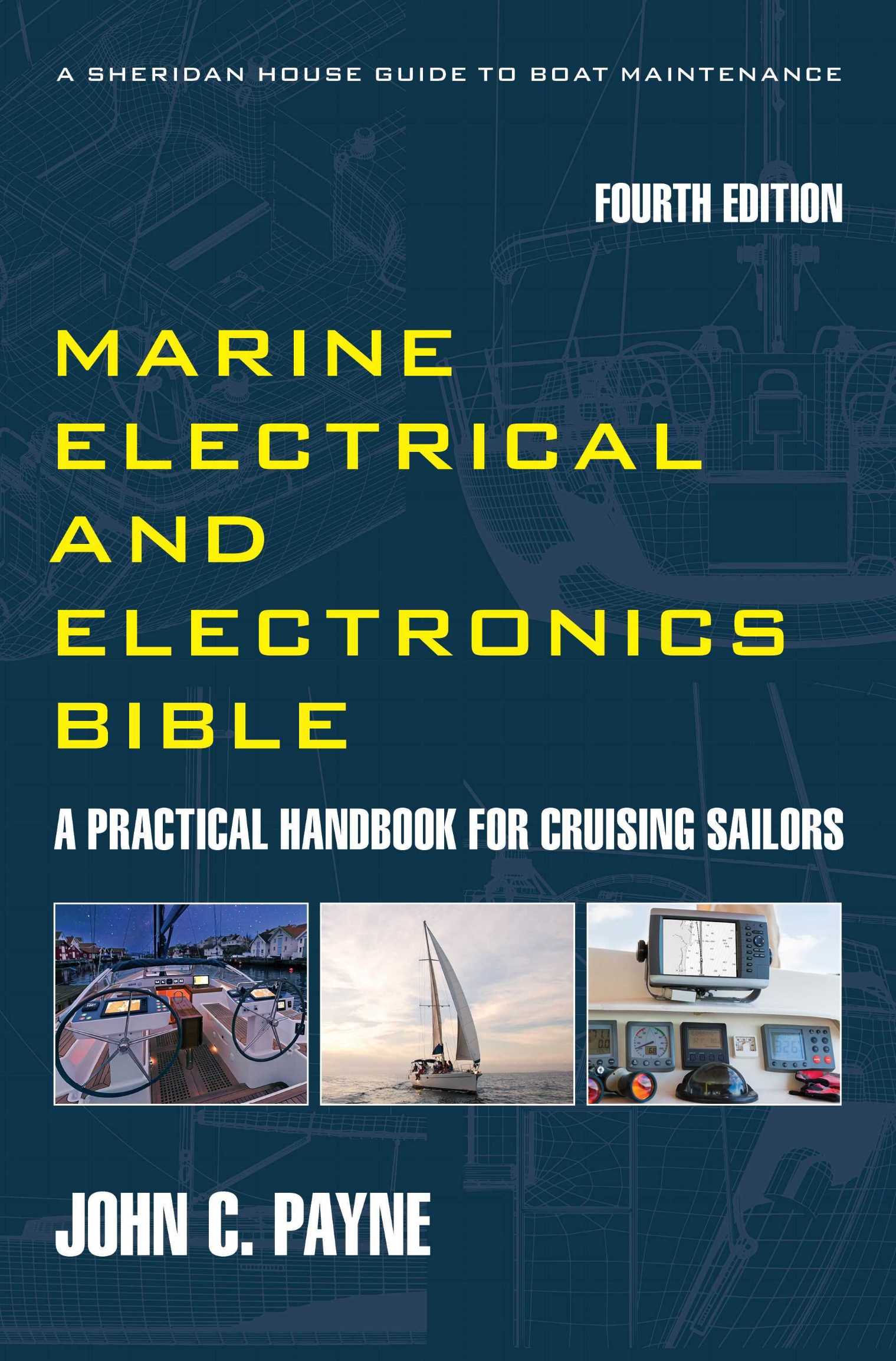
If you are headed somewhere remote consider the need to expand your knowledge base or have an information resource on board. Why not get a copy of my book The Marine and Electrical and Electronics Bible 4th Edition. By and for yachties, with everything from batteries and charging, solar and wind, diesel engines and marine electronics and so much more. Your complete systems guide. 650 pages of practical advice. In Australia and New Zealand order a copy through Boat Books. UK and European boats can buy the UK Edition Here. US and Canadian boats can get the US Edition Order Here. Marine systems are my profession so let me help you. By a liveaboard boat owner for other boat owners
Sailing in the Bahamas - Marine Services
Nassau. Full marine services including diesel engine repair, electrical, refrigeration and marine electronics. Haul‑out facilities and chandlery outlets. Check locally for authorised Volvo Penta, Yanmar or Mercury agents. Freeport. Engine and electrical services, haul‑out and chandlery. Abacos. Limited marine services in Marsh Harbour. Exumas. Basic mechanical and electrical assistance in George Town. Out Islands. Minimal or no marine services.

Sailing in the Bahamas - Local Customs
Local behaviour is reserved and polite. Standard Western etiquette applies. Fishing regulations are detailed and strictly enforced, including limits on conch, lobster and reef fish. Marine‑park zones prohibit fishing and anchoring on coral. Respect for private property is important, particularly around small settlements.
Sailing in the Bahamas - Summary
The Bahamas present shallow‑water navigation dominated by banks, coral heads and narrow cuts. Visual navigation is essential. Anchorages are mostly sand with variable protection. Nassau and Freeport provide full services, while outer islands have limited facilities. Weather patterns include trade winds, winter fronts and summer thunderstorms. Environmental regulations are strict, particularly regarding fishing and anchoring. Sailing in the Bahamas for all you need to know