Raw Water Pump for Boat
The raw water pump for boat is an essential component in the cooling systems of small marine diesel engines. Unlike the freshwater coolant pump, which circulates glycol coolant within a closed loop, the raw-water pump draws seawater from outside the vessel and drives it through the heat exchanger, exhaust elbow, and other components that depend on seawater cooling.
These pumps must deliver reliable flow at all engine speeds and withstand continuous exposure to saltwater, abrasive particles, and intermittent dry-running conditions. Their performance directly affects engine temperature control, exhaust cooling, and overall system integrity. Understanding how these pumps work and how to maintain them is vital for marine technicians and vessel owners.
Raw Water Pump for
Boat - Purpose
Small marine diesel engines rely on a two-stage cooling system: a freshwater (closed-loop) circuit and a seawater (raw-water) circuit. The raw-water pump forms the heart of the seawater side. Its primary functions includes:
- Drawing seawater through the seacock and sea strainer.
- Providing positive pressure flow into the heat exchanger.
- Removing heat from the engine coolant via the heat exchanger.
- Cooling the exhaust gases by injecting seawater into the mixing elbow.
- Maintaining correct backpressure in the exhaust system through adequate water volume.
Because marine engines often run under steady loads for long periods, these pumps must provide consistent, controllable flow across a wide RPM range
Raw Water Pump for
Boat - Construction
Most raw-water pumps used in small marine diesels are flexible impeller pumps—simple, robust, and self-priming. Their design consists of a few critical components:
Pump Body. Typically constructed from bronze, because it resists corrosion in seawater and is durable under abrasive loading. Some modern pumps use marine-grade stainless steel or nickel-aluminium-bronze alloys.
Flexible Impeller. The flexible impeller is usually made of neoprene or nitrile rubber. Neoprene is standard for seawater, while nitrile is used for fuel or oil pumping applications. The impeller contains multiple flexible vanes that bend as they rotate inside the eccentric cam chamber.
Cam Plate. A fixed inner cam plate creates an eccentric cavity. As the impeller rotates past this cam, the vanes deform, creating alternating suction and pressure zones. This self-priming capability is a major advantage over centrifugal pumps.
Shaft and Bearings. Raw-water pump shafts are typically stainless steel and supported by sealed bearings or bushings. Some use water-lubricated bearings, while others use permanently sealed units. Shaft wobble is a common failure point, especially when an impeller fails and overheats the pump.
Cover Plate. A thin stainless-steel cover plate seals the pump cavity. Over time, abrasive wear from sand or impeller debris can create grooves in the cover, reducing pump efficiency.
Mechanical Seal. This seal prevents seawater from escaping along the pump shaft and leaking into the engine room. Mechanical seals consist of two polished surfaces—one rotating with the shaft, the other fixed in the housing.
Raw Water Pump for
Boat - Function
The flexible impeller pump operates on positive-displacement principles. As the impeller rotates:
- Vanes pass the inlet, where they straighten and increase volume, creating suction that draws seawater in.
- Vanes reach the cam, where they are compressed, reducing chamber volume.
- This compression forces water out of the discharge port toward the heat exchanger.
- Because the pump produces flow proportional to engine speed and not dependent on priming, it is reliable in a marine environment where suction head varies.
Raw Water Pump for
Boat Installation
Raw-water pumps are usually mounted on the front of the engine and are:
- Gear-driven (common on Volvo Penta and some Yanmar models)
- Belt-driven (common on older Yanmars, Nanni, Volvo, Beta Marine, Westerbeke)
- Direct-coupled to the crankshaft on some compact units
The pump must be positioned below the waterline whenever possible to maintain prime. Installations above the waterline require excellent check valves and hose routing to prevent air locks.
Mechanical
and Electrical Repairs Resource
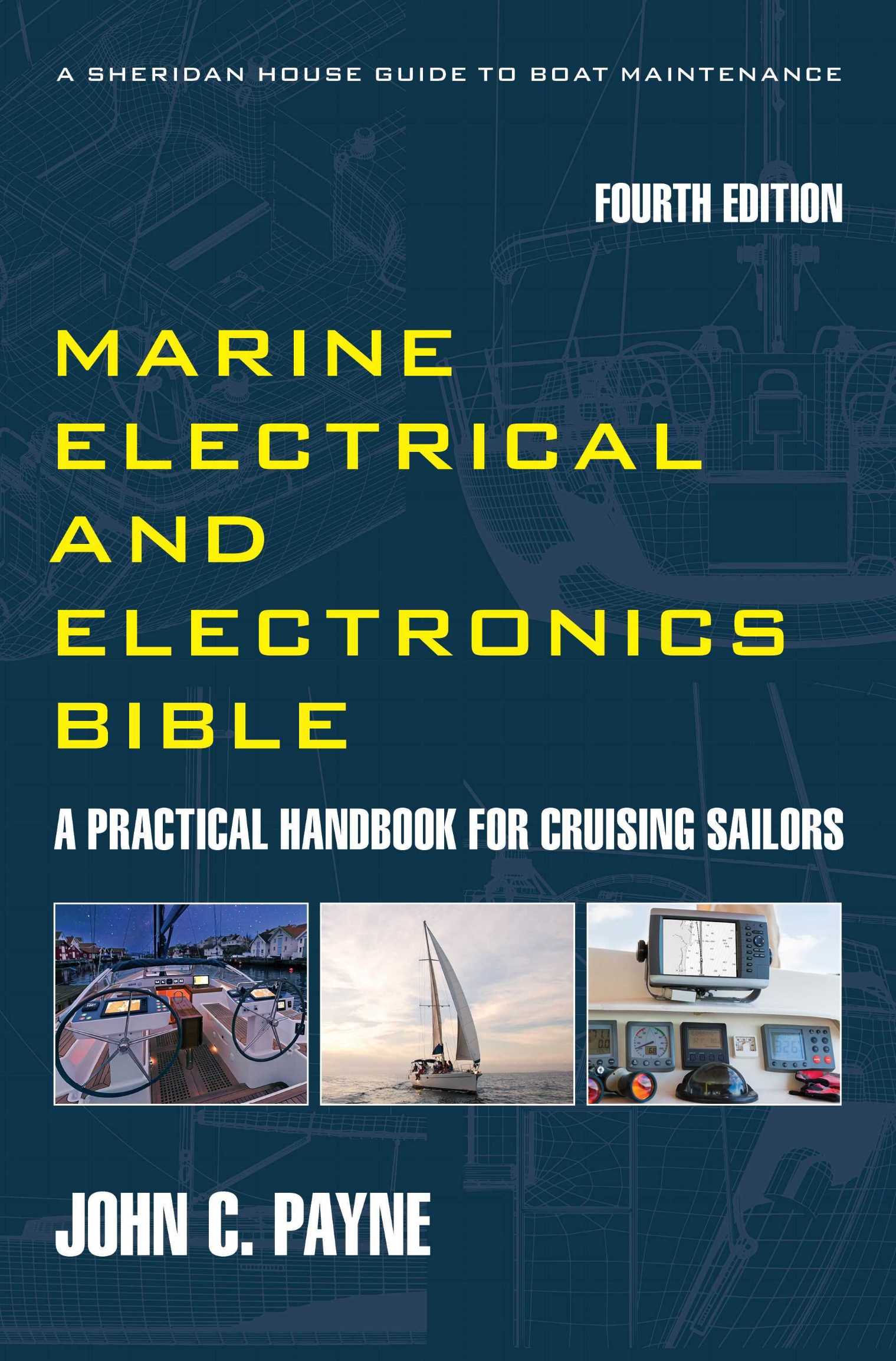
If you are headed somewhere remote consider the need to expand your knowledge base or have an information resource on board. Why not get a copy of my book The Marine and Electrical and Electronics Bible 4th Edition. By and for yachties, with everything from batteries and charging, solar and wind, diesel engines and marine electronics and so much more. Your complete systems guide. 650 pages of practical advice. In Australia and New Zealand order a copy through Boat Books. UK and European boats can buy the UK Edition Here. US and Canadian boats can get the US Edition Order Here. Marine systems are my profession so let me help you. By a liveaboard boat owner for other boat owners

Raw Water Pump for
Boat Maintenance
Raw-water pumps require periodic inspection and servicing. Neglect can lead to overheating, exhaust system failure, and engine damage.
Impeller Replacement. Knowing how to change an impeller is a fundamental skill to learn. The impeller is the primary wear component and should be replaced:
- Annually for most cruising yachts
- Every 500 hours for commercial use
- Immediately if run dry. Dry-running even for 30 seconds can destroy an impeller and score the pump chamber.
- Impeller Removal Tools. Use a pullwer and avoid using screwdrivers and damaging the new impeller
Lubrication During Assembly. When installing a new impeller, use glycerine or silicone grease. Petroleum grease can degrade neoprene rubber.
Inspecting the Cover Plate. Worn or grooved plates reduce pump efficiency. Many owners replace the plate every 2–3 impeller changes
Seal and Bearing Inspection. If coolant or seawater appears at the weep hole or around the shaft, the mechanical seal has begun to fail. Bearing wear or corrosion can cause shaft wobble, accelerating seal failure.
Hose and Strainer Care. Ensure the intake system is obstruction-free, as the pump cannot tolerate cavitation or suction starvation.
Winterisation. Freezing water inside a raw-water pump can crack the housing. Anti-freeze flushing is recommended in cold climate
Raw Water Pump for Boat Failure Modes
Impeller Failure. Often caused by dry-running, age, heat, or ingesting debris. Missing vanes may clog the heat exchanger downstream.
Seal Leakage. Saltwater drips from the underside are early signals. Left unaddressed, water intrusion can destroy bearings.
Shaft Wear. Corrosion or abrasive particles can wear grooves in the shaft, causing persistent seal failure.
Cavitation Damage. Occurs when suction is restricted by:
- Blocked sea strainer
- Collapsed hose
- Over-tightened bends
- Cavitation pits the impeller and housing.
- Cover Plate Wear
- Grooves from sand or impeller contact reduce pump volume.
Troubleshooting
Low Raw-Water Flow
Symptoms include high engine temperature, steam from exhaust, or weak discharge at the transom. Follow these steps:
- Check seacock and strainer and verify clear flow.
- Inspect impeller and look for missing or cracked vanes.
- Check for hose collapses especially on aged rubber lines.
- Examine pump cam and chamber, wear reduces flow significantly.
- Investigate heat exchanger blockage, lost impeller blades often lodge here.
- Check exhaust elbow for scaling, a common cause of exhaust overheat.
Raw Water Pump for
Boat Practical Tips
- Carry at least one spare impeller, cover gasket, and plate.
- Replace impeller before long trips, even if not due yet.
- Mark impeller removal dates inside the pump cover with a paint marker.
- Always recover missing impeller vanes from downstream hoses or heat exchanger.
- Ensure the pump is mounted below the waterline to maintain reliable priming.
Raw Water Pump for Boat
Summary
The raw-water pump plays a critical role in the cooling and exhaust systems of small marine diesel engines. Although mechanically simple, it operates in a harsh environment and relies heavily on proper maintenance. Understanding the construction, operating principles, failure symptoms, and maintenance procedures helps ensure reliable operation, prevent overheating, and extend engine life. Regular inspection and timely replacement of impellers, seals, and wear components keep the raw-water pump performing as designed, safeguarding the entire marine cooling system. Check your Raw Water Pump for Boat and make sure you know how to change an impeller.