Marine Sanitation Device
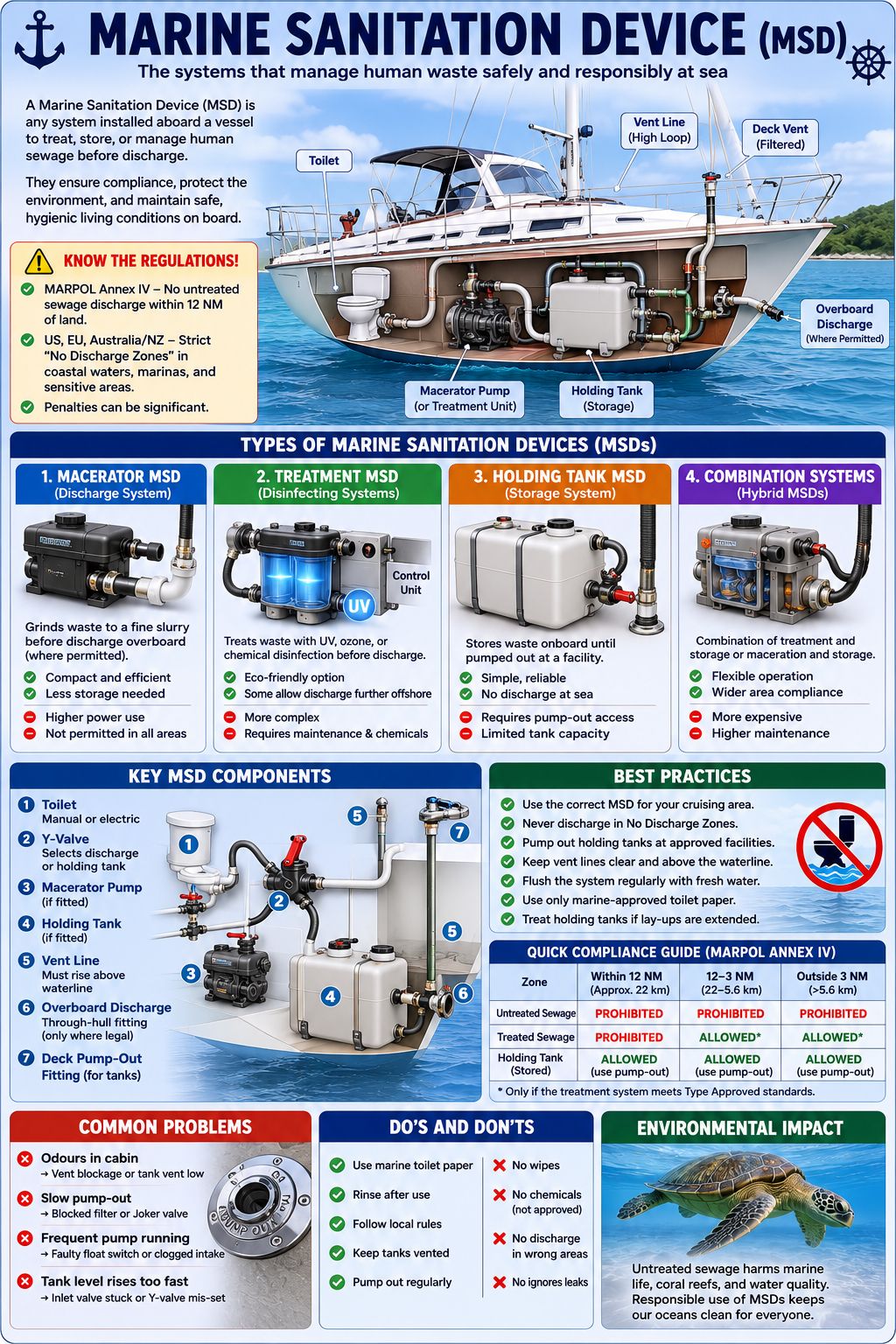
A Marine Sanitation Device (MSD) is any system installed aboard a vessel to treat, store, or manage human sewage before discharge. MSDs are essential components of modern marine sanitation architecture, ensuring that boats comply with environmental regulations, prevent pollution, and maintain safe onboard hygiene. Depending on vessel type, cruising area, and regulatory jurisdiction, an MSD may either treat waste onboard, macerate and disinfect it, or store it for later pump-out.
Understanding MSD categories, how they operate, and how they must be installed is crucial for marine professionals, surveyors, and also the vessel owners. This article provides a comprehensive technical overview of Marine Sanitation Devices used on recreational boats, and offshore yachts. MARPOL Annex IV prohibits untreated sewage discharge within 12 nautical miles of land, while this may not apply to the average yacht be ware if you don’t already know that the US, EU states and Australia/New Zealand enforce strict “no discharge zones” in coastal waters, marinas, and sensitive areas. Know the regulations!
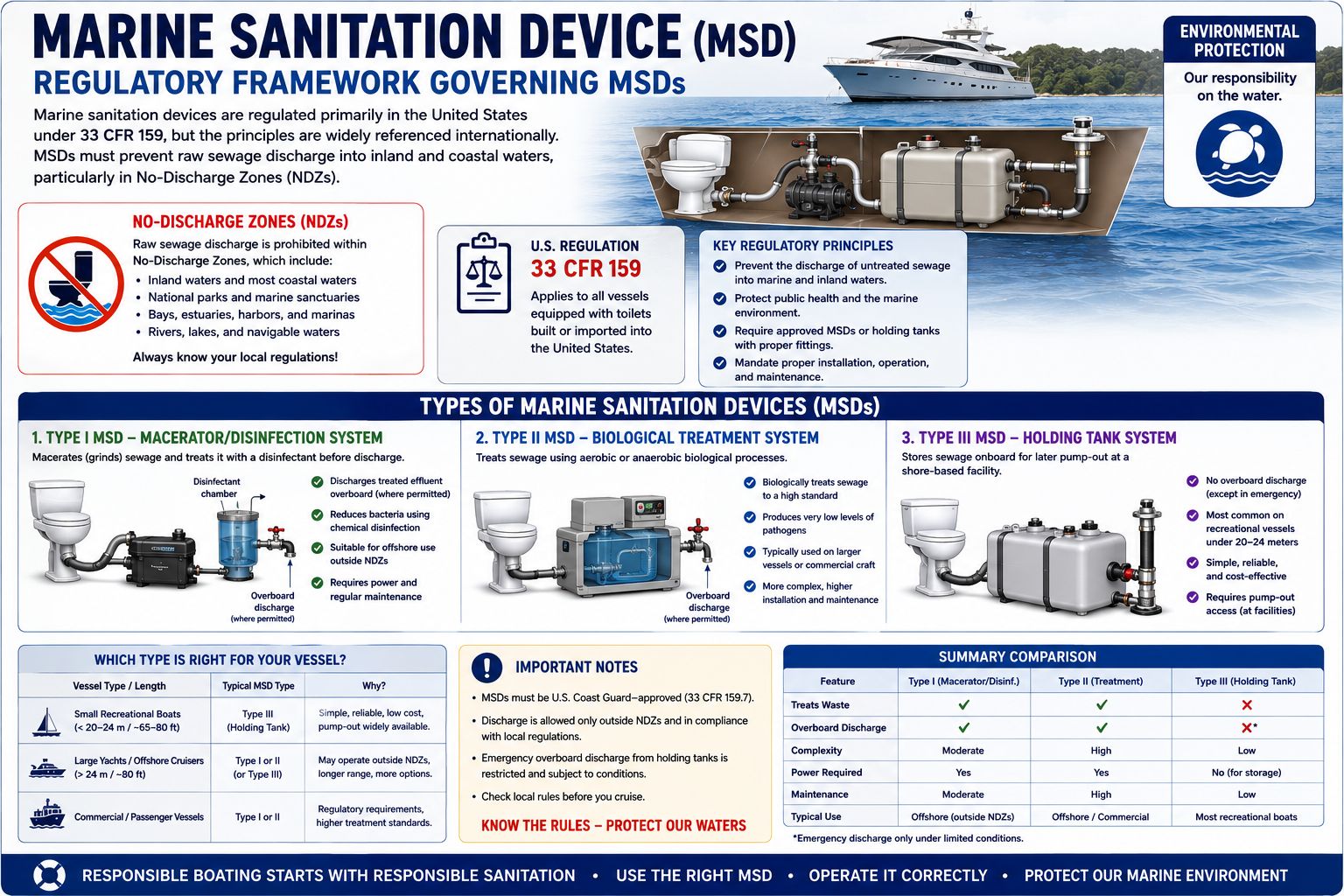
Regulatory Framework Governing
MSD's
Marine sanitation devices are regulated primarily in the United States under 33 CFR 159, but the principles are widely referenced internationally. MSDs must prevent raw sewage discharge into inland and coastal waters, particularly in No-Discharge Zones (NDZs).
MSDs are categorized into three types:
- Type I MSD: Macerates and disinfects sewage before discharge
- Type II MSD: Biologically treats sewage to a higher standard
- Type III MSD: Holding tank systems that store waste for pump-out
Most recreational vessels under 20–24 meters use Type III MSDs, as they are the simplest, most reliable, and easiest to maintain. Type I and II systems are more common on larger vessels or commercial craft that operate away from NDZs.
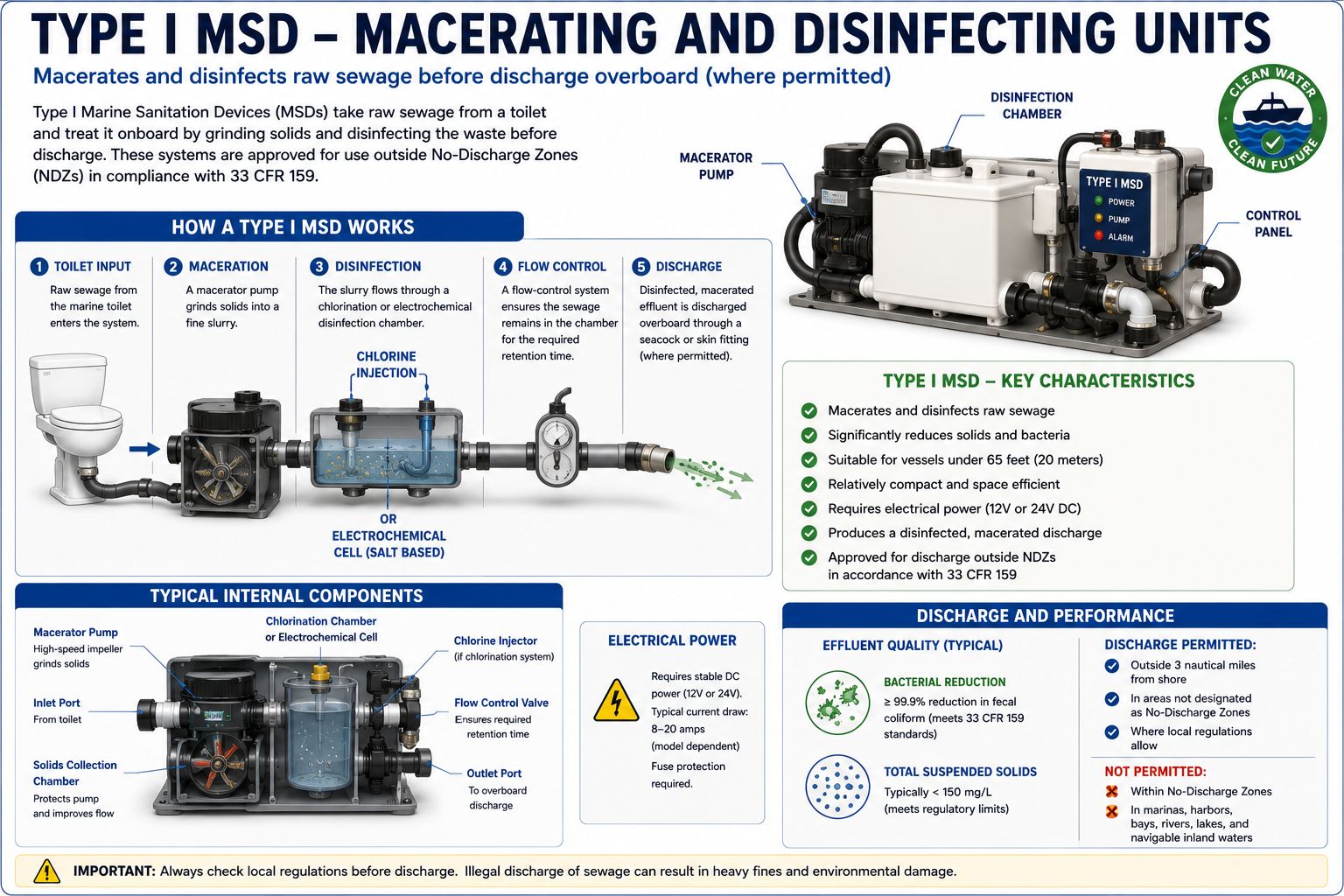
Type I MSD – Macerating and Disinfecting Units
Type I devices take raw sewage from a toilet and process it through:
- A macerator pump to grind solids
- A chlorination or electrochemical disinfection chamber
- A flow-control system to ensure required retention time
The effluent is significantly reduced in solids content, and bacterial counts are lowered to meet regulatory discharge limits. The characteristics are:
- Suitable for vessels under 65 feet
- Relatively compact
- Requires electrical power
- Produces a disinfected, macerated discharge
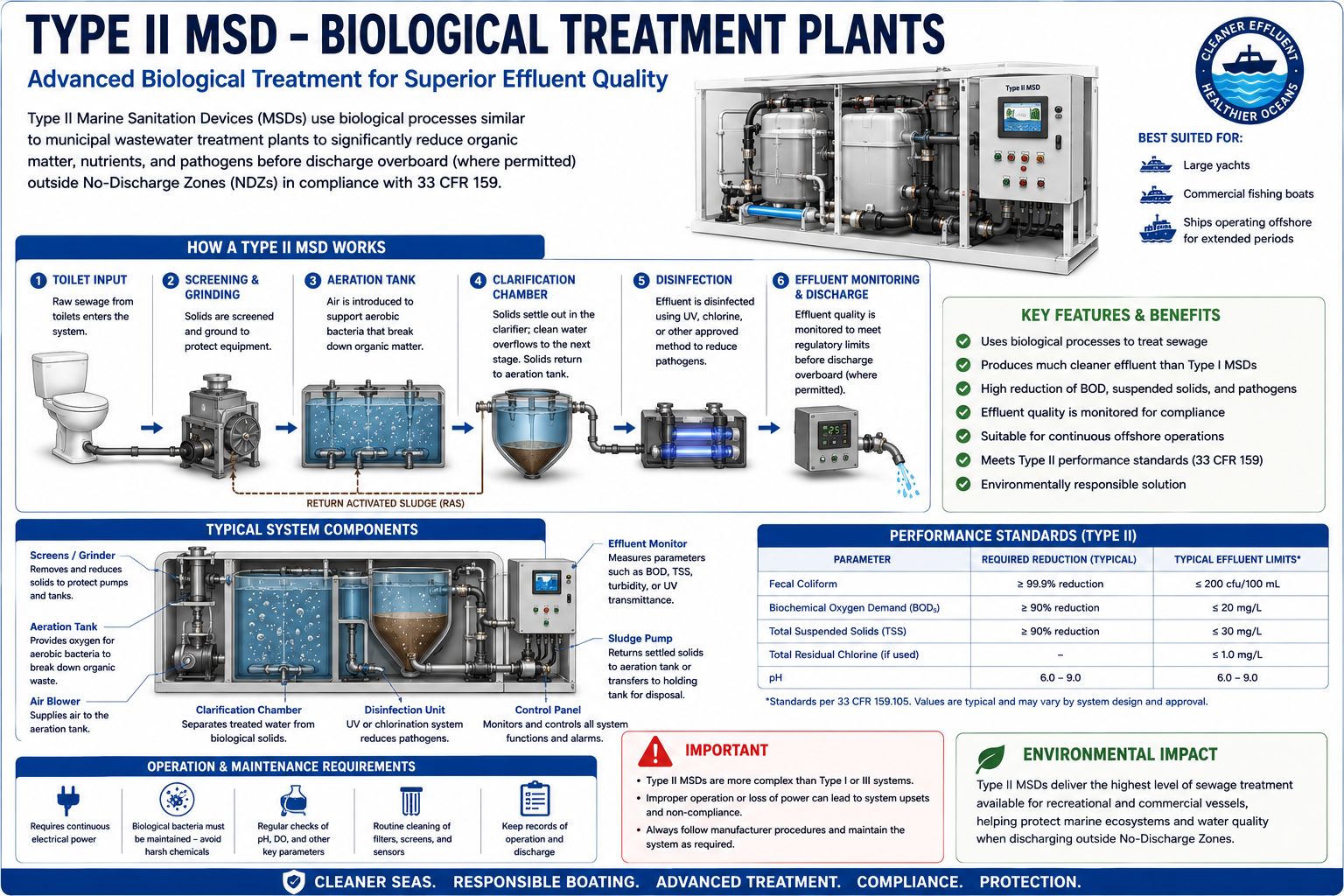
Type II MSD – Biological Treatment Plants
Type II MSDs use biological processes similar to municipal wastewater systems:
- Aeration tanks to promote aerobic bacteria
- Clarification chambers
- Disinfection stages
- Effluent monitoring
These systems produce much cleaner effluent than Type I units and are typically installed on:
- Large yachts
- Commercial fishing boats
- Ships operating offshore for extended periods
They require continuous power and careful operation to keep bacterial colonies healthy.
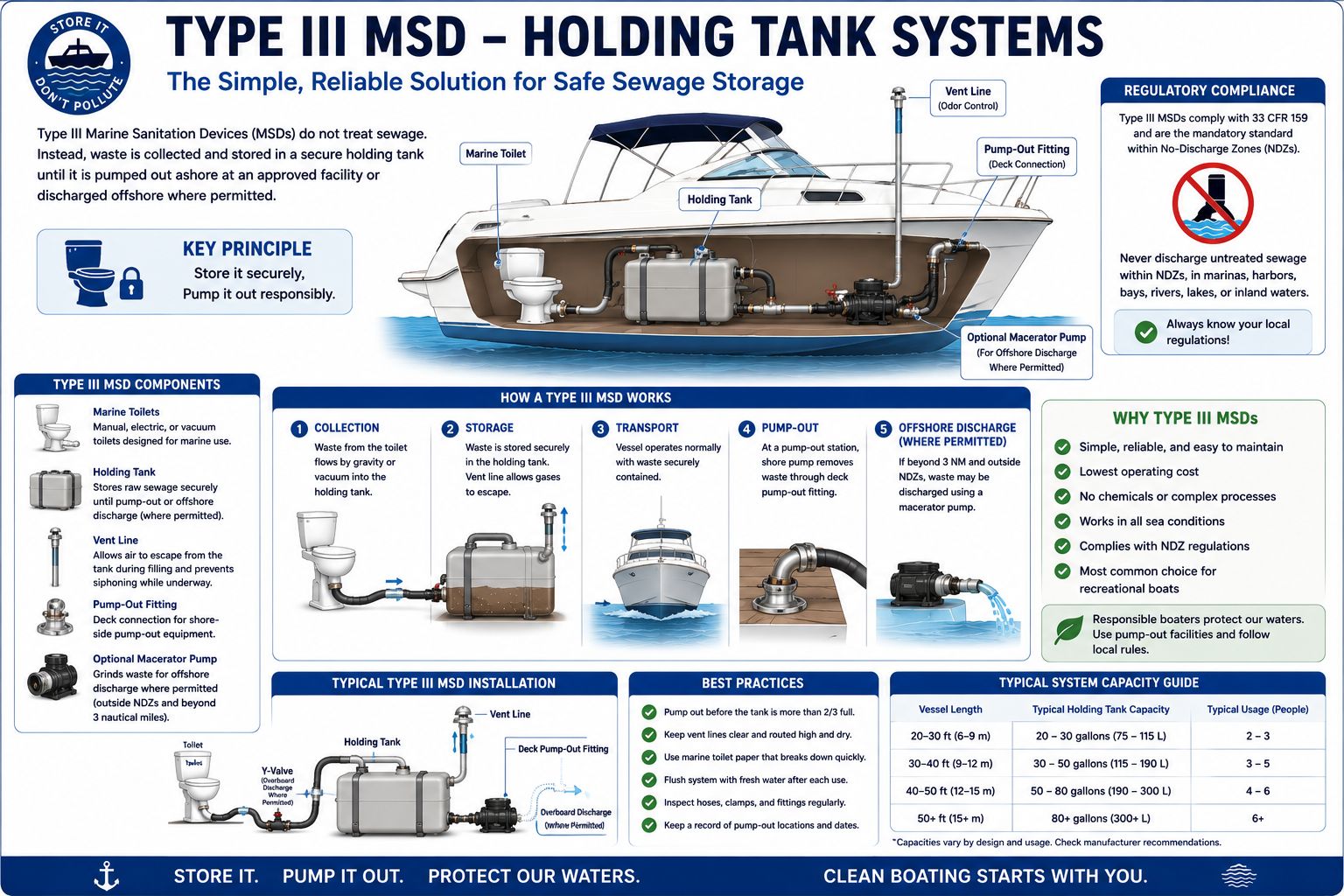
Type III MSD – Holding Tank Systems
Type III systems do not treat sewage. Instead, waste is:
- Collected
- Stored in a secure holding tank
- Pumped out ashore or discharged offshore (where permitted)
Type III MSDs consist of:
- Marine toilets (manual, electric, or vacuum)
- Holding tanks
- Vent lines
- Pump-out fittings
- Optional macerator pumps for offshore discharge
They are the most common MSD on recreational boats due to simplicity, reliability, and regulatory compatibility.
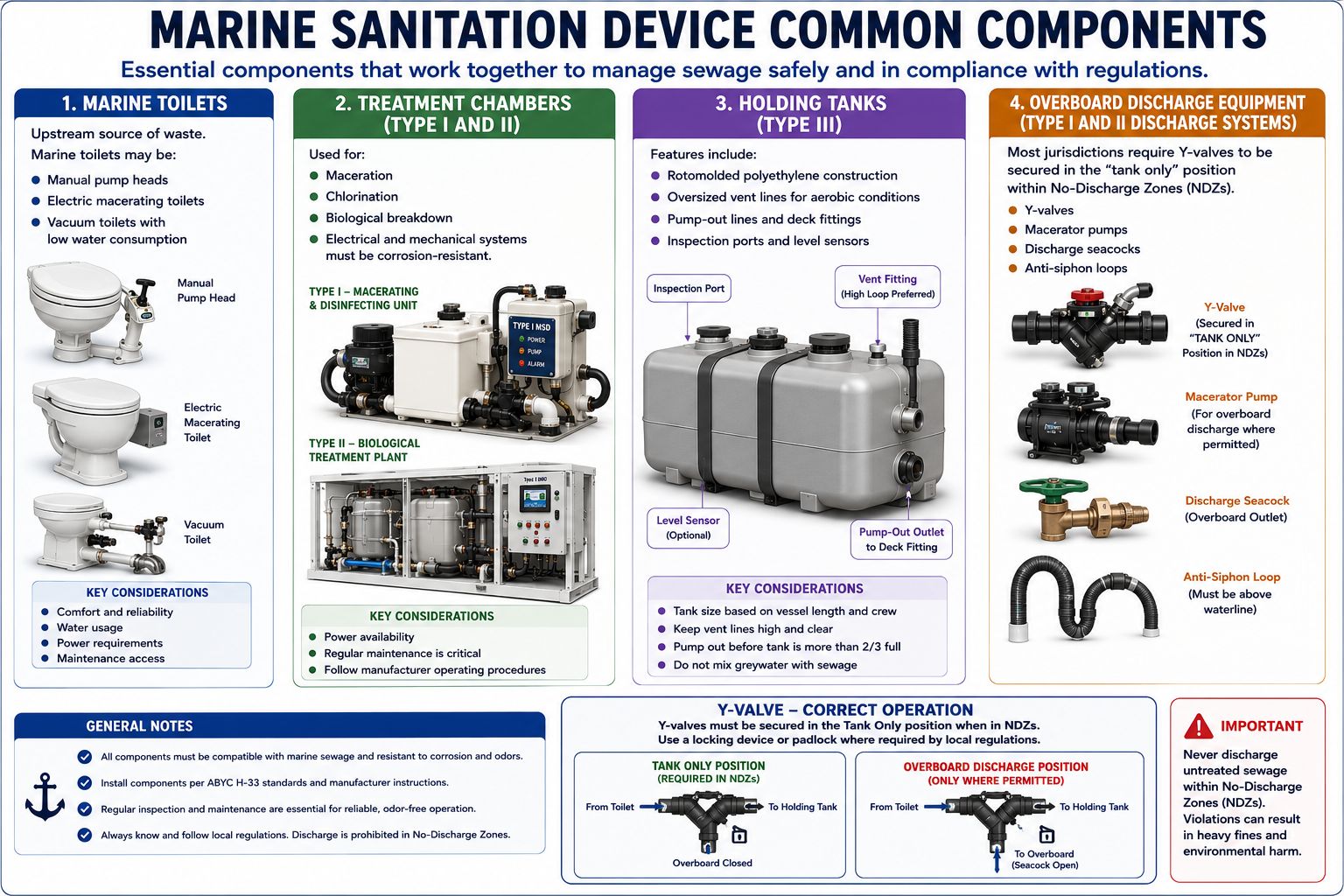
Marine Sanitation Device Common Components
Marine Toilets. These are the upstream source of waste. They may be:
- Manual pump heads
- Electric macerating toilets
- Vacuum toilets with low water consumption
Treatment Chambers (Type I and II). Used for:
- Maceration
- Chlorination
- Biological breakdown
- Electrical and mechanical systems must be corrosion-resistant.
Holding Tanks (Type III). Features include:
- Rotomolded polyethylene construction
- Oversized vent lines for aerobic conditions
- Pump-out lines and deck fittings
- Inspection ports and level sensors
Overboard Discharge Equipment. Most jurisdictions require Y-valves to be secured in the “tank only” position within NDZs.
- Y-valves
- Macerator pumps
- Discharge seacocks
- Anti-siphon loops
Mechanical
and Electrical Repairs Resource
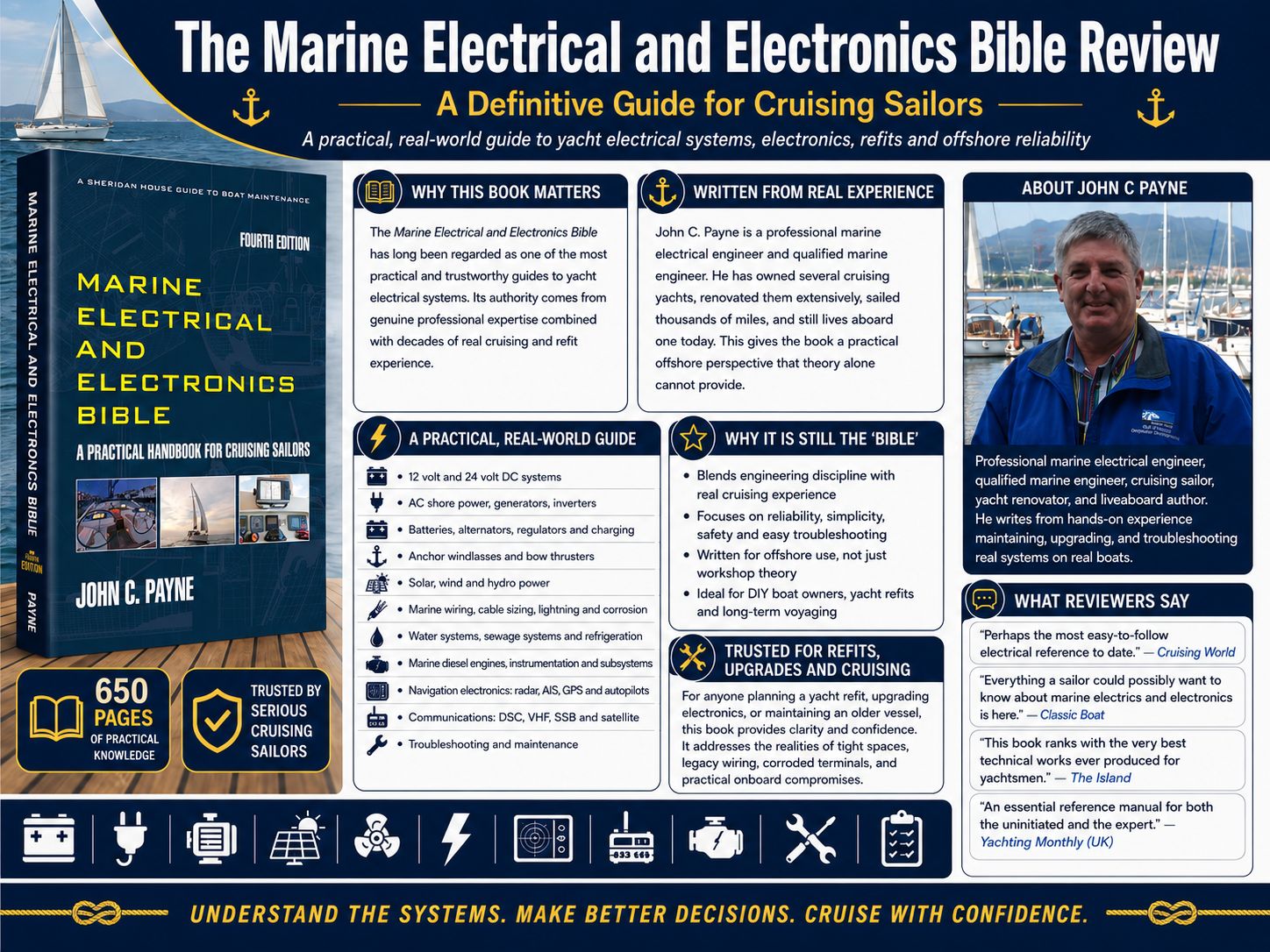
Why not get a copy of my book The Marine and Electrical and Electronics Bible 4th Edition. Your complete systems guide. 650 pages of practical advice. In Australia and New Zealand order a copy through Boat Books. UK and European boats can buy the UK Edition Here. US and Canadian boats can get the US Edition Order Here. Marine systems are my profession so let me help you. By a liveaboard boat owner for other boat owners
Marine Sanitation Device Placement and Mounting
MSDs should be installed:
- In dry, accessible compartments
- Close to toilets to minimize hose length
- On vibration-resistant mounts
Marine Sanitation Device Plumbing Systems
- Use sanitation-rated hose to prevent odor permeation
- Minimize hose bends and avoid low spots
- Install anti-siphon loops on all lines below the waterline
- Ensure vent lines are at least 19 mm and completely unrestricted
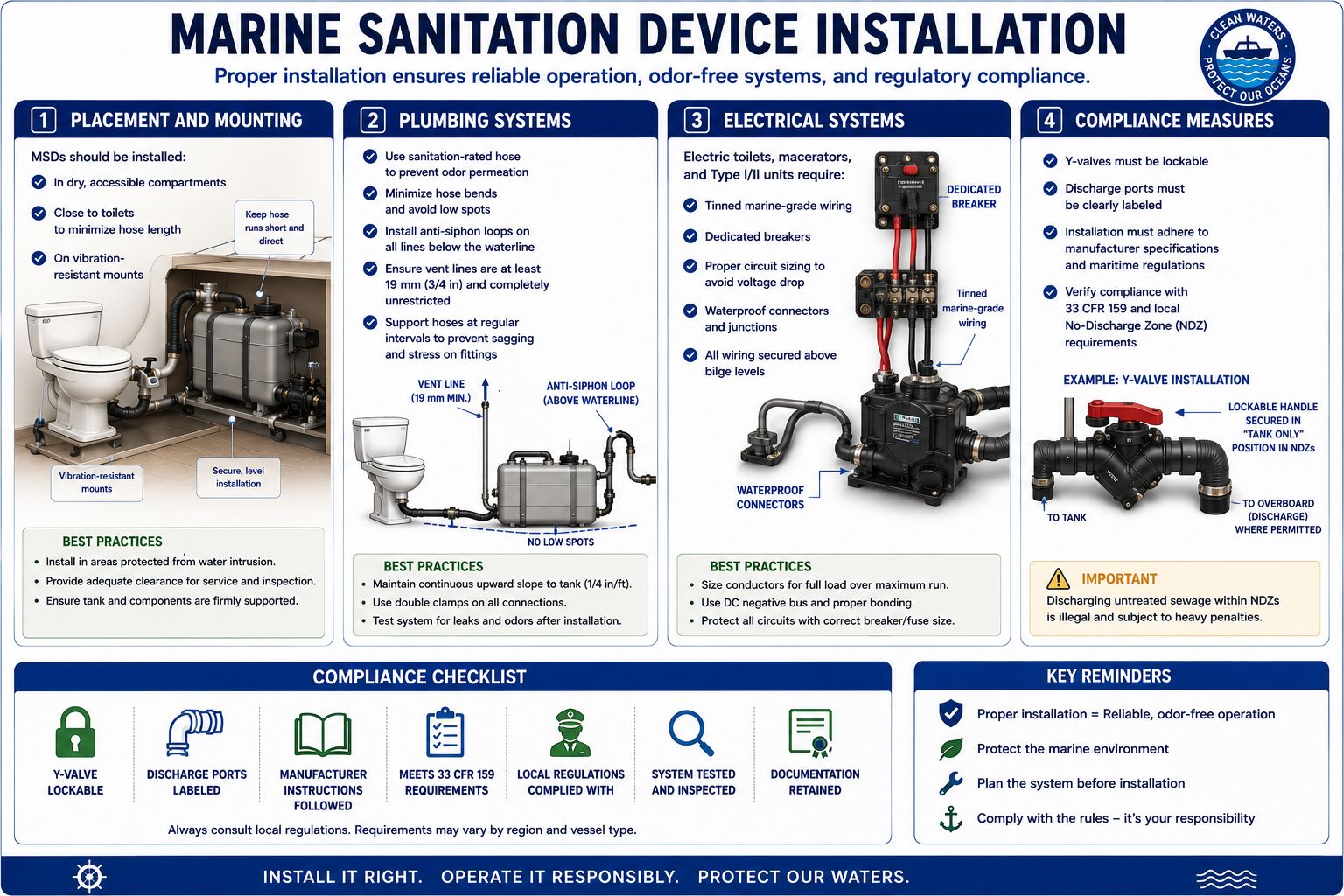
Marine Sanitation Device Electrical Systems
Electric toilets, macerators, and Type I/II units require:
- Tinned marine-grade wiring
- Dedicated breakers
- Proper circuit sizing to avoid voltage drop
- Waterproof connectors
Marine Sanitation Device Compliance Measures
- Y-valves must be lockable
- Discharge ports must be clearly labeled
- Installation must adhere to manufacturer specifications and maritime regulations
MSD Operation and User Behavior
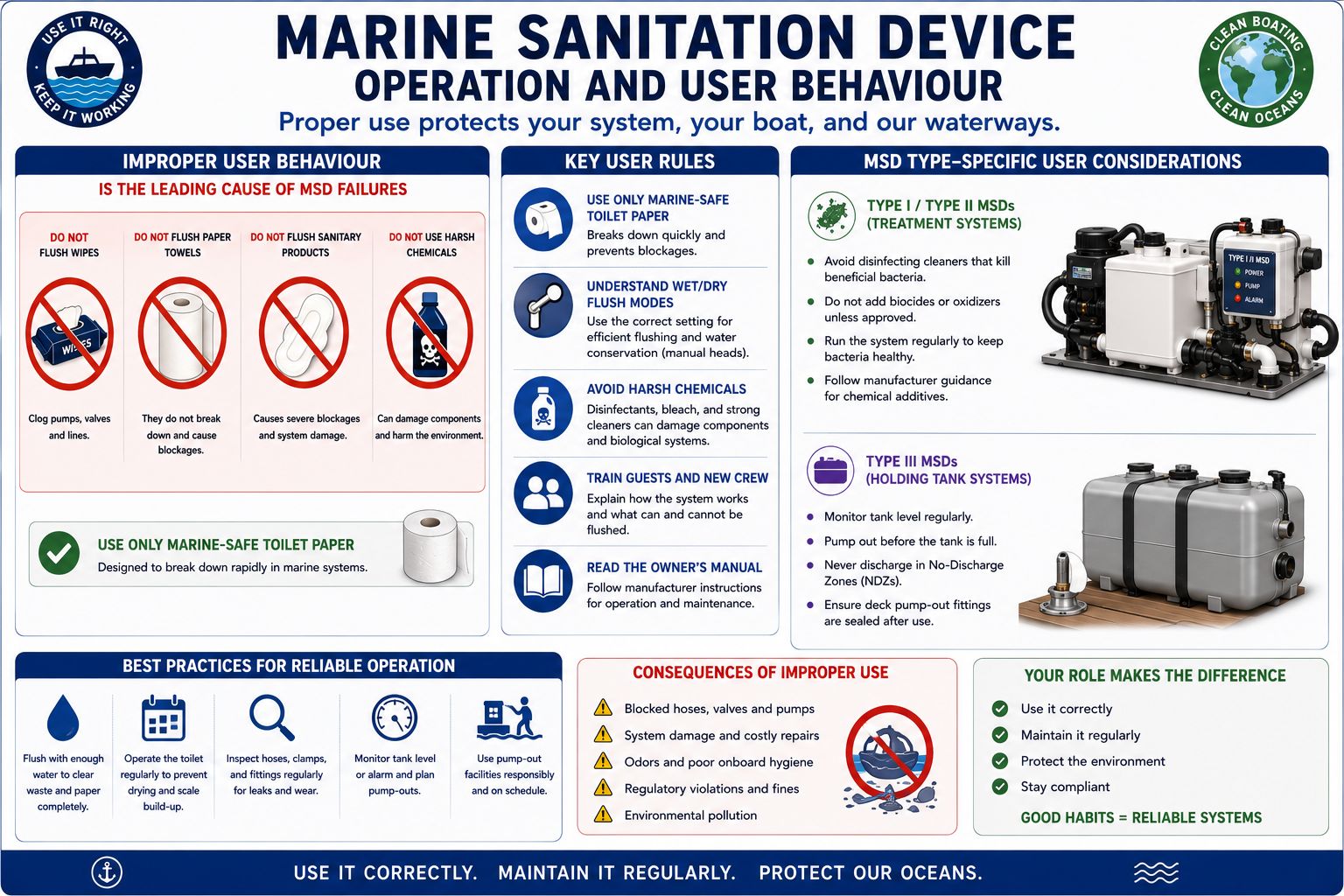
Improper user behavior is the leading cause of MSD failures. Key user rules:
- Do not flush wipes, paper towels, or sanitary products
- Use only marine-safe toilet paper
- Understand wet/dry flush modes (manual heads)
- Avoid harsh chemicals that interfere with biological systems
- Training guests and new crew is essential.
MSD Type-specific Issues
- Type I/II: Avoid disinfecting cleaners that kill beneficial bacteria
- Type III: Monitor tank level and pump out before full
Marine Sanitation Device - Maintenance Requirements
Type I MSDs
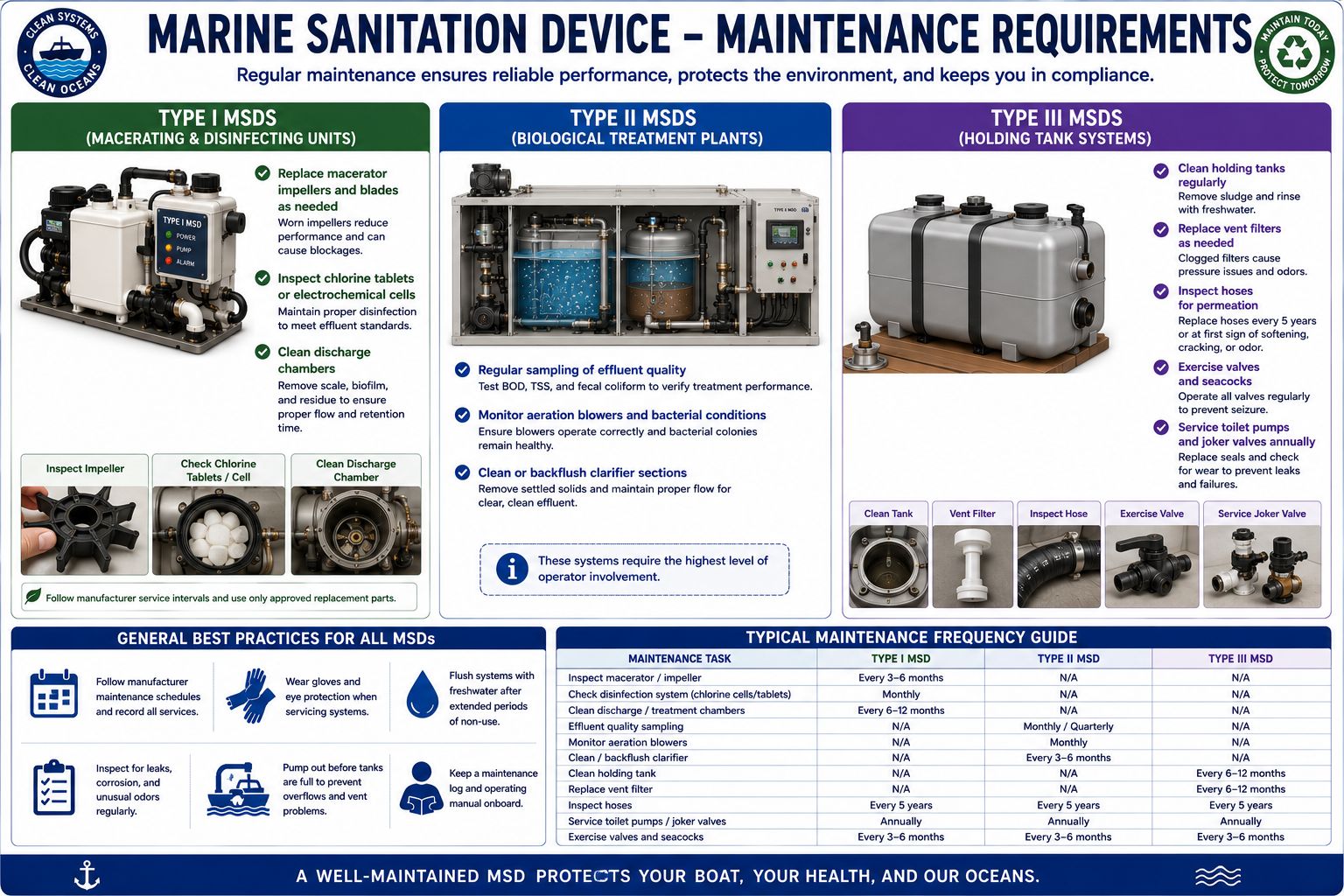
- Replace macerator impellers and blades as needed
- Inspect chlorine tablets or electrochemical cells
- Clean discharge chambers
Type II MSDs
- Regular sampling of effluent quality
- Monitor aeration blowers and bacterial conditions
- Clean or backflush clarifier sections
These systems require the highest level of operator involvement.
Type III MSDs
- Clean holding tanks regularly
- Replace vent filters as needed
- Inspect hoses for permeation
- Exercise valves and seacocks
- Service toilet pumps and joker valves annually
Troubleshooting Common MSD Problems
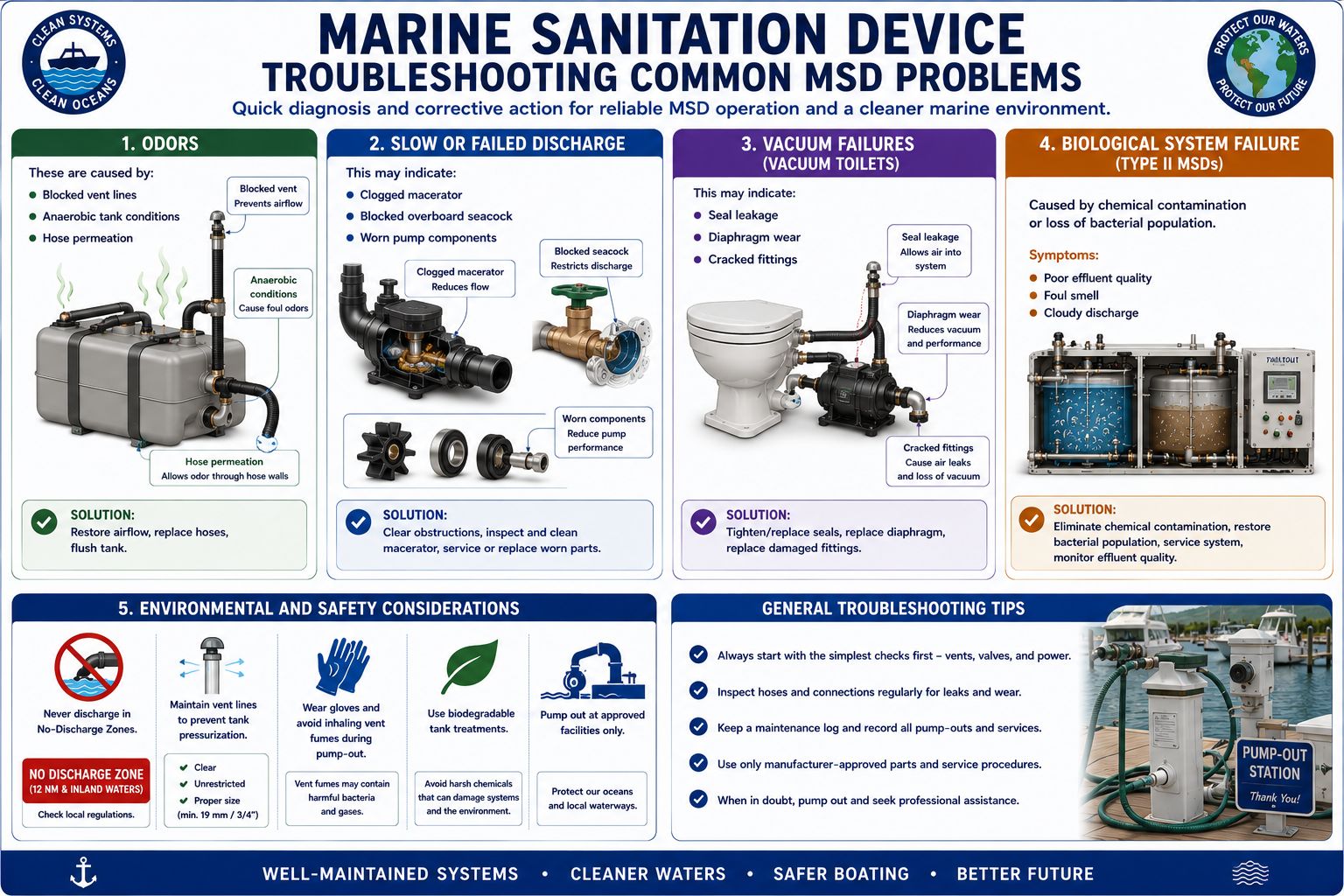
Odors. These are caused by:
- Blocked vent lines
- Anaerobic tank conditions
- Hose permeation
Solution: restore airflow, replace hoses, flush tank.
Slow or Failed Discharge. This may indicate:
- Clogged macerator
- Blocked overboard seacock
- Worn pump components
Vacuum Failures (Vacuum Toilets). This may indicate:
- Seal leakage
- Diaphragm wear
- Cracked fittings
Biological System Failure (Type II). Caused by chemical contamination or loss of bacterial population. The symptoms are:
- Poor effluent quality
- Foul smell
- Cloudy discharge
Environmental and Safety Considerations. Properly operated MSDs significantly reduce marine pollution and protect sensitive waterways.
- Never discharge in No-Discharge Zones
- Maintain vent lines to prevent tank pressurization
- Wear gloves and avoid inhaling vent fumes during pump-out
- Use biodegradable tank treatments.


Marine Sanitation Device Summary
Marine Sanitation Devices are essential for ensuring that vessels manage human waste safely, legally, and efficiently. Whether using a simple holding tank system, a macerating disinfecting device, or a sophisticated biological treatment plant, each MSD type requires proper installation, informed operation, and regular maintenance. By adhering to best practices and regulatory guidelines, boat owners and marine professionals can maintain effective onboard sanitation while safeguarding the marine environment. Have you checked your marine sanitation device lately and done the maintenance.