Marine Lightning
Protection and Corrosion Control: Technical Overview
Marine Lightning protection and corrosion control are two of the most critical, and often misunderstood, aspects of sailboat safety and longevity. Both involve complex interactions between electrical pathways, conductive materials, seawater chemistry, and environmental conditions. A well‑designed system protects the vessel and its equipment from catastrophic damage, while poor design or neglect can lead to structural compromise, equipment failure, and accelerated degradation of essential components. This start page provides a high‑level technical introduction to the principles, system behaviors, and engineering considerations behind lightning protection and corrosion management on modern sailboats.
Sailboat safety depends on effective marine lightning protection and corrosion control systems. A well‑designed lightning pathway manages strike conduction, bonding networks, and grounding plates to reduce structural damage and electrical failure. Corrosion protection focuses on galvanic corrosion, stray‑current corrosion, material compatibility, and sacrificial anodes to prevent metal loss in harsh marine environments. Together, these systems ensure long‑term durability, electrical integrity, and reliable performance across modern sailboat grounding and corrosion‑prevention strategies.
1. Understanding
Lightning Risk on Sailboats
Sailboats are inherently exposed to lightning due to their tall masts, conductive rigging, and operation in open water, an environment where they often become the highest point in the landscape. Lightning does not “seek out” boats, but it does follow conductive paths, and a sailboat mast provides an efficient route for electrical discharge.
A lightning strike can deliver currents exceeding 30,000 amps and temperatures hotter than the surface of the sun. The goal of a lightning protection system is not to prevent a strike, which is impossible, but to control the strike, providing a low‑resistance path to the water while minimizing side flashes, structural damage, and onboard electrical destruction. Marine Lightning protection and corrosion control key risks include:
- Explosive damage to masthead equipment
- Melting or vaporization of rigging components
- Hull punctures or delamination
- Damage to electronics through induced currents
- Fire ignition from heat or arcing
A properly engineered system reduces these risks by managing the flow of energy from the strike point to the water.
2. Principles of
Lightning Protection Systems
Lightning protection on sailboats is built around a few core principles: interception, conduction, dissipation, and bonding.
Interception. The highest conductive point, typically the masthead, acts as the strike receptor. Some vessels use dedicated air terminals, but the mast itself is usually sufficient.
Conduction. Once intercepted, the lightning current must be directed downward through a low‑resistance path. This typically includes:
- Mast and rigging
- Internal down conductors
- Heavy‑gauge copper or aluminum pathways
Sharp bends, small conductors, and discontinuities increase resistance and encourage side flashes, so system geometry is critical.
Dissipation. The final stage is transferring the energy into the water. This is achieved through:
- Grounding plates
- Keel bolts (on metal keels)
- Dedicated underwater electrodes
The dissipation point must have sufficient surface area to handle the massive current without vaporizing or causing hull damage.
Bonding. Bonding connects major metal components, stanchions, chainplates, engines, tanks, and through‑hulls, to a common potential. This reduces the risk of side flashes jumping between isolated metal parts during a strike. Bonding is not the same as grounding; it is a protective equalization strategy. Marine Lightning protection and corrosion control often interact.
3. Corrosion on Sailboats: The
Electrochemical Landscape
Corrosion is the natural process by which metals return to their lowest energy state. On sailboats, this process is accelerated by seawater, dissimilar metals, electrical currents, and environmental exposure. Corrosion is not a single phenomenon but a family of related processes, including galvanic corrosion, stray‑current corrosion, and crevice corrosion.
Galvanic Corrosion. Occurs when two dissimilar metals are electrically connected in seawater. The less noble metal becomes the anode and corrodes preferentially. Common examples include:
- Stainless steel bolts in aluminum masts
- Bronze through‑hulls near stainless shafts
- Aluminum sail drives exposed to copper‑based antifouling
Galvanic corrosion is predictable and manageable through proper material selection and sacrificial anodes.
Stray‑Current Corrosion. Far more destructive, stray‑current corrosion occurs when DC electrical current leaks into the water due to wiring faults, damaged insulation, or improper grounding. It can destroy underwater metals in days rather than years.
Crevice Corrosion. A localized attack that occurs in oxygen‑depleted gaps, such as under fasteners or inside fittings. Stainless steel is particularly vulnerable when deprived of oxygen.
Understanding the type of corrosion is essential for diagnosing root causes and designing effective protection strategies.
4. Corrosion Protection Systems
Corrosion control relies on a combination of material selection, electrical design, and protective devices.
Sacrificial Anodes. Zinc, aluminum, or magnesium anodes are intentionally installed to corrode instead of critical components. They must be electrically connected to the protected metal and sized appropriately for the environment.
Bonding Systems. Bonding ties underwater metals to a common potential, reducing galvanic differences. However, bonding must be carefully engineered; improper bonding can increase corrosion or create pathways for stray current.
Isolation. In some cases, isolating components, such as using shaft isolation couplings or non‑conductive through‑hulls reduces galvanic interaction.
Electrical Integrity
Preventing stray‑current corrosion requires:
- Proper DC negative bus design
- Intact insulation
- Correct grounding practices
- Avoiding accidental connections between AC and DC systems
Material Compatibility. Selecting metals with compatible galvanic potentials reduces corrosion risk. For example, aluminum hulls require strict control of copper exposure.
5. Interaction Between Lightning
Protection and Corrosion Control
Lightning protection and corrosion management are often treated as separate disciplines, but they interact in important ways.
Bonding Networks. Lightning systems require extensive bonding to equalize potential during a strike. Corrosion systems sometimes require isolation to prevent galvanic pathways. Balancing these needs requires careful design.
Grounding Plates. Lightning grounding plates must be large and conductive. Corrosion protection may require isolating or protecting these plates to prevent them from becoming galvanic liabilities.
Stray Currents and Lightning Paths. Poorly designed bonding systems can create unintended electrical pathways that increase stray‑current corrosion risk.
Material Selection
Lightning conductors often use copper or aluminum, while corrosion‑resistant components may require stainless steel or bronze. Mixing metals without proper separation can accelerate galvanic attack. A well‑designed system considers both lightning and corrosion holistically rather than as independent problems.
Mechanical
and Electrical Repairs Resource
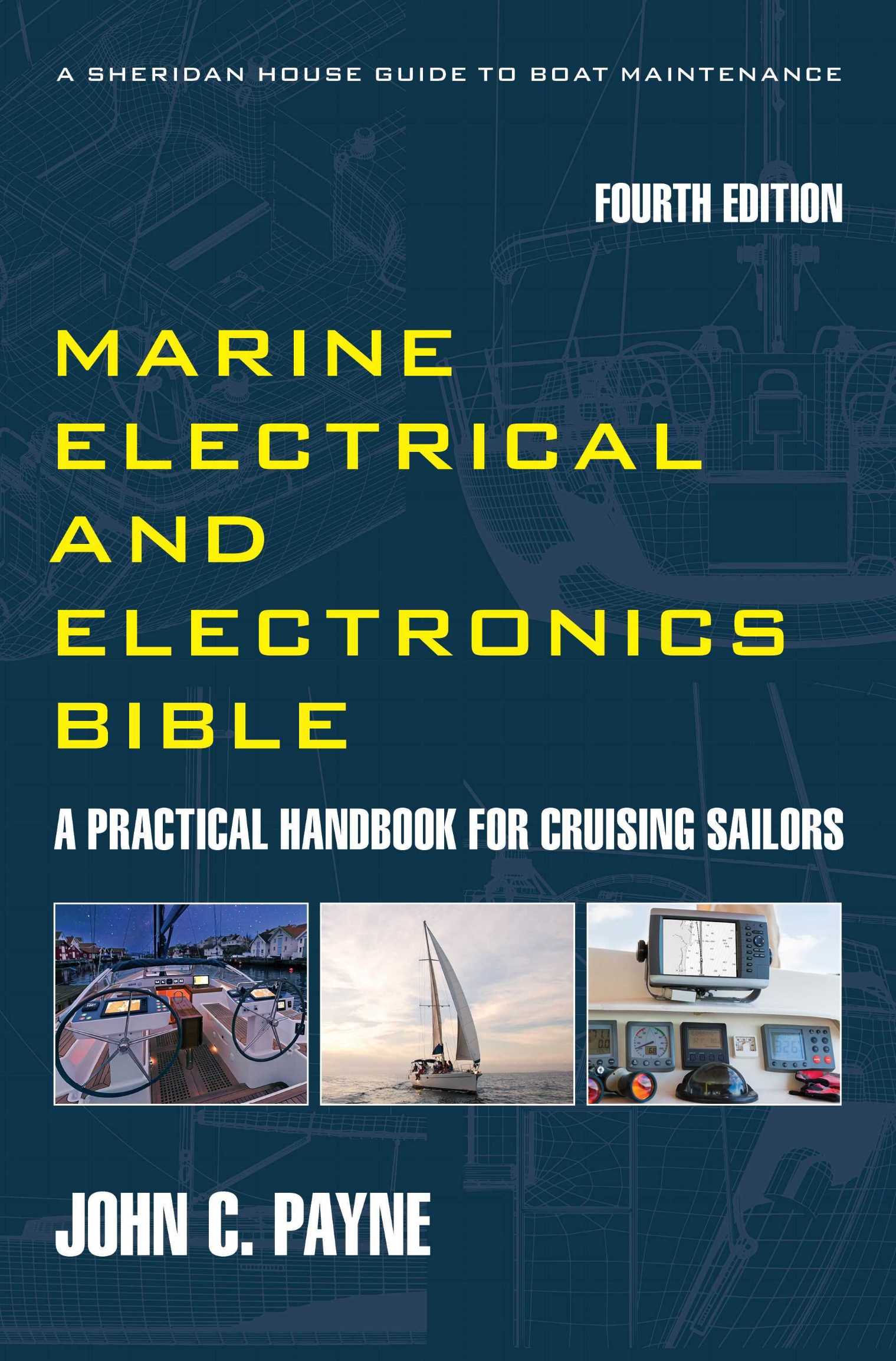
If you are headed somewhere remote consider the need to expand your knowledge base or have an information resource on board. Why not get a copy of my book The Marine and Electrical and Electronics Bible 4th Edition. By and for yachties, with everything from batteries and charging, solar and wind, diesel engines and marine electronics and so much more. Your complete systems guide. 650 pages of practical advice. In Australia and New Zealand order a copy through Boat Books. UK and European boats can buy the UK Edition Here. US and Canadian boats can get the US Edition Order Here. Marine systems are my profession so let me help you. By a liveaboard boat owner for other boat owners

6. System Behavior, Failure Modes,
and Risk Factors
Understanding how lightning and corrosion systems behave under real‑world conditions is essential for diagnosing issues and designing robust solutions.
Lightning System Failure Modes
- Side flashes to unbonded metal
- Hull punctures from inadequate dissipation
- Melted rigging components
- Damage to electronics from induced currents
- Arcing at sharp bends or small conductors
Corrosion System Failure Modes
- Rapid anode depletion
- Pitting in stainless components
- Sail drive or propeller erosion
- Through‑hull degradation
- Unexplained metal loss from stray current
Environmental Factors
- Warm, conductive seawater accelerates corrosion
- Tropical storm activity increases lightning exposure
- Marinas with poor electrical infrastructure increase stray‑current risk
Marine Lightning Protection and Corrosion Control
Lightning protection and corrosion control are foundational elements of sailboat safety and longevity. Both require a systems‑level understanding of electrical pathways, material behavior, and environmental interactions. This start page provides the technical foundation for deeper exploration into lightning system design, bonding strategies, galvanic protection, stray‑current diagnostics, and long‑term corrosion management. With these principles in place, the complexities of protecting a sailboat from both atmospheric and electrochemical threats become far more manageable.