Marine diesel fuel polishing
systems
Marine diesel fuel polishing systems have become increasingly important in the marine industry, especially for sailing vessels that rely on stored fuel for long periods. Many boats in cold climates are winterized and are subject to extremely low temperatures for extended periods. Water contamination, microbial growth (“diesel bug”), and particulate matter can accumulate in fuel tanks over months or years, threatening the reliability of marine diesel engines. A fuel polishing system addresses these issues by continuously or intermittently cleaning the fuel in the tank, removing water and solids before they reach the engine’s fuel system. This article provides a detailed explanation of how diesel fuel polishing works, how systems are typically installed on sailing boats, and the components that make up a complete polishing setup.
Diesel bug, a microbial contamination in yacht fuel, poses distinct risks in varying climates. In warm climates, higher temperatures accelerate microbial growth, leading to rapid sludge formation, clogged filters, and engine failure. Humidity further promotes water condensation in tanks, fueling contamination. In cold climates, microbial activity slows, but water separation and ice formation increase, risking blocked lines and corrosion. Both conditions expose yachts to costly downtime, reduced efficiency, and heightened safety hazards if not proactively managed.
Marine diesel fuel
polishing systems basics
Diesel fuel polishing is a multistage filtration and conditioning process that removes contaminants, such as water, sludge, microbial masses, and solid particles from diesel fuel stored in a tank. Unlike a simple inline fuel filter, which protects the engine during operation, polishing systems scrub the fuel within the tank itself, returning clean fuel to storage rather than feeding it directly to the engine. Polishing is especially useful for boats because:
- Diesel may sit unused for months during off-season storage.
- Marine tanks often accumulate condensation, leading to water contamination.
- Modern low-sulfur diesel and biodiesel blends are more susceptible to microbial growth and oxidation.
- Rough seas can stir settled debris into suspension.
By recirculating and filtering the entire tank volume periodically, a polishing system keeps the fuel clean and greatly reduces the risk of clogged filters and engine failure.

How a Fuel Polishing System Works
Although designs vary, most polishing systems follow a similar process:
Step 1: Fuel is drawn from the tank. A pickup tube, either the tank’s existing supply line or a dedicated polishing pickup is used to pull fuel from the bottom of the tank, where contamination is most concentrated. This fuel is then routed to the polishing pump.
Step 2: The fuel passes through a series of filters. Most systems include a Primary prefilter / water separator. This stage removes free water and large solids. Centrifugal separators (like Racor-type turbine filters) use vortex action to spin out water droplets before they reach finer filtration media. A clear bowl allows visual inspection.
Fine particulate filter (secondary stage). After water separation, the fuel passes through a filter element typically rated between 2 and 10 microns. This removes fine particulate matter, microbial debris, and sludge. Some units combine both stages into a single multi-step filter housing.
Step 3: Water and contaminants are collected and drained. Separated water settles in a collection bowl or sump, where it can be drained manually or automatically detected and evacuated via sensors and solenoid valves. Solid contaminants remain trapped in the filter element.
Step 4: The cleaned fuel is returned to the tank. After filtration, the corrected fuel is returned to the tank via a dedicated return fitting. The circulation continues until the entire fuel volume has passed through the system multiple times.
Step 5: Optional fuel conditioning. Some advanced systems incorporate:
- Biocide injection ports
- Magnetic or electronic fuel conditioners
- Automated control units with timers and pressure sensors
While these conditioners are not always essential, they can enhance microbial control and system automation.

Key Components of a Marine Diesel Fuel Polishing System
1. Fuel Pump. The heart of the system is a self-priming, continuous-duty-rated electric fuel pump. Key characteristics:
- Typically 12V or 24V DC for marine installations
- Flow rate between 1–5 gallons per minute (GPM), depending on tank size
- Must be diesel-compatible
- Must be capable of running dry briefly without damage
- Gear pumps, vane pumps, and diaphragm pumps are commonly used.

2. Primary Water Separator / Prefilter
This stage removes water and coarse solids. Common specifications include:
- 30–100 micron rating
- Clear sediment bowl for inspection
- Drain valve for water removal
Racor 500 or 900 series units are commonly used in marine polishing systems.
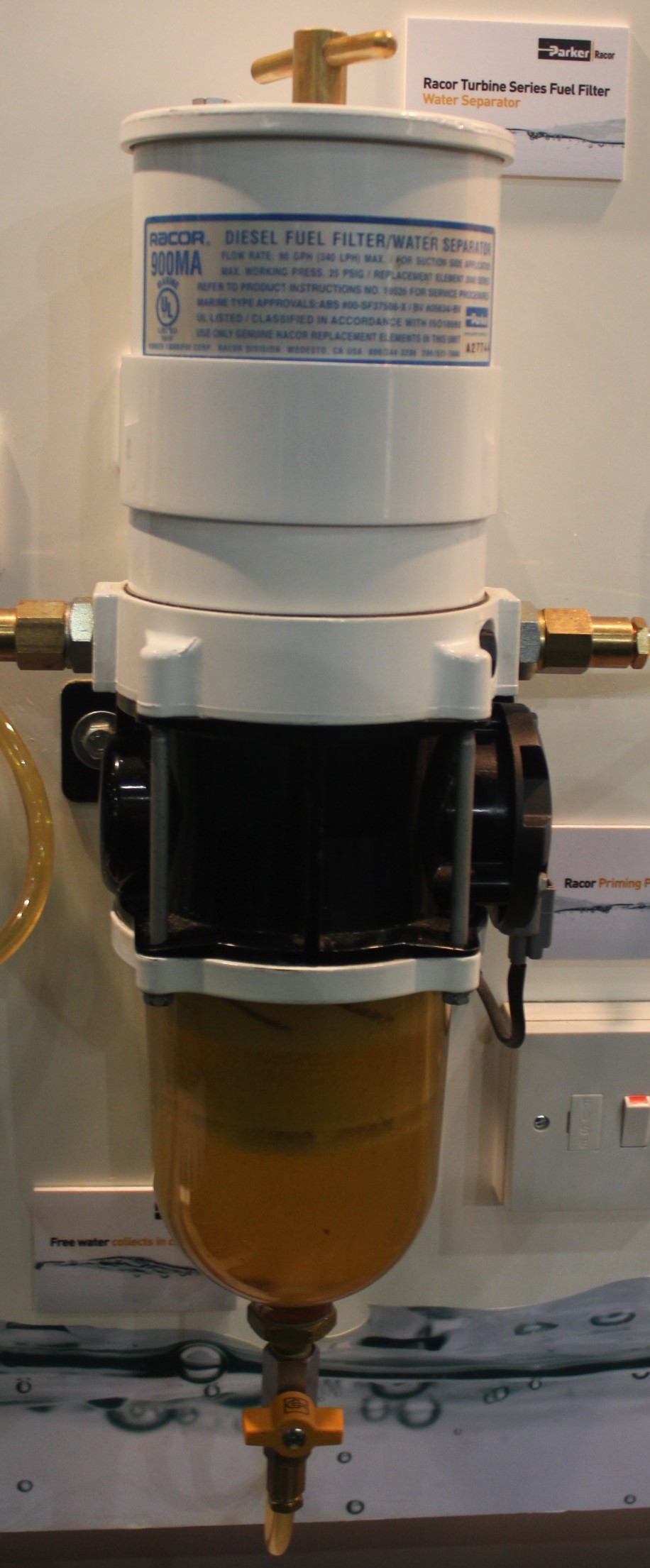
Secondary Fine Filter
This filter removes smaller contaminants that could harm injectors or clog engine filters. Typical features include:
- 2–10 micron rating
- Spin-on or cartridge-style elements
- Restriction gauge or vacuum port to indicate clogging
Some systems use dual-parallel filter housings to allow element changes without shutting down the system.
4. Hoses and Fittings
All plumbing components must be:
- Diesel-compatible
- ABYC-compliant for marine use
- Rated for suction or pressure depending on location
- Fuel-grade hose (A1 or A2 rating) is essential.
5. Tank Pickup and Return Fittings
These may use:
- Existing tank supply ports
- Dedicated polishing pickup tubes reaching near the tank bottom
- Custom return fittings integrated into the filler or vent port
6. Electrical Control System
- At minimum, this includes:
- Power switch or control panel
- Fuse or circuit breaker
- Indicator lights for pump operation
More advanced systems add:
- Timers (for automated daily/weekly polishing)
- Pressure/vacuum sensors
- Water-in-bowl alarms
Installing a
Diesel Fuel Polishing System on a Sailing Boat
Step 1: Planning and Component Placement
The polishing system should be mounted close to the tank yet accessible for service. Considerations include:
- Adequate space for filter changes
- Ventilation to minimize fume buildup
- Avoiding sharp bends in hose runs
- Ensuring easy access to drains and bowls
The pump is usually placed before the filter bank to ensure reliable suction.
Step 2: Plumbing the Fuel Lines. The typical plumbing path is:
Tank pickup → Pump → Primary water separator → Fine filter → Return line → Tank
Steps include:
- Installing or utilizing a tank pickup located near the bottom
- Running A1-rated hose to the pump and then to the filter housings
- Mounting filters vertically with clear bowls visible
Connecting the polished fuel return to an unused tank port or modifying the filler neck with a weldless return fitting
Step 3: Electrical Wiring
The pump and any electric components are wired to:
- The vessel’s DC distribution panel
- A dedicated breaker or fused circuit
- A control switch or timer
- If automatic controls are used, sensors must be wired per manufacturer instructions.
Step 4: Priming and Testing
Once installed:
- Fill filters with clean diesel
- Run the system while checking for leaks
- Observe the bowl for water accumulation
- Verify pressure or vacuum readings
A full polishing cycle typically requires circulating the tank volume 2–4 times.

Mechanical
and Electrical Repairs Resource
If you are headed somewhere remote consider the need to expand your knowledge base or have an information resource on board. Why not get a copy of my book The Marine and Electrical and Electronics Bible 4th Edition. By and for yachties, with everything from batteries and charging, solar and wind, diesel engines and marine electronics and so much more. Your complete systems guide. 650 pages of practical advice. In Australia and New Zealand order a copy through Boat Books. UK and European boats can buy the UK Edition Here. US and Canadian boats can get the US Edition Order Here. Marine systems are my profession so let me help you. By a liveaboard boat owner for other boat owners


Marine diesel fuel polishing systems
A marine diesel fuel polishing system is an invaluable addition to any sailing boat that relies on stored diesel for long periods, especially in environments prone to water contamination and microbial growth. By continuously or intermittently recirculating fuel through pumps, water separators, and fine filters, polishing systems maintain fuel quality, reduce engine failures, and extend the life of critical engine components. With proper installation, including careful routing of hoses, appropriate filter placement, and safe electrical connections, a marine diesel fuel polishing system can deliver years of reliable service and dramatically enhance the dependability of a vessel’s propulsion and power-generation systems.