Marine
Battery Systems: Technical Overview of Onboard Power & Charging
Marine battery systems form the backbone of a yacht’s electrical infrastructure. Every essential function, navigation electronics, communications, refrigeration, lighting, pumps, autopilot, and emergency systems, depends on a stable and well‑managed energy supply. Understanding how batteries work, how they are charged, and how the various components of the power system interact is fundamental to maintaining reliability and preventing failures offshore. This page provides a high‑level technical introduction to the core concepts, technologies, and system behaviours that define modern marine battery systems.
Marine battery systems demand precise configuration, and most failures trace back to predictable patterns in AGM, flooded lead‑acid, gel, and LiFePO₄ marine batteries. Troubleshooting often begins with diagnosing low voltage, rapid voltage drop under load, or alternator overheating, all of which point to incorrect multi‑stage battery charging or mismatched bulk, absorption, and float charging profiles. Issues such as solar underperformance, MPPT misconfiguration, or DC‑DC charger faults frequently appear in mixed‑chemistry systems. Lithium installations introduce additional challenges, including BMS disconnect issues, cell imbalance, and lithium low‑temperature charging limits. Long‑tail technical problems, like determining the correct charging voltage for AGM batteries, preventing alternator damage when charging lithium, or resolving uneven charge acceptance across a battery bank, highlight the need for accurate regulation, proper wiring, and system‑wide compatibility. Effective troubleshooting depends on understanding how chemistry, charging sources, and protective devices interact under real‑world loads.
1.
The Role of Batteries in Marine Electrical Systems
Unlike automotive start batteries, which are designed for short bursts of high current, marine house batteries are engineered for deep cycling and sustained energy delivery. They act as the central energy reservoir, smoothing the fluctuations between power generation and consumption. Onboard loads vary widely, from low‑draw sensors to high‑demand devices like windlasses and inverters, and the battery bank must supply stable voltage across all of these demand conditions. A well‑designed battery system ensures:
- Consistent voltage for sensitive electronics
- Adequate reserve capacity for extended periods without charging
- Protection against voltage sag under heavy load
- Compatibility with multiple charging sources
- Resilience in emergency scenarios
The battery bank is not an isolated component; it is the central node in a dynamic ecosystem of charging devices, regulators, monitoring systems, and protective hardware.
2.
Battery Types and Their Characteristics
Marine battery technology has evolved significantly, and each chemistry behaves differently under load, temperature, and charging conditions. Selecting the correct type, and configuring the system around it, is essential for performance and longevity. Understand 12 Volt boat batteries and your boat batteries. It is worth mentioning the subject of portable lithium ion batteries as they present many risks.
Flooded Lead‑Acid (FLA). Traditional and widely used, FLA batteries offer predictable behaviour and low upfront cost. They require ventilation and periodic electrolyte maintenance. Overcharging can produce hydrogen gas, and undercharging leads to sulphation, reducing capacity.
AGM (Absorbed Glass Mat) Batteries. AGM batteries are sealed, maintenance‑free, and capable of higher charge acceptance than the FLA. They tolerate vibration well and are suitable for high‑load environments. However, they are sensitive to over‑voltage and heat, and incorrect charging can significantly shorten their lifespan.
Gel Batteries. Gel batteries use a silica‑thickened electrolyte, offering excellent stability and long cycle life. They require lower charging voltages and are easily damaged by aggressive charging profiles. They are less common in modern installations due to compatibility constraints.
Lithium Iron Phosphate (LiFePO₄). The Lithium ion marine battery has transformed marine energy systems. They offer high usable capacity, rapid charging, low internal resistance, and minimal voltage sag. Their operation is governed by a Battery Management System (BMS), which protects against over‑voltage, under‑voltage, over‑current, and temperature extremes. Lithium ion batteries for boats require compatible chargers, alternators, and protective devices to operate safely. Lithium deep cycle batteries offer advantages. Understand Lithium batteries for boats. There are many things to consider with Lithium boat batteries.
Carbon‑Enhanced Lead Batteries. These hybrid lead‑acid variants improve charge acceptance and reduce sulphation, making them well‑suited to partial‑state‑of‑charge operation. They offer a middle ground between traditional lead‑acid and lithium systems.
Understanding the characteristics of each battery chemistry is essential because charging profiles, safety requirements, and system design choices depend on the battery type in use.
3.
How Battery Charging Works
Battery charging is a controlled process designed to restore energy while protecting the battery from damage. Boat battery charging systems including modern chargers and regulators use multi‑stage algorithms tailored to the specific chemistry.
Bulk Stage. The charger delivers maximum current until the battery reaches approximately 70–80% state of charge. This is the fastest stage and is limited primarily by the battery’s charge acceptance.
Absorption Stage. Voltage is held constant while current gradually tapers. This ensures the battery reaches full capacity without overheating or overcharging. Absorption duration varies by chemistry and battery condition.
Float Stage. A reduced voltage maintains the battery at full charge without causing electrolyte loss or stress. Float is essential for lead‑acid batteries but is not always required for lithium systems.
Equalisation (Lead‑Acid Only). A controlled overcharge used to break down sulphation and balance cells. This process must never be applied to AGM, Gel, or Lithium batteries.
Lithium Charging Behaviour. Lithium batteries charge rapidly and efficiently, with minimal time spent in absorption. They do not require float or equalisation. The BMS plays a central role in managing charge acceptance, cell balancing, and protective cut‑offs. Understanding these stages is critical for configuring chargers, alternator regulators, and solar controllers to match the battery chemistry.
Mechanical
and Electrical Repairs Resource
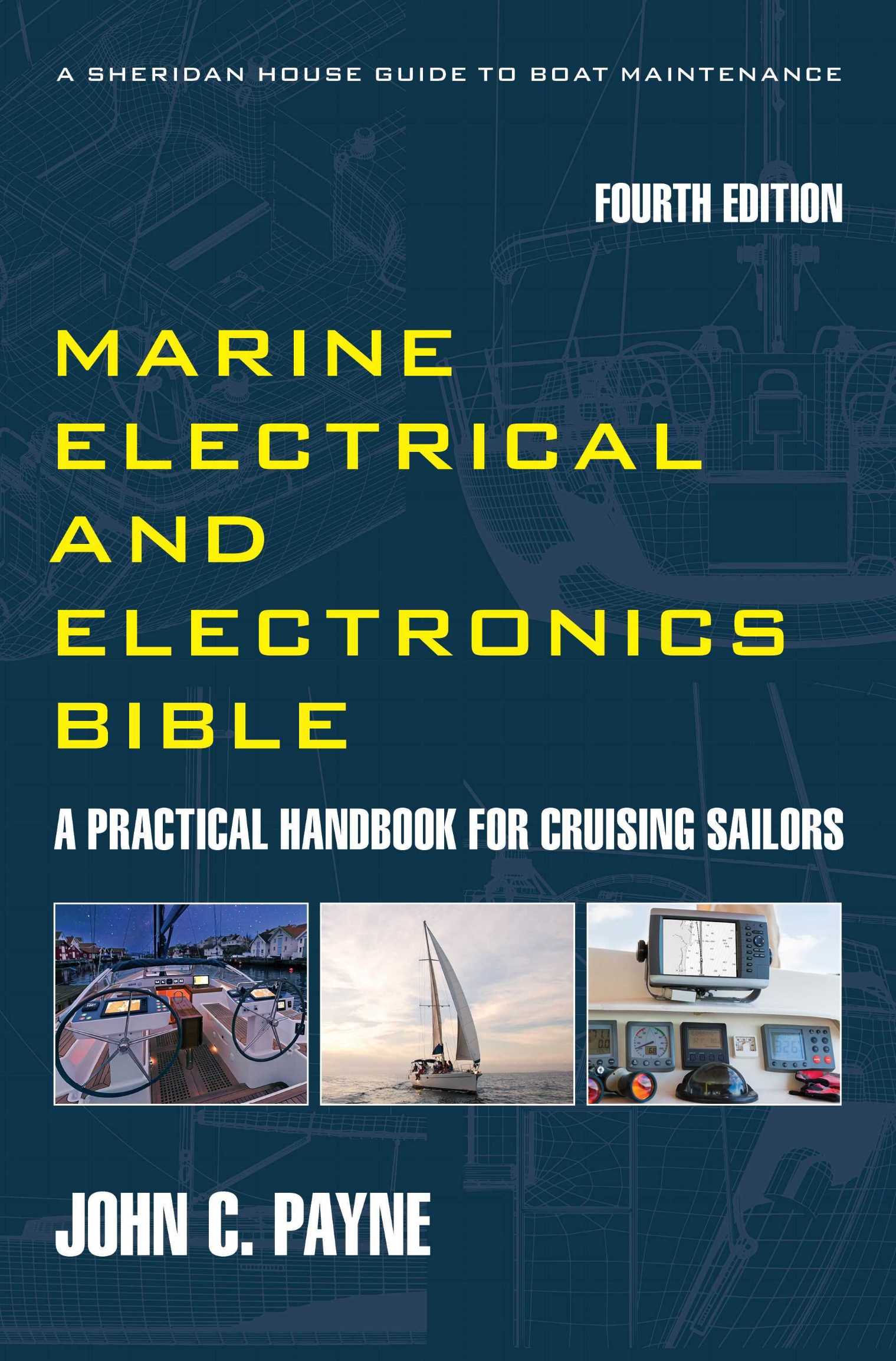
If you are headed somewhere remote consider the need to expand your knowledge base or have an information resource on board. Why not get a copy of my book The Marine and Electrical and Electronics Bible 4th Edition. By and for yachties, with everything from batteries and charging, solar and wind, diesel engines and marine electronics and so much more. Your complete systems guide. 650 pages of practical advice. In Australia and New Zealand order a copy through Boat Books. UK and European boats can buy the UK Edition Here. US and Canadian boats can get the US Edition Order Here. Marine systems are my profession so let me help you. By a liveaboard boat owner for other boat owners

4.
Charging Sources and System Integration
Marine electrical systems typically combine multiple charging sources, each with unique characteristics and limitations. Effective integration ensures consistent charging, reduced engine runtime, and balanced energy flow.
Alternator Charging. Alternators are the primary charging source when the engine is running. Standard internal regulators are designed for automotive batteries and may not provide optimal charging profiles for marine systems. High‑output alternators and external regulators are often required, especially for lithium installations, to prevent overheating and ensure correct voltage control.
Solar Charging. Solar panels provide silent, continuous charging and are highly effective for maintaining battery health. MPPT (Maximum Power Point Tracking) controllers optimise panel output and adjust charging profiles based on battery type. Shading, panel orientation, and temperature all influence performance.
Wind and Hydro Generators. These renewable sources are valuable during passages or in windy anchorages. Output varies with environmental conditions, and regulators must be compatible with the battery chemistry.
Shore Power Chargers. AC chargers provide stable, predictable charging when connected to shore power. Modern chargers offer programmable profiles for different chemistries and temperature compensation for lead‑acid batteries.
DC‑DC Chargers. Used to safely charge one battery bank from another, especially in mixed‑chemistry systems (e.g., lithium house bank with a lead‑acid start battery). They ensure correct voltage regulation and prevent back‑feeding.
A well‑designed marine battery charging system ensures that all charging sources operate harmoniously, preventing overcharging, undercharging, and thermal stress.
5.
Safety Considerations in Marine Battery Systems
Battery systems store significant energy, and incorrect installation or operation can lead to dangerous conditions. Safety considerations vary by chemistry but share common principles.
Thermal Management. All batteries are sensitive to temperature. High temperatures accelerate degradation, while low temperatures reduce charge acceptance. Lithium batteries must not be charged below freezing unless equipped with heating systems.
Ventilation. Lead‑acid batteries can produce hydrogen gas during charging. Proper ventilation prevents gas accumulation and reduces explosion risk.
Over‑Current and Short‑Circuit Protection. Fuses, circuit breakers, and busbars must be correctly sized to protect wiring and equipment. Lithium systems require additional protective devices due to their high discharge capability.
BMS Operation. In lithium systems, the BMS is the final line of defence. It monitors cell voltages, temperature, and current flow, disconnecting the battery if unsafe conditions arise. System design must ensure that BMS disconnects do not compromise critical loads.
Isolation and Switching. Battery switches, contactors, and emergency isolation points must be clearly labelled and accessible. Proper isolation protects equipment during maintenance and prevents accidental energisation.
Safety is not an optional layer, it is integral to system design and operation.
6.
System Behaviour, Performance, and Reliability
Marine battery systems operate in a dynamic environment where loads, charging sources, and conditions constantly change. Understanding system behaviour helps diagnose issues, optimise performance, and ensure long‑term reliability. Key performance factors include:
- Charge acceptance and efficiency
- Voltage stability under load
- Depth of discharge patterns
- Alternator temperature and regulation behaviour
- Solar output variability
- BMS intervention frequency
- Cable resistance and voltage drop
Monitoring systems, from simple voltmeters to advanced shunt‑based monitors, provide insight into system health and energy flow. Accurate data supports informed decisions about charging, load management, and system upgrades.
Marine Battery
System Summary
Marine battery systems are complex, interconnected networks that require correct configuration, compatible components, and an understanding of how different technologies interact. This start page provides a high‑level technical foundation for exploring battery chemistries, charging systems, safety considerations, and system behaviour. With these principles in place, deeper topics such as alternator regulation, lithium integration, solar optimisation, and advanced system design can be approached with clarity and confidence. Some try to portray boat electrical systems as challenging or mystifying, they are not, but the more complex you make it the more failure modes exist.