The Joker Valve
The joker valve is one of those few absolutely critical components, and frequently overlooked. This small, flexible check valve sits in the toilet discharge line and serves as the final gate between the toilet bowl and the downstream plumbing or holding tank. When functioning properly, it prevents backflow, maintains system hygiene, and allows waste to pass efficiently. When worn, stiff, clogged, or improperly installed, the joker valve becomes one of the most common causes of marine toilet blockages, backfilling, and pump difficulty.
This article provides a technical review of the joker valve, how they work, why they fail, how they contribute to blockages, and how proper maintenance prevents most marine toilet problems. The joker valve got its name because of its three‑pointed, tricuspid rubber design the resembles the hat worn by medieval jesters. Another story is that Jabsco originally wanted to call it a “choker valve” but that name was already taken in hydraulics, so they switched to joker.
What Is a Joker Valve?
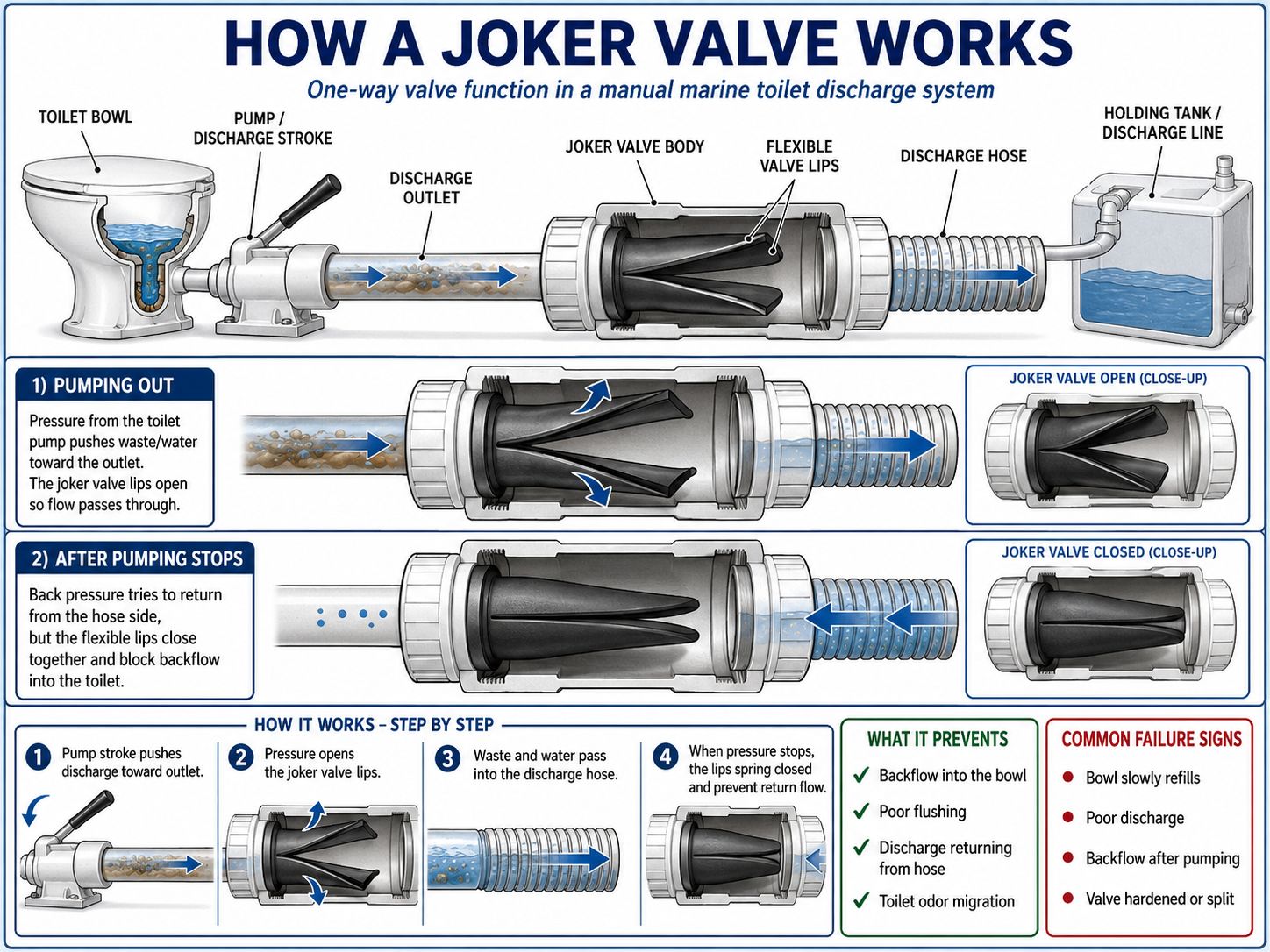
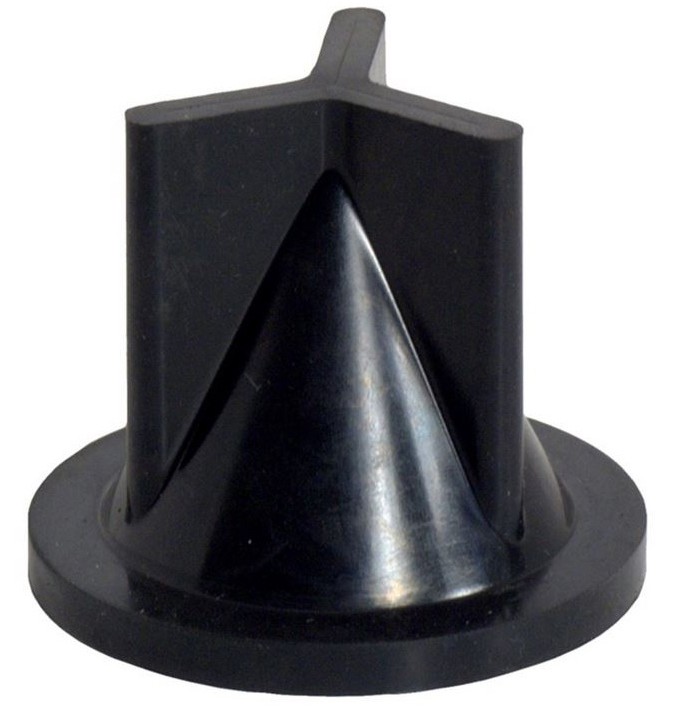
A joker valve is a flexible, one-way check valve typically shaped like a tri-lobed slit or duck-bill. Most are made from nitrile or neoprene rubber, chosen for flexibility and chemical resistance. The primary functions are:
- Prevent backflow from the discharge line into the toilet bowl
- Allow waste and water to exit with minimal restriction
- Maintain system hygiene, limiting odors and contamination
- Reduce the chance of back-pressure in long or uphill hose runs
How Does a Joker Valve Work
When the toilet is flushed:
- The pump pushes water and waste toward the valve.
- Pressure forces the slit in the valve open.
- Once flow stops, the slit closes due to elastic tension.
The valve must open easily, seal reliably, and withstand hundreds or thousands of cycles in an environment containing saltwater, urine, scale, and chemicals.
Why Joker Valves Cause Toilet
Blockages
A joker valve is the most common choke point in the sanitation system. A stiff valve cannot open fully, reducing the effective discharge diameter and increasing resistance. Blockages occur when:
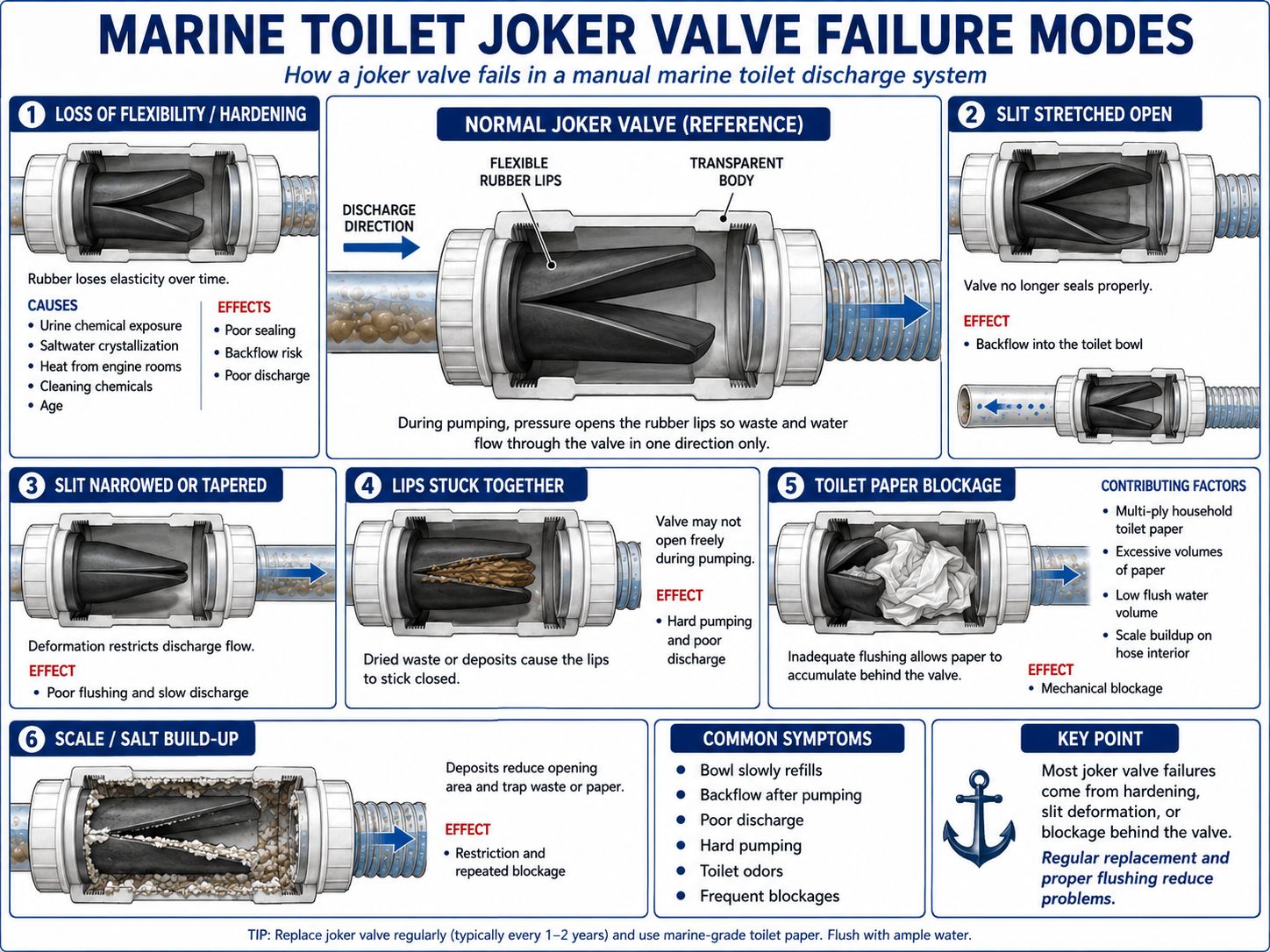
The Valve Loses Flexibility. Over time, rubber stiffens due to:
- Urine chemical exposure
- Saltwater crystallization
- Heat from engine rooms
- Cleaning chemicals
- Age
The Valve’s Slit Deforms or Tapers. Deformation is one of the most frequent failure modes. The slit may suffer the following:
- Become stretched open (causing backflow)
- Deform into a narrow point (restricting flow)
- Stick together due to dried waste
Toilet Paper Accumulation. Inadequate flushing allows toilet paper to lodge behind the joker valve. This eventually forms a dense plug. Problems intensify with:
- Multi-ply household toilet paper
- Excessive volumes of paper
- Low flush water volume
- Scale buildup on hose interior
- Once trapped behind the valve, paper forms a mechanical blockage.
Marine Scale and Calcium Deposits
Scale narrows passageways and encourages paper and solids to snag. Saltwater flushing introduces minerals that crystallize on:
- Pump chambers
- Intake passages
- Joker valve lips
- Hose inner walls
Pump Failure Contributing to Blockages. A weak pump or macerator may not generate sufficient pressure to open a tight joker valve, causing the following:
- Slow evacuation
- Incomplete waste passage
- Buildup upstream
Mechanical
and Electrical Repairs Resource
If you are headed somewhere remote consider the need to expand your knowledge base or have an information resource on board. Why not get a copy of my book The Marine and Electrical and Electronics Bible 4th Edition. By and for yachties, with everything from batteries and charging, solar and wind, diesel engines and marine electronics and so much more. Your complete systems guide. 650 pages of practical advice. In Australia and New Zealand order a copy through Boat Books. UK and European boats can buy the UK Edition Here. US and Canadian boats can get the US Edition Order Here. Marine systems are my profession so let me help you. By a liveaboard boat owner for other boat owners


Symptoms of Joker Valve Problems
You likely have a joker valve issue if you observe the following:
- Slow Draining from the Toilet Bowl. The bowl takes excessive pumping cycles or multiple electric flushes to clear.
- Backflow into the Toilet. Water or waste reappears in the bowl minutes after flushing—classic sign of a stretched or worn valve.
- Pump Handle Resistance. Manual pumps feel harder to operate as pressure builds behind a restricted valve.
- Gurgling, bubbling, or air intrusion. Indicates poor sealing or valve deformation.
- Odors. If the joker valve does not seal fully, gases from the holding tank may seep backward.
- Frequent Clogs at the Tank Inlet. A partially restricted joker valve limits flow and increases solids accumulation upstream.
How to Inspect a Joker Valve
Inspection should occur annually or whenever symptoms appear. If the valve is stiff, misshapen, or visibly worn, replacement is essential. Perform the following steps:
- Shut intake seacock (if seawater flush).
- Pump toilet dry to remove remaining water.
- Remove discharge hose clamps.
- Pull out the joker valve assembly.
- Inspect for tears
- Inspect for hardening
- Inspect for warped or flared slit
- Inspect for accumulated debris
- Inspect for scale buildup
Joker Valve Replacement Schedule
Many toilet manufacturers recommend annual replacement regardless of apparent condition. The joker valve should be considered a consumable part. Recommended Replacement Intervals:
- Every 12 months (best practice)
- Every 6 months for heavy charter use
- Immediately if symptoms appear
Joker Valve-Induced Blockage
Prevention
Preventive strategies revolve around proper flushing, toilet paper selection, and system design.
- Use Enough Water. Low-volume flushing is the number-one cause of blockages.
- Manual toilet guideline:
- 6–10 strokes to wet the bowl
- 12–20 strokes after bowl empties
- Finish with several "dry" mode cycles
- Electric toilets should be run long enough to clear hoses fully.
Choose Rapid-Dissolve Toilet Paper
Use only the following:
- Marine toilet paper
- RV toilet paper
- Septic-safe paper that passes a dissolution test
- Avoid thick multi-ply household papers that jam the valve.
Reduce Scale Buildup
Freshwater flush systems experience fewer valve failures. Saltwater scale narrows passageways. For prevention:
- Rinse system with fresh water periodically
- Use white vinegar or mild descaler monthly
- Convert to freshwater flushing if possible
Keep Hose Runs Smooth and Logical. Proper routing ensures waste velocity stays high enough to clear the valve. Poor installation contributes heavily to joker valve problems. Avoid the following:
- Tight hose bends
- Sags where solids collect
- Long vertical lifts
- Hose friction points
Maintain Holding Tank Venting
A blocked vent line increases tank back-pressure, forcing waste backward against the joker valve. Ensure vents are:
- Free of mud wasps (a popular problem)
- Unobstructed by charcoal filters
- Correct diameter (19–25 mm)
Clearing Blockages Caused by Joker Valves
Never force pumps under pressure, this risks hose rupture or seal blowouts. When a blockage does occur:
- Open the system at the joker valve, this is where most clogs sit.
- Remove debris and hardened paper.
- Scrape scale from surrounding fittings.
- Replace valve with a new one.
- Flush system thoroughly with fresh water.
The Joker Valve
The joker valve, though small and inexpensive, plays a central role in the performance and reliability of marine sanitation systems. It controls backflow, influences flow velocity, and is often the first point where restrictions turn into full blockages. By selecting the right toilet paper, flushing with adequate water, maintaining proper hose routing, preventing scale buildup, and replacing the joker valve annually, boat owners can prevent most toilet clogs before they form. Understanding the joker valve function and maintenance needs ensures a reliable, odor free sanitation system capable of long-term, trouble-free service at sea. What condition is your joker valve in, time to maintain it.