How to Unclog Boat Toilet
How to unclog boat toilet? The answer starts with how they are designed and installed. Marine toilet blockages are among the most common and frustrating plumbing problems on boats. Unlike household plumbing, marine sanitation systems operate with minimal water, narrow hoses, vented loops, pumps, joker valves, and holding tanks, each of which can become a restriction point. Preventing clogs is far easier than clearing them, and proper system design, user behavior, and regular maintenance dramatically improve reliability.
This article provides a detailed technical overview of how to prevent clogs in marine toilets, addressing mechanical, hydraulic, and operational factors that contribute to blockage formation. Preventing clogs in marine toilets requires a combination of proper toilet paper selection, adequate flushing technique, routine maintenance, and intelligent system design. Marine sanitation systems are mechanically simple but unforgiving—minor misuse or neglect can quickly lead to expensive, unpleasant blockages. By choosing rapid-dissolve toilet paper, using sufficient flush water, maintaining joker valves, controlling scale buildup, routing hoses correctly, and educating guests, boat owners can ensure a reliable, low-maintenance sanitation system that performs consistently in all conditions.
Understand Why Marine Toilets Clog
Marine toilets differ from domestic toilets in three key ways:
- Small-diameter hoses. Most installations use 19–38 mm sanitation hose, compared to 90–100 mm domestic pipes.
- Low water volume. Manual and electric toilets use only a fraction of the water of a household toilet, reducing flushing force.
- Pump-driven flow. Waste must be pulled or pushed through multiple bends, valves, and loops.
Clogging Causes. Understanding these mechanisms is the foundation of prevention. Clogs typically form due to the following
- Inappropriate toilet paper
- Insufficient water flushing
- Build-up of scale and mineral deposits
- Degraded joker valves
- Foreign objects flushed by guests
- Collapsed or permeated hoses
Use the Correct Toilet Paper
This is the single most effective clog-prevention measure. See the article on toilet paper on boats. Improper toilet paper creates thick, cohesive masses that stick to hose walls and clog joker valves. Perform a jar test: add water and shake lightly. The paper should disintegrate rapidly. Paper types recommended area as follows:
- Marine rapid-dissolve toilet paper
- RV/chemical-toilet paper
- 1–2 ply septic-safe paper (only if it passes a dissolution test)
DO NOT USE
- Luxury multi-ply household paper
- Wipes (even “flushable” types)
- Paper towels or tissues
- Cotton pads, tampons, or sanitary items
Use Enough Water When Flushing
Most clogs form because users try to conserve water excessively.
Minimum Water Rule. Run at least 10–15 full pump cycles (manual) or a full flush cycle (electric). Why this matters:
Water lubricates hoses
- Suspends solids
- Helps the joker valve seal properly
- Carries waste past the vented loop
- Prevents waste accumulation at holding tank inlet
Manual toilet technique. Low-water flushing is one of the most common causes of obstructions.
- Pump water into the bowl ("wet" mode).
- Pump several strokes after waste leaves bowl.
- Switch to “dry” mode to clear remaining water from bowl.
Maintain Joker Valves Regularly
The joker valve is a soft rubber one-way valve on the discharge side of most marine toilets. When worn, stiff, or swollen, it restricts flow and catches paper. A fresh joker valve dramatically reduces clog risk. Maintenance frequency:
- Replace every 12 months (heavy use)
- Replace every 2–3 years (light use)
- Signs of a failing joker valve:
- Bowl backfills
- Slow discharge
- Pump handle resistance
- Odor escaping from discharge line
Control Calcium and Mineral Scale
Buildup
Saltwater flushing introduces calcium that crystallizes inside hoses, narrowing their diameter. Scale builds quickly in warm regions. The consequences are as follows:
- Hose internal diameter reduced
- Paper sticks to hose scale
- Sharp crystals tear toilet paper into clog-forming clumps
Prevention Measures.
- Flush toilet occasionally with freshwater
- Use biodegradable descaler (e.g., diluted vinegar, limescale removers)
- Annual hose flushing with hot freshwater if possible
Convert toilet to freshwater flush (best long-term solution) as freshwater flush systems produce dramatically fewer clogs. Not an option for most boat owners.
Mechanical
and Electrical Repairs Resource
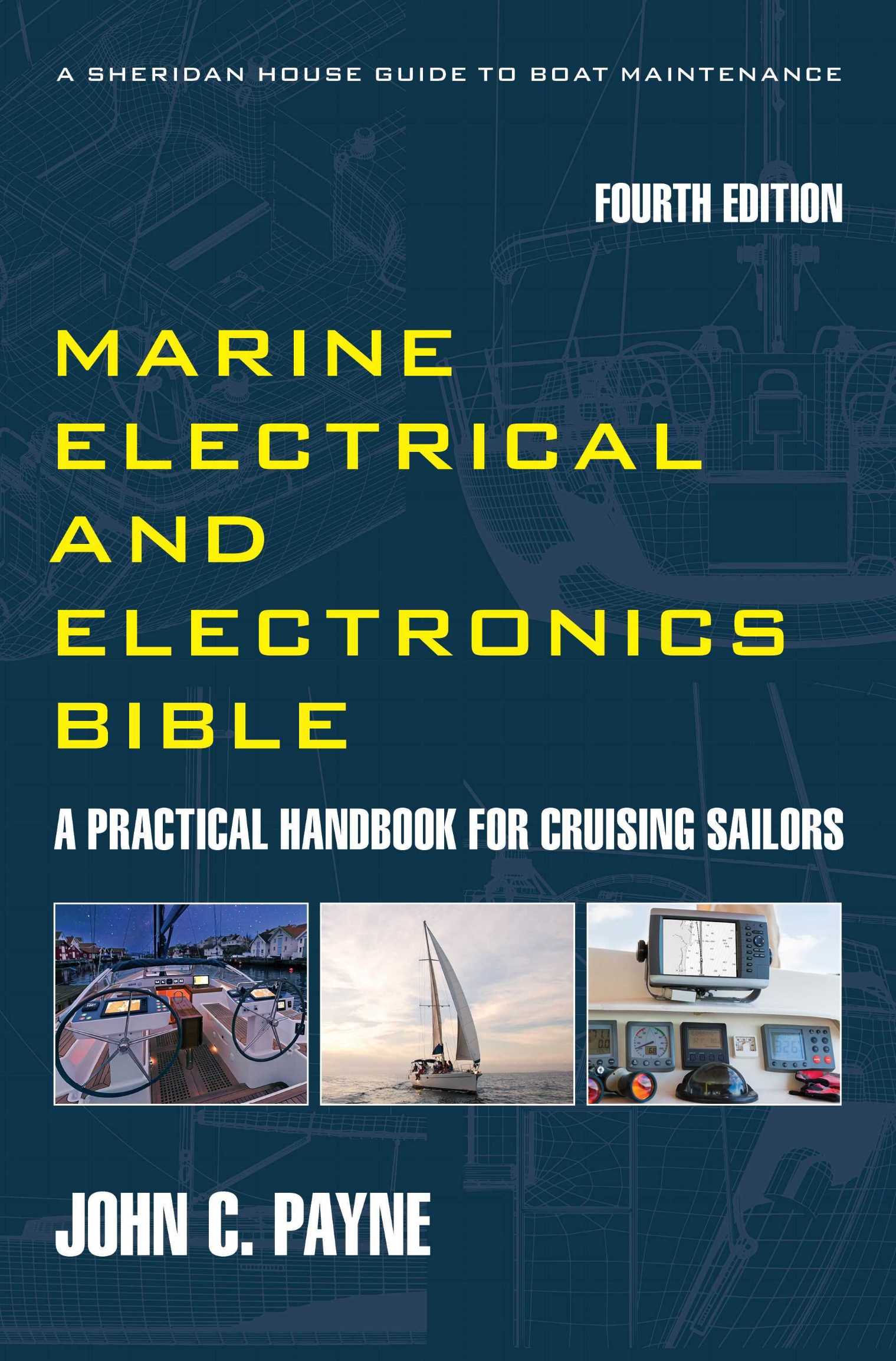
If you are headed somewhere remote consider the need to expand your knowledge base or have an information resource on board. Why not get a copy of my book The Marine and Electrical and Electronics Bible 4th Edition. By and for yachties, with everything from batteries and charging, solar and wind, diesel engines and marine electronics and so much more. Your complete systems guide. 650 pages of practical advice. In Australia and New Zealand order a copy through Boat Books. UK and European boats can buy the UK Edition Here. US and Canadian boats can get the US Edition Order Here. Marine systems are my profession so let me help you. By a liveaboard boat owner for other boat owners

Ensure Proper Installation and Hose Routing
Mechanical design errors are a major cause of chronic blockages. Good installation eliminates restrictions that promote clogging. Avoid the following:
- Long horizontal runs where solids can settle
- Tight bends or kinks that restrict flow
- Hose sags or “traps” where waste accumulates
- Undersized hoses
- Sharp-edged fittings that snag paper
Optimal installation guidelines:
- Use smooth-bore sanitation hose only
- Keep pipe runs as straight as possible
- Minimize vertical lift
- Place vented loops in correct positions
- Support hoses with clamps every 30–40 cm
How to Unclog Boat Toilet - Tools
A small rubber plunger. Carry one on board as they are also useful on sink blockages
A small flexible plumbing snake. Small length ones are available, also again useful for sink drains as well
Rubber Gloves. Always work with disposable gloves on as bacterial infections into small cuts could cause you more problems than a clogged toilet
Prevent Holding Tank Inlet Blockages
The most common place for clogs is at the holding tank inlet. This is caused by toilet paper and waste collect at the first elbow or inlet fitting. If the tank vent is blocked, the pump must push against tank pressure, increasing clog risk. Some solutions are as follows:
- Increase water volume when flushing
- Ensure vent line is unobstructed for proper airflow
- Use top-mounted tank inlets
- Periodically backflush holding tank with freshwater
- Use enzymatic tank treatments (avoid formaldehyde)
Educate Crew and Guests
Most toilet blockages occur when new guests use the boat. A laminated sign inside the head prevents most user-induced clogs. Posting simple instructions helps:
- Only marine toilet paper
- Use enough water
- Nothing else goes in the toilet
- How to operate the pump (wet/dry modes)
- What to do if the toilet seems slow
Install an Easy-Access Cleanout System
These reduce time and mess when clearing blockages. For boats prone to clogs, consider the following:
- Access ports in hoses
- Unions near bends
- Removable sections of plumbing
- Quick-disconnect fittings on tank inlet
Regular Preventive Maintenance
A consistent maintenance schedule dramatically reduces clog incidents.
Quarterly Tasks
- Clean bowl rim jets
- Inspect hoses for softness or swelling
- Flush with freshwater
Seasonal Tasks
- Replace joker valve
- Remove scale buildup
- Inspect pump seals and valves
- Backflush holding tank
- Check vent line airflow
- Every 3–5 years: Replace sanitation hoses (permeation and mineral hardening occur over time)
Warning Signs of an Impending Clog
Any of these symptoms means attention is required before full blockage occurs. Early detection prevents catastrophe.
- Toilet pump hard to operate
- Slow drain from bowl
- Bubbling or backflow into toilet
- Water rises after pumping
- Loud strain noises from macerator
- Tank vent emits strong sewage odors
- Increased time to empty bowl
How to Unclog Boat Toilet
How to Unclog Boat Toilet is a key skill but unclogging boat toilets requires patience and care. Start by shutting off the water supply, then use a plunger or manual pump to dislodge blockages. Check hoses and valves for buildup, clearing debris with marine-safe cleaners. Avoid harsh chemicals that damage seals. Regular maintenance, proper waste disposal, and freshwater flushing help prevent clogs, ensuring reliable onboard sanitation. How to Unclog Boat Toilet is something you know but hopefully never have to do.