How To Anchor Boat - Part 2
How to anchor boat and the
challenges to consider are varied including environmental ones. A sailing yacht
at anchor experiences a complex combination of environmental forces that
together determine the total load placed on the anchor, chain, and deck
fittings. Wind is usually the dominant contributor, acting on the exposed hull,
mast, and rigging. Because wind pressure increases with the square of wind
speed, loads rise rapidly in strong conditions, making a yacht that rides
comfortably at 15 knots place several times greater force on its tackle at 30
knots. So many things to consider, from how to anchor a boat overnight, or how to anchor in wind or current, and that big issue of how to know if your anchor is dragging and then the basics of how to retrieve an anchor.
Wave action introduces additional dynamic loads. As the yacht pitches, rolls, and yaws, the chain alternately slackens and snatches tight. These shock loads can exceed the mean static load by several factors, especially in short, steep wave patterns common in shoaling bays or tidal inlets. Current also plays a significant role, creating a steady horizontal force that can oppose or reinforce the direction of wind and waves. As tides turn, changes in alignment can momentarily spike load as the yacht swings and the rode re-tensions. Vessel-specific factors, such as displacement, windage, keel configuration, and the length and type of rode, further influence loading behaviour. Understanding these combined forces is essential for selecting reliable ground tackle, ensuring secure anchoring, and reducing the risk of dragging in challenging conditions.
How To Anchor Boat - Wind Effects
Wind acting on a boat’s hull and rig directly influences how securely the anchor sets and holds. The exposed surfaces of the hull, mast, and rigging catch wind, creating lateral and forward forces that can cause yawing, sailing at anchor, or sudden shock loads on the rode. These forces can either help dig the anchor in (if aligned properly) or compromise holding by pulling it sideways or lifting it out.
Hull Windage. The broad sides and superstructure act like sails, it is also known as the sail plane effect. A high freeboard or cabin increases windage, amplifying the sideways forces.
- Rig Windage. Even with sails furled, masts, booms, and rigging catch wind. Tall rigs create leverage that exaggerates yawing.
- Combined Effect: The balance between underwater resistance (keel, hull shape) and above-water windage determines whether the boat sits quietly head-to-wind or sheers across the anchor.
Impact on Anchor Setting
- Anchor Digging: A steady headwind can help drive the anchor deeper as the boat pulls back.
- Anchor Dragging: Crosswinds or gusts can pull the anchor sideways, reducing holding power.
- Shock Loads: Gusts cause sudden jerks on the rode, especially if chain is short or no snubber is used.
- Swinging/Yawing: Wind imbalance makes the boat sheer back and forth, loosening the anchor’s bite.
Mitigation Strategies
- Scope Calculation: Use generous scope (chain length 5–7× depth) to absorb wind loads.
- Snubber/Bridle: Nylon snubbers or bridles reduce shock loads and stabilize swing.
- Anchor Riding Sail: A small sail set aft balances windage, reducing yaw.
- Anchor Choice: Modern anchors (Rocna, Spade, Mantus) reset better under shifting wind loads than older plow or claw designs.
- Set Under Power: Back down firmly with the engine to ensure the anchor is dug in before relying on wind forces.
How To Anchor Boat - The Anchor Swivel
How to anchor boat is quite complicated. The anchor swivel is a metal fitting placed between the anchor and the chain. The purpose is to allow the rode to rotate freely, preventing twists and kinks when the boat swings at anchor. The swivel prevents chain twist, as the boat yaws or swings with wind/tide, the swivel reduces torsion in the chain. The swivel also helps the anchor come up correctly on the roller, especially with plow-style anchors that need to self-orient. They also facilitate smooth anchor deployment with less chance of chain snarls when paying out.
Swivels can be weaker than the chain itself if poorly designed or undersized. Many swivels are not engineered for lateral loads. If the anchor is pulled sideways (common in tide shifts), the swivel can bend or fail. Stainless swivels can suffer crevice corrosion, especially if buried in mud or sand. Some sailors foolishly rely on swivels instead of proper anchoring technique such as the correct scope, using a snubber or bridle.
If replacing your swivel use only a high quality, high-grade, load-tested swivels (e.g., forged stainless or galvanized, from reputable name brand manufacturer. Cheap and cheerful will cause you grief. The swivel should match or exceed chain strength. You need to attach swivel directly to the anchor shank, not mid-chain. Regularly check for cracks, corrosion, or distortion. I do this every time I retrieve my anchor.
An anchor swivel can be useful for preventing chain twist and easing retrieval, but it’s often considered a potential weak link. Many seasoned sailors either use only top-quality swivels or avoid them altogether, relying instead on technique and gear sizing.
How To Anchor Boat - Wave Action and Surge
Wave action and surge when anchored refers to the forces created by waves moving past a stationary vessel. Surge is the forward-and-back motion caused by wave sets, while wave action includes vertical (heave), rolling, and pitching motions. Together, they stress the anchor system, rode, and hull, sometimes making the boat lurch or strain against the ground tackle.
- Anchor Strain: Surge can cause snatch loads on the rode, especially if chain is short or nylon snubbers are absent.
- Anchor Dragging: Repeated surging can “plow” the anchor loose from the seabed.
- Crew Safety: Boarding or disembarking in surge is hazardous—ladders and dinghies move unpredictably.
- Hull Stress: Constant pitching and rolling increase fatigue on fittings and rigging.
Surge: The fore-and-aft horizontal motion of a vessel caused by passing waves. It is different from sway (side-to-side) or heave (up-and-down). Surge pushes the boat forward, then backward, in rhythm with wave sets. Even moderate surge can be stronger than the crew’s ability to resist, which is why divers and boaters are taught to “ride the surge” rather than fight
Wave Action at Anchor. These motions combine to create complex stresses on the anchor rode and fitting. Wave action includes all motions induced by waves:
- Pitch: Bow up and down.
- Roll: Side-to-side rocking.
- Heave: Vertical lift/drop.
- Yaw: Swinging around the anchor.
- Surge: Forward/backward push.
Mechanical
and Electrical Repairs Resource
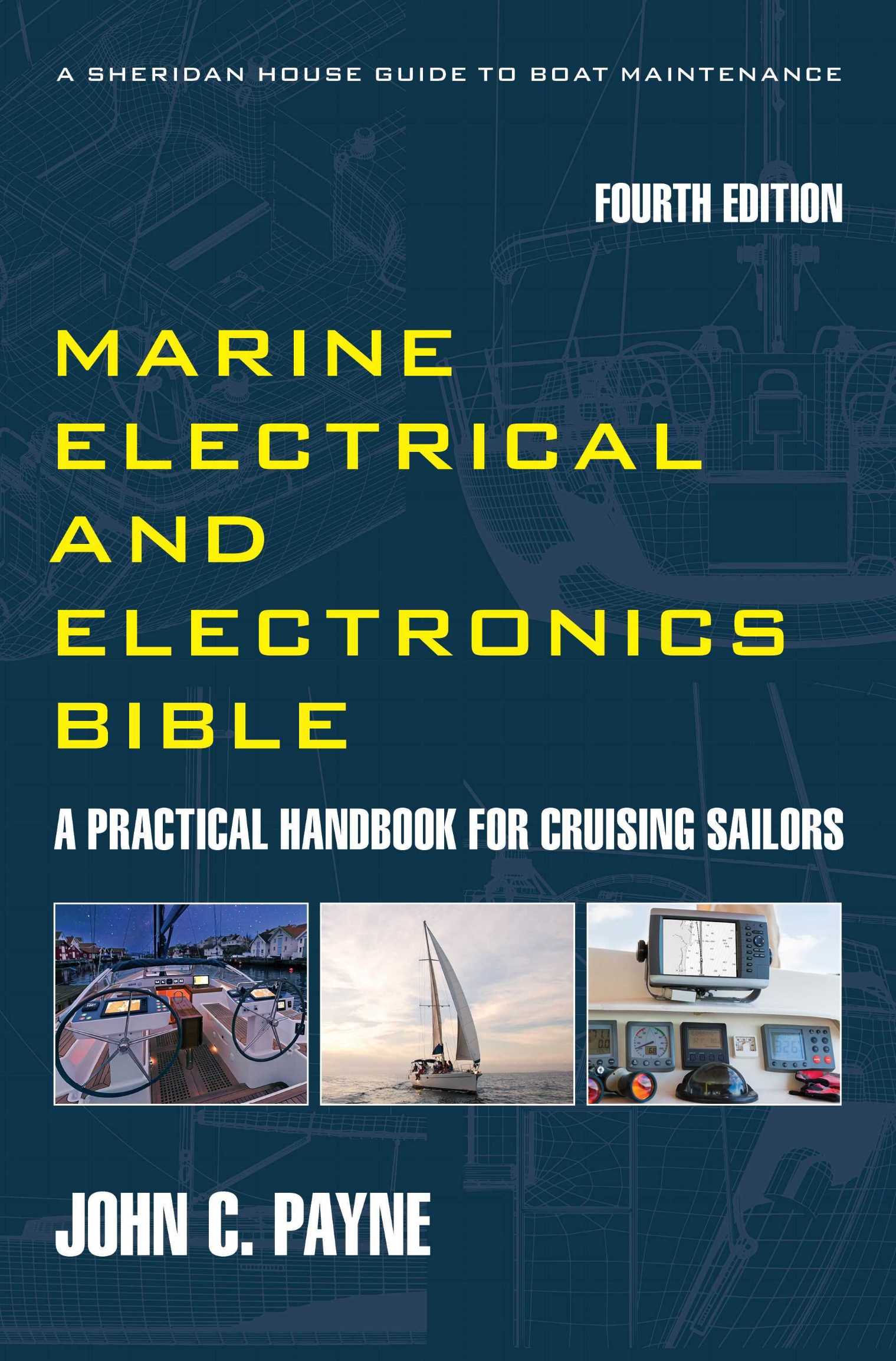
If you are headed somewhere remote consider the need to expand your knowledge base or have an information resource on board. Why not get a copy of my book The Marine and Electrical and Electronics Bible 4th Edition. By and for yachties, with everything from batteries and charging, solar and wind, diesel engines and marine electronics and so much more. Your complete systems guide. 650 pages of practical advice. In Australia and New Zealand order a copy through Boat Books. UK and European boats can buy the UK Edition Here. US and Canadian boats can get the US Edition Order Here. Marine systems are my profession so let me help you. By a liveaboard boat owner for other boat owners

How To Anchor Boat - Tidal Currents
Tidal currents. Tidal currents affect anchoring by changing the direction and strength of forces on your boat, which can cause the anchor to drag, reset, or fail if not properly set. Strong currents can swing the vessel through wide arcs, strain the rode, and compromise holding power, especially during tide changes. Tidal currents influence how to anchor boat planning and execution.
- Anchor Dragging: When the tide turns, the current reverses direction. If the anchor isn’t well dug in, the shift can pull it free.
- Swinging Room: Boats swing with the current, often through 180°. In crowded anchorages, this can lead to collisions or tangled rodes.
- Load on Rode: Tidal currents exert stronger forces than wind in many areas. This increases tension on the rode and can cause snatch loads if scope is short.
- Depth Changes: Tidal rise and fall alters scope ratio. At high tide, scope may shorten relative to depth, reducing anchor efficiency.
- Anchor Resetting: Some anchors reset well when pulled from a new angle, but older designs (like the Danforth anchor) may fail to bite after a tide shift.
How To Anchor Boat - Yawing and Sailing
Yawing and sailing at anchor means a boat is swinging or sheering back and forth across the wind while tethered to its anchor, often appearing as if it is “sailing” despite being stationary. This motion increases strain on the anchor and can cause dragging or reduced holding power.
Yawing at anchor: This is the side-to-side swinging of a boat around its anchor point. Instead of sitting quietly head-to-wind, the vessel pivots repeatedly, sometimes through wide arcs of 90° or more. This happens when the center of wind force (sails, superstructure, topsides) is forward of the underwater resistance center (keel, hull shape). This imbalance creates instability, making the boat sheer across the wind. Each swing increases tension on the rode (anchor line/chain), which can “wriggle” the anchor loose and eventually causes dragging.
Sailing at anchor: Boats with tall topsides or rigs can catch wind like sails, causing them to move forward and sideways even while anchored. This motion appears like the boat is “sailing” around its anchor, tracing arcs across the anchorage. Catamarans and beamy yachts are especially prone to this, sometimes swinging through 180°.
Wind load increases exponentially. A 10-metre yacht in a 20-knot breeze might generate less than 200 kg of horizontal pull, but at 40 knots this may exceed 700–900 kg. In storm conditions (50–60 knots), loads can exceed 1,500 kg on a cruising yacht. Anchor weight contributes to resisting these loads, particularly at the moment when the chain catenary is fully straightened.
How to Anchor Boat
Anchoring is influenced by yawing, surge, tidal currents, wind loads, and hardware like swivels. Yawing and sailing strain the rode, surge adds shock loads, tides alter scope and reset anchors, and windage causes swinging or dragging. Swivels reduce chain twist but risk failure if undersized. Proper scope, snubbers, and anchor choice ensure secure holding. How to anchor boat includes much more than the anchor and winch.