How to Anchor a
Boat
How to anchor a boat is one of the most fundamental seamanship skills and among the most technically involved. A well-executed anchoring manoeuvre requires correct understanding of equipment behaviour, environmental forces, and procedural sequencing. Ask ten yachties about anchoring and there seems to be ten opinions. I am reminded of a quote. “Anchor as though you plan to stay for weeks, even if you intend to leave in an hour.”
How to anchor a boat and anchoring involves selecting a safe location with suitable seabed, approaching slowly into the wind, and lowering the anchor under control. Pay out sufficient scope, let the anchor set by gently reversing, and check for secure holding. Add a snubber to absorb loads, monitor position regularly, and adjust scope or reset the anchor if dragging is detected.
How to Anchor a
Boat - Preparation
Before approaching an anchorage, the skipper must evaluate three key factors:
Anchorage Assessment. A suitable anchorage must provide the following:
- Adequate depth for the yacht’s draft, expected tidal changes, and swinging circle. Also consider currents for that area.
- Shelter from wind and swell from the current and forecasted direction.
- Sufficient space to swing without risk of collision.
- Good holding ground such as sand, broken shell or firm mud. Avoid weedy, rocky, or very soft mud where anchors may struggle. Check your chart
How to Anchor a Boat - Bottom Composition?
On nautical charts, bottom materials are shown using standardized abbreviations (per NOAA’s Chart No. 1 and international equivalents). These designations indicate seabed composition for anchoring, dredging, and navigation safety. Not all charts show every bottom type; accuracy depends on the survey detail.
Lead Lines. I still use an old fashioned lead line to check if in doubt. The lead is hollowed out to create a recess at the end. You then fill this with grease or petroleum jelly as I do. Lower it and touch bottom and whatever is there, particles of sand, shell, mud etc, adheres to it.
Qualifying Terms. Charts may also add texture or firmness qualifiers: Sf = Soft; F = Fine; Md = Medium; Co = Coarse; Stk = Sticky
For example: Ms = Mud, soft; Sc = Sand, coarse; Stk M = Sticky mud
Hazard awareness such as rock, coral, or weed bottoms are flagged as poor or unsafe for anchoring. Absolutely do not anchor in coral, exercise environmental awareness.
- S = Sand = Often good holding ground
- M = Mud = Soft, often poor holding ground
- Cy = Clay = Firm, generally good holding ground
- St = Stones = Rocky, poor holding ground
- Sh = Shells = Can be mixed with mud/sand, reasonable holding ground
- G = Gravel = Variable Holding
- Cb = Cobbles = poor holding
- R = Rocks = dangerous Holding
- Co = Coral = Hard, Fragile, Not Recommended
- Wd = Weed = Grass, vegetation, poor holding
- Oz = Ooze = very soft mud, poor holding
- Hd = Hard = Poor holding
- Grs = Grass = Poor holding
How to Anchor a Boat - Anchor Systems Check
Ensuring equipment reliability before arrival prevents failures at the most critical moment. A functional anchor system includes the following:
- Chain and/or rope rode in good condition.
- Anchor windlass (electric or manual) fully operational.
- Snubber or bridle ready if using all-chain rode.
- Shackles moused or cable-tied to prevent loosening.
How to Anchor a Boat - Pre-arrival Briefing
Hold a briefing so everyone knows what the procedure is, what the commands are (I use a laminated card for this). If you are sailing with a crew, clearly define clear crew roles, who is on the helm, who is operating the windlass. Establish hand signals or verbal communication commands, as the engine and wind noise can interfere with hearing at the bow. Bow person knows what the proposed anchor depth and scope is. Verify that anchor chain markings are understood. I use a colour coded system with chain coloured plastic inserts.
How to Anchor a Boat - The Anchorage Approach
The yacht approaches the chosen anchoring position slowly, typically at idle speed or less, just making way. The approach ensures the yacht will naturally fall backward as the anchor is deployed, assisting proper setting. The key principles are:
- Approach into the wind or into the current, whichever is the dominant force.
- Maintain steering control while remaining slow enough to stop almost instantaneously.
- Avoid approaching with sail power unless engine backup is immediately available.
The correct way to let go an anchor using the free fall method is called “letting go” or “drop anchoring.” It involves releasing the brake on the windlass to allow the anchor and chain to fall freely under gravity. This method is typically used in depths up to 20 meters and requires careful control to avoid damage or fouling. Windlasses have a clutch to brake and control the speed of chain release. Be aware that a sudden stop can cause shock loading which can damage windlass or anchor chain. The anchor may not set properly if dropped too fast. Safety Note: Stay clear of chain path and windlass, do not insert hand or fingers near chain, gypsy and bow rollers when operating.
Anchor Commands
Below is a practical list of standard deck commands commonly used on sailing yachts when dropping anchor and heaving in (recovering) the anchor. These commands help ensure clear communication between helm (skipper) and bow crew, especially in noisy or stressful conditions. Commands are broadly similar worldwide, though individual boats may adjust wording slightly. The goal is short, unambiguous phrases that prevent misunderstanding
Commands should be short,
loud, and positive (avoid ambiguous “okay” or “ready?”). Bow crew typically
gives situational reports, helm gives action commands, unless safety dictates
otherwise. Crew should confirm each command clearly.
Mechanical
and Electrical Repairs Resource
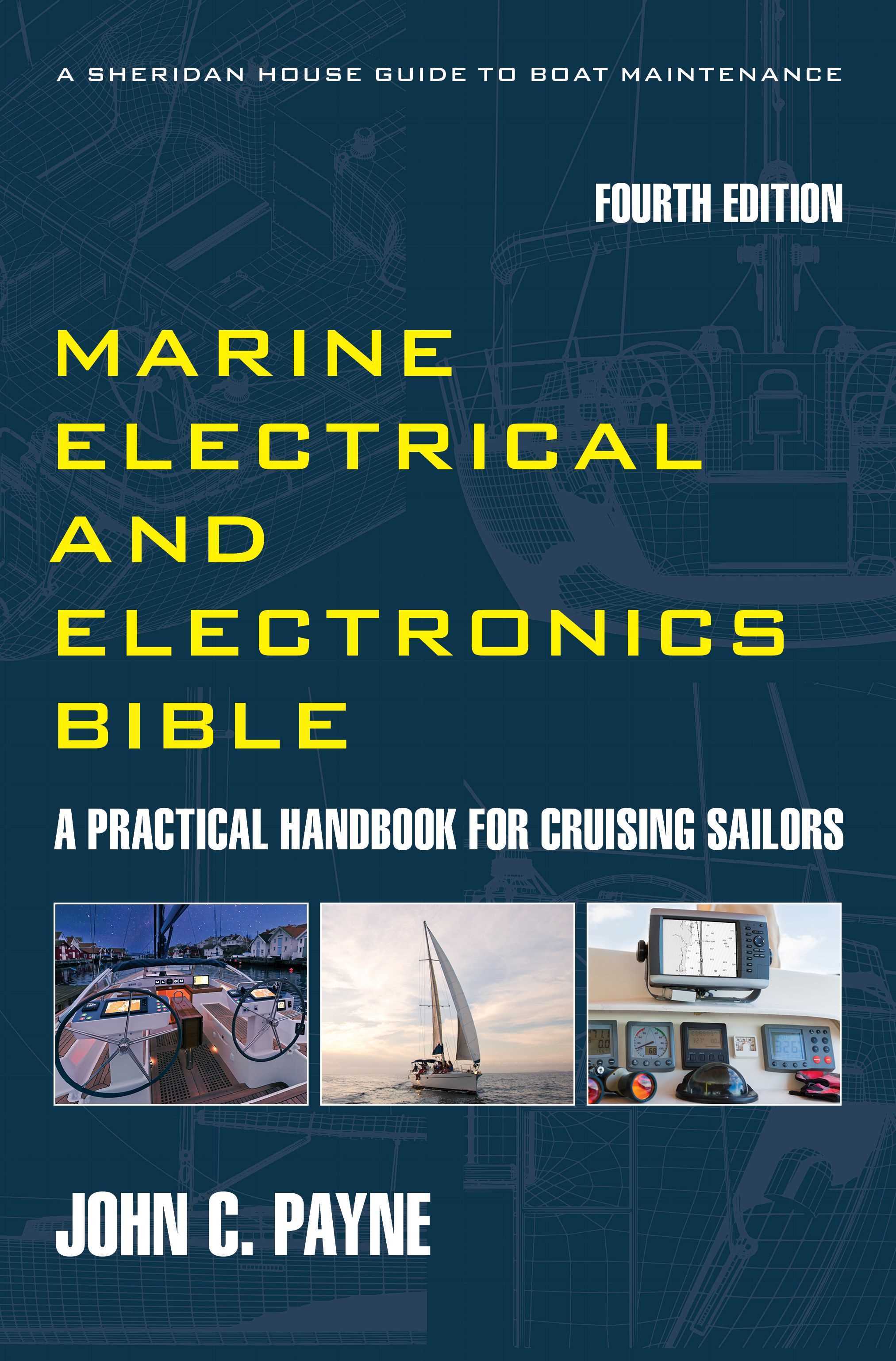
If you are headed somewhere remote consider the need to expand your knowledge base or have an information resource on board. Why not get a copy of my book The Marine and Electrical and Electronics Bible 4th Edition. By and for yachties, with everything from batteries and charging, solar and wind, diesel engines and marine electronics and so much more. Your complete systems guide. 650 pages of practical advice. In Australia and New Zealand order a copy through Boat Books. UK and European boats can buy the UK Edition Here. US and Canadian boats can get the US Edition Order Here. Marine systems are my profession so let me help you. By a liveaboard boat owner for other boat owners

Commands for
Dropping (Deploying) the Anchor
1. Approaching the Anchoring Position
- Helm to Bow: “Prepare to anchor!” Crew goes forward, checks windlass, anchor, chain.
- Bow to Helm: “Anchor ready!” or “Anchor cleared to drop!”
- If fouled or tangled: “Anchor NOT ready!” (Stop manoeuvre.)
2. Final positioning
- Helm to Bow: “Stand by!” (Boat positioned head-to-wind or bow-to-current.)
- Bow to Helm: “Standing by!”
3. Dropping the anchor. When yacht is at rest, stern drifting back:
- Helm to Bow: “Let go!” or “Drop anchor!” Bow crew releases the clutch or uses windlass down-button.
- Bow reports progress: “Anchor is away!” “Chain running!” “Anchor on the bottom" (Anchor has hit the seabed.)
4. Paying out chain (veering chain) Anchor lands on seabed; helm allows boat to drift astern.
- Helm to Bow: “Veer chain!” (Pay out chain.) “Veer to 10 metres!” “Veer another 5!”
- Bow to Helm: “10 metres out!” “15 metres out!” When target scope is reached: “Scope set!”
5. Setting the anchor. When the right length is out and the boat is drifting/engines in astern idle:
- Helm to Bow: “Snub the chain!” (Bow crew briefly stops chain to encourage anchor digging in.)
- Bow reports: “Anchor biting!” “Anchor set!” “Chain bar‐tight!” (Very high load — important warning.)
- If anchor drags after load is applied: “Anchor not holding!”
6. Securing the anchor. After anchor is set:
- Helm to Bow: “Make off chain!” or “Secure chain!”
- Bow fits chain stopper, snubber, or bridle and reports:
- “Chain secured!” or “Snubber on!”
Dropping and Laying Out Rode
Lowering the Anchor. Use the windlass to lower (not free-fall unless specifically designed) the anchor until it touches the seabed. Continue lowering until a short length of chain, typically one to two boat lengths, is on the bottom.
Going Astern to Lay Out Rode
Once the anchor reaches the seabed:
- The helm applies gentle astern throttle, usually around 1,000–1,200 RPM.
- The bow crew pays out chain steadily, ensuring it does not overrun or pile up.
This procedure achieves two things:
- Creates the horizontal pull needed for the anchor to orient and bite.
- Distributes the rode on the seabed in a straight line, avoiding tangles.
Calculating Scope
Scope is the ratio of rode length to water depth (measured from bow roller to seabed). Standard guidelines:
- 4:1 to 5:1 minimal fair-weather scope for all-chain rode.
- 6:1 to 8:1 for mixed rope-chain rode.
- 10:1 or more in high winds or poor holding ground.
Example: In 10 m depth with 1 m bow-to-waterline height, 11 m depth total × 5 = 55 m of chain.
Dropping and Laying Out Rode
Preventing Yaw and Chain Shock
- All-chain rodes require a snubber or nylon bridle to:
- Add elastic shock absorption
- Transfer load off the windlass
- Reduce chain noise transmitted into the hull
- Attach the snubber after initial setting.
Setting the Anchor
Once the appropriate scope is deployed:
- Increase astern power to firm setting RPM—typically 1,500–1,800 RPM.
- Observe chain tension at the bow: it should become taut and straighten.
- Feel for vibration or chains jerking forward—these indicate dragging.
- Monitor GPS speed and bearing: should remain zero and stable.
A properly set anchor will dig progressively deeper under load, especially modern scoop or new-generation anchors. If dragging occurs after several attempts, move to a new spot or change anchor type.
Verifying the Set
Confirmation techniques:
- Transits: Use shore objects aligned to detect movement.
- GPS anchor alarm: Useful for overnight anchoring.
- Phone app alarm: Useful for anchoring
- Depth sounder: Detects whether the boat is drifting into shallower or deeper water.
- Visual seabed inspection (for divers or clear water).
Verification must consider upcoming tides, wind shifts, and squalls. A secure set in one direction does not guarantee reliable holding after a 180° wind shift unless the anchor is known to reset well.
Dropping and Laying Out Rode
Swinging Circle Calculation. When anchored, the yacht will swing in a circle centred on the anchor position.
Calculate swinging radius:
- Chain length + boat length + safety margin
Ensure the radius fits the available space without contacting other vessels, reefs, or shorelines. Multihulls tend to swing differently from monohulls, and mixed fleets must account for differing windage and yaw behaviour.
Holding in Poor Conditions
In marginal holding ground or approaching bad weather:
- Increase scope significantly.
- Deploy a kellet/angel weight to keep chain catenary low (less common today).
Lay a second anchor using:
- V-formation (two anchors 45–60° apart)
- Tandem (one anchor shackled behind another)
- Stern anchor (to limit swinging)
- Avoid overloading windlass gears, always let the engine and chain absorb loads.
Overnight and Heavy-Weather Best Practices
- Recheck snubber tension after load cycles.
- Keep windlass clutch locked and circuit breaker off.
- Review forecasts regularly. Set alarms for wind speed if available.
- Mark chain visually or use chain counter for quick retrieval.
- Maintain a clear deck for rapid departure if necessary.
- In severe conditions, use all available scope and be prepared for veering winds. Modern anchors generally reset well, but older plow types may pull out before re-setting.
How to Anchor a Boat - Retrieving the
Anchor
Start the engine. Never use the windlass alone to pull the yacht forward, it is not designed for that load. To retrieve the anchor:
- Motor slowly toward the anchor, taking in slack chain.
- Keep chain vertical before breaking the anchor free.
- When anchor breaks out, reduce throttle to neutral.
- Wash mud or sand from anchor before stowing (if you have time)
- Secure chain stopper and ensure windlass is unloaded.
Commands for Heaving In (Recovering) the Anchor
1. Preparing to weigh anchor
- Helm to Bow: “Prepare to weigh!”
- Bow to Helm: “Ready on the bow!” (Windlass ready, chain clear, snubber removed.)
2. Taking the strain
- Helm to Bow: “Heave in!” (Start raising chain.)
- Bow reports: “Heaving in!” “Chain slack!” (Good) “Chain coming tight!” (Load increasing)
- If chain is hard to lift (mud, current, rode snagged): “Chain under heavy load!”
3. Direction of chain. Bow communicates chain direction as boat manoeuvres to stay above anchor.
- Bow to Helm: “Chain leading ahead!” “Chain to port!” “Chain to starboard!”
- “Chain straight up and down!” (Critical signal)
- Helm manoeuvres accordingly: “Going ahead slow.” “Astern slow.” “Port helm!” “Starboard helm!”
4. Breaking the anchor out. When chain is vertical and boat is directly above the anchor:
- Bow to Helm: “Up and down!” (Chain vertical, ready to break free.)
- Helm to Bow: “Break it out!” Slight forward movement and windlass lifts anchor.
- Bow reports: “Anchor breaking out!” “Anchor free!”
5. Recovering the anchor to the bow roller
- Helm to Bow: “Heave in and secure!”
- Bow reports: “Anchor at the surface!”
- “Mud on fluke!” (So helm can avoid fouling deck accidentally.)
- “Anchor home!” (Anchor seated in bow roller.)
6. Securing for sea. Bow finishes final locking procedures, and you as skipper should check when possible to verify:
- Bow to Helm: “Anchor secured!” (Pin locked, chain stopper on, windlass off.)
Useful Optional Commands. For troubleshooting
- “Foul! Foul chain!” means Chain wrapped or snagged.
- “Anchor fouled!” means Anchor stuck on rock/debris.
- “Windlass jammed!”
- “Chain twisting!”
For safety
- “STOP!” is the universal emergency halt. Using raised clenched fist
- “HANDS CLEAR!” is the warning to new crew. Many a finger has been lost.
How to Anchor a
Boat
Anchoring a sailing yacht is a skilled procedure requiring understanding of mechanics, seabed behaviour, and equipment performance. Mastery involves more than dropping an anchor; it requires precise positioning, controlled rode deployment, proper setting loads, and continuous assessment of conditions. When executed with good technique and well-maintained equipment, anchoring is a reliable and safe method of securing a yacht in almost all coastal conditions. How to anchor a boat is a critical skill to learn.