Heat Exchanger Cleaning
Heat exchanger cleaning is essential for one of the most critical components in the cooling systems of small marine diesel engines, allowing heat from the closed-loop freshwater coolant to be transferred to raw seawater without mixing the two fluids. Over time, seawater passageways accumulate marine growth, scale, silt, zinc residues, corrosion products, and debris. Simultaneously, the freshwater side may develop sediment, rust particles, and coolant deposits. These contaminants restrict flow, reduce heat-transfer efficiency, and ultimately cause overheating under load.
Regular heat-exchanger cleaning is essential for safe, reliable operation of engines from Yanmar, Volvo Penta, Beta, Nanni, Kubota-based units, and similar small marine diesel platforms. This article provides a full technical overview of heat-exchanger cleaning methods, inspection procedures, service intervals, and troubleshooting.
Heat Exchanger Cleaning and Contamination
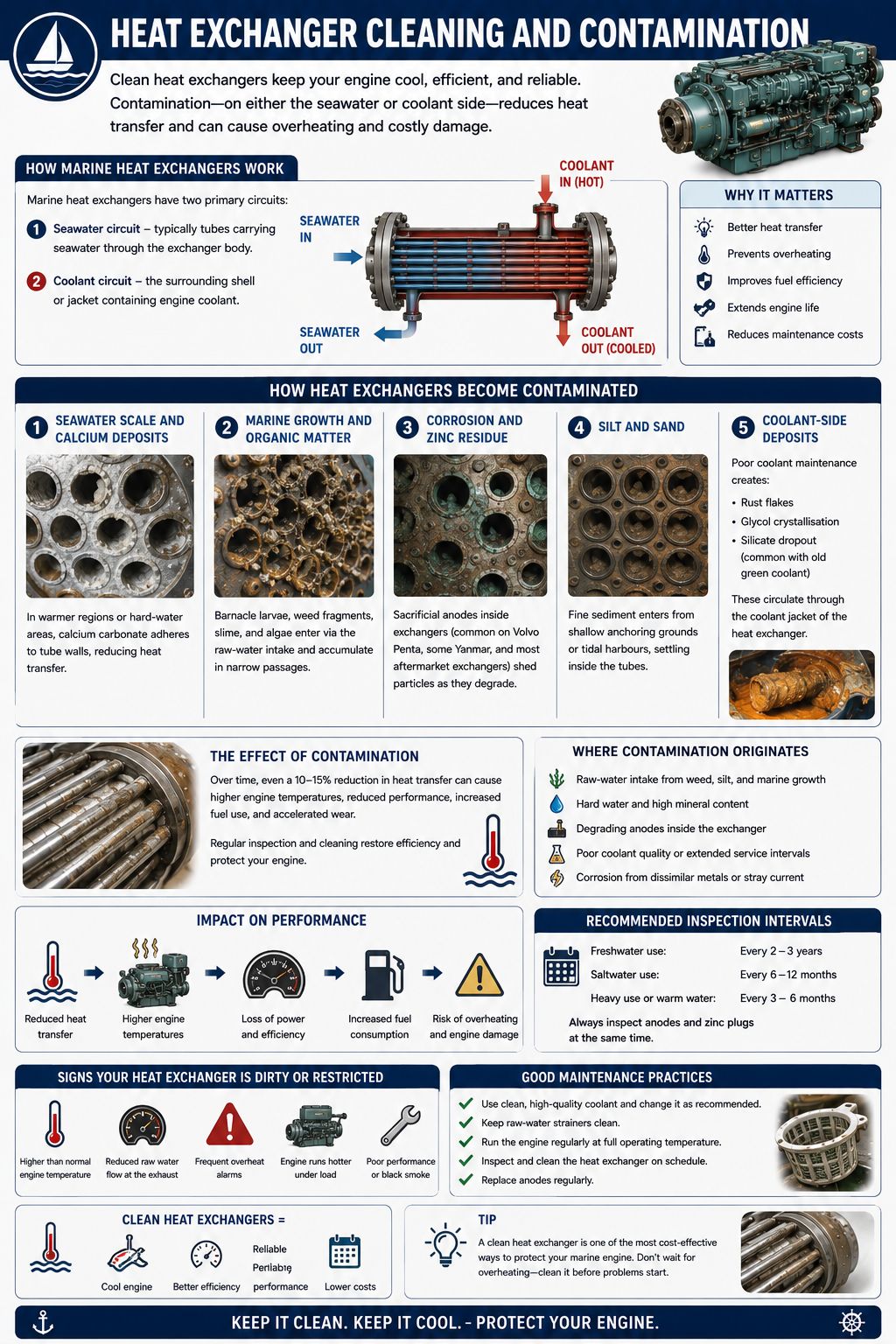
How do marine heat exchangers become contaminated? Marine heat exchangers have two primary circuits:
- Seawater circuit – typically tubes carrying seawater through the exchanger body.
- Coolant circuit – the surrounding shell or jacket containing engine coolant.
Contamination occurs due to the following:
Seawater Scale and Calcium Deposits. In warmer regions or hard-water areas, calcium carbonate adheres to tube walls, reducing heat transfer.
Marine Growth and Organic Matter. Barnacle larvae, weed fragments, slime, and algae enter via the raw-water intake and accumulate in narrow passages.
Corrosion and Zinc Residue. Sacrificial anodes inside exchangers (common on Volvo Penta, some Yanmar, and most aftermarket exchangers) shed particles as they degrade.
- Silt and Sand. Fine sediment enters from shallow anchoring grounds or tidal harbours, settling inside the tubes.
- Coolant-Side Deposits. Poor coolant maintenance creates:
- Rust flakes
- Glycol crystallisation
- Silicate dropout. (common with old green coolant)
These circulate through the coolant jacket of the heat exchanger. Over time, even a 10–15% reduction in heat-transfer area can cause noticeable overheating, especially at high throttle.
Signs That Cleaning Is Required
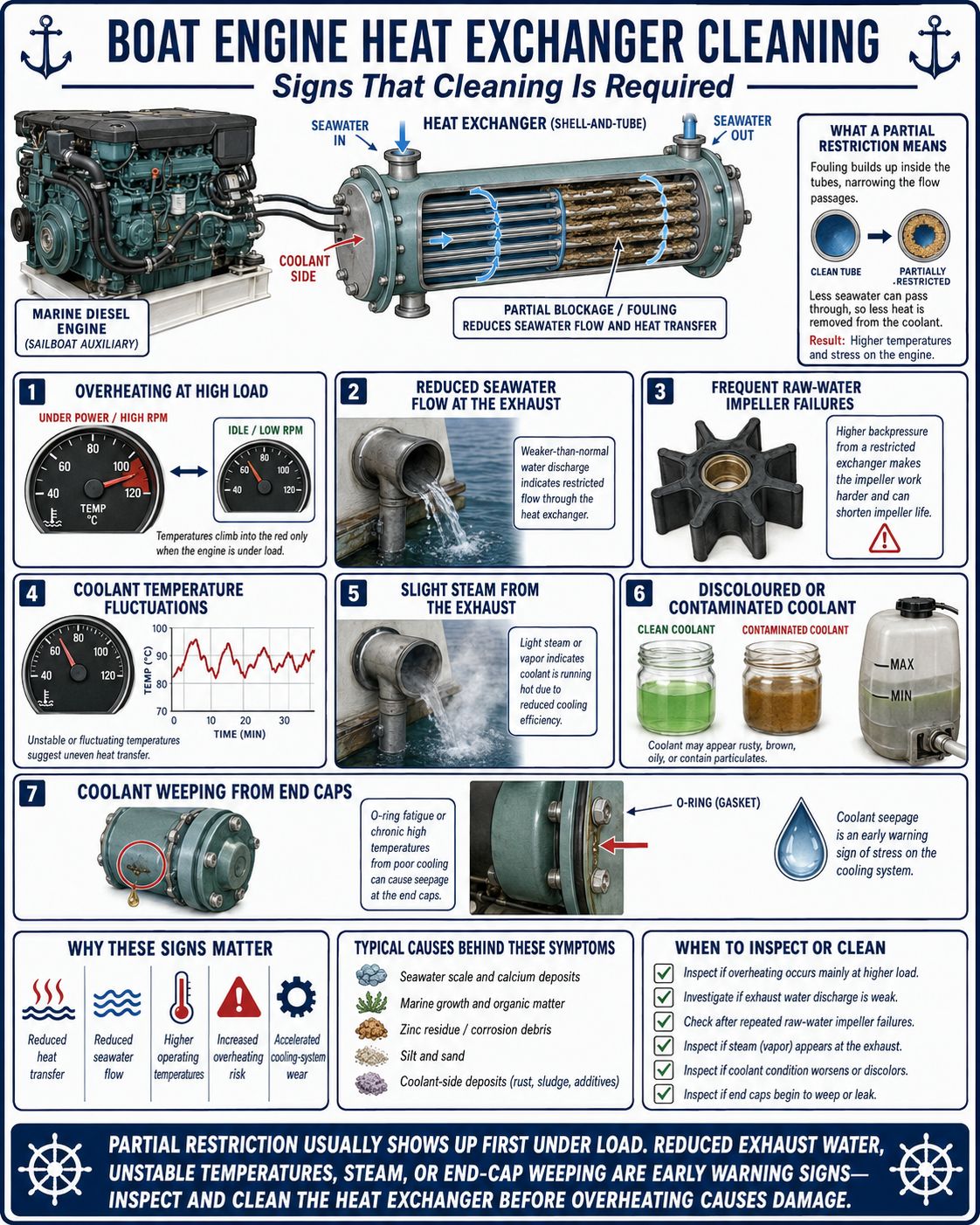
These symptoms generally indicate a partially restricted exchanger. Typical symptoms include:
- Overheating at high load but normal temperature at idle
- Reduced seawater flow exiting the exhaust
- Frequent raw-water pump impeller failures due to higher backpressure
- Coolant temperature fluctuations
- Slight steam from the exhaust
- Discoloured or contaminated coolant
- Coolant weeping from end caps due to O-ring fatigue
Heat Exchanger Design and Access
Points
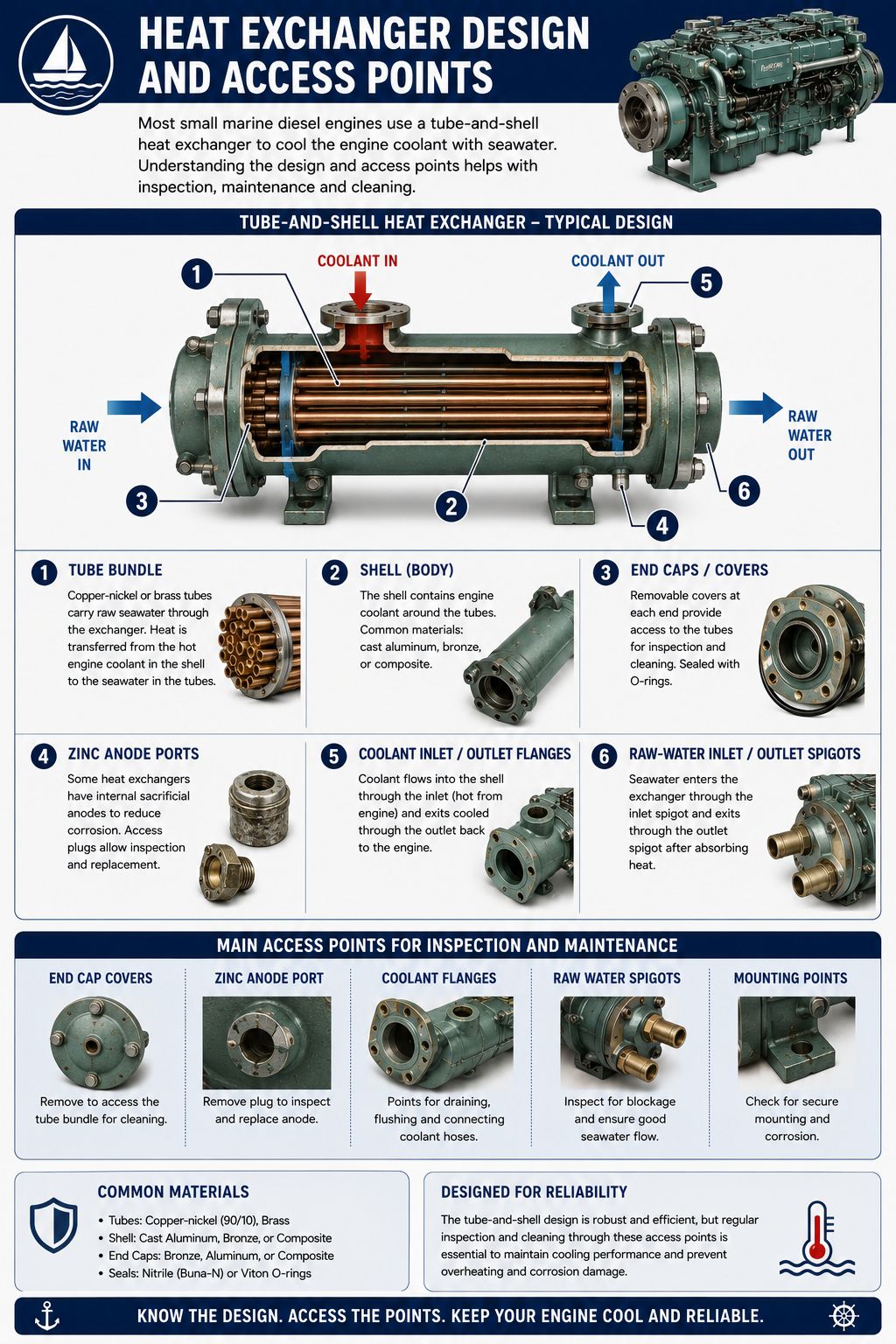
Most small marine diesels use a tube-and-shell design. Common construction includes:
- Tube bundle: copper-nickel or brass tubes
- Shell: cast aluminum, bronze, or composite
- End caps or covers: often sealed with O-rings
- Zinc anode ports: on some models
- Coolant inlet/outlet flanges
- Raw-water inlet/outlet spigots
Heat Exchanger Manufacturers
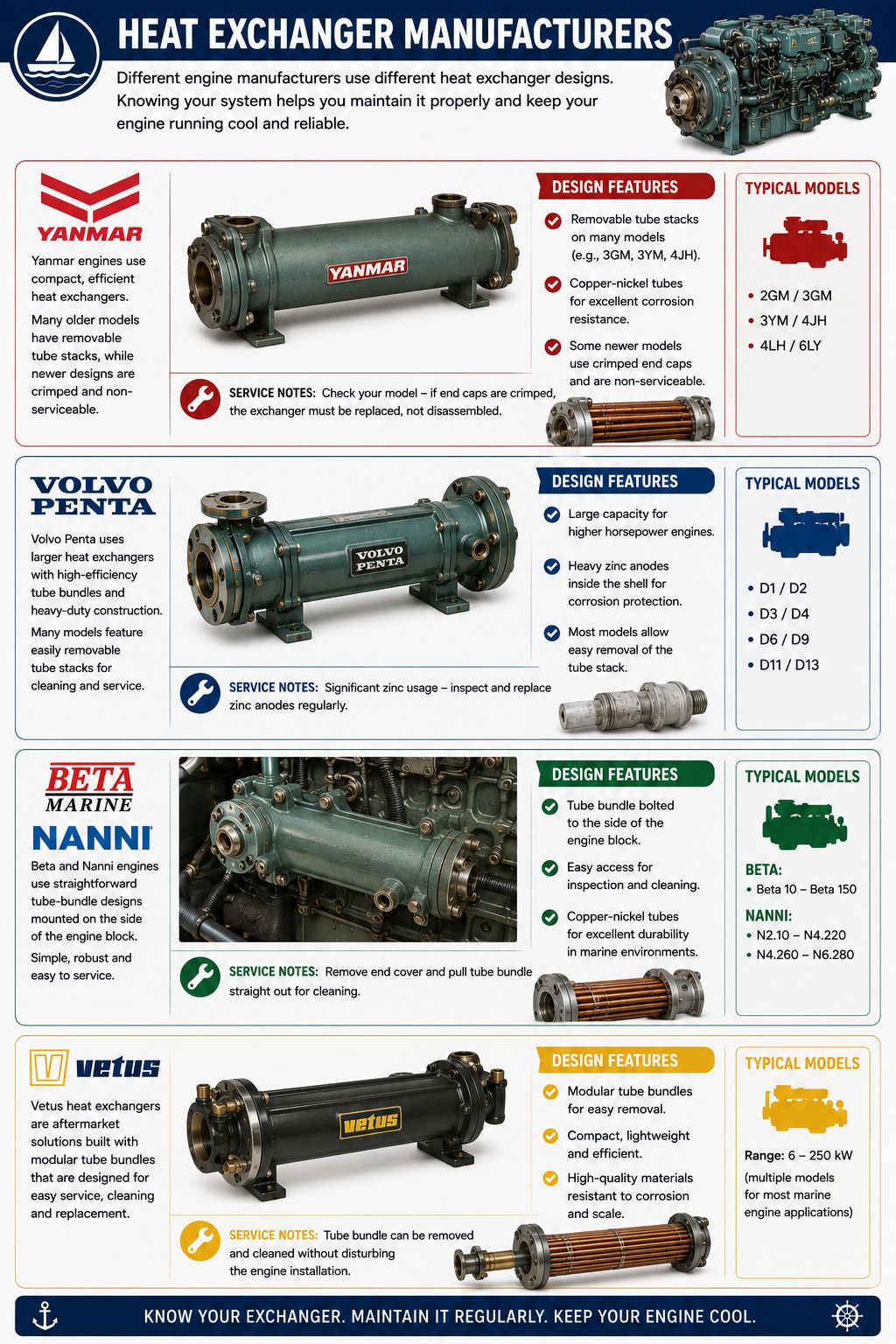
Yanmar: removable tube stacks on many models (e.g., 3GM, 3YM, 4JH), though some newer heat exchangers are crimped and must be replaced rather than disassembled.
Volvo Penta: larger exchangers with significant zinc usage; many allow easy tube-stack removal.
Beta and Nanni: straightforward tube bundles bolted to the side of the block.
Vetus: aftermarket exchangers with modular tube bundles designed for easy service.
Mechanical
and Electrical Repairs Resource
If you are headed somewhere remote consider the need to expand your knowledge base or have an information resource on board. Why not get a copy of my book The Marine and Electrical and Electronics Bible 4th Edition. By and for yachties, with everything from batteries and charging, solar and wind, diesel engines and marine electronics and so much more. Your complete systems guide. 650 pages of practical advice. In Australia and New Zealand order a copy through Boat Books. UK and European boats can buy the UK Edition Here. US and Canadian boats can get the US Edition Order Here. Marine systems are my profession so let me help you. By a liveaboard boat owner for other boat owners

Heat Exchanger Cleaning Methods
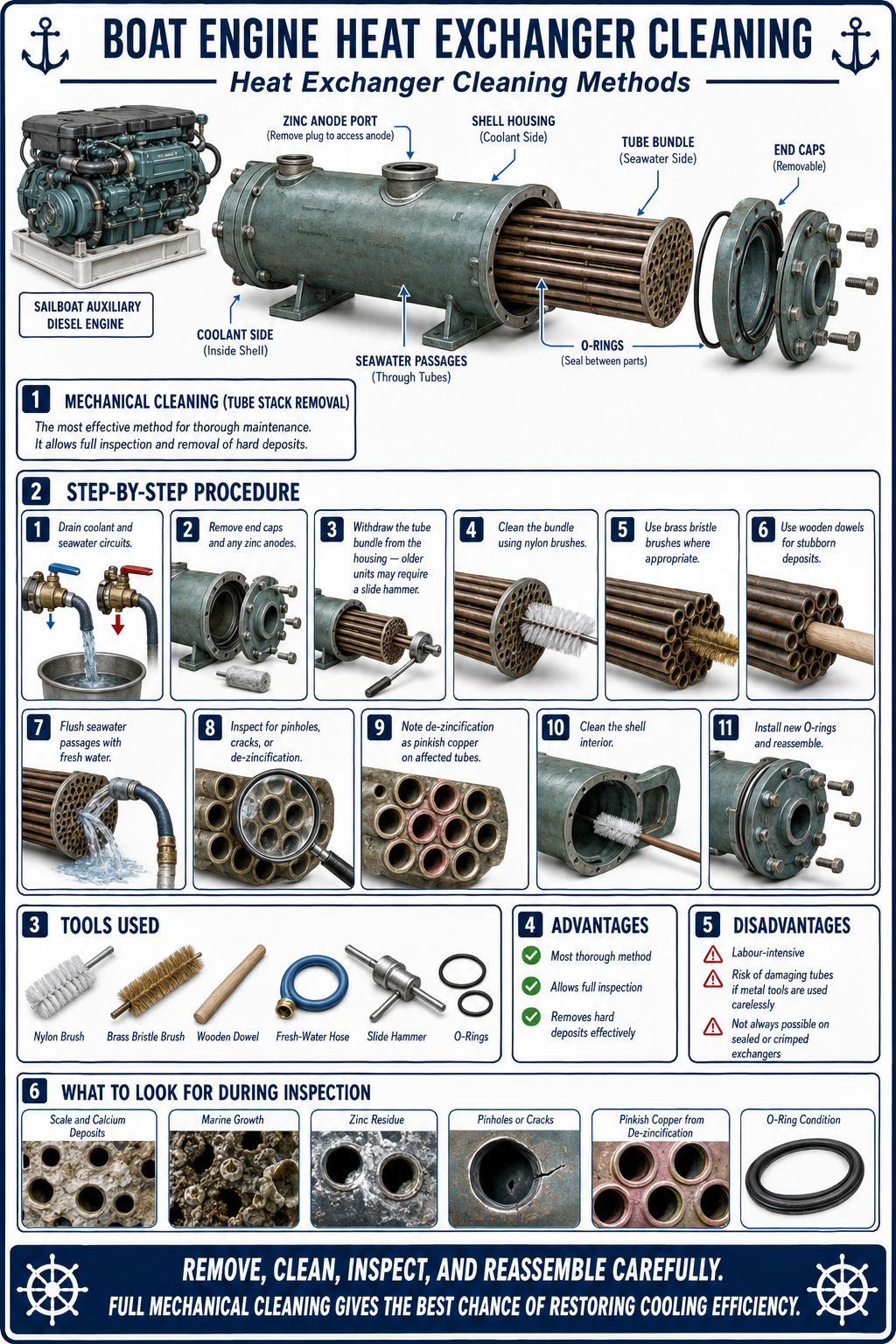
Mechanical Cleaning (Tube Stack Removal). The most effective method for thorough maintenance. The procedure is as follows:
- Drain coolant and seawater circuits.
- Remove end caps and any zinc anodes.
- Withdraw the tube bundle from the housing—may need a slide hammer on older units.
- Clean the bundle using:
- Nylon brushes
- Brass bristle brushes
- Wooden dowels for stubborn deposits
- Flush seawater passages with fresh water.
- Inspect for pinholes, cracks, or de-zincification (pinkish copper).
- Clean the shell interior.
- Install new O-rings and reassemble.
Advantages: Most thorough method. Allows full inspection, Removes hard deposits effectively
Disadvantages: Labour-intensive, Risk of damaging tubes if using metal tools, Not always possible on sealed or crimped exchangers
Chemical Descaling (Soaking or
Circulating)
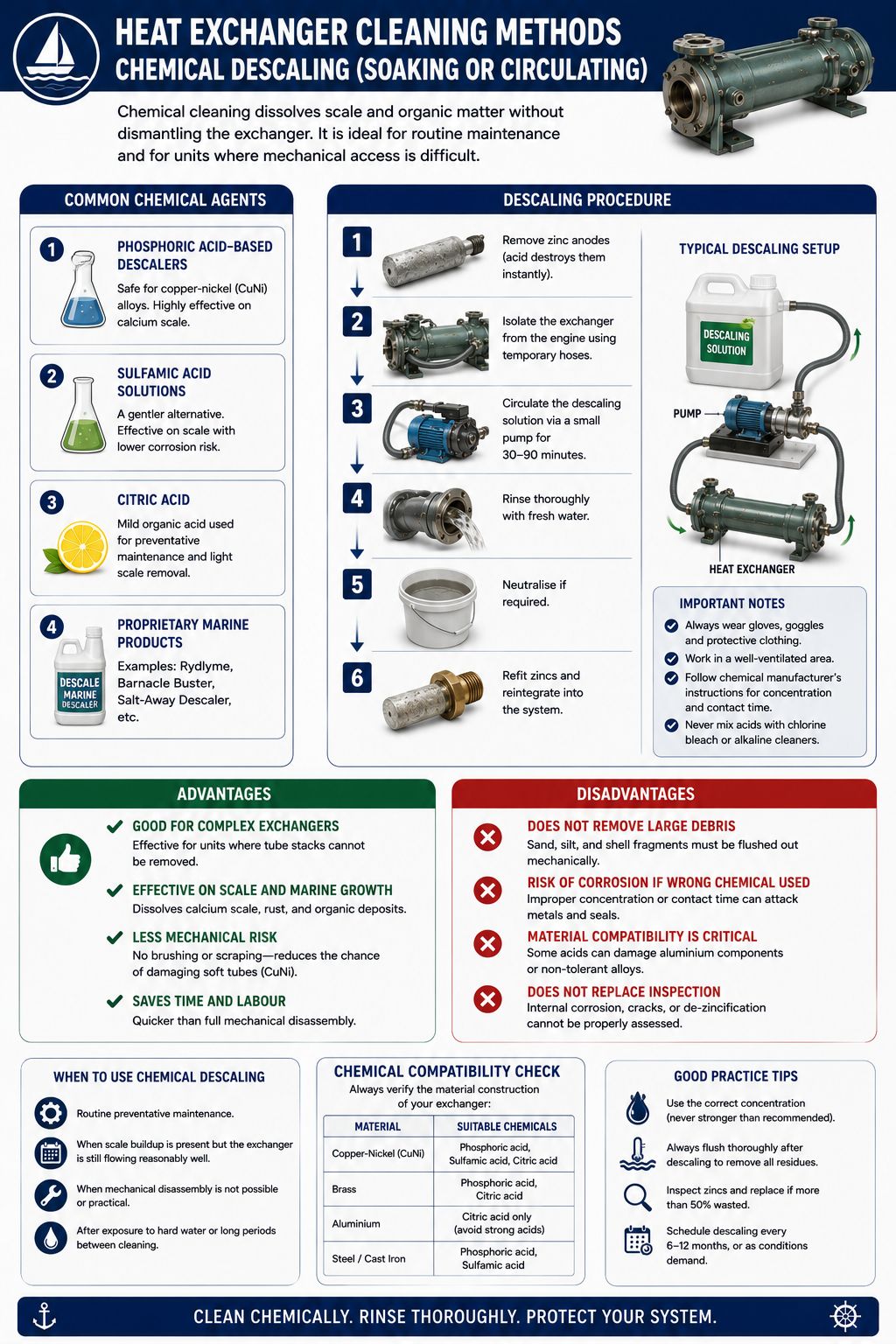
Chemical cleaning dissolves scale and organic matter without dismantling the exchanger. The most common chemical agents in use are:
- Phosphoric acid–based descalers (safe for CuNi alloys)
- Sulfamic acid solutions (gentler alternative)
- Citric acid (mild organic acid used for preventative maintenance)
- Proprietary marine products: Rydlyme, Barnacle Buster, etc.
Descaling Procedure:
- Remove zinc anodes (acid destroys them instantly).
- Isolate the exchanger from the engine using temporary hoses.
- Circulate the descaling solution via a small pump for 30–90 minutes.
- Rinse thoroughly with fresh water.
- Neutralise if required.
- Refit zincs and reintegrate into the system.
Advantages: Good for complex exchangers, Effective on scale and marine growth, Less mechanical risk
Disadvantages: Does not remove large debris. Risk of corrosion if wrong chemical used. Must avoid mixing with engine metals not tolerant to acid
Coolant-Side Flushing
Flush the freshwater side using distilled water or manufacturer-approved coolant flush solution. This method clears rust, silicate dropout, and internal scale from the coolant jacket. Follow these Steps:
- Drain old coolant.
- Fill system with flushing agent or fresh water.
- Run engine until warm.
- Drain and repeat until water runs clear.
- Refill with correct coolant mixture (50/50 typically).
Inspection During Cleaning
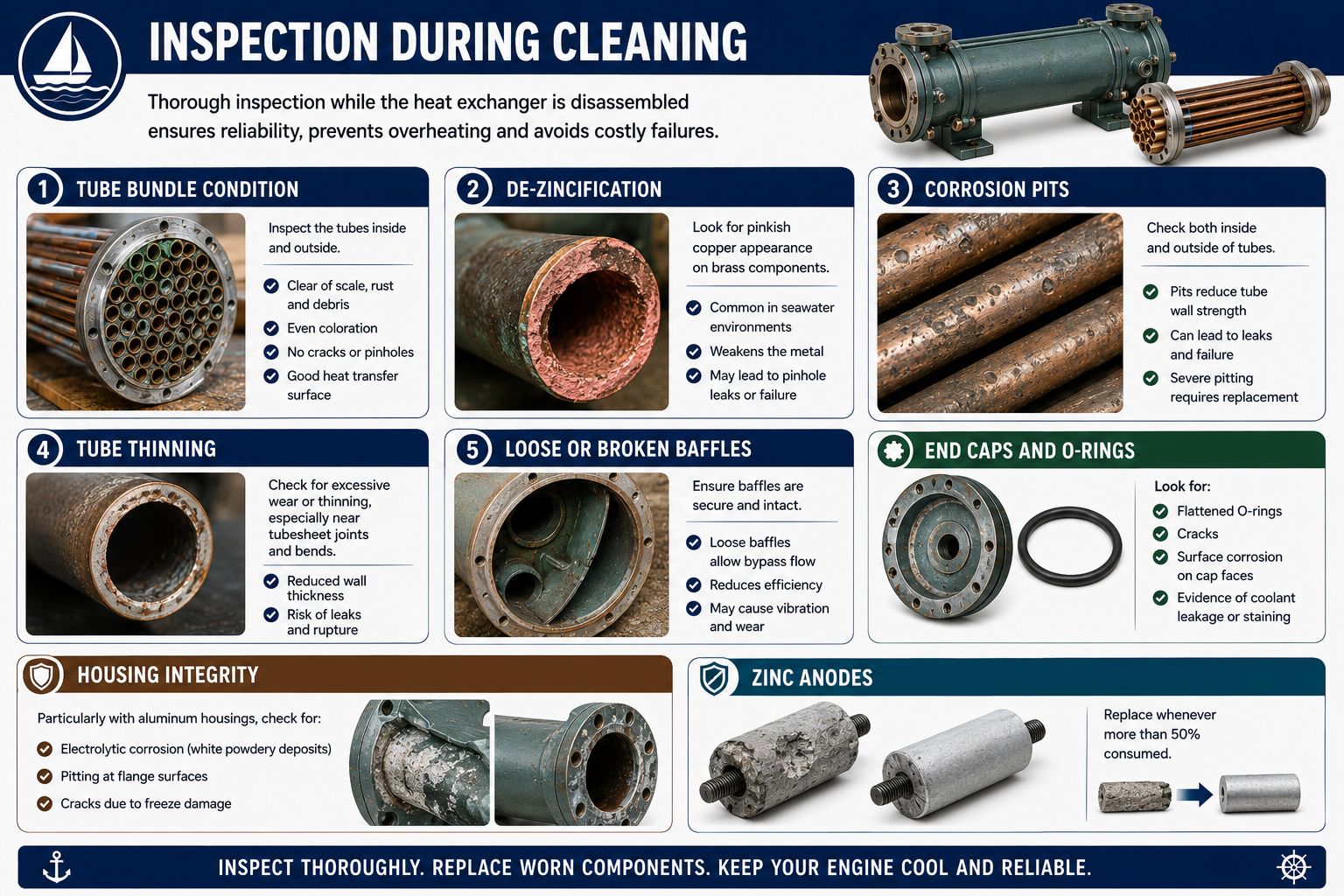
Always inspect for:
- Tube Bundle Condition
- De-zincification
- Corrosion pits
- Tube thinning
- Loose or broken baffles
End Caps and O-Rings
Look for:
- Flattened O-rings
- Cracks
- Surface corrosion on cap faces
- Evidence of coolant leakage or staining
Housing Integrity
Particularly with aluminum housings, check for:
- Electrolytic corrosion
- Pitting at flange surfaces
- Cracks due to freeze damage
Zinc Anodes. Replace whenever more than 50% consumed.
Heat Exchanger Cleaning - Service Intervals
Coolant-side flushing should occur every 2 years, or whenever coolant is changed. Recommended cleaning intervals vary by region:
- Tropical waters: every 1–2 years
- Temperate waters: every 2–3 years
- Occasional-use vessels: every 3–4 years
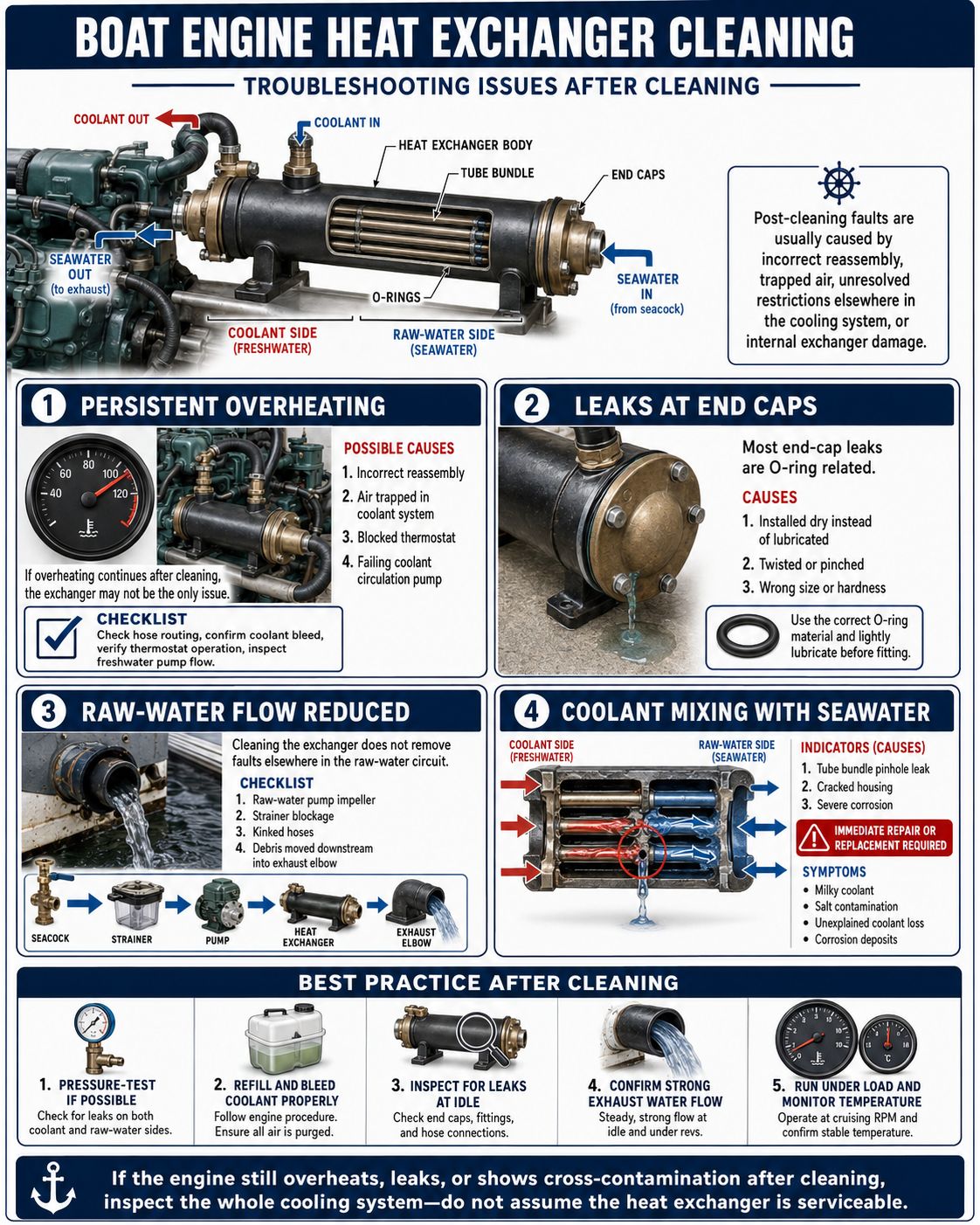
Troubleshooting Issues After Cleaning
Persistent Overheating. Possible causes:
- Incorrect reassembly
- Air trapped in coolant system
- Blocked thermostat
- Failing coolant circulation pump
Leaks at End Caps. Usually O-rings:
- Installed dry instead of lubricated
- Twisted or pinched
- Wrong size or hardness
Raw-Water Flow Reduced. Check:
- Raw-water pump impeller
- Strainer blockage
- Kinked hoses
- Debris moved downstream into exhaust elbow
Coolant Mixing with Seawater. This requires immediate repair or replacement and is an indicator of:
- Tube bundle pinhole leak
- Cracked housing
- Severe corrosion
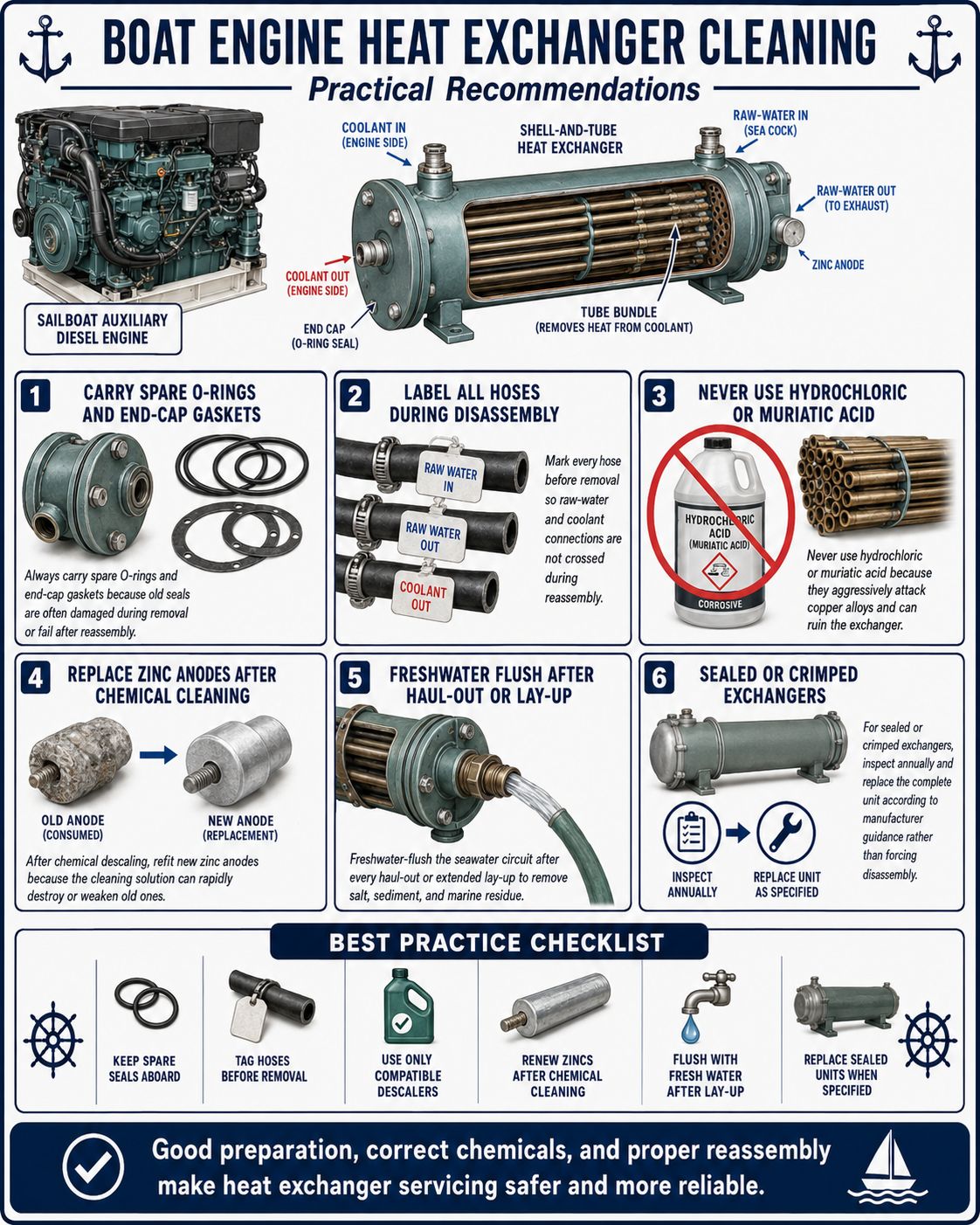
Heat Exchanger Cleaning Practical
Recommendations
- Always carry spare O-rings and end-cap gaskets.
- Label all hoses during disassembly.
- Never use hydrochloric or muriatic acid as they destroy copper alloys.
- Replace zinc anodes after every chemical cleaning.
- Freshwater flush the seawater side after every haul-out or extended lay-up.
- For sealed or crimped exchangers, inspect annually and replace as a complete unit per manufacturer guidelines.


Heat Exchanger Cleaning Summary
Regular cleaning of marine diesel engine heat exchangers is vital for efficiency and longevity. Salt, scale, and debris buildup restrict coolant flow, causing overheating, reduced performance, and costly damage. Preventive maintenance ensures optimal heat transfer, lowers fuel consumption, and minimizes breakdowns. Clean exchangers safeguard reliability, extend engine life, and reduce repair expenses, keeping vessels safe and operational. Heat Exchanger Cleaning is essential to maintain optimal engine cooling.