Marine Diesel Engine Exhaust Elbow
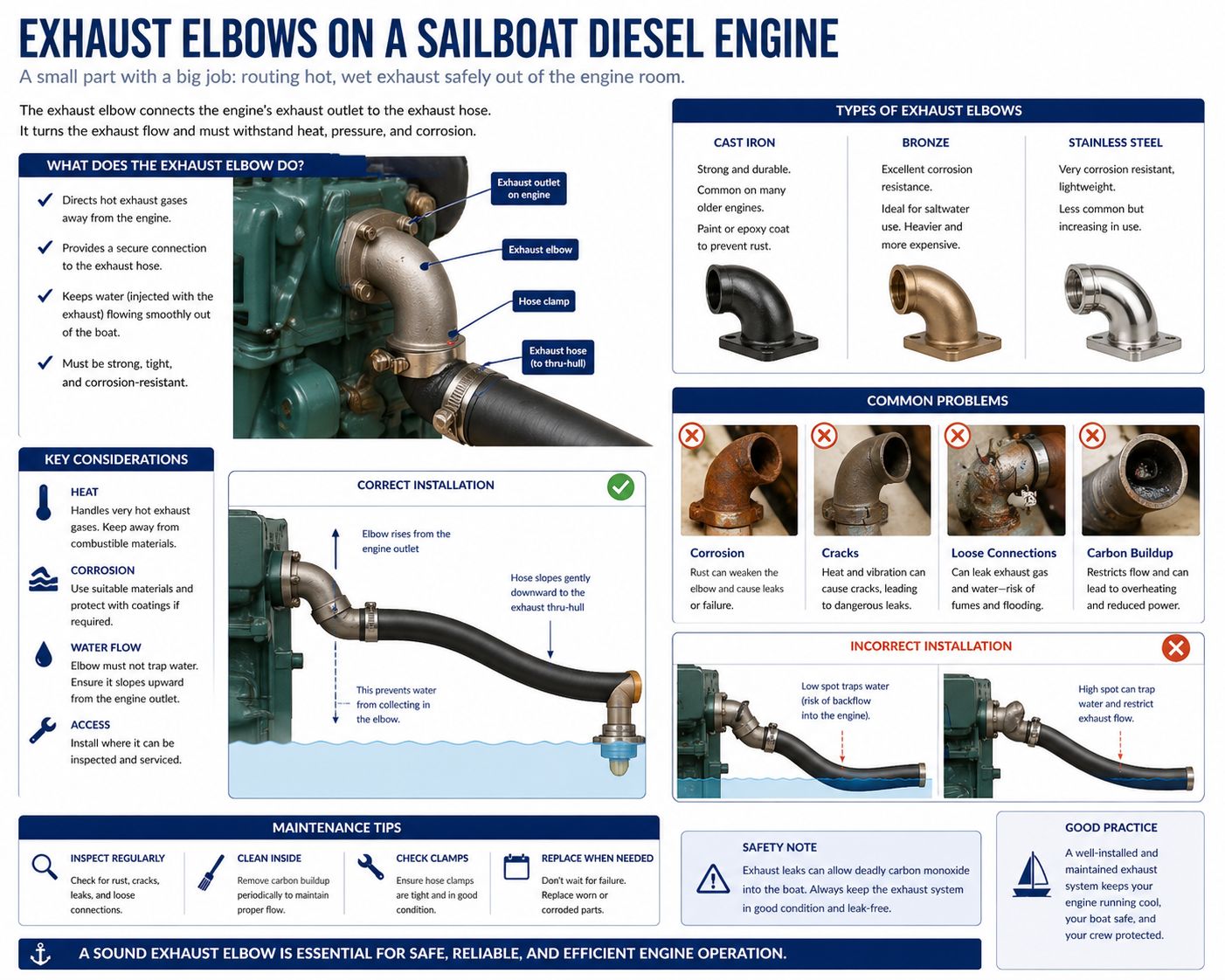
The exhaust elbow, often called the mixing elbow, wet exhaust mixing elbow, water-injection bend, or exhaust riser, is a critical component in small marine diesel installations. Despite its modest size, it plays a central role in ensuring safe exhaust discharge, maintaining optimal engine back-pressure, and preventing seawater from flowing backward into the engine cylinders. Understanding its construction, thermal environment, and maintenance requirements is essential for reliable marine diesel operation.
The exhaust mixing elbow is a key
component in small marine diesel engines where hot exhaust gases and cooling
seawater combine. It rapidly reduces exhaust temperature, allowing safe use of
rubber exhaust hose downstream. The elbow also prevents seawater backflow into
the engine by directing flow downward. Because it handles heat, corrosion, and
salt deposits, regular inspection and replacement are essential to avoid
blockages, excess backpressure, or water ingress. It is important to understand how a mixing elbow works, and also how to inspect an exhaust elbow, and options for exhaust elbow cleaning and exhaust elbow replacement. Many also want to be able to identify signs of a failing exhaust elbow and how to perform exhaust elbow maintenance and hopefully not have to undertake exhaust elbow troubleshooting.
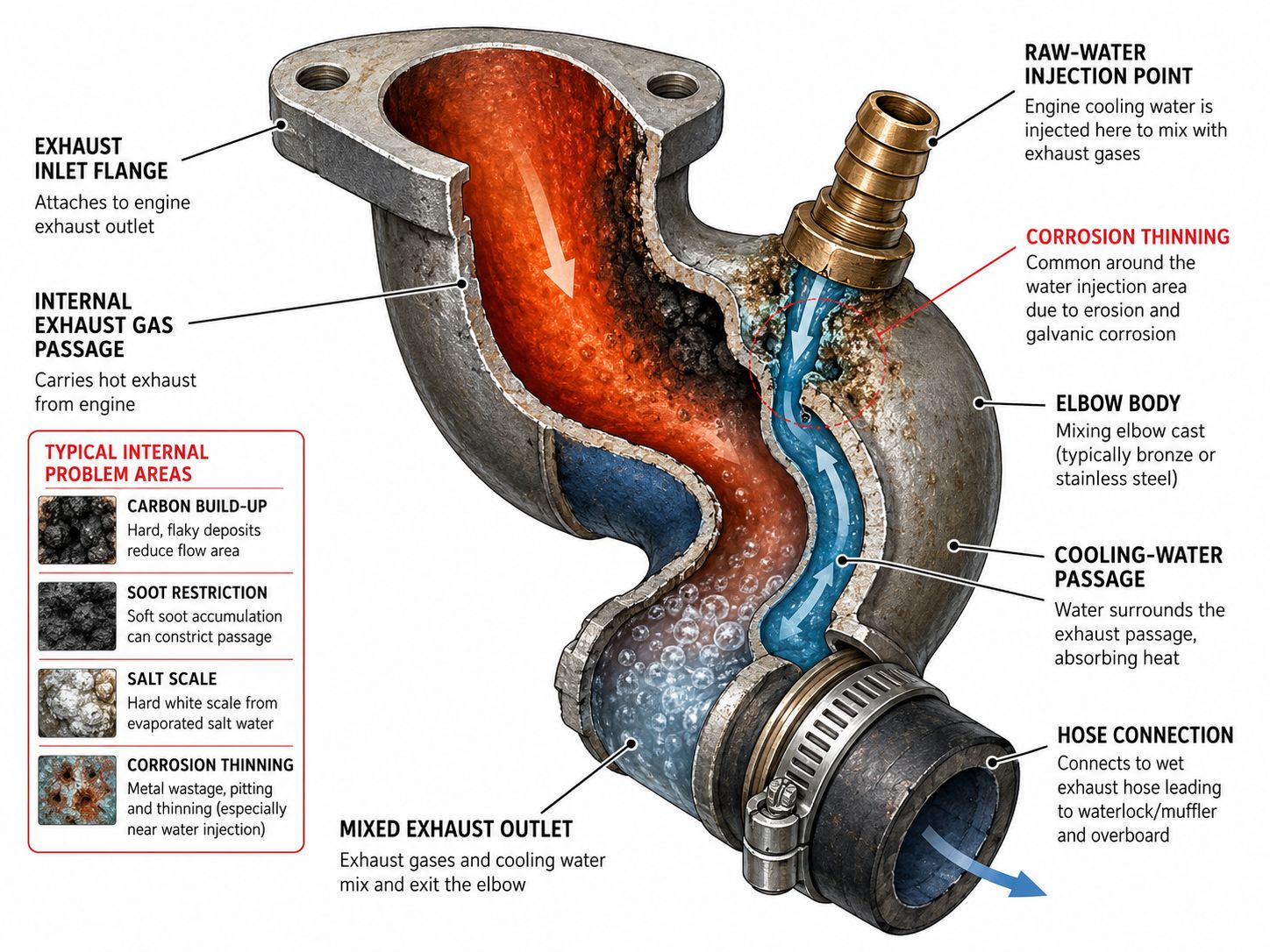
Marine Diesel Exhaust Elbow Functional
Requirements
A marine diesel’s exhaust system must perform multiple tasks simultaneously: remove combustion gases, attenuate noise, discharge seawater used for cooling, prevent water backflow, and limit heat transfer into the engine space. The exhaust elbow is where these functions converge. Located at the engine’s exhaust outlet, it provides a point where cooling water is injected into hot exhaust gas to reduce temperature from several hundred degrees Celsius down to safe wet-exhaust handling temperatures.
This water-gas mixing suppresses exhaust temperature sufficiently that flexible reinforced rubber exhaust hose can be used downstream. Without the mixing elbow, the system would require heavy dry-exhaust piping and insulation, something impractical in most small yachts and workboats.
Marine Diesel Engine Exhaust Elbow
Types
Exhaust elbows are generally available in three configurations:
- Standard Down-Turn Mixing Elbow. The most common design on small marine diesels. The exhaust gas exits horizontally from the manifold or turbocharger, then the elbow turns downward about 90 degrees. Raw cooling water from the engine is injected inside the elbow, typically at the top or outer radius of the bend, where it mixes immediately with the gas stream.
- Elevated “Riser” or “Lift” Elbow. This design raises the exhaust outlet above the waterline using a vertical section before turning downward. Increasing the exhaust outlet height helps prevent seawater from back flooding during long periods of motoring in following seas or when the vessel is heeled. Riser elbows are often fabricated from stainless steel and may integrate a cooling jacket to reduce external heat.
- Separate Injection Tee. In some installations, exhaust gas exits through a dry elbow or pipe first, then cooling water is injected through a dedicated tee downstream. This system reduces heat load on the elbow itself, but overall complexity and space needs increase.
Mechanical
and Electrical Repairs Resource
If you are headed somewhere remote consider the need to expand your knowledge base or have an information resource on board. Why not get a copy of my book The Marine and Electrical and Electronics Bible 4th Edition. By and for yachties, with everything from batteries and charging, solar and wind, diesel engines and marine electronics and so much more. Your complete systems guide. 650 pages of practical advice. In Australia and New Zealand order a copy through Boat Books. UK and European boats can buy the UK Edition Here. US and Canadian boats can get the US Edition Order Here. Marine systems are my profession so let me help you. By a liveaboard boat owner for other boat owners
Marine Diesel Engine Exhaust Elbow Construction
Because exhaust elbows must handle high heat and corrosive saltwater, material selection is critical. Common materials include:
- Cast iron: Used by Yanmar, Volvo Penta, Beta, and Nanni for stock elbows. Economical but susceptible to internal rusting and scaling.
- Stainless steel (316, 321): Preferred for custom high-rise risers or heavy-duty replacements. More corrosion-resistant, but welds can still suffer chloride stress cracking.
- Bronze or cupronickel: Rare for elbows but used in some high-end or commercial designs due to superior seawater corrosion resistance.
Internal temperatures upstream of water injection can exceed 400–600°C depending on load. Once water is injected, temperatures drop rapidly to 60–90°C, enabling rubber hose downstream. This thermal plunge imposes high thermal stress on the elbow, contributing to cracking, especially in fabricated stainless units.
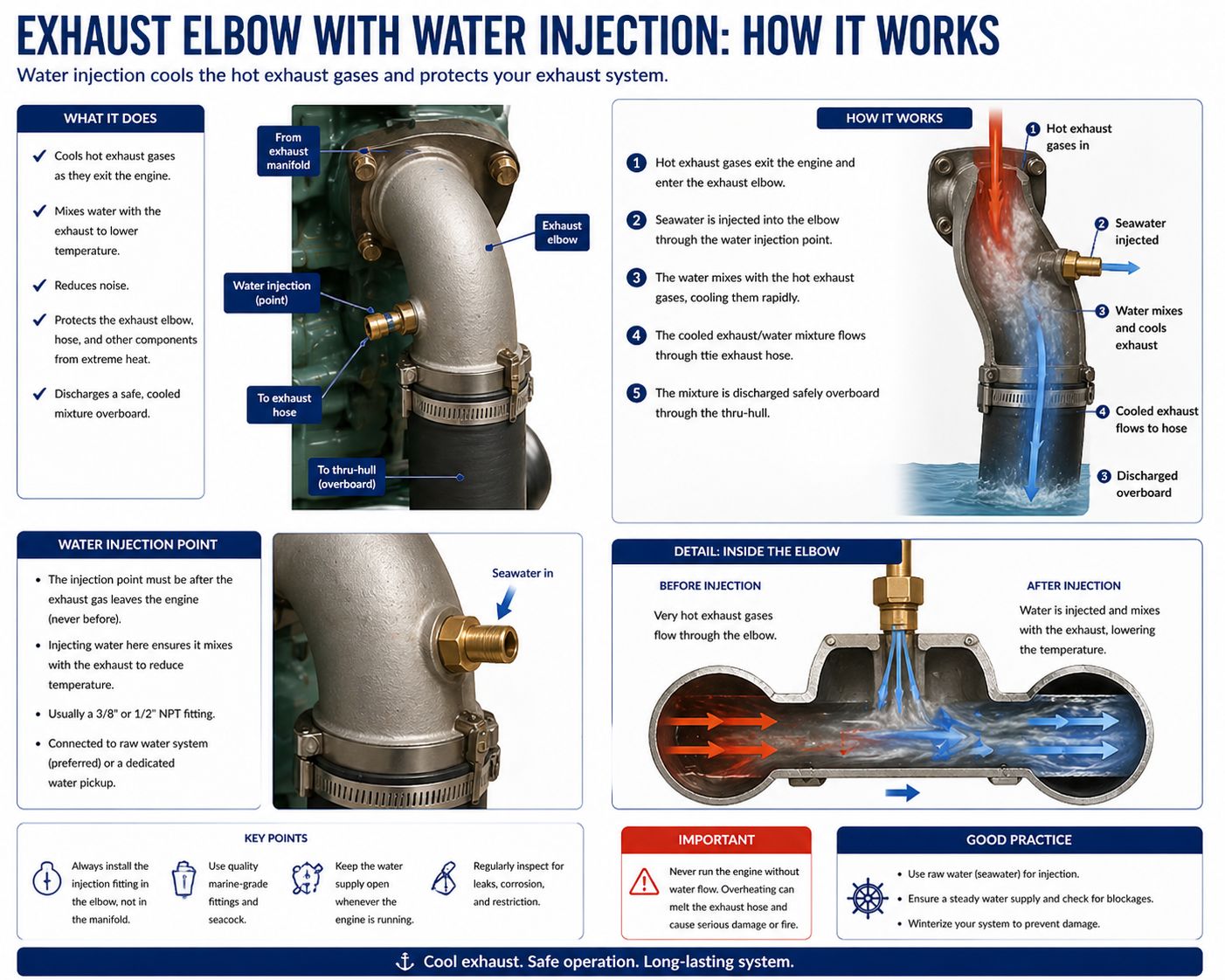
Diesel Exhaust Elbow Water Injection
Point
The water injection point is carefully designed to ensure rapid cooling without promoting backflow or erosion. Key engineering aspects include:
- Placement Relative to Exhaust Flow. Water is normally injected on the outer radius of the elbow or at a tangential angle. This avoids spraying directly onto the inner wall, which would promote thermal shock cracking, and ensures water entrains cleanly into the central gas stream.
- Orifice Size and Flow Distribution. The cooling water is delivered via a nozzle or circumferential ring with multiple small holes. Proper atomisation is important: if the water arrives as a solid jet rather than a distributed spray, localized cooling and erosion can occur.
- Preventing Backflow and Siphoning. The injection point must sit below the engine’s cooling water injection outlet but high enough to prevent water siphoning back toward the cylinders. Many installations incorporate anti-siphon valves or loops in the water feed to the elbow to prevent unwanted water entry when the engine stops.


Marine Diesel Engine Exhaust Elbow Failure Modes
Exhaust elbows are notorious for gradual internal deterioration. Understanding failure modes helps identify early warning signs.
Internal Carbon and Salt Buildup. Exhaust gases contain soot, unburned hydrocarbons, and corrosion debris. When mixed with seawater, these solids deposit inside the mixing elbow. Over time, these deposits can choke the passage, increasing exhaust backpressure. Symptoms include:
- Reduced power under load
- Elevated exhaust temperature
- Excessive smoke
- Overheating due to reduced seawater flow past the injection point
Corrosion and Perforation. Cast iron elbows eventually rust through from inside. Stainless elbows suffer weld cracking and pitting from chloride exposure. Leakage may allow hot gases or water to escape into the engine space, potentially causing corrosion, steam, and hazardous conditions.
Backflow of Water into Cylinders. A severely restricted elbow, improper riser height, or failure of anti-siphon valves can allow seawater to migrate backward into the engine. This can cause:
- Hard starting
- Water in cylinders (hydrolock risk)
- Bent conrods or severe internal damage
Marine Diesel Engine Exhaust Elbow Inspection and
Maintenance
Because exhaust elbows work in a harsh environment, routine replacement is considered normal maintenance. Recommended inspection intervals
- Every 250–300 operating hours: External inspection for leaks, corrosion, or discoloration.
- Every 1–2 years: Remove elbow and inspect interior. Check for scaling, flaking, and narrowing of passages.
- Every 3–5 years: Replacement is often recommended, especially for cast iron elbows in saltwater use.
Exhaust Elbow Key Inspection Points
- Blocked water-injection holes
- Flaking rust inside cast elbows
- Cracks at welds (stainless risers)
- Erosion at the point where water meets hot gas
- Signs of overheating on external surfaces
Marine Diesel Exhaust Elbow Installation
Proper installation is critical to prevent water ingress and maintain exhaust system reliability.
- Orientation: Ensure the elbow angle maintains a continuous downward slope after water injection.
- Riser height: Follow manufacturer guidelines, typically 200–400 mm above maximum heeled waterline.
- Hose selection: Use high-temperature marine-rated exhaust hose for wet exhaust systems.
- Anti-siphon valves: Required whenever the injection point sits below the vessel’s static waterline. These valves must be serviced periodically to ensure reliable operation.
Marine Diesel Engine Exhaust Elbow Upgrades
Many owners replace stock cast-iron elbows with stainless steel high-rise risers to extend service life and modify exhaust routing. These upgrades reduce the risk of backflow and generally provide longer service intervals, but must be fabricated with correct internal geometry to manage heat and water mixing without causing erosion or excessive condensation. Check your exhaust elbow is functional and in good condition.