Exhaust Back Pressure
Exhaust back pressure is a critical but often overlooked parameter in the performance, efficiency, and longevity of small marine diesel engines. Unlike automotive engines, marine exhaust systems must route combustion gases through water-injection elbows, long rubber hoses, waterlocks, goosenecks, and hull outlets, each introducing resistance to gas flow. Excessive backpressure can cause significant performance losses and, in severe cases, cylinder overheating, incomplete scavenging, oil contamination, turbocharger stress, and even hydrolock.
In marine diesels, excessive back pressure reduces volumetric efficiency, increases fuel consumption, raises exhaust temperatures, and shortens engine life. Properly designed exhaust systems balance noise reduction and emissions control without restricting flow, ensuring optimal performance, fuel efficiency, and durability. Understanding how backpressure arises, how it is measured, and how to maintain exhaust components is essential for reliable operation of yacht diesel engines up to around 100 hp.
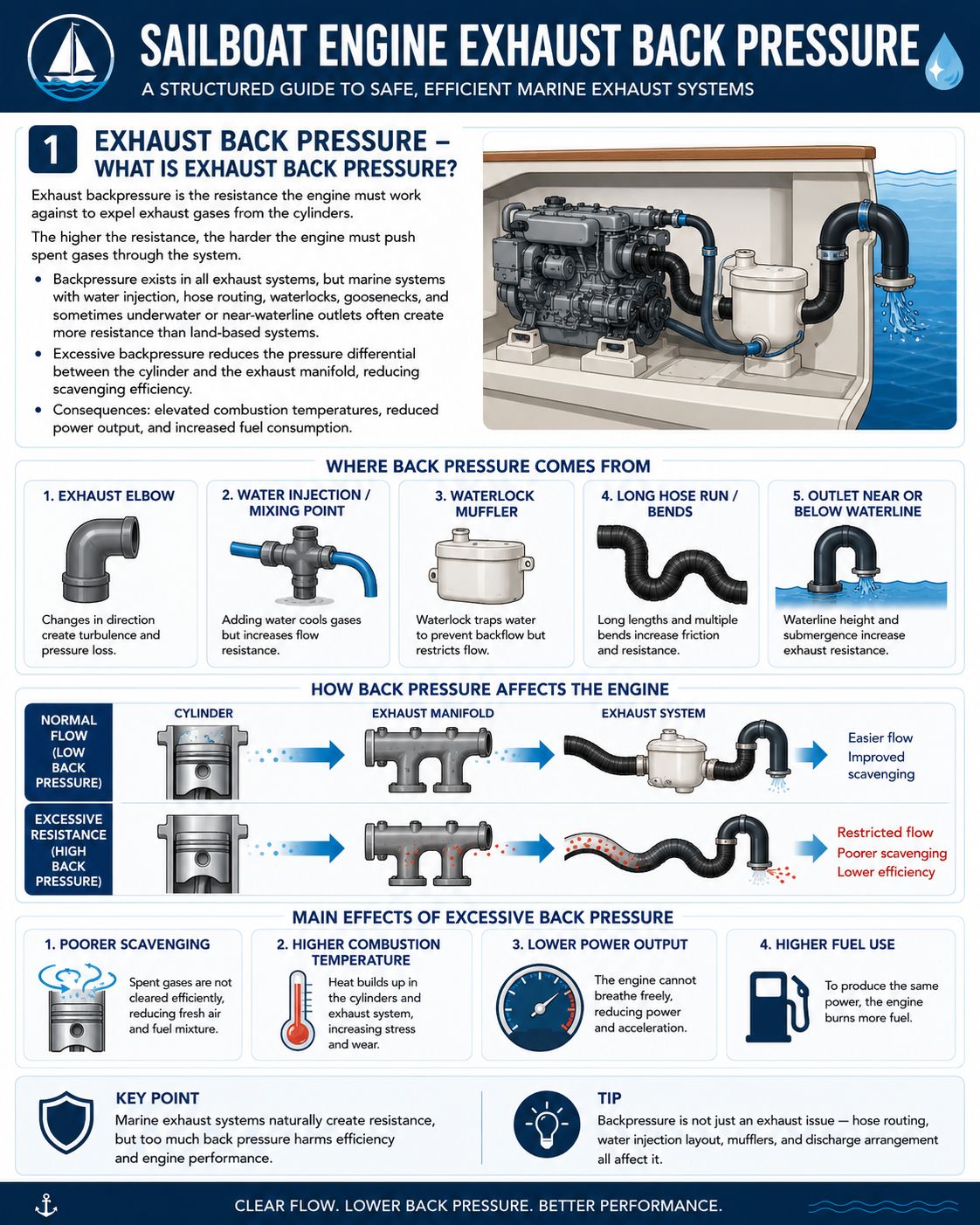
What Is Exhaust
Back Pressure?
Exhaust backpressure is the resistance the engine must work against to expel exhaust gases from the cylinders. The higher the resistance, the harder the engine must push spent gases through the system. Backpressure is present in all exhaust systems, but marine systems—with their combination of water injection, hose routing, and underwater outlets—tend to generate more than their land-based equivalents.
Excessive backpressure reduces the pressure differential between the cylinder and the exhaust manifold, reducing the efficiency of scavenging. This can lead to elevated combustion temperatures, reduced power output, and increased fuel consumption.
Exhaust Back Pressure Limits
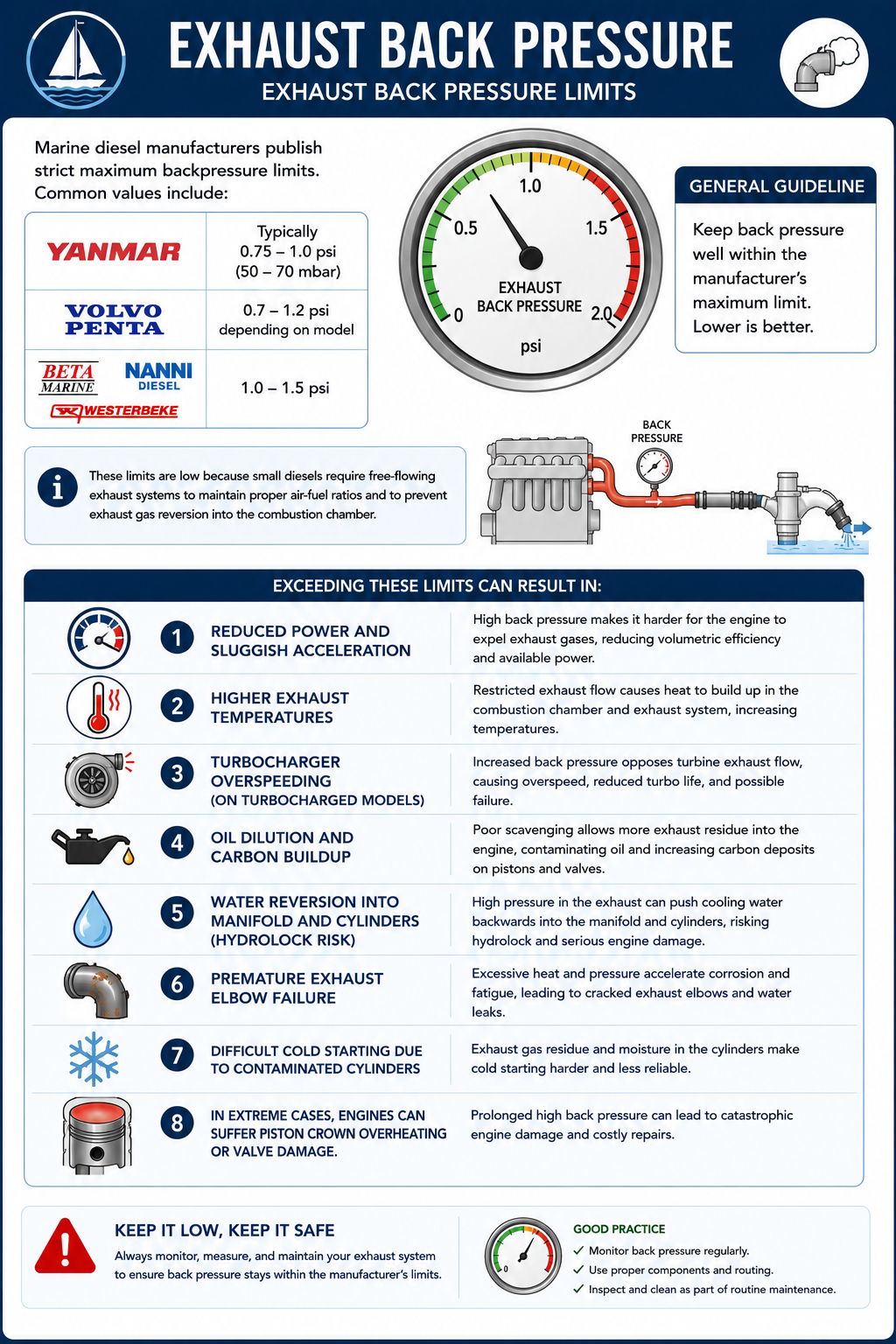
Marine diesel manufacturers publish strict maximum backpressure limits. Common values include:
- Yanmar: typically 0.75–1.0 psi (50–70 mbar)
- Volvo Penta: 0.7–1.2 psi depending on model
- Beta Marine / Nanni / Westerbeke: 1.0–1.5 psi
These limits are low because small diesels require free-flowing exhaust systems to maintain proper air-fuel ratios and to prevent exhaust gas reversion into the combustion chamber.
Exceeding these limits can result in:
- Reduced power and sluggish acceleration
- Higher exhaust temperatures
- Turbocharger overspeeding (on turbocharged models)
- Oil dilution and carbon buildup
- Water reversion into manifold and cylinders (hydrolock risk)
- Premature exhaust elbow failure
- Difficult cold starting due to contaminated cylinders
- In extreme cases, engines can suffer piston crown overheating or valve damage.
Mechanical
and Electrical Repairs Resource
If you are headed somewhere remote consider the need to expand your knowledge base or have an information resource on board. Why not get a copy of my book The Marine and Electrical and Electronics Bible 4th Edition. By and for yachties, with everything from batteries and charging, solar and wind, diesel engines and marine electronics and so much more. Your complete systems guide. 650 pages of practical advice. In Australia and New Zealand order a copy through Boat Books. UK and European boats can buy the UK Edition Here. US and Canadian boats can get the US Edition Order Here. Marine systems are my profession so let me help you. By a liveaboard boat owner for other boat owners

Excessive Exhaust Back
Pressure Sources
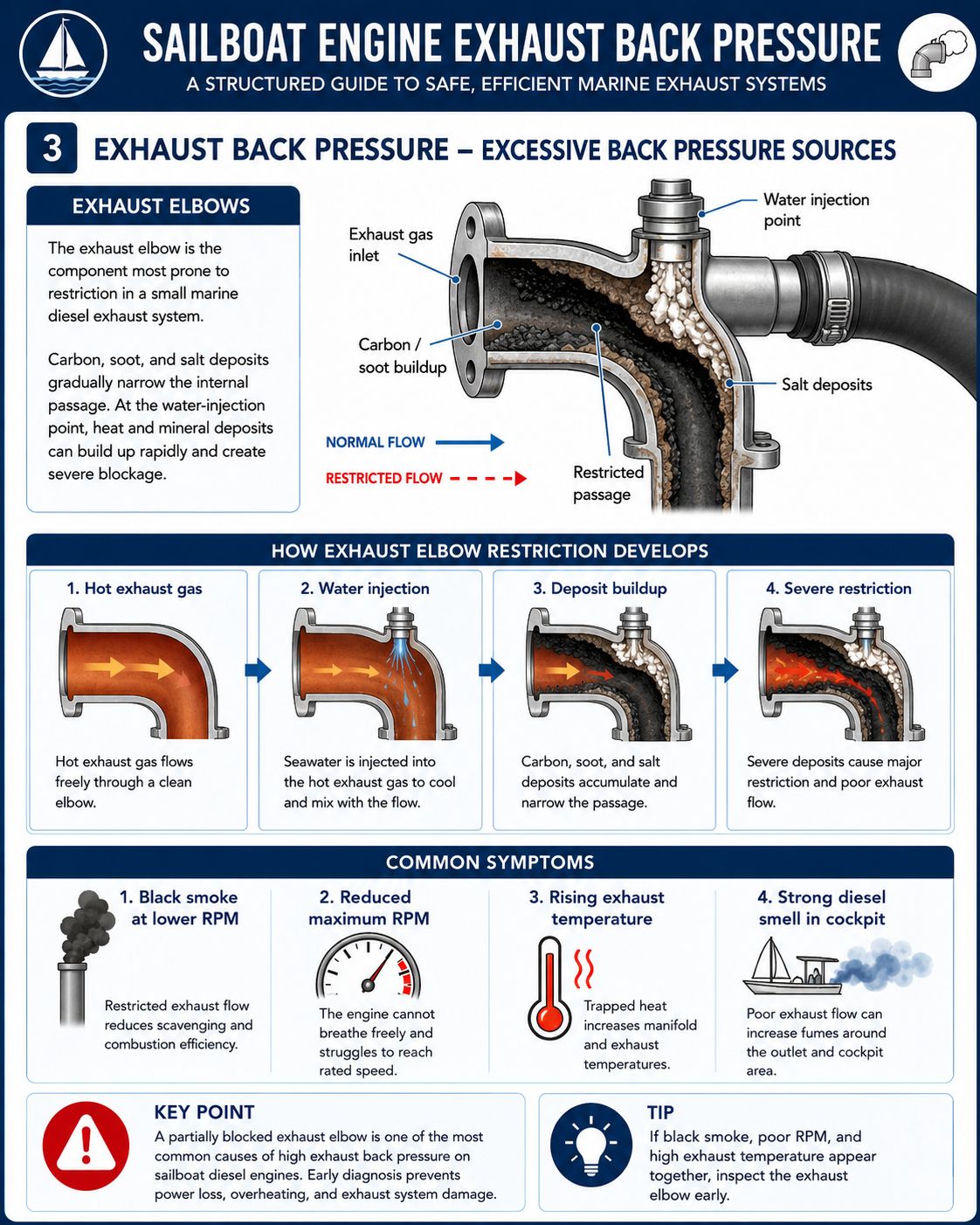
Exhaust Elbows. The exhaust elbow is the component most prone to restriction. Internally, carbon, soot, and salt accumulation narrow the gas passage. A failing water-injection elbow can accumulate solidified deposits where water meets hot gas.
Symptoms include:
- Black smoke at lower RPM
- Reduced maximum RPM
- Rising exhaust temperature
- Strong diesel smell in cockpit
Waterlocks and
Mufflers
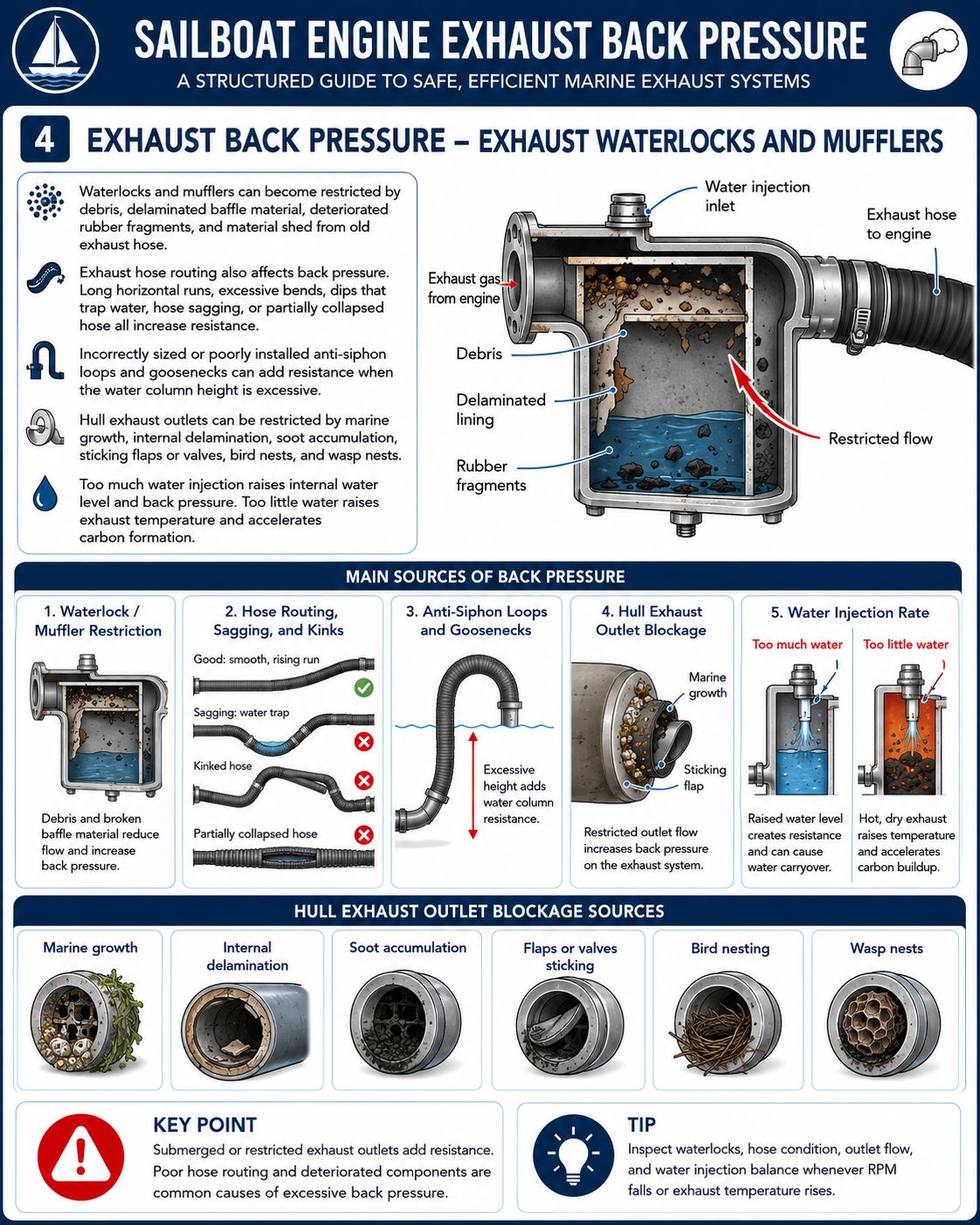
Waterlocks can fill with debris, delaminated baffle material, or deteriorated rubber fragments. Over time, hoses and internal linings degrade into the system.
Hose Routing, Sagging, and Kinks. Marine exhaust hose must be routed carefully. Long horizontal runs, excessive bends, dips that trap water, or hose sagging introduce resistance. A partially collapsed hose (common with old “wet exhaust” hose) dramatically increases backpressure.
Anti-siphon Loops and Goosenecks. Incorrectly sized or poorly installed goosenecks can add resistance if the water column height is excessive.
Hull Exhaust Outlet. Marine exhaust outlets can become partially blocked by:
- Marine growth
- Internal delamination
- Soot accumulation
- Flaps or valves sticking
- Birds nesting
- Wasp Nests
Submerged exhaust outlets add additional resistance at high hull speeds or heavy displacement conditions.
Water Injection Rate. Too much injected water can overwhelm the hose’s capacity, raising internal water level and thus resistance. Too little water increases exhaust temperature and accelerates carbon formation.
Effects on Engine Operation
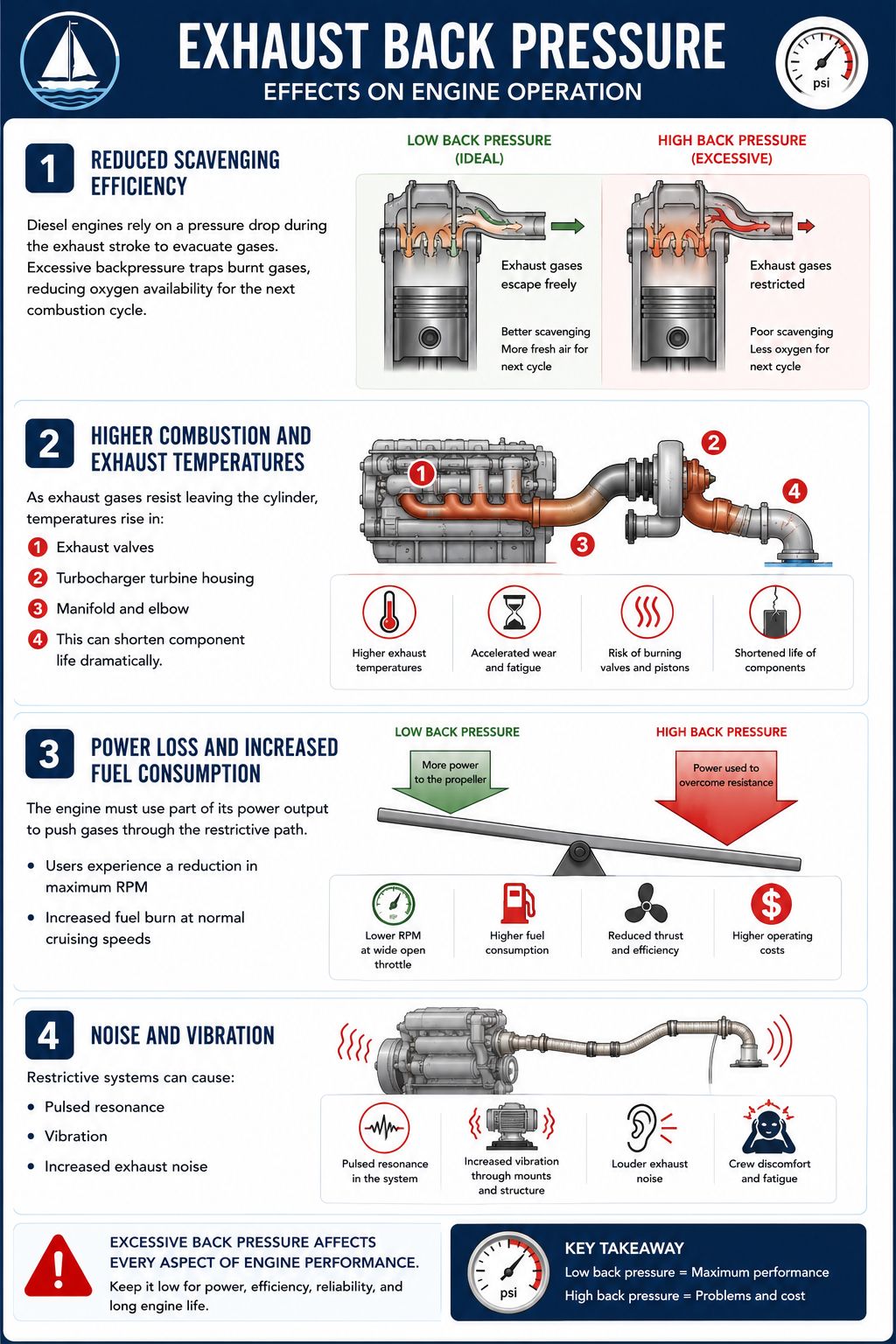
Reduced Scavenging Efficiency. Diesel engines rely on a pressure drop during the exhaust stroke to evacuate gases. Excessive backpressure traps burnt gases, reducing oxygen availability for the next combustion cycle.
Higher Combustion and Exhaust Temperatures. As exhaust gases resist leaving the cylinder, temperatures rise in:
- Exhaust valves
- Turbocharger turbine housing
- Manifold and elbow
- This can shorten component life dramatically.
- Power Loss and Increased Fuel Consumption
The engine must use part of its power output to push gases through the restrictive path. Users experience a reduction in maximum RPM and increased fuel burn at normal cruising speeds.
Noise and Vibration. Restrictive systems can cause pulsed resonance, vibration, and increased exhaust noise
Measuring Exhaust
Backpressure
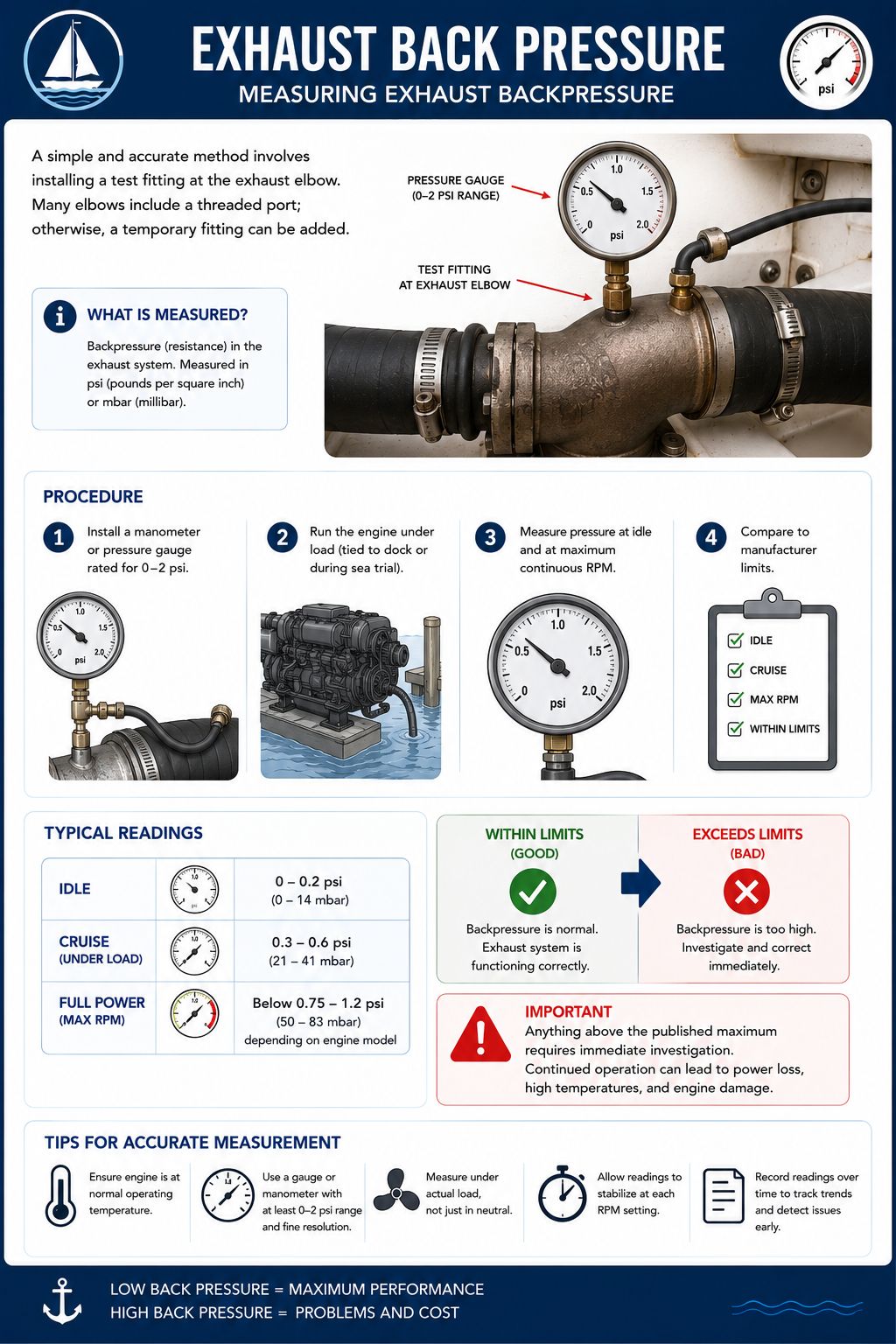
A simple and accurate method involves installing a test fitting at the exhaust elbow. Many elbows include a threaded port; otherwise, a temporary fitting can be added. Procedure:
- Install a manometer or pressure gauge rated for 0–2 psi.
- Run the engine under load (tied to dock or during sea trial).
- Measure pressure at idle and at maximum continuous RPM.
- Compare to manufacturer limits.
Typical readings:
- Idle: 0–0.2 psi
- Cruise: 0.3–0.6 psi
- Full power: below 0.75–1.2 psi depending on engine model
Anything above the published maximum requires immediate investigation.
Maintenance
Practices to Prevent Excessive Backpressure
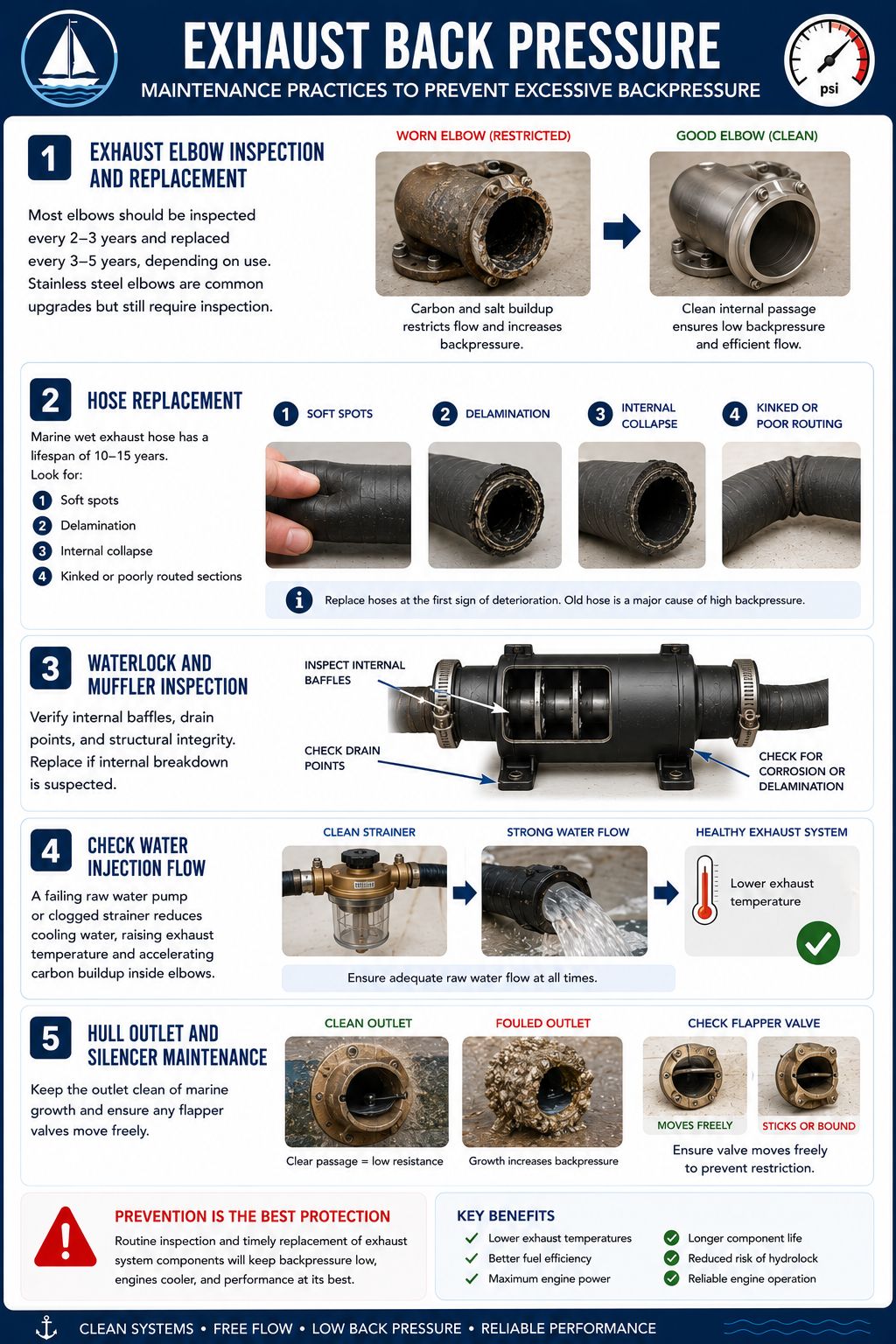
Exhaust Elbow Inspection and Replacement. Most elbows should be inspected every 2–3 years and replaced every 3–5 years, depending on use. Stainless steel elbows are common upgrades but still require inspection.
Hose Replacement. Marine wet exhaust hose has a lifespan of 10–15 years. Look for:
- Soft spots
- Delamination
- Internal collapse
- Kinked or poorly routed sections
Waterlock and Muffler Inspection. Verify internal baffles, drain points, and structural integrity. Replace if internal breakdown is suspected.
Check Water Injection Flow. A failing raw water pump or clogged strainer reduces cooling water, raising exhaust temperature and accelerating carbon buildup inside elbows.
Hull Outlet and Silencer Maintenance. Keep the outlet clean of marine growth and ensure any flapper valves move freely.
When Backpressure
Problems Appear
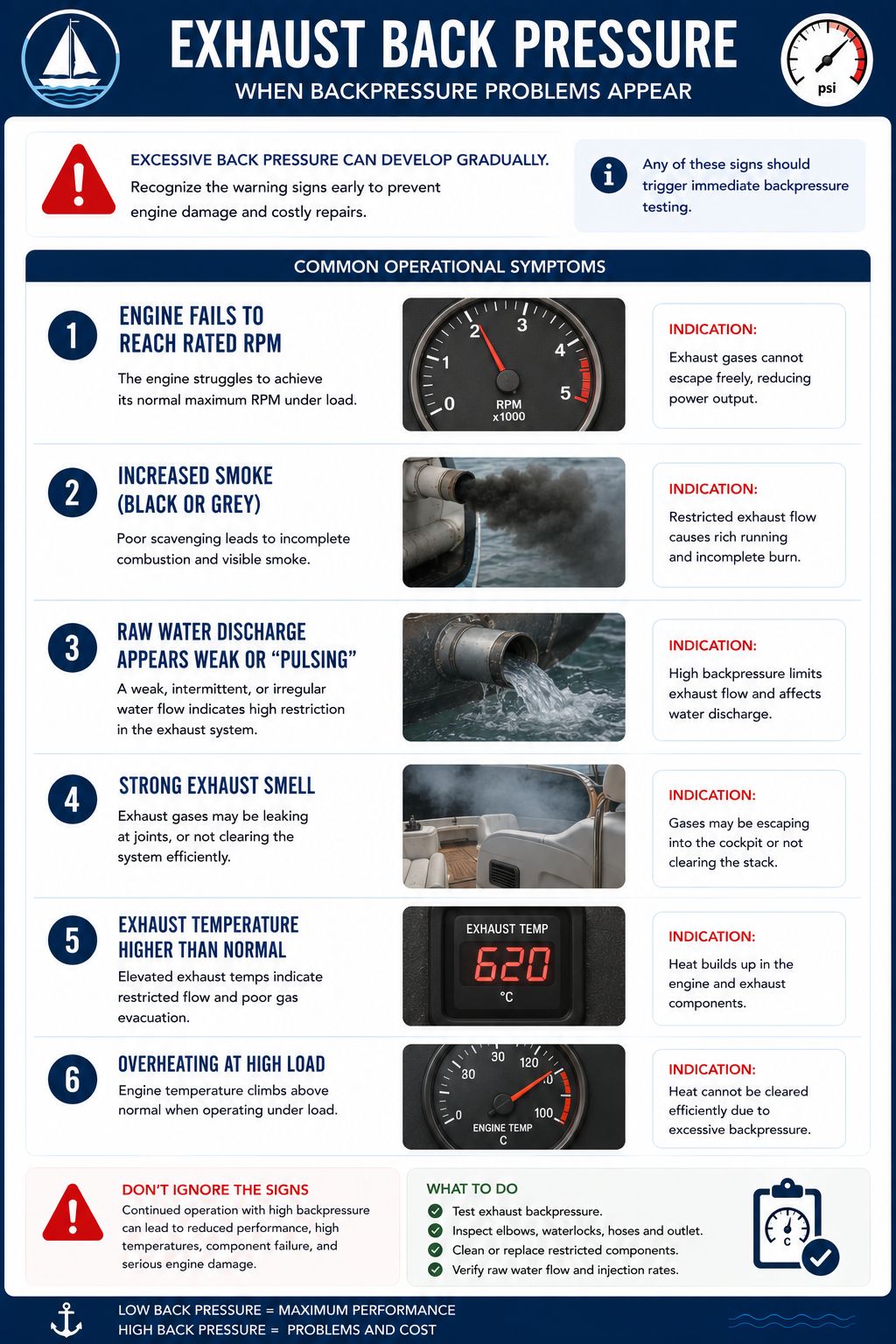
Common operational symptoms include:
- Engine fails to reach rated RPM
- Increased smoke (black or grey)
- Raw water discharge appears weak or “pulsing”
- Strong exhaust smell
- Exhaust temperature higher than normal
- Overheating at high load
Any of these signs should trigger immediate backpressure testing


Exhaust Back
Pressure Summary
Exhaust back pressure is a key factor in the performance and longevity of small marine diesel engines. Because marine exhaust systems involve long runs of hose, water injection, waterlocks, goosenecks, and underwater outlets, maintaining low resistance is essential. Monitoring, proper installation, and routine inspection of elbows, hoses, and exhaust components are vital to ensuring that backpressure remains within safe limits. Understanding its causes and effects allows boat owners and technicians to diagnose performance issues early and keep marine diesel engines running efficiently and reliably. Doe you know about Exhaust Back Pressure, find out more