Marine Diesel Engine Burning Oil
Engine burning oil and marine diesel engine oil consumption is a normal and expected characteristic of any internal-combustion engine, including the small marine diesels found on sailing yachts. However, the rate of oil consumption, and the pattern in which it changes over time, provide valuable insights into the mechanical condition and operating efficiency of the engine. It is important to know how to fix engine burning oil issues and also important to distinguish between burning oil vs an oil leak. Understanding oil burning causes and solutions and how to implement oil burning prevention tips are essential.
Marine diesels experience unique operating environments, long idle periods, intermittent high loads, varied engine angles, and corrosive atmospheres, making them more sensitive to oil-related issues than automotive diesels of similar displacement. This article examines typical oil-consumption expectations, the mechanisms by which engines use oil, and the root causes of increased or abnormal oil loss in marine applications.

Engine Burning Oil Normal Rates
All engines consume small amounts of oil through evaporation, ring leakage, valve-guide lubrication, or turbocharger seal seepage. What is considered normal depends on design, age, and operating profile, but broadly:
- Modern small marine diesels (Yanmar, Volvo Penta, Nanni, Beta) typically consume 1–3 grams per kWh, or approximately 0.1–0.3 L per 100 engine hours.
- Older engines or those with high engine hours may consume 0.5–1.0 L per 100 hours without being considered defective.
- Turbocharged engines may consume slightly more due to higher blow-by and turbo bearing lubrication demands.
- Manufacturers specify acceptable maximum rates, sometimes as high as 0.5% of fuel consumed. Therefore, modest consumption does not automatically indicate a defect.
The key is consistency. Sudden increases or a progressive rise in oil usage are warning signs that warrant investigation.
Engine Burning Oil
and Consumption Causes
Small marine diesels primarily lose oil through four mechanisms:
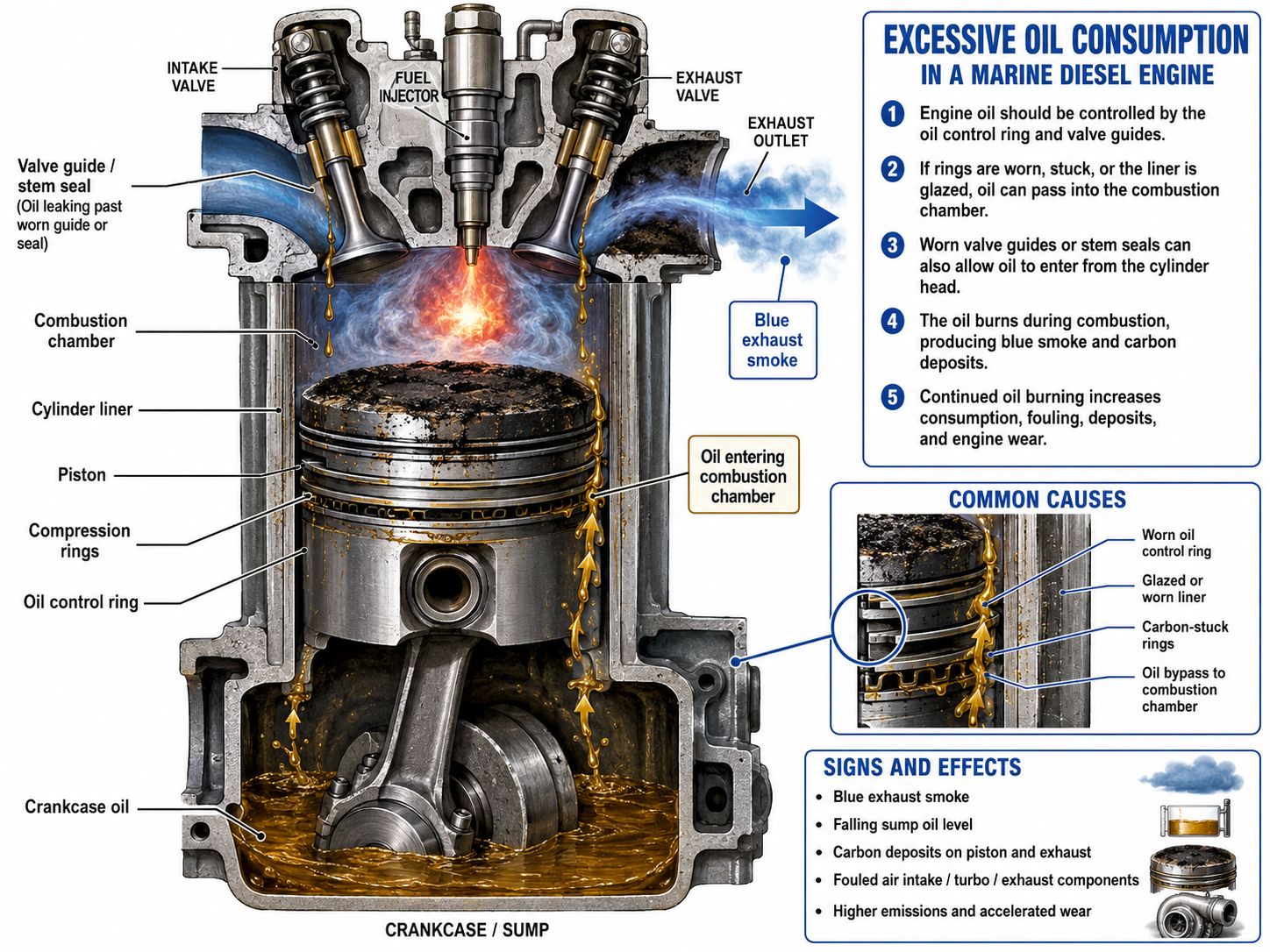
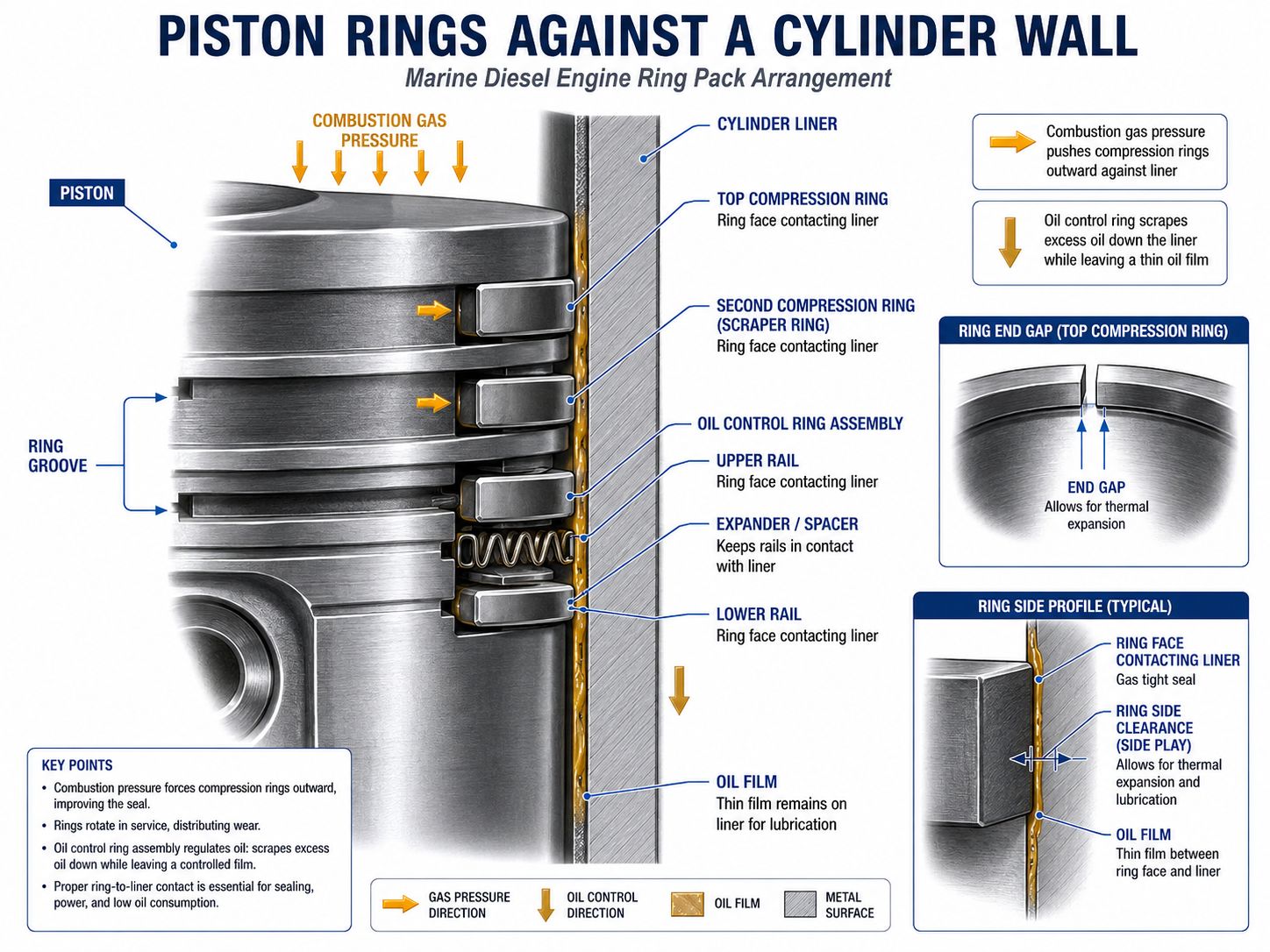
Ring Blow-By and Cylinder Wall Leakage. A small volume of oil is purposely left on cylinder walls to aid lubrication. Piston movement scrapes most of it back into the sump, but some is burned during combustion, and this increases for the following:
- Rings are worn
- Cylinder walls are glazed
- Combustion temperatures are low
This is the dominant normal consumption pathway.
Valve-Guide Lubrication. Oil lubricates the upper valve train and drains back into the head, but a small amount enters intake or exhaust ports. Older engines often have higher guide clearance, increasing oil flow.
Crankcase Ventilation Loss. Crankcase vapours contain atomised oil that exits through the breather. Closed-circuit systems return vapour to the air intake, where it is burned.
Turbocharger Seal Loss. In turbo engines, oil under pressure lubricates bearings. Seals limit leakage, but high boost pressure or worn components can cause oil to enter the compressor or turbine housings.
Mechanical
and Electrical Repairs Resource
If you are headed somewhere remote consider the need to expand your knowledge base or have an information resource on board. Why not get a copy of my book The Marine and Electrical and Electronics Bible 4th Edition. By and for yachties, with everything from batteries and charging, solar and wind, diesel engines and marine electronics and so much more. Your complete systems guide. 650 pages of practical advice. In Australia and New Zealand order a copy through Boat Books. UK and European boats can buy the UK Edition Here. US and Canadian boats can get the US Edition Order Here. Marine systems are my profession so let me help you. By a liveaboard boat owner for other boat owners
Engine Burning Oil
and Increased Oil Consumption
Ring Wear and Cylinder Wall Degradation. As rings wear, the sealing between piston and cylinder deteriorates. This causes:
- Greater blow-by
- More oil drawn into the combustion chamber
- Increased oil oxidation due to higher crankcase temperatures
Cylinder glazing is particularly common in marine engines, as prolonged light loading (e.g., low RPM cruising or battery-only charge operation) prevents rings from bedding properly. Glazing creates a polished surface that holds less oil and prevents proper ring sealing, increasing oil burn. The symptoms are:
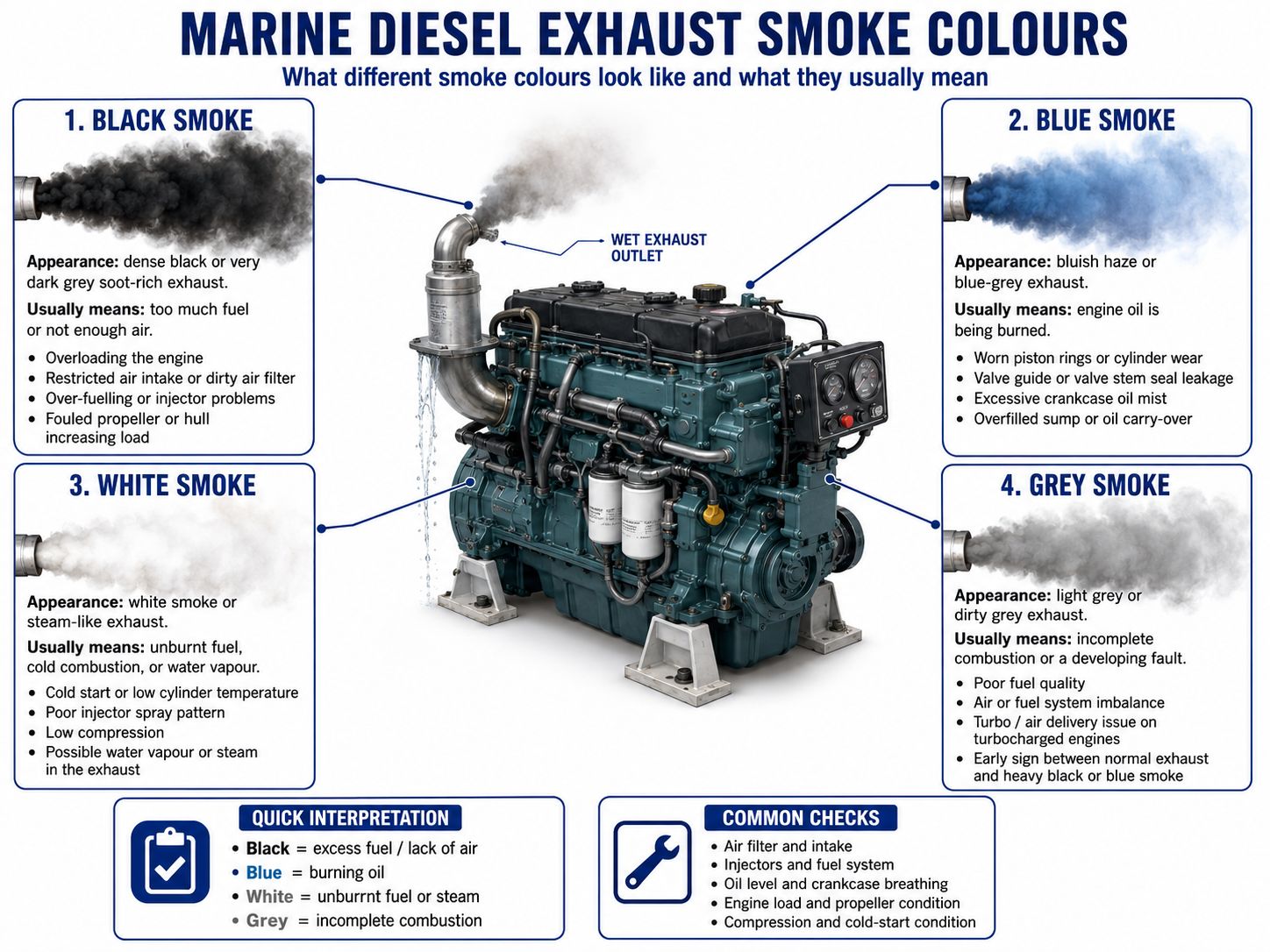
- Blue smoke under load
- High crankcase pressure
- Oil fouling at the breather
Engine Burning Oil
and Increased Oil Consumption
Valve-Guide and Valve-Stem Seal Wear. Worn valve guides allow oil to flow down the stem into the intake or exhaust ports. Marine engines may suffer guide wear due to extended periods of inactivity, leading to corrosion at the valve stems. The effects are:
- Blue smoke on start-up
- Smoky exhaust after long idle periods
- Gradually increasing consumption
Turbocharged engines exacerbate the issue due to intake vacuum pulses at low load.
Turbocharger Oil Leakage
In small marine diesels with turbochargers (Volvo D-series, Yanmar 3JH/4JH turbo models), oil can escape past the turbo’s internal seals if:
- Bearings are worn
- Drain line is restricted
- Crankcase pressure is elevated
- Sump is overfilled
This oil enters either the compressor (causing smoke and fouling the intercooler) or the turbine (burning invisibly in the exhaust).
Overfilled Sump
Too much oil results in crankshaft whip, which aerates the oil and forces it through the breather system. The engine then burns this oil through the intake. Marine engines, which operate at heel or pitch in rough seas, are highly sensitive to small overfills.
Poor Maintenance
or Long Oil-Change Intervals
Old oil degrades due to the following reasons:
- Viscosity drops
- Metal wear particles accumulate
- Volatile fractions evaporate
- Detergents lose effectiveness
Thin oil passes more readily through clearances and rings, increasing consumption. Marine engines running cool or light-loaded (common on sailboats) accumulate soot and fuel contamination, accelerating viscosity loss.
Fuel Dilution
Masking True Consumption
A failing lift pump diaphragm, leaking injector, or worn injection pump seal can allow diesel fuel into the crankcase. This raises the oil level, making it seem like consumption is low or stable. After repair, the level may rapidly drop to its true baseline, leading to the mistaken belief of sudden increased consumption. Fuel dilution also thins the oil, accelerating wear.
External Leaks
Misinterpreted as Consumption
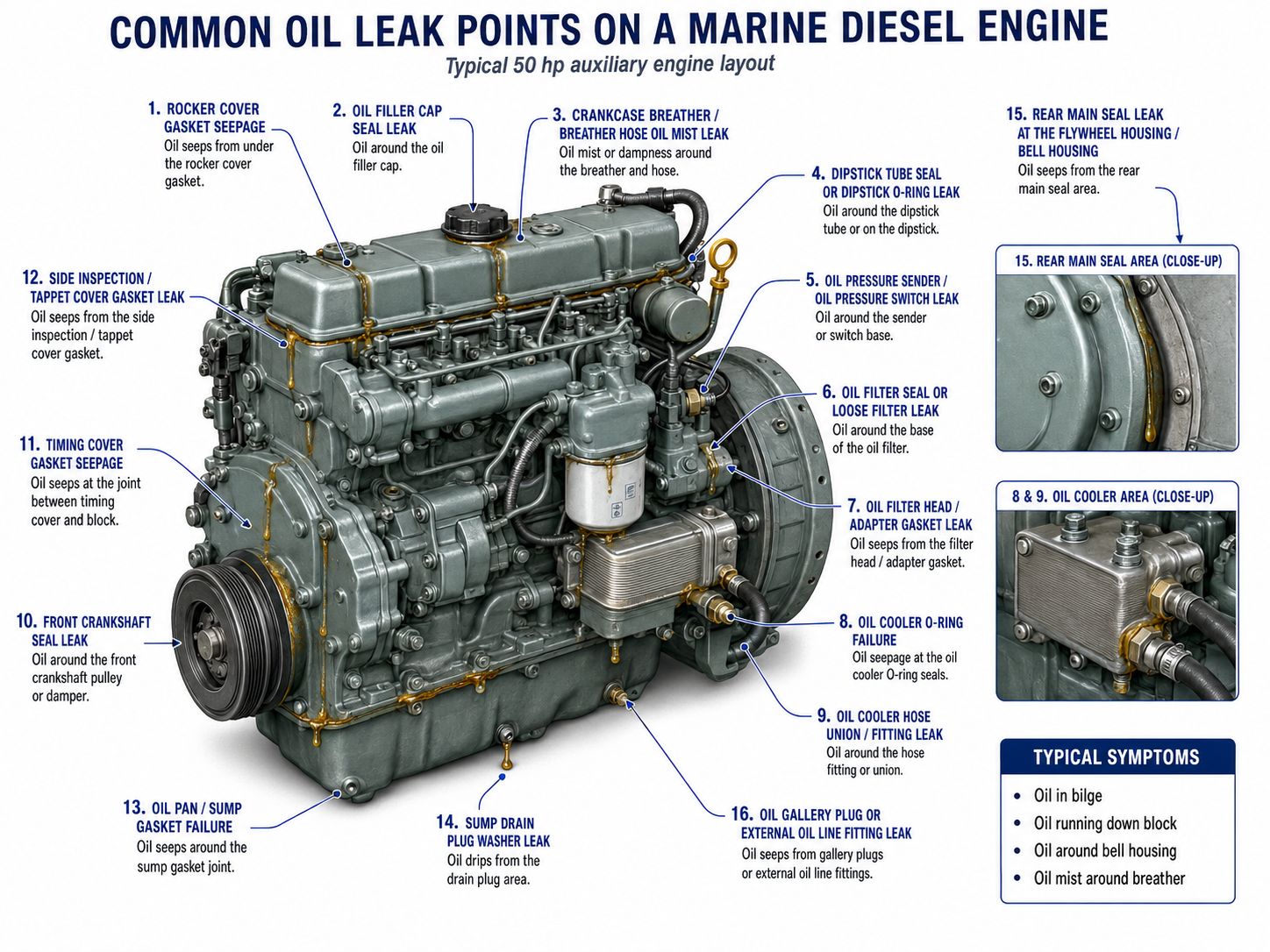
Oil can be lost without combustion through:
- Rear main seal leaks
- Oil pan gasket failures
- Rocker cover seepage
- Oil cooler O-ring failures
- Remote filter hose leaks
These are especially common in boats due to vibration, corrosion, and difficult access limiting maintenance visibility.
Excessive Engine
Ventilation Loss (Blow-By)
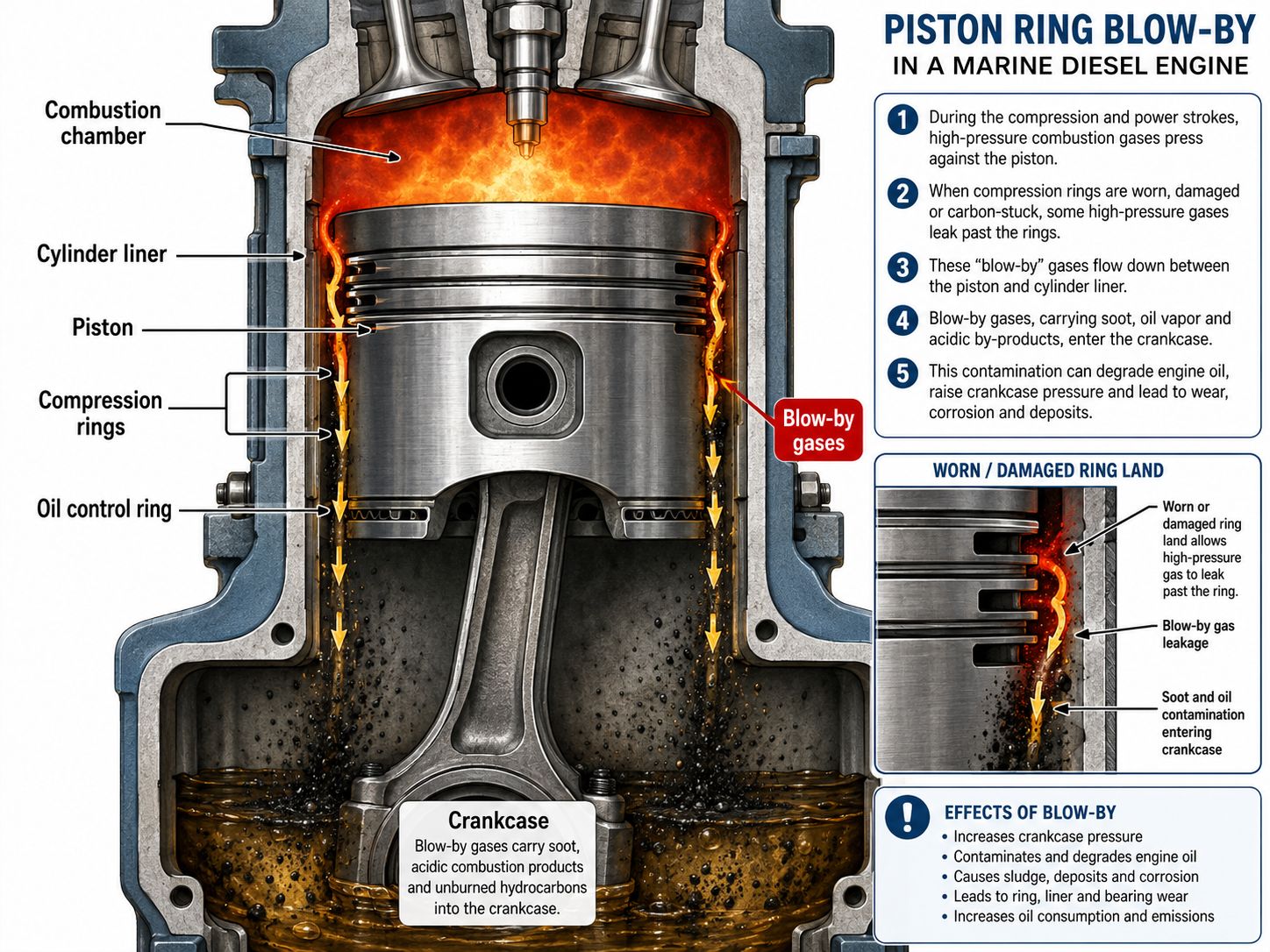
As rings and bores wear, more oil vapour is carried out via the crankcase breather. Closed breather systems will burn this oil; open systems vent directly into the engine bay, creating a mess and masking the true consumption rate. Blow-by also raises crankcase pressure, worsening ring leakage and turbo seal performance
Poor Operating
Conditions Unique to Marine Engines
Marine diesels often run cool, lightly loaded, and intermittently—all of which increase oil usage by:
- Preventing proper ring seating
- Encouraging condensation and internal rust
- Allowing unburned fuel to wash oil from cylinder walls
- Causing sludge and carbon buildup
Engines used exclusively for battery charging (low RPM, no load) are particularly vulnerable.
Monitoring and Managing Oil Consumption
Owners should track the following factors:
- Oil added per 10-hour interval
- Exhaust smoke colour
- Breather discharge
- Oil level stability
- Colour and viscosity changes
Periodic compression testing, leak-down testing, and turbo inspection can help diagnose rising oil usage early.


Engine Burning Oil
and Oil Consumption
If the engine burning oil and oil consumption in a small marine diesel engine is normal, but a rising or excessive rate is an early indicator of mechanical wear, operational stress, or improper maintenance. Because marine engines operate in a uniquely challenging environment, low load, high humidity, long idle periods, they are particularly prone to cylinder glazing, guide wear, breather losses, and turbo leakage. Understanding the mechanisms of oil usage and the factors that cause increases allows operators to identify issues before they lead to costly failures, ensuring reliability and long service life at sea. Marine diesel oil consumption and engine burning oil needs monitoring as part of your vessel management strategy.