Marine Diesel Engine Coolant Expansion
Tank
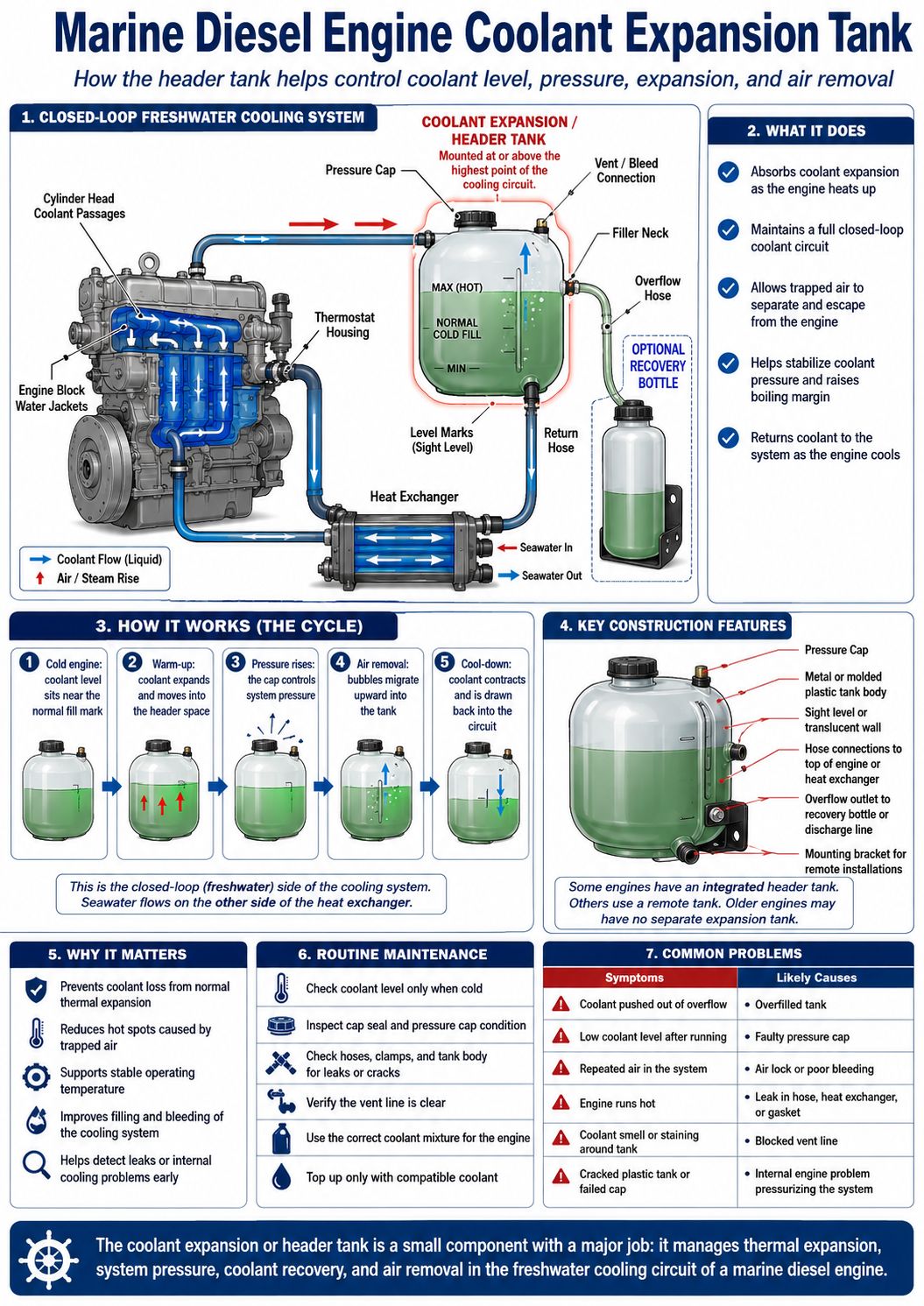
The marine diesel engine coolant expansion tank or sometimes called the coolant header tank or overflow tanks, is an essential components in the closed-loop freshwater cooling circuits of small marine diesel engines. Their purpose is often underestimated, yet they play a critical role in managing coolant volume, thermal expansion, system pressure, and the efficient removal of air from the engine’s cooling passages.
They are not installed on every engine but most modern ones have them, my older Volvo does not have one. Whether integrated directly onto the engine or mounted remotely on a bulkhead, header tanks help ensure consistent coolant levels and stable operating temperatures. This article provides a detailed technical overview of their function, construction, coolant flow principles, maintenance requirements, and troubleshooting procedures.
Coolant Expansion
Tank Function
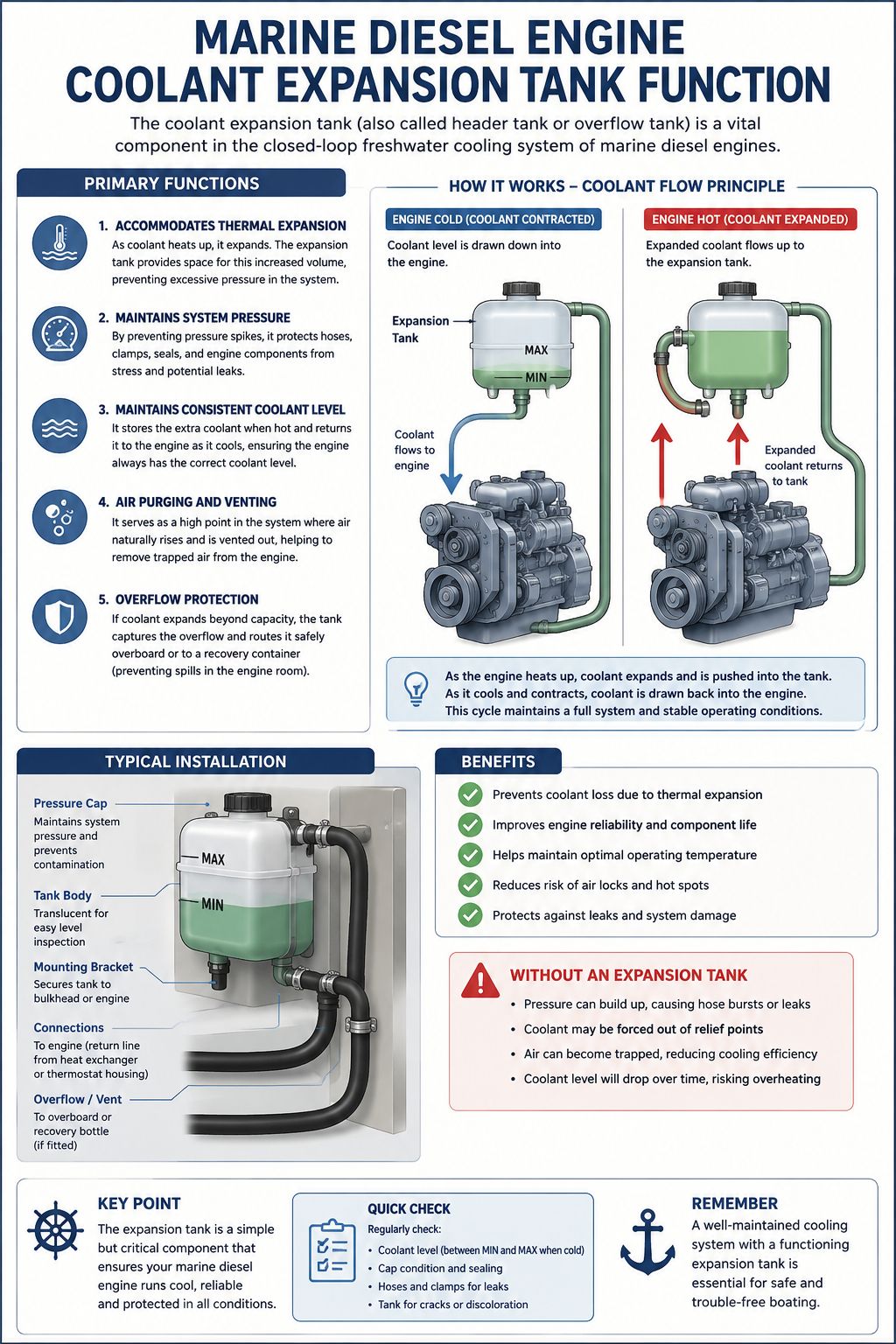
Engine coolant expands as it heats from ambient temperature to roughly 80–90°C during normal operation. Without proper pressure control and volume compensation, the coolant would overflow from the system or cause excessive internal pressure. The header tank provides a controlled space where hot coolant can expand safely. Key functions include:
Expansion Management. As coolant heats and expands, it flows upward from the engine into the header tank. The tank’s airspace allows for safe expansion without forcing coolant out of the system prematurely.
Pressure Regulation. Most header tanks incorporate a pressure cap, typically rated between 7–16 psi depending on engine design. Increasing system pressure raises the boiling point of coolant, improving heat transfer efficiency and preventing vapor pockets inside the engine. The cap also includes a spring-loaded relief valve to discharge excess pressure into the overflow line when thresholds are exceeded.
Air Separation. Air in a cooling system can cause hot spots, cavitation, and poor circulation. Since air naturally rises, the header tank, positioned above the highest coolant passage, provides a central point for air to escape through the coolant flow path.
Coolant Recovery and Return. Many systems use a remote overflow reservoir connected by a hose to the header tank's pressure cap. When coolant expands and flows into this reservoir, it is drawn back into the header tank as the system cools and contracts, ensuring stable coolant levels without manual topping-up.
Coolant Expansion
Tank Configurations
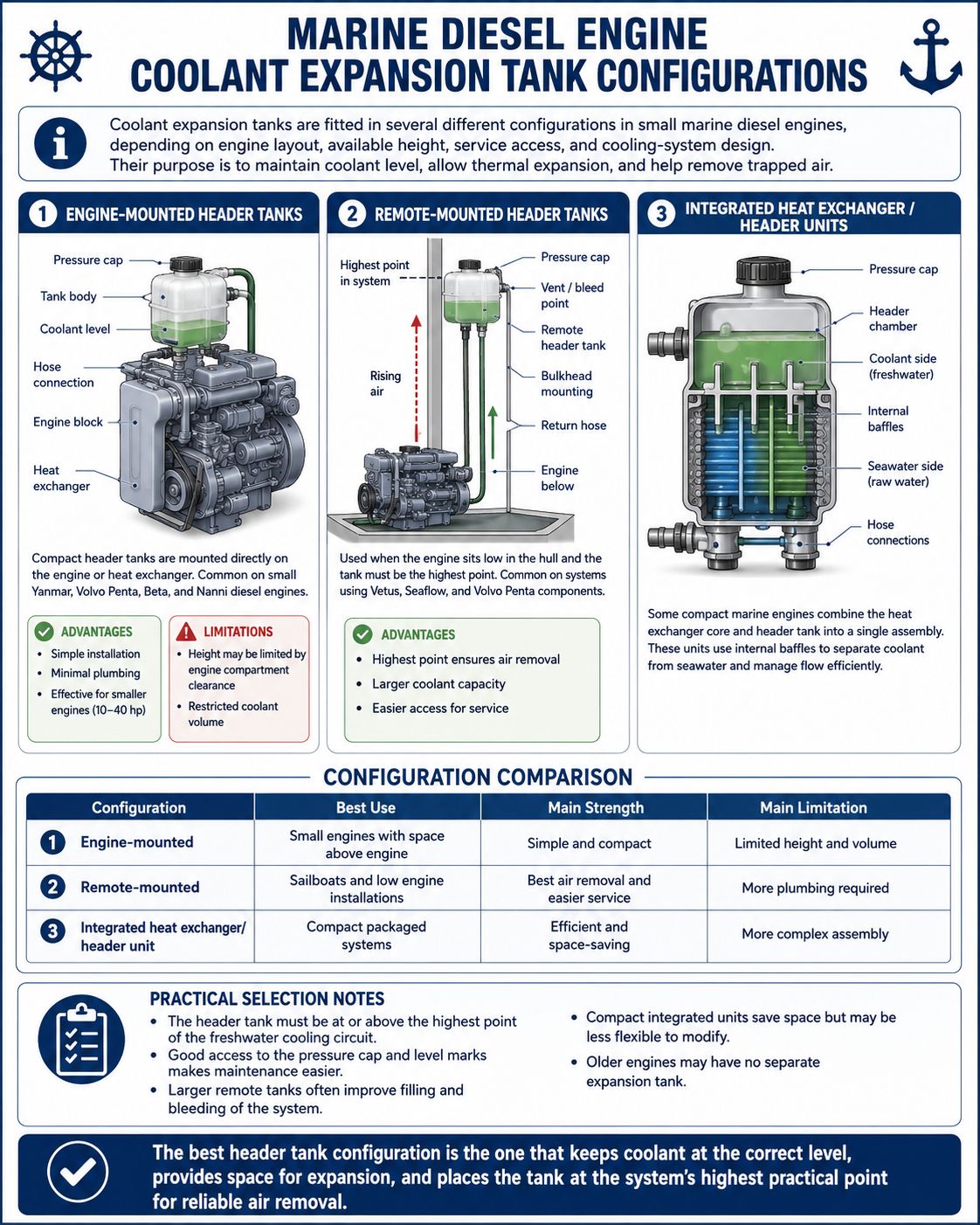
Engine-Mounted Header Tanks. Common on small Yanmar, Volvo Penta, Beta, and Nanni diesels, these are compact tanks bolted directly to the engine block or heat exchanger body. The advantages are:
- Simple installation
- Minimal plumbing
- Effective for smaller engines (10–40 hp)
Limitations:
- Height may be limited by engine compartment clearance
- Restricted coolant volume
Remote-Mounted Header Tanks. Used when the engine sits low in the hull (common in sailboats), making it impossible for the engine-mounted tank to be the highest point. Manufacturers such as Vetus, Seaflow, and Volvo Penta produce remote header tanks installed on a bulkhead above the engine. The advantages are:
- Highest point ensures air removal
- Larger coolant capacity
- Easier access for service
- Integrated Heat Exchanger/Header Units
Some compact marine engines combine the heat exchanger core and header tank into a single assembly. These units include internal baffles to separate coolant from seawater and manage flow.
Coolant Expansion
Tank Construction
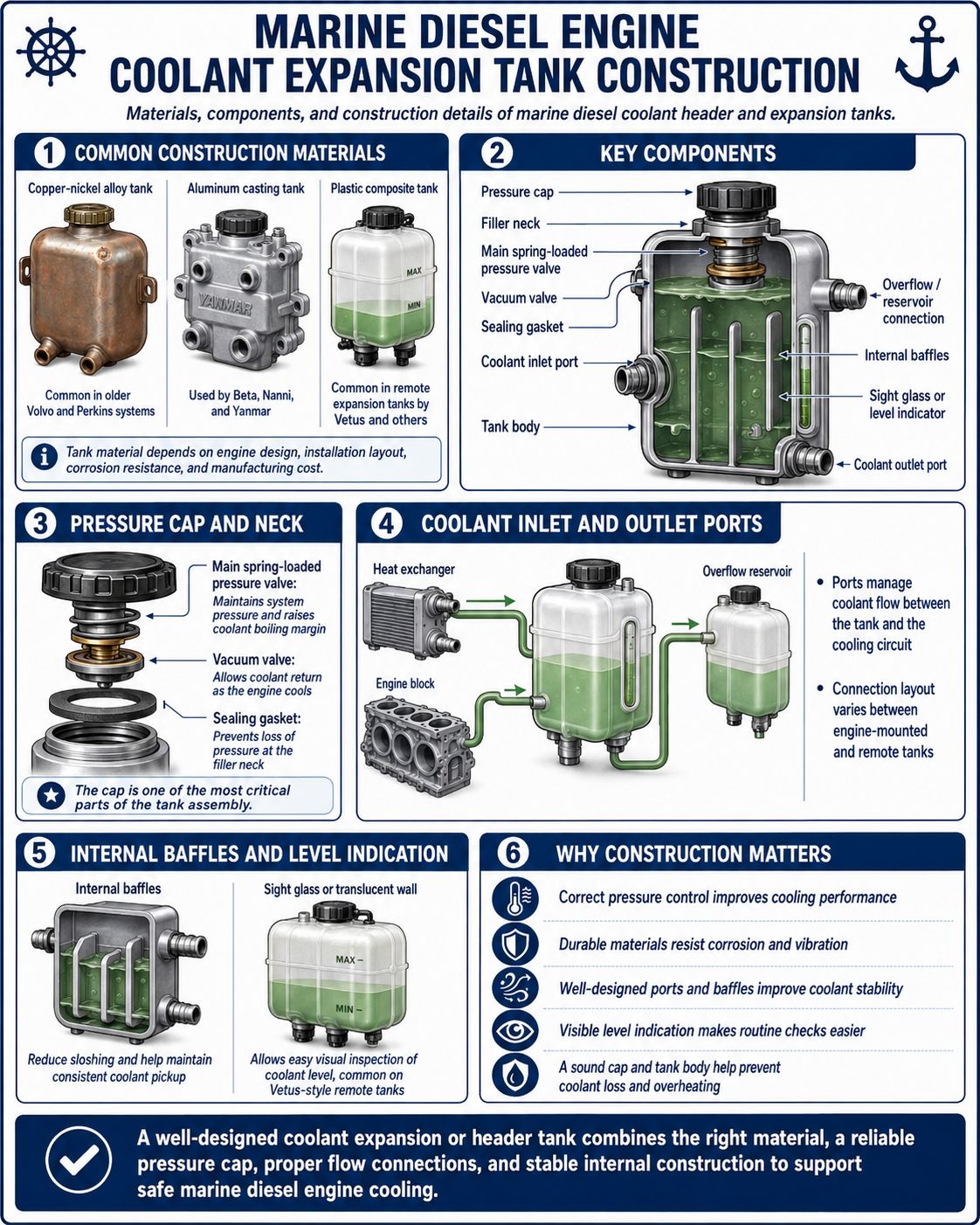
Header tanks are typically fabricated from:
- Copper-nickel alloy (common in older Volvo and Perkins systems)
- Aluminum castings (Beta, Nanni, Yanmar)
- Plastic composites (used in remote expansion tanks by Vetus and Seaflow)
Key components include:
Pressure Cap and Neck
- The cap is critical for maintaining system pressure. It typically contains:
- A main spring-loaded pressure valve
- A vacuum valve to allow coolant return
- A sealing gasket
- Coolant Inlet and Outlet Ports
These manage flow to:
- Heat exchanger
- Engine block
- Overflow reservoir
- Internal Baffles. Prevent sloshing and ensure consistent coolant pickup.
- Sight Glass or Level Indicator. Common on Vetus remote tanks for easy visual inspection.
Operation and
Coolant Flow Principles
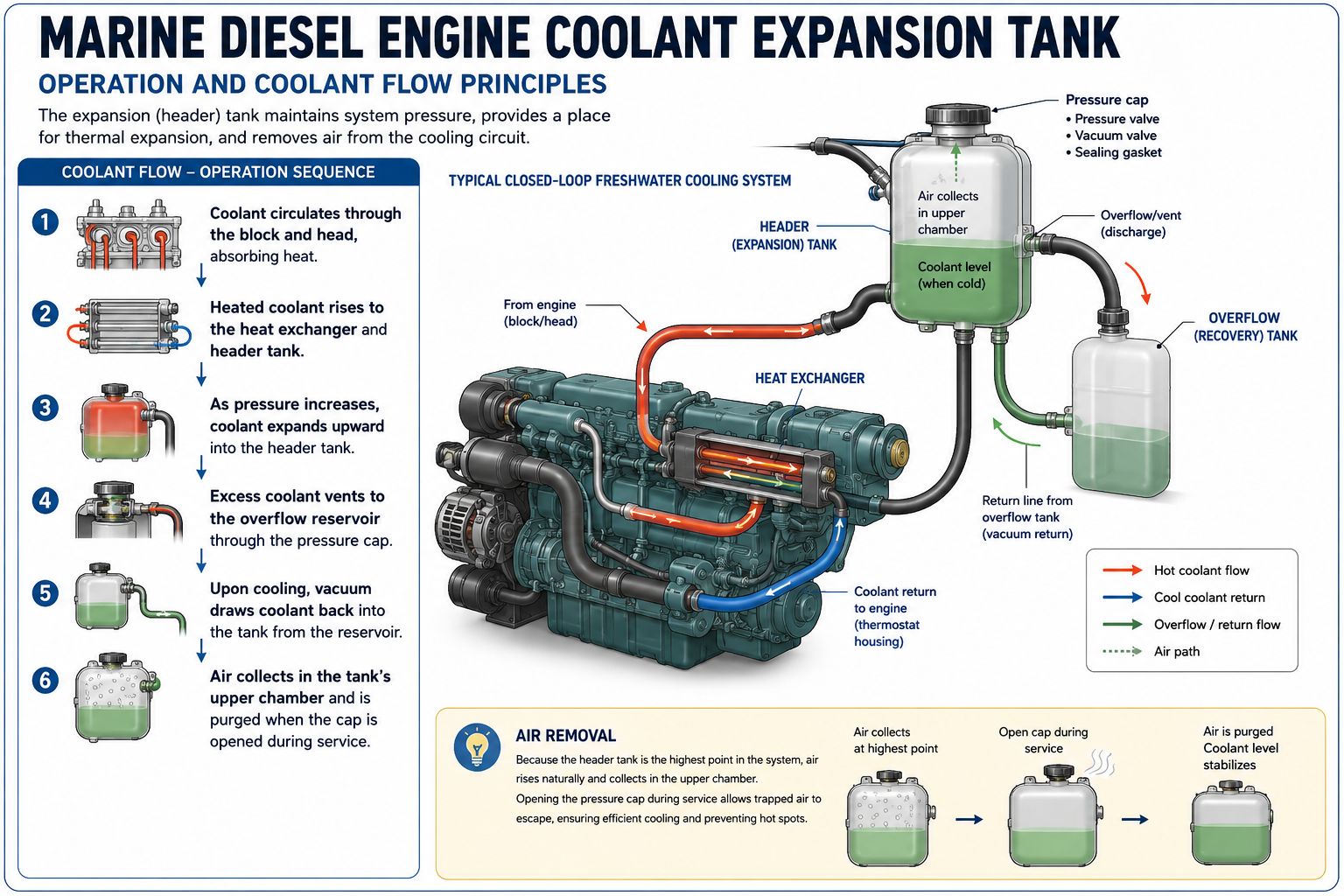
A typical flow sequence is:
- Coolant circulates through the block and head, absorbing heat.
- Heated coolant rises to the heat exchanger and header tank.
- As pressure increases, coolant expands upward into the header tank.
- Excess coolant vents to the overflow reservoir through the pressure cap.
- Upon cooling, vacuum draws coolant back into the tank from the reservoir.
- Air collects in the tank’s upper chamber and is purged when the cap is opened during service
Mechanical
and Electrical Repairs Resource

Why not get a copy of my book The Marine and Electrical and Electronics Bible 4th Edition. By and for yachties. In Australia and New Zealand order a copy through Boat Books. UK and European boats can buy the UK Edition Here. US and Canadian boats can get the US Edition Order Here. Marine systems are my profession so let me help you. By a liveaboard boat owner for other boat owners
Coolant Expansion
Tank Maintenance
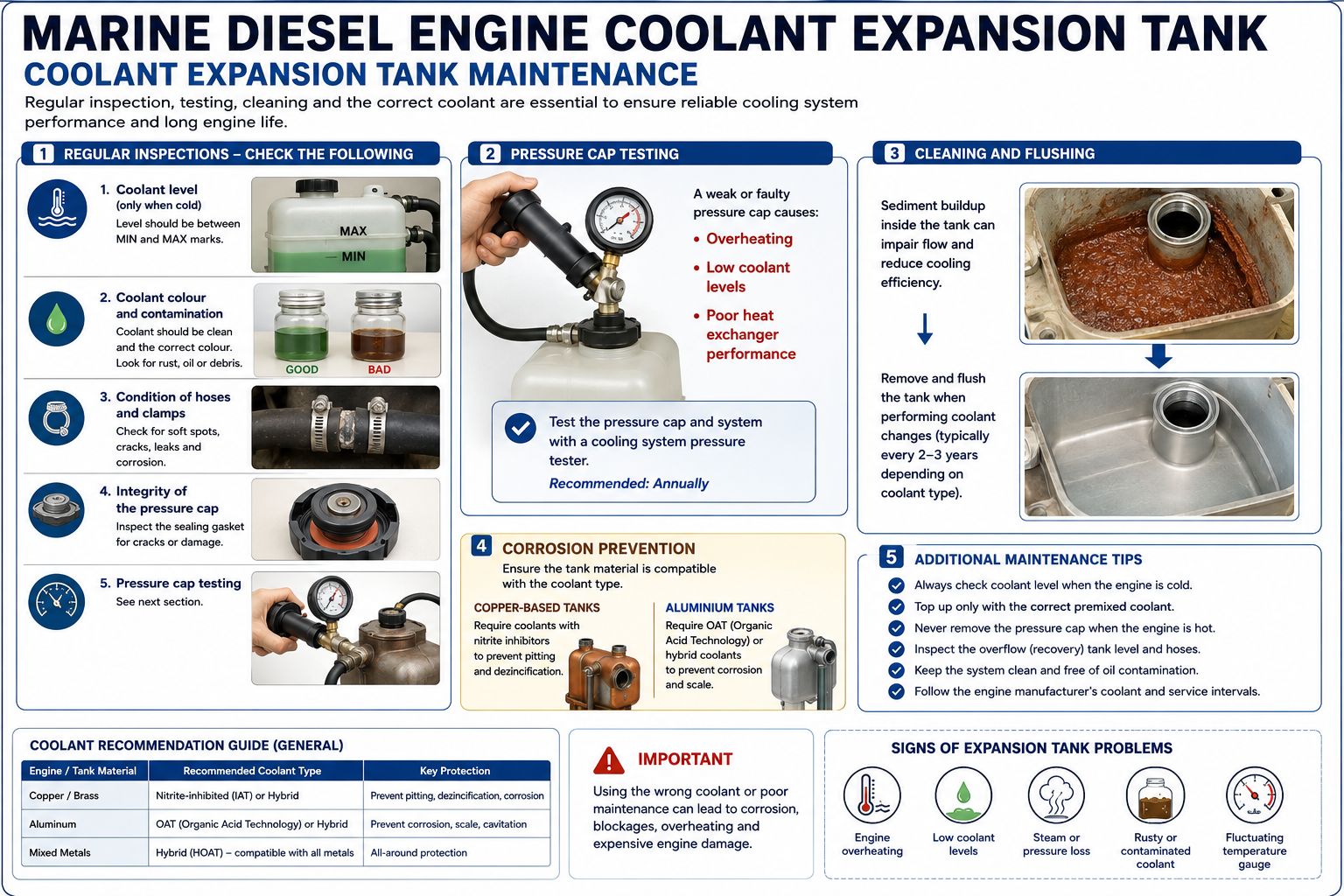
Regular Inspections to perform. Check the following:
- Coolant level (only when cold)
- Coolant colour and contamination
- Condition of hoses and clamps
- Integrity of the pressure cap
- Pressure Cap Testing. A weak cap causes:
- Overheating
- Low coolant levels
- Poor heat exchanger performance
Testing with a cooling system pressure tester is recommended annually.
Cleaning and Flushing
Sediment buildup inside the tank can impair flow. Remove and flush the tank when performing coolant changes (typically every 2–3 years depending on coolant type).
Corrosion Prevention
Ensure the tank material is compatible with the coolant type. For example:
- Copper-based tanks require nitrite inhibitors
- Aluminum tanks require OAT or hybrid coolants
Troubleshooting
Common Problems
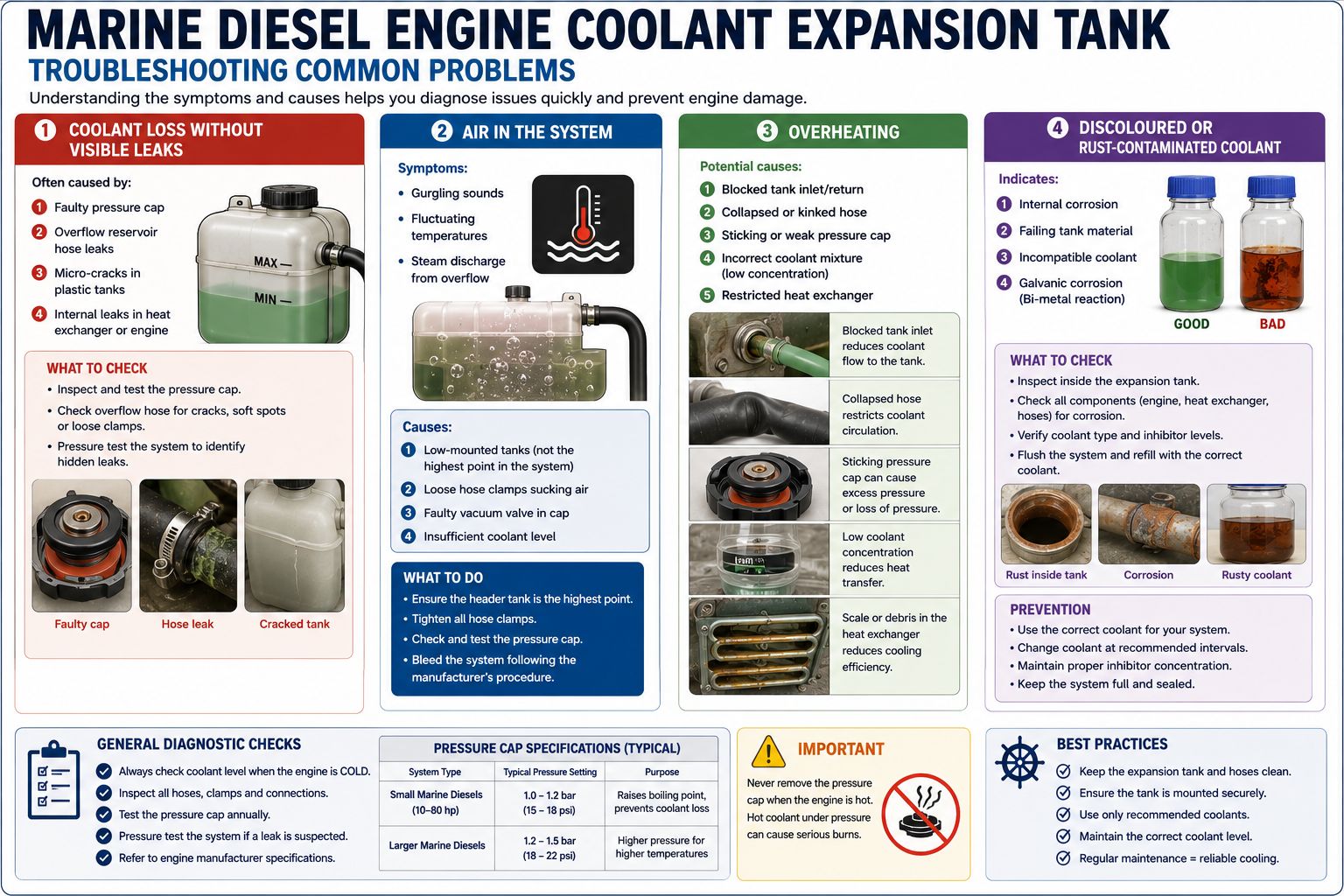
Coolant Loss Without Visible Leaks. Often caused by:
- Faulty pressure cap
- Overflow reservoir hose leaks
- Micro-cracks in plastic tanks
- Air in the System
Symptoms:
- Gurgling sounds
- Fluctuating temperatures
- Steam discharge
Causes:
- Low-mounted tanks
- Loose hose clamps sucking air
- Faulty vacuum valve in cap
Overheating.
Potential causes:
- Blocked tank inlet
- Collapsed hose
- Sticking pressure cap
- Incorrect coolant mixture
Discoloured or Rust-Contaminated Coolant
Indicates:
- Internal corrosion
- Failing tank material
- Incompatible coolant
Coolant Expansion
Tank Practical Recommendations
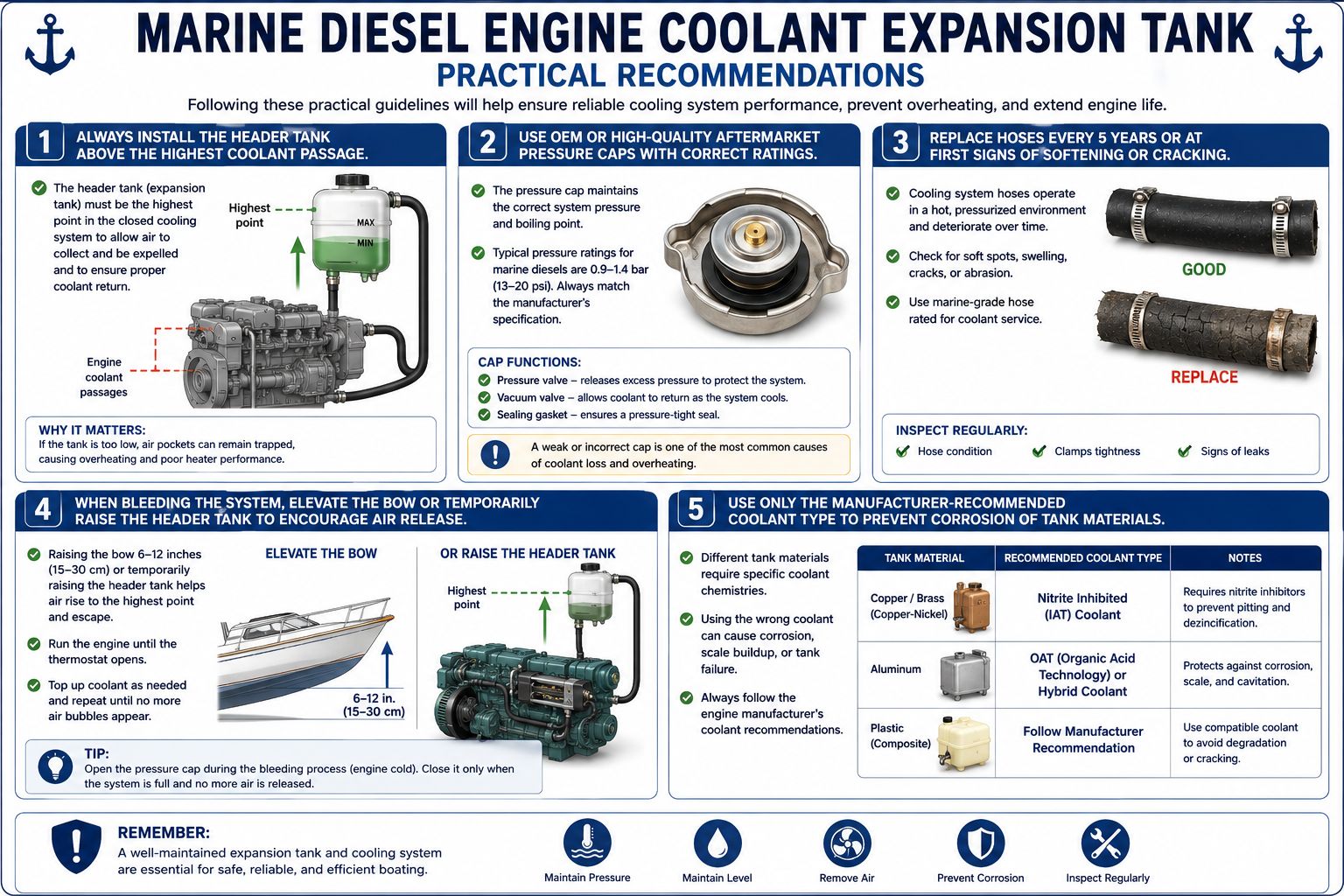
- Always install the header tank above the highest coolant passage.
- Use OEM or high-quality aftermarket pressure caps with correct pressure ratings.
- Replace hoses every 5 years or at first signs of softening or cracking.
- When bleeding the system, elevate the bow or temporarily raise the header tank to encourage air release.
- Use only the manufacturer-recommended coolant type to prevent corrosion of tank materials.


Coolant Expansion
Tank Summary
Marine diesel engine expansion tanks are vital for reliable cooling and engine longevity. They absorb coolant expansion during heating, prevent pressure spikes, and return fluid as temperatures drop, ensuring stable circulation. By reducing risk of overheating, cavitation, and airlocks, they safeguard critical components like cylinder heads and heat exchangers. Their elevated placement also aids bleeding air, simplifying maintenance. Without them, cooling systems would be prone to failure, inefficiency, and costly damage, so understand your coolant expansion tank and how it works.