Boat Waste Treatment Systems
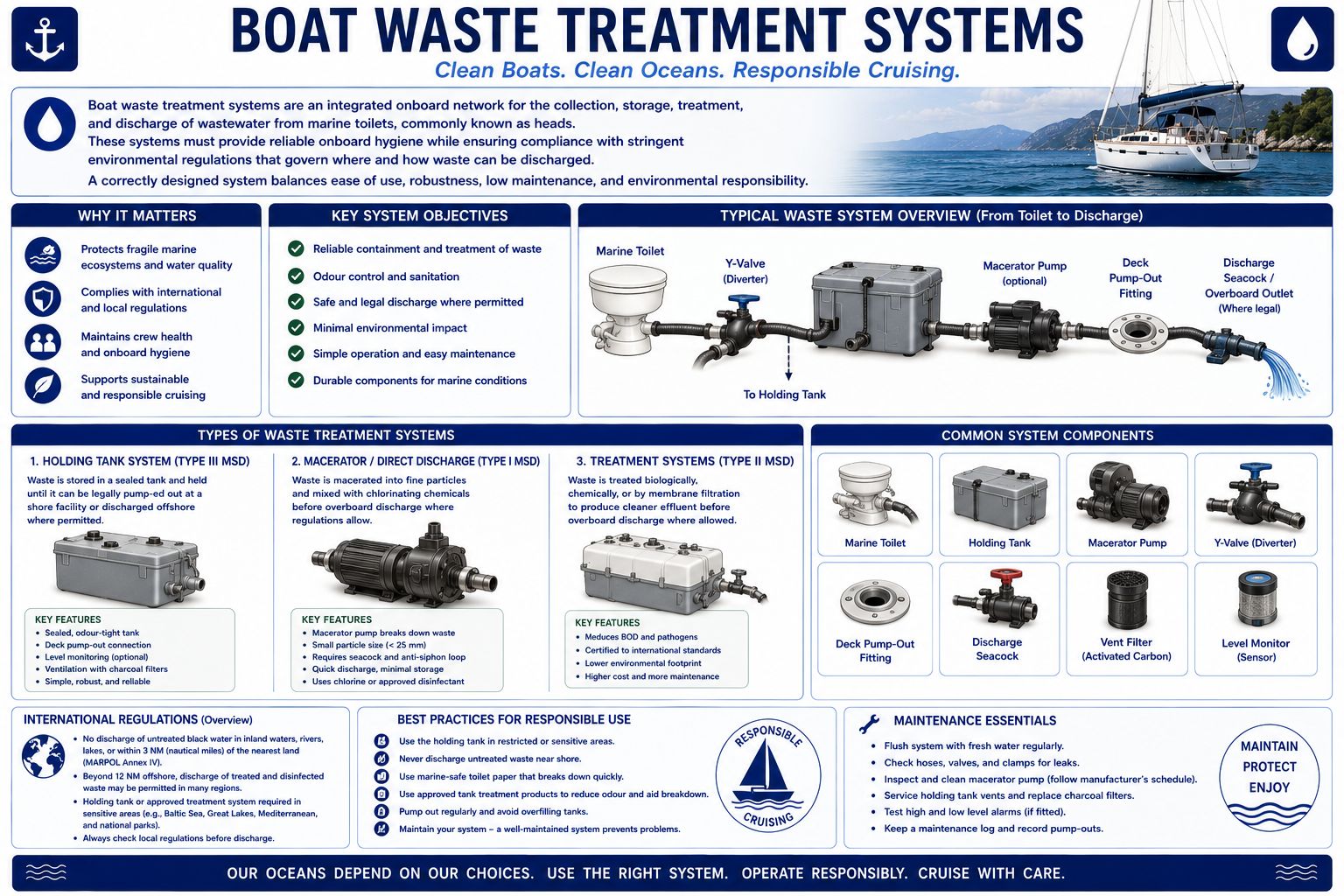
Boat waste treatment systems are an integrated onboard network for the collection, storage, treatment, and discharge of wastewater from marine toilets, commonly known as heads. These systems must provide reliable onboard hygiene while ensuring compliance with stringent environmental regulations that govern where and how waste can be discharged. A correctly designed system balances ease of use, robustness, low maintenance, and environmental responsibility.
This article provides a comprehensive technical overview of the systems commonly installed on recreational boats, commercial vessels, and offshore cruising yachts. Marine sanitation systems on a sailing yacht manage black water from onboard toilets, ensuring safe collection, treatment, and discharge. These systems protect fragile marine environments, comply with international regulations, and maintain crew hygiene. By using holding tanks or treatment units, yachts achieve sustainable cruising and responsible waste management at sea.
Boat Waste Treatment Systems Regulations
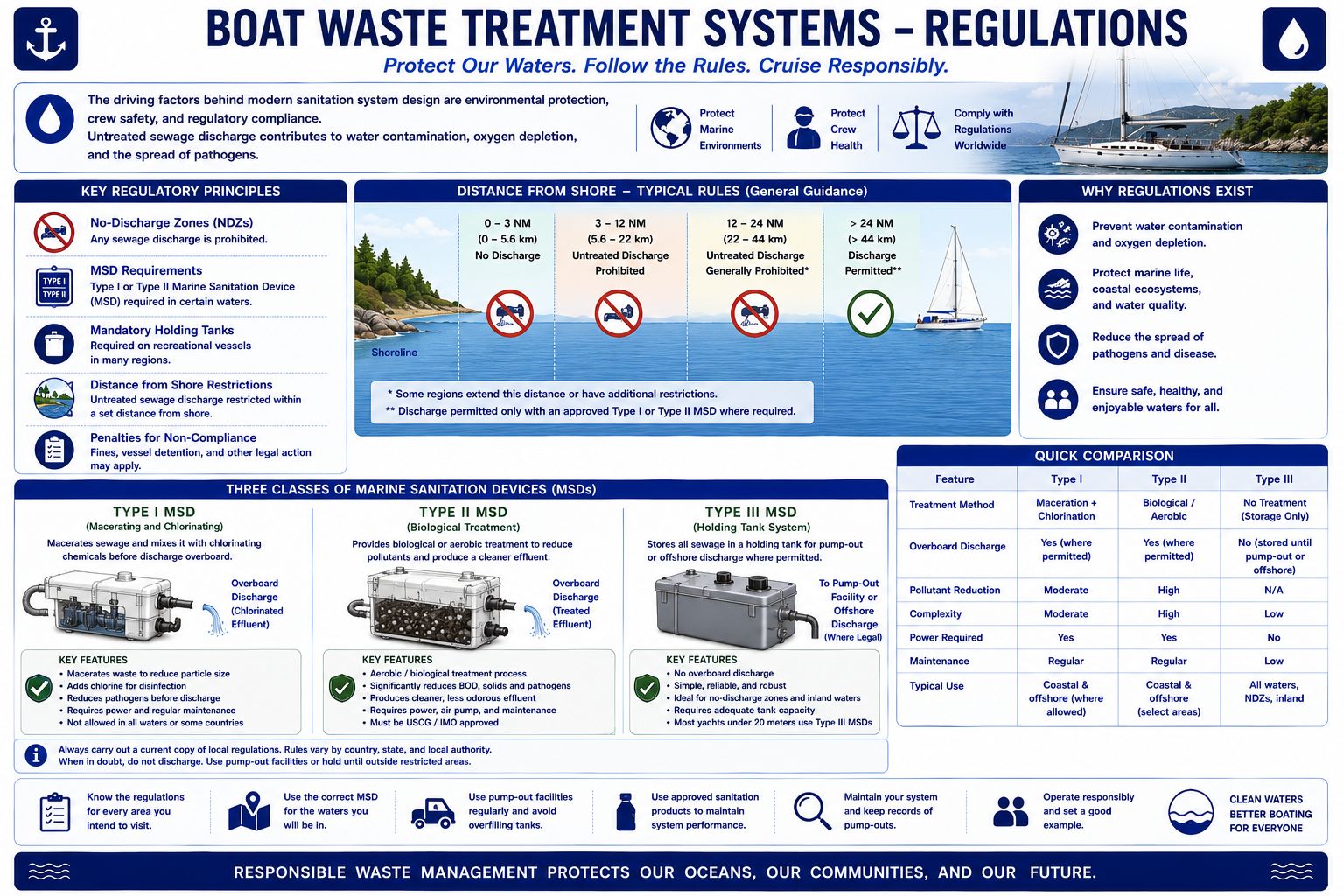
The driving factors behind modern sanitation system design are environmental protection, crew safety, and regulatory compliance. Untreated sewage discharge contributes to water contamination, oxygen depletion, and the spread of pathogens. Most jurisdictions now enforce strict rules such as:
- No-discharge zones (NDZs) where any sewage discharge is prohibited.
- Requirements for a Type I or Type II Marine Sanitation Device (MSD) on vessels in certain waters.
- Mandatory holding tanks on recreational vessels in many regions.
- Restrictions on overboard discharge for untreated waste within a certain distance from shore.
Three classes of MSDs exist:
- Type I: Macerates and chlorinates sewage before discharge.
- Type II: Provides biological or aerobic treatment, producing cleaner effluent.
- Type III: Holding tank systems that store all sewage for pump-out or offshore discharge.
Most yachts under 20 meters rely on Type III installations due to simplicity and reliability.
Boat Waste Treatment Systems Basics
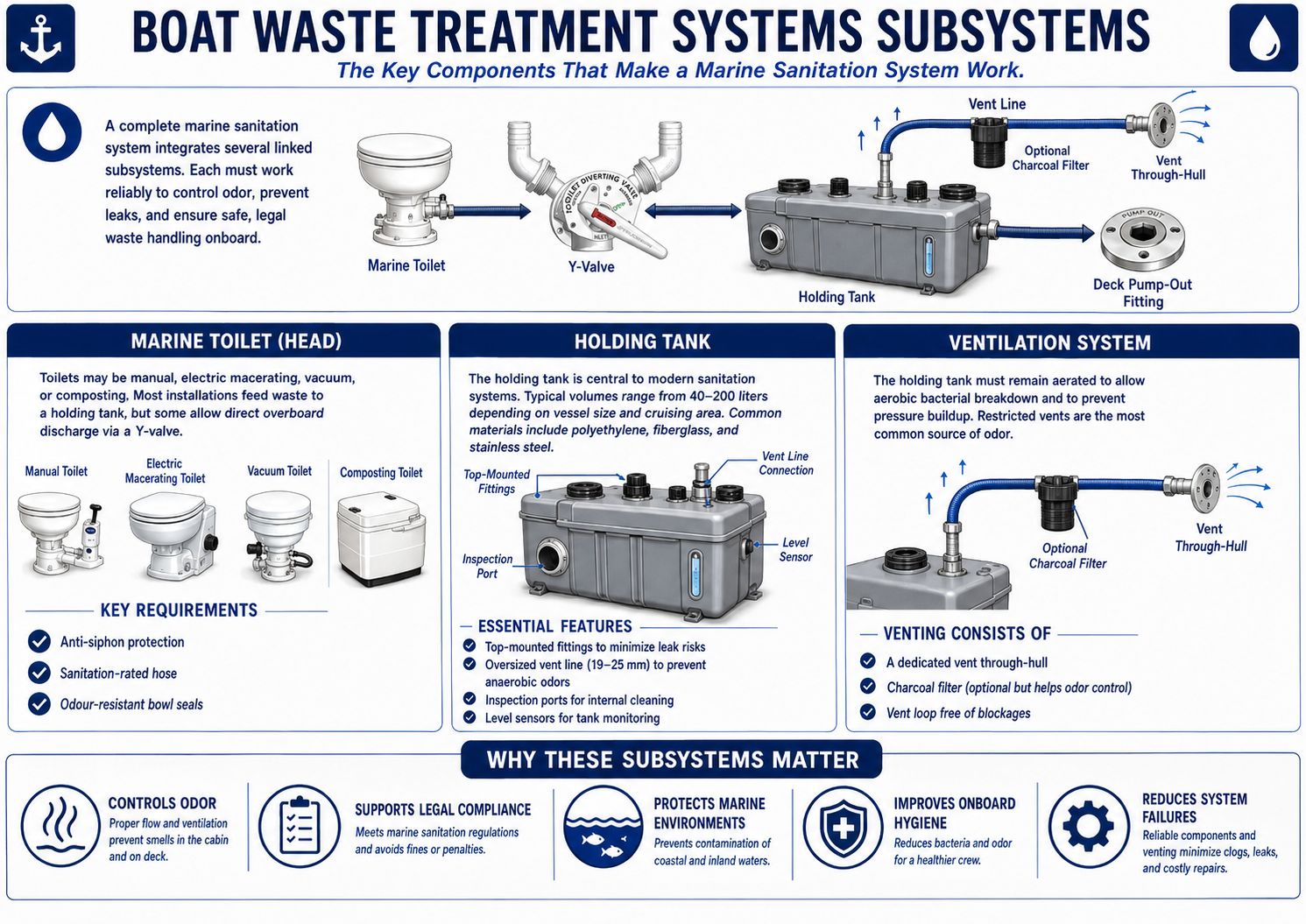
A complete system integrates several subsystems:
Marine Toilet (Head). Toilets may be manual, electric macerating, vacuum, or composting. Most installations feed waste to a holding tank, but some allow direct overboard discharge via a Y-valve. Key requirements:
- Anti-siphon protection
- Sanitation-rated hose
- Odour-resistant bowl seals
Holding Tank. The holding tank is central to modern sanitation systems. Typical volumes range from 40–200 liters depending on vessel size and cruising area. Common materials include polyethylene, fiberglass, and stainless steel. Essential features:
- Top-mounted fittings to minimize leak risks
- Oversized vent line (19–25 mm) to prevent anaerobic odors
- Inspection ports for internal cleaning
- Level sensors for tank monitoring
Ventilation System. The holding tank must remain aerated to allow aerobic bacterial breakdown and to prevent pressure buildup. Restricted vents are the most common source of odor. Venting consists of:
- A dedicated vent through-hull
- Charcoal filter (optional but helps odor control)
- Vent loop free of blockages
Mechanical
and Electrical Repairs Resource
If you are headed somewhere remote consider the need to expand your knowledge base or have an information resource on board. Why not get a copy of my book The Marine and Electrical and Electronics Bible 4th Edition. By and for yachties, with everything from batteries and charging, solar and wind, diesel engines and marine electronics and so much more. Your complete systems guide. 650 pages of practical advice. In Australia and New Zealand order a copy through Boat Books. UK and European boats can buy the UK Edition Here. US and Canadian boats can get the US Edition Order Here. Marine systems are my profession so let me help you. By a liveaboard boat owner for other boat owners

Discharge Pumping Systems
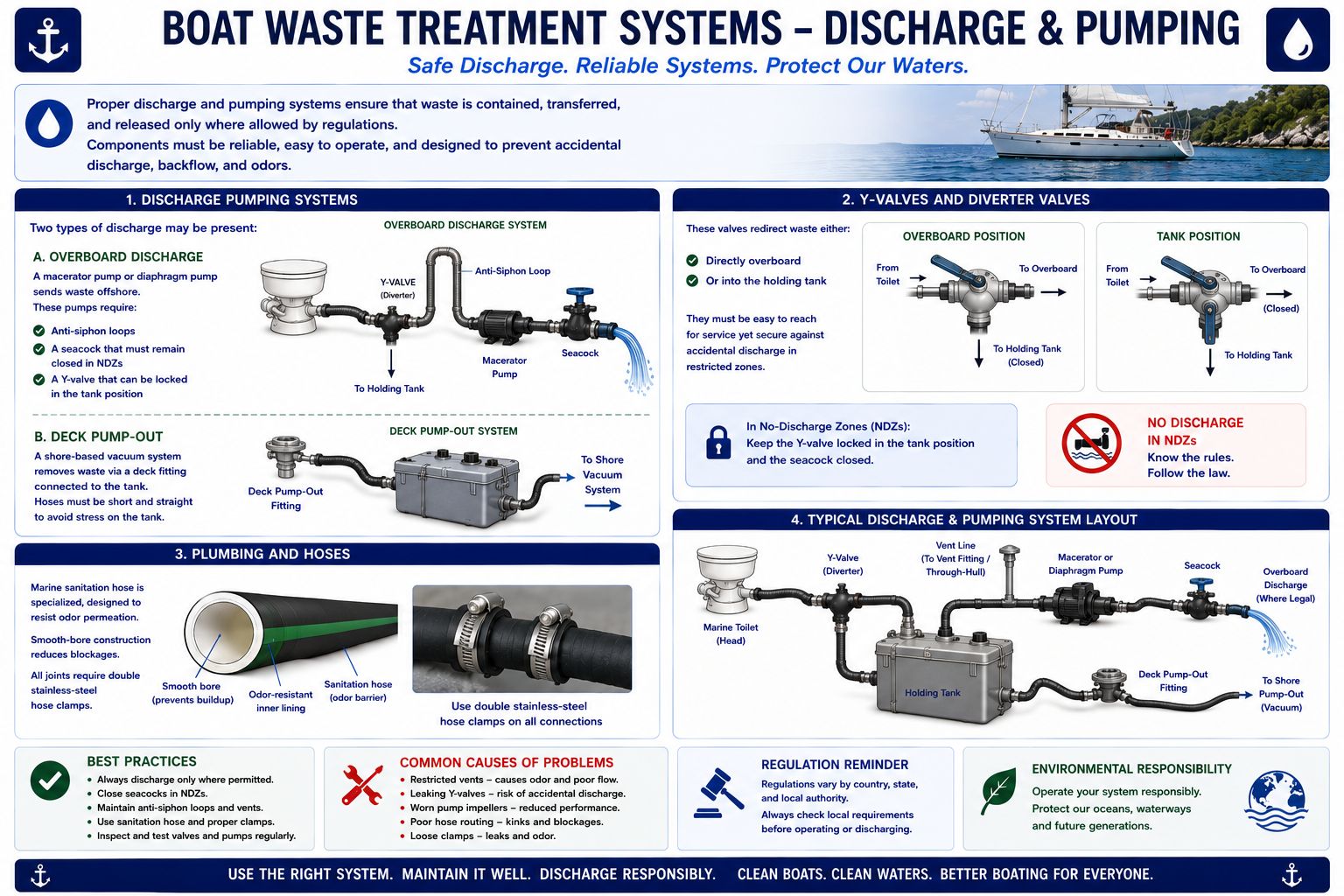
Two types of discharge may be present:
Overboard Discharge. A macerator pump or diaphragm pump sends waste offshore. These pumps require:
- Anti-siphon loops
- A seacock that must remain closed in NDZs
- A Y-valve that can be locked in the tank position
Deck Pump-Out. A shore-based vacuum system removes waste via a deck fitting connected to the tank. Hoses must be short and straight to avoid stress on the tank.
Y-Valves and Diverter Valves. They must be easy to reach for service yet secure against accidental discharge in restricted zones. These valves redirect waste either:
- Directly overboard
- Or into the holding tank
- Plumbing and Hoses
Marine sanitation hose is specialized, designed to resist odor permeation. Smooth-bore construction reduces blockages. All joints require double stainless-steel hose clamps.
System Configurations
Standard Type III System (Holding Tank Only). The most common layout:
- Toilet thru Discharge hose to Holding Tank to Deck Pump-Out OR Macerator to Overboard
- This configuration is simple, odor-controlled, and compliant nearly everywhere.
Dual-Mode System (Tank + Overboard Bypass)
A Y-valve upstream of the tank allows the operator to bypass the tank and discharge directly overboard when legally permissible.


Vacuum Sanitation Systems
Vacuum toilets use a vacuum reservoir and pump to move waste quickly with minimal water. They are efficient and reduce the need for large hoses. Components include:
- Vacuum pump
- Vacuum accumulator tank
- Check valves
- Minimal 25–38 mm discharge line
Treatment-Based Systems (Type I and
II MSDs)
These systems mechanically and chemically treat waste before discharge. While effective, they require more maintenance and electrical power. They include:
- Mixers and macerators
- Chlorination units
- Aeration chambers
Installation Principles
Hose Routing. Correct hose installation is critical:
- Keep hose runs short and direct
- Install anti-siphon loops above the waterline on all intake and discharge lines
- Avoid low spots where effluent may settle
Access and Serviceability. Valves, clamps, pumps, and filters must be reachable for routine inspection.
Holding Tank Placement. Ideal tank locations:
- Above the waterline to allow gravity discharge
- Close to the head to minimize odor and clog risks
- Adequately supported to prevent stress cracks
Electrical Requirements. Electric toilets, macerators, and vacuum pumps require:
- Circuit breakers sized per manufacturer
- Waterproof connectors
- Adequate wire gauge to avoid voltage drop, over size cables is best option.
Boat Waste Treatment Systems Maintenance
Regular Checklist
- Inspect hoses for stiffness or odor
- Check clamps for corrosion
- Exercise Y-valves monthly
- Confirm vent line is clear
- Replace joker valves annually
Odor Management. Strategies include:
- Freshwater-flush conversion of toilets
- Large-diameter vent lines
- Activated charcoal filters
- Regular tank flushing with biodegradable cleaners
Winterization. Systems must be drained and filled with non-toxic antifreeze in freezing climates. Freshwater rinse pumps and washdown systems require similar treatment.
Descaling. Saltwater systems accumulate scale in hoses and pumps. Regular descaling maintains efficiency and prevents blockages.
Boat Waste Treatment Systems
Troubleshooting
Odors Inside the Boat. Likely causes:
- Permeated hoses
- Blocked vent
- Full tank
- Leaking seals
Solutions: Replace hoses, clear vents, service toilet pump.
Toilet Not Pumping Out. Causes include:
- Air leaks in suction side
- Blocked joker valve
- Faulty macerator pump
- Siphon loop blockage
Holding Tank Overflow. Often due to misread level sensors or clogged deck pump-out lines. Regular inspection prevents this issue.
Macerator Pump Failure. Possible causes are:
- Motor connection fault
- Internal faults in the motor
- Jamming from foreign objects
- Worn impellers
- Bearing failure
Boat Waste Treatment Systems
Boat waste treatment systems are essential onboard infrastructure requiring proper design, installation, and ongoing care. Whether using a simple holding tank system or a more complex vacuum or treatment device, success hinges on reliable components, correct hose routing, adequate tank ventilation, and compliance with local discharge laws. With routine inspection and proper user behavior, a system will deliver years of safe, hygienic, and trouble-free operation for any vessel. Boat waste treatment systems are essential part of the boat, maintain them properly.