Boat Sewage Pump Out
Boat sewage pump out systems are critical elements of marine sanitation infrastructure, enabling vessels to safely and legally empty their blackwater holding tanks. Whether servicing recreational sailboats, commercial vessels, or large motor yachts, pump-out systems ensure compliance with environmental regulations while protecting sensitive waterways from nutrient loading, bacterial contamination, and harmful chemicals.
A properly installed and maintained pump-out arrangement allows boat owners to manage waste efficiently, prevent tank damage, and avoid odor and backflow issues. This article provides a comprehensive technical overview of how boat sewage pump-out systems work, their components, operational procedures, and maintenance requirements.
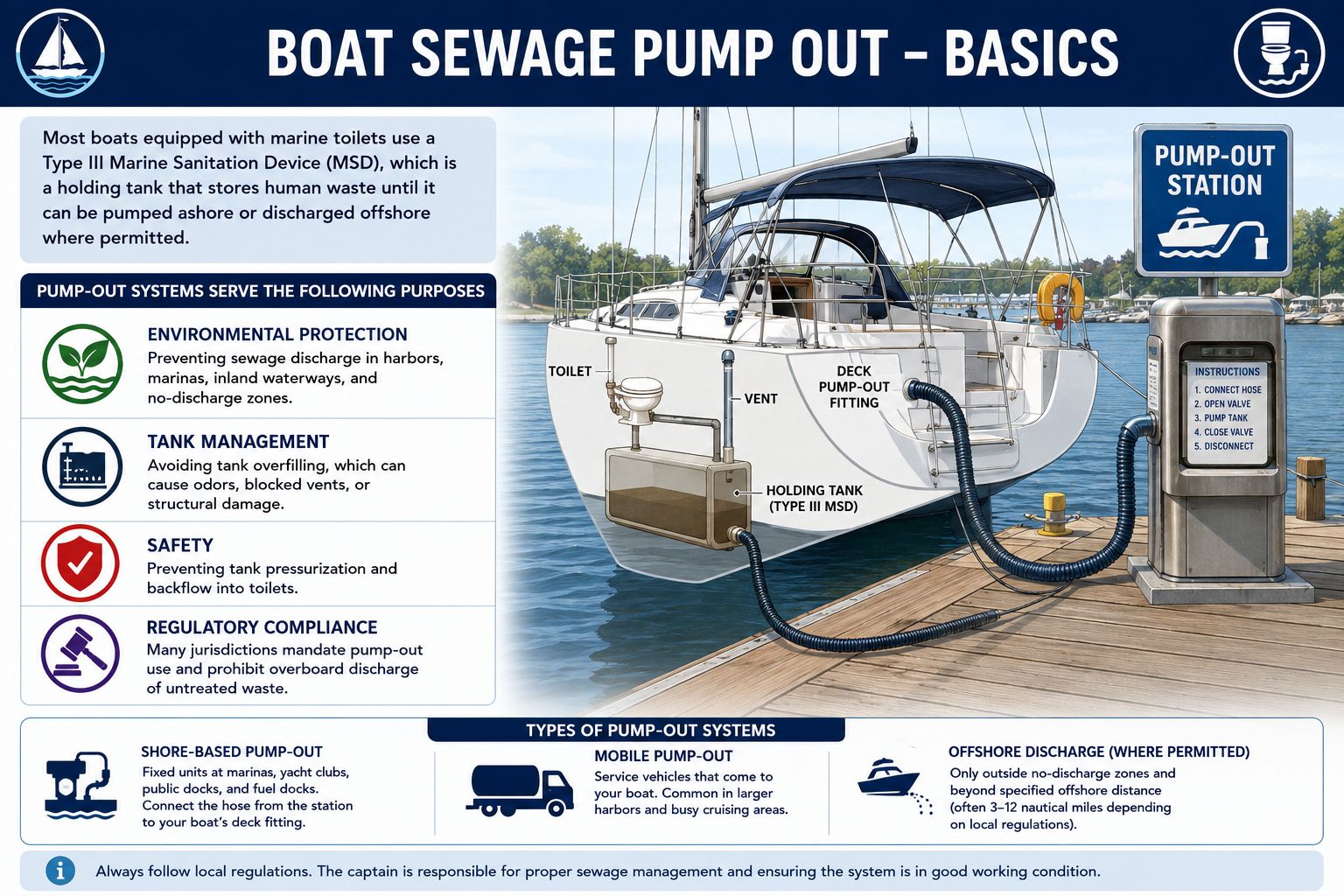
Boat Sewage Pump Out - Basics
Most boats equipped with marine toilets use a Type III Marine Sanitation Device (MSD), which is a holding tank that stores human waste until it can be pumped ashore or discharged offshore where permitted. Pump-out systems serve the following purposes:
- Environmental protection: Preventing sewage discharge in harbors, marinas, inland waterways, and no-discharge zones.
- Tank management: Avoiding tank overfilling, which can cause odors, blocked vents, or structural damage.
- Safety: Preventing tank pressurization and backflow into toilets.
- Regulatory compliance: Many jurisdictions mandate pump-out use and prohibit overboard discharge of untreated waste.
Boat Sewage Pump Out - Deck Fittings
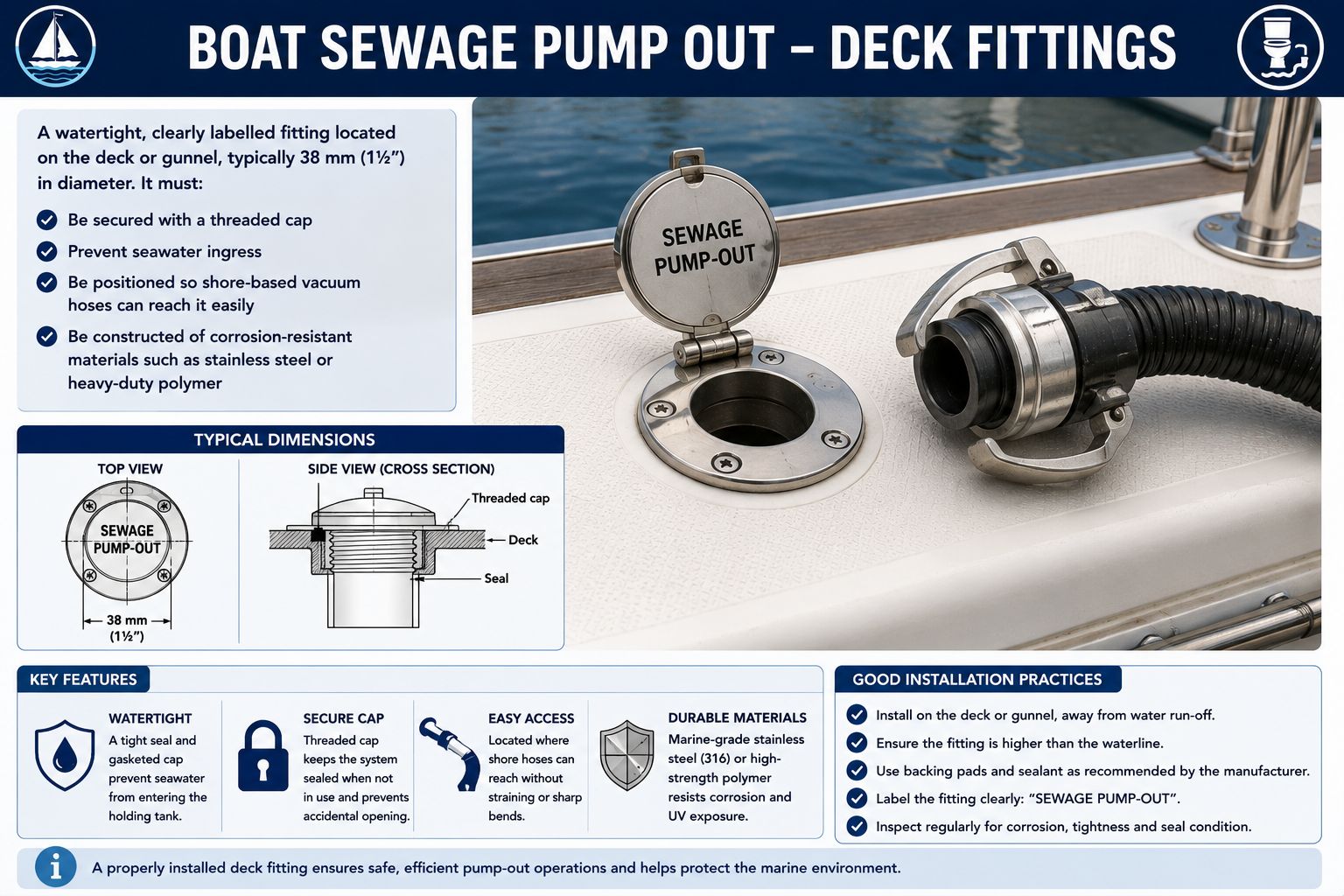
A watertight, clearly labelled fitting located on the deck or gunnel, typically 38 mm (1½”) in diameter. It must:
- Be secured with a threaded cap
- Prevent seawater ingress
- Be positioned so shore-based vacuum hoses can reach it easily
- Be constructed of corrosion-resistant materials such as stainless steel or heavy-duty polymer
Boat Sewage Pump Out - Holding Tanks
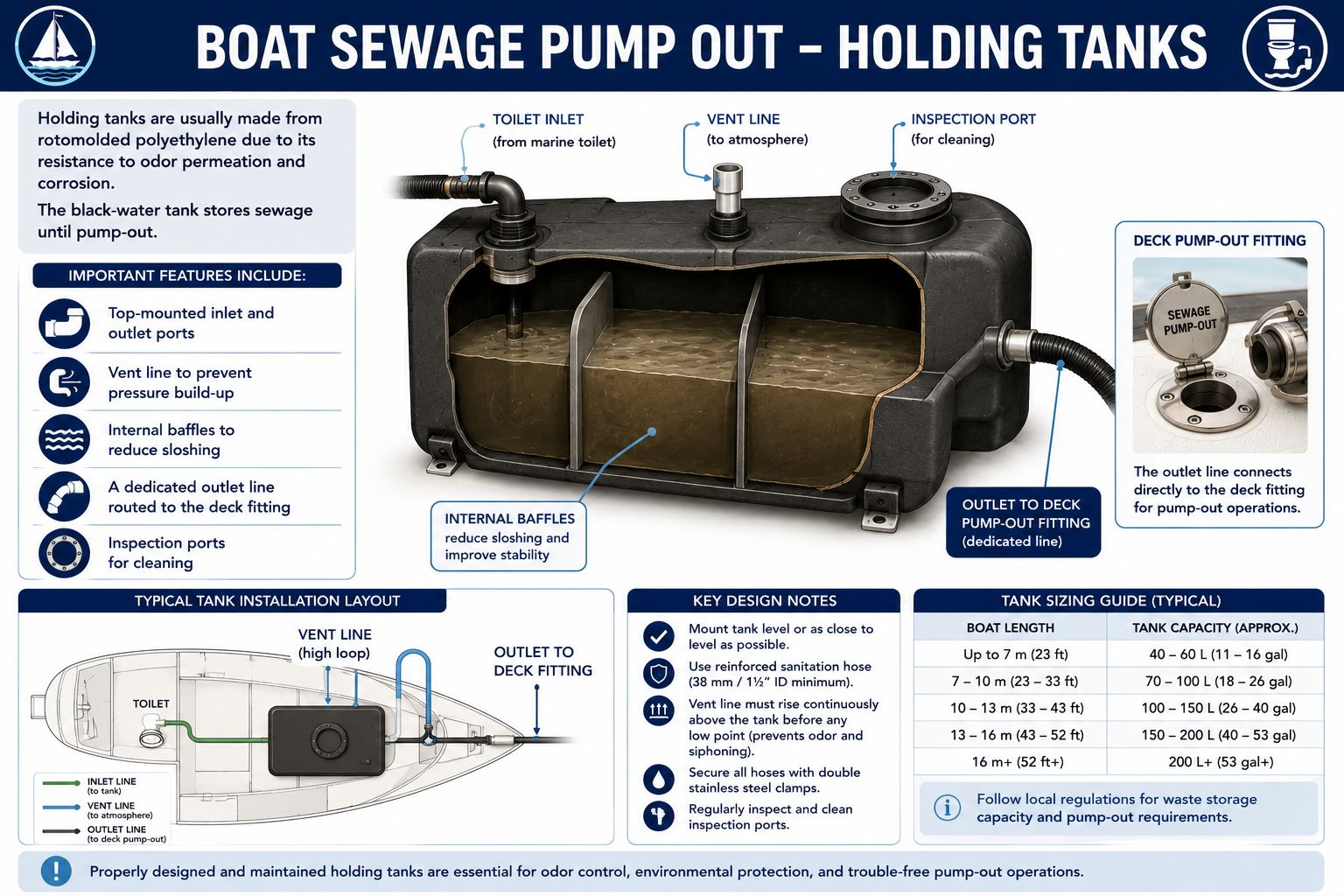
Holding tanks are usually made from rotomolded polyethylene due to its resistance to odor permeation and corrosion. The black-water tank stores sewage until pump-out. Important features include:
- Top-mounted inlet and outlet ports
- Vent line to prevent pressure build-up
- Internal baffles to reduce sloshing
- A dedicated outlet line routed to the deck fitting
- Inspection ports for cleaning
Boat Sewage Pump Out - Tank Vent Line
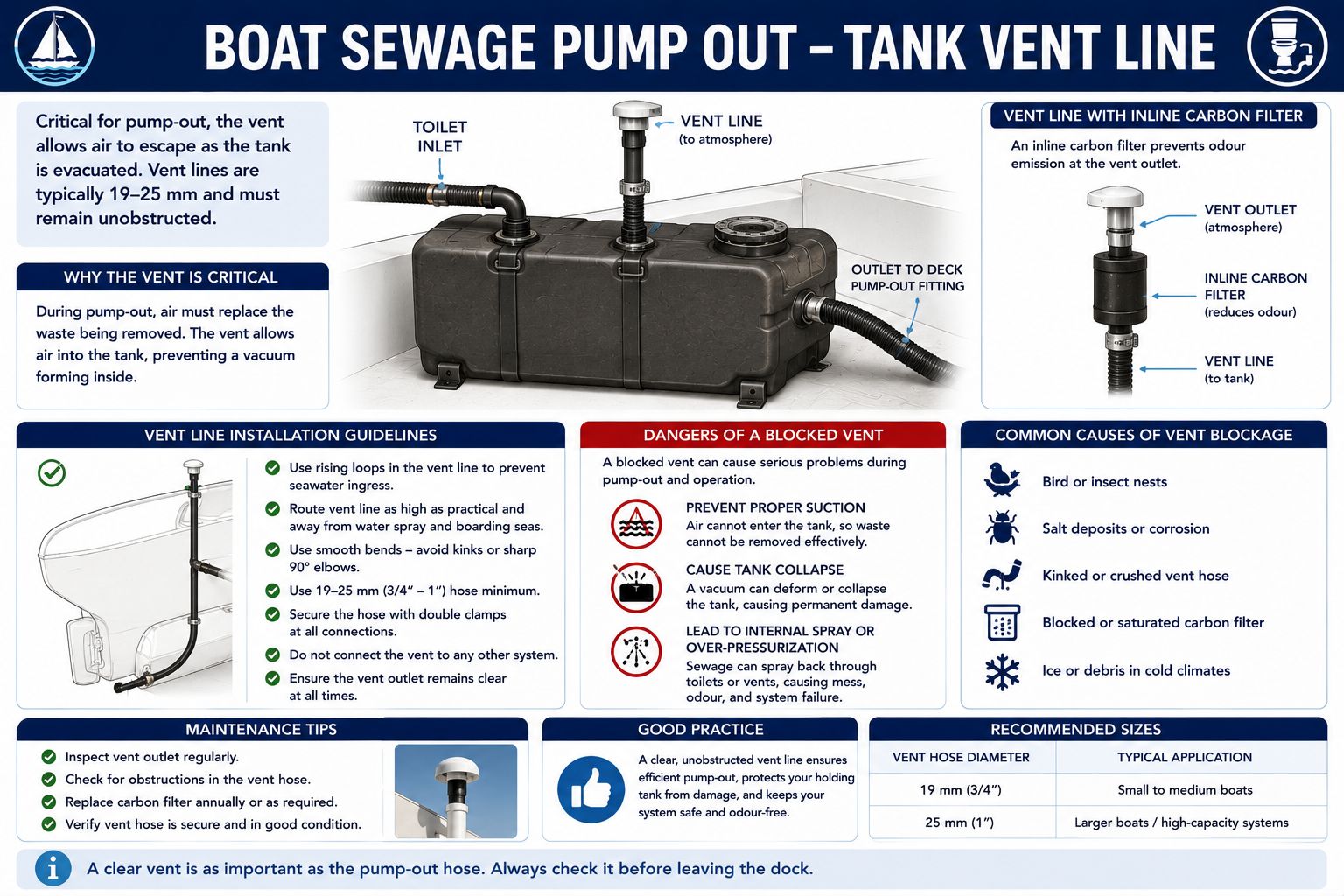
Critical for pump-out, the vent allows air to escape as the tank is evacuated. Vent lines are typically 19–25 mm and must remain unobstructed. A blocked vent can:
- Prevent proper suction
- Cause tank collapse due to vacuum
- Lead to internal sewage spray or over-pressurization
Pump-Out Hose and Vacuum System
(Shore-Side)
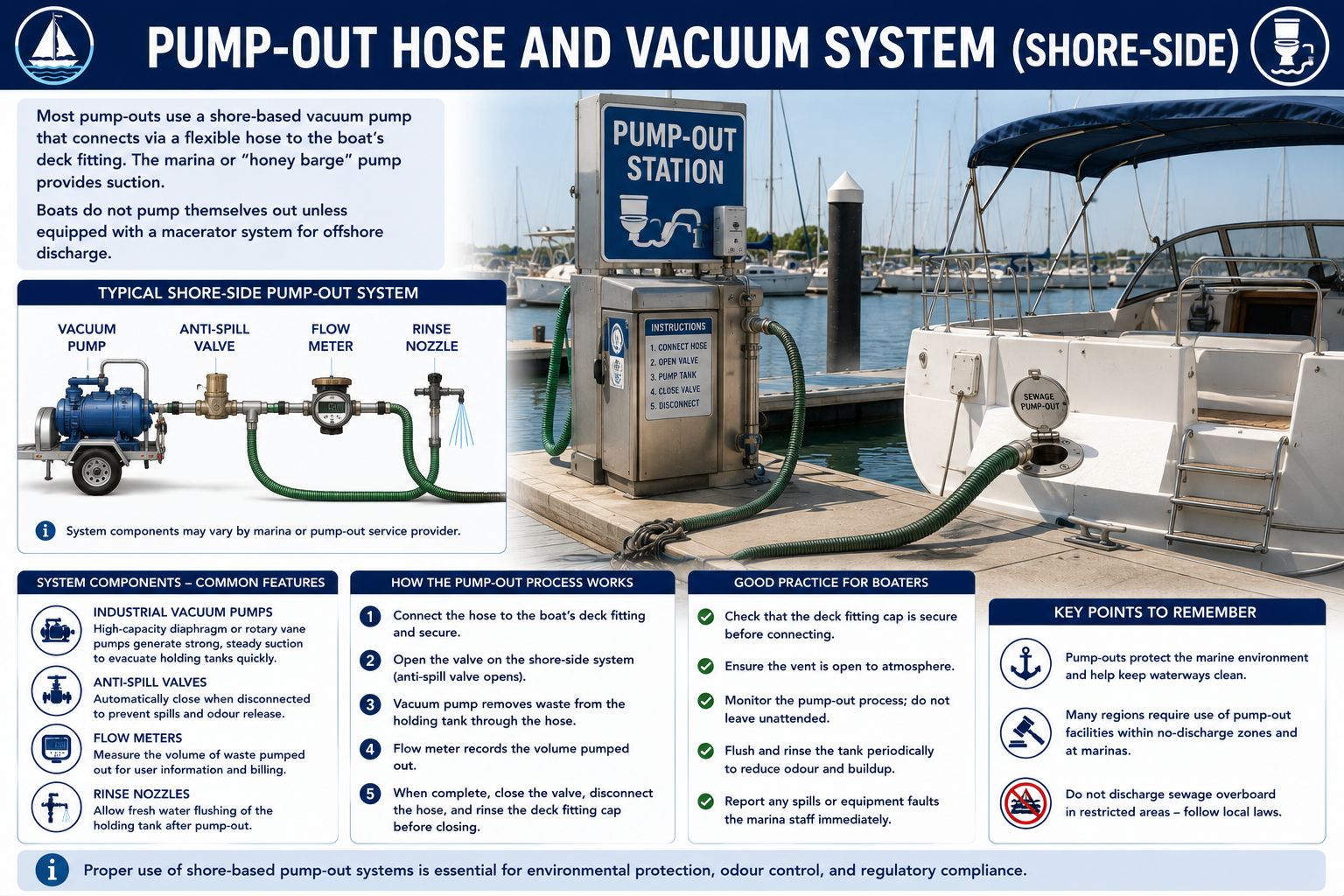
Most pump-outs use a shore-based vacuum pump that connects via a flexible hose to the boat’s deck fitting. The marina or honey barge pump provides suction, boats do not pump themselves out unless equipped with a macerator system for offshore discharge. These systems often include:
- Industrial diaphragm or rotary vane vacuum pumps
- Anti-spill valves
- Flow meters
- Rinse nozzles for tank flushing
Optional Tank Rinse Fitting. Some holding tanks include a secondary fitting for freshwater flushing during pump-out. This allows removal of settled solids and reduces odor.
Mechanical
and Electrical Repairs Resource
If you are headed somewhere remote consider the need to expand your knowledge base or have an information resource on board. Why not get a copy of my book The Marine and Electrical and Electronics Bible 4th Edition. By and for yachties, with everything from batteries and charging, solar and wind, diesel engines and marine electronics and so much more. Your complete systems guide. 650 pages of practical advice. In Australia and New Zealand order a copy through Boat Books. UK and European boats can buy the UK Edition Here. US and Canadian boats can get the US Edition Order Here. Marine systems are my profession so let me help you. By a liveaboard boat owner for other boat owners
How the Pump-Out Process Works

The pump-out procedure is straightforward but must be done correctly to avoid spills, tank damage, or contamination.
Step 1: Prepare the Boat
- Position the vessel securely against the dock pump-out station.
- Ensure all crew know to avoid flushing during the pump-out.
- Identify the correct deck fitting (usually marked “WASTE”).
Step 2: Connect the Pump-Out Hose
- Remove the cap from the deck fitting.
- Attach the marina pump-out hose securely using the gasketed nozzle or Cam-lock fitting.
- Check the vent outlet for clear airflow.
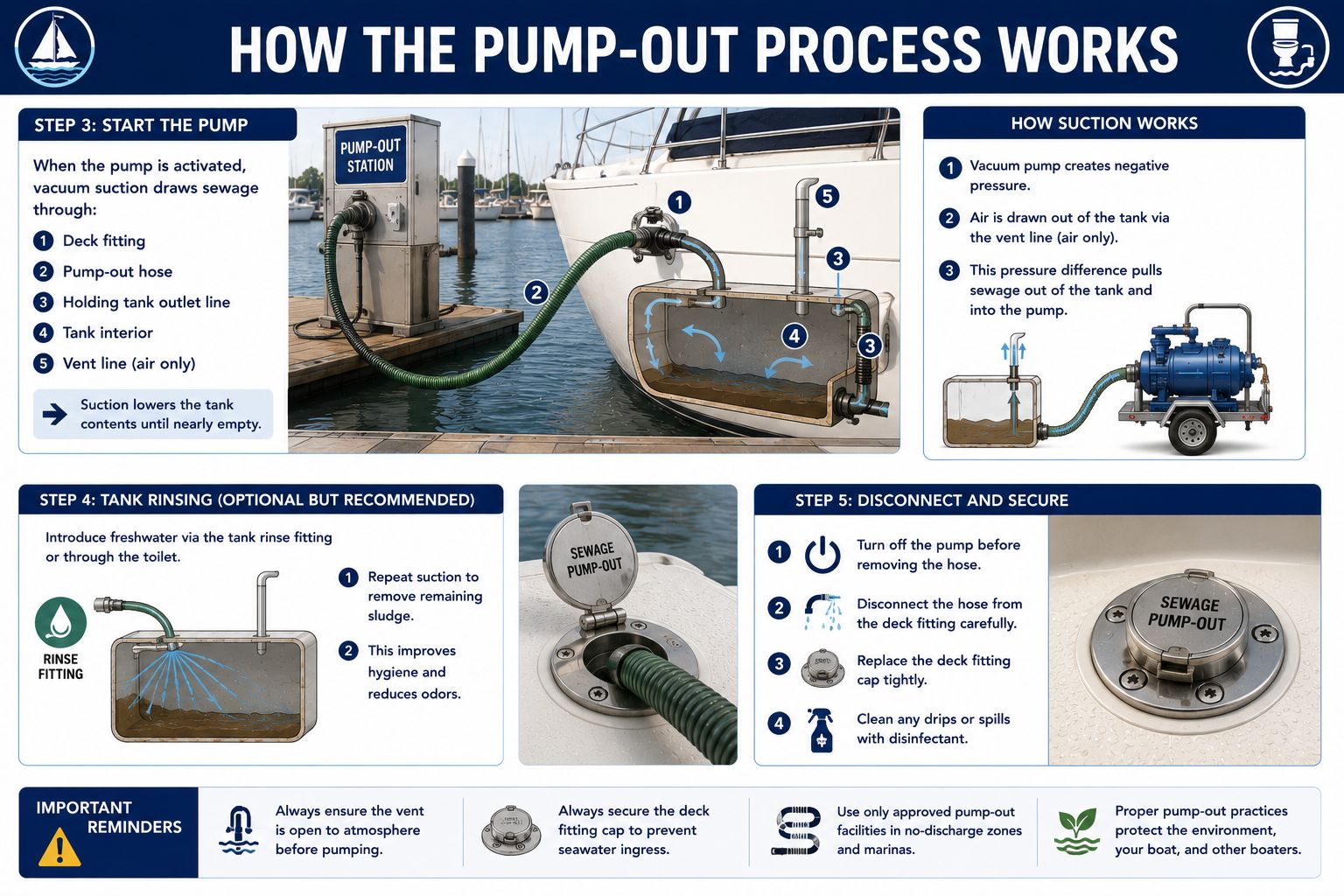
Step 3: Start the Pump. When the pump is activated, vacuum suction draws sewage through:
- Deck fitting
- Pump-out hose
- Holding tank outlet line
- Tank interior
- Vent line (air only)
- Suction lowers the tank contents until nearly empty.
Step 4: Tank Rinsing (Optional but Recommended). Introduce freshwater via the tank rinse fitting or through the toilet.
- Repeat suction to remove remaining sludge.
- This improves hygiene and reduces odors.
- Disconnect and secure.
- Turn off the pump before removing the hose.
- Replace the deck fitting cap tightly.
- Clean any drips with disinfectant.
Offshore Pump-Out Through a Macerator
System
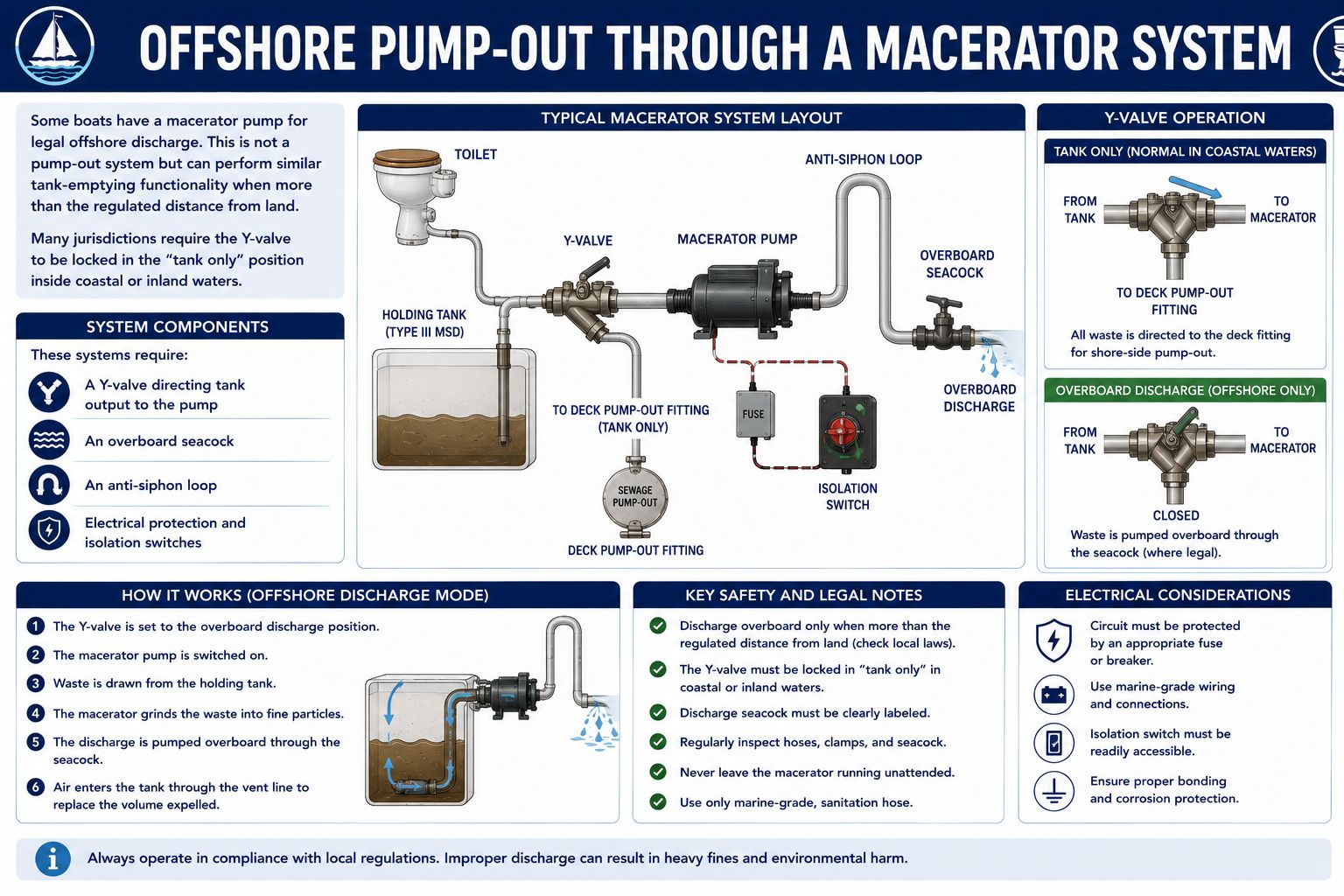
Some boats have a macerator pump for legal offshore discharge. This is not a pump-out system but can perform similar tank-emptying functionality when more than the regulated distance from land. Many jurisdictions require the Y-valve to be locked in the “tank only” position inside coastal or inland waters. These systems require:
- A Y-valve directing tank output to the pump
- An overboard seacock
- An anti-siphon loop
- Electrical protection and isolation switches
Boat Sewage Pump Out Installation
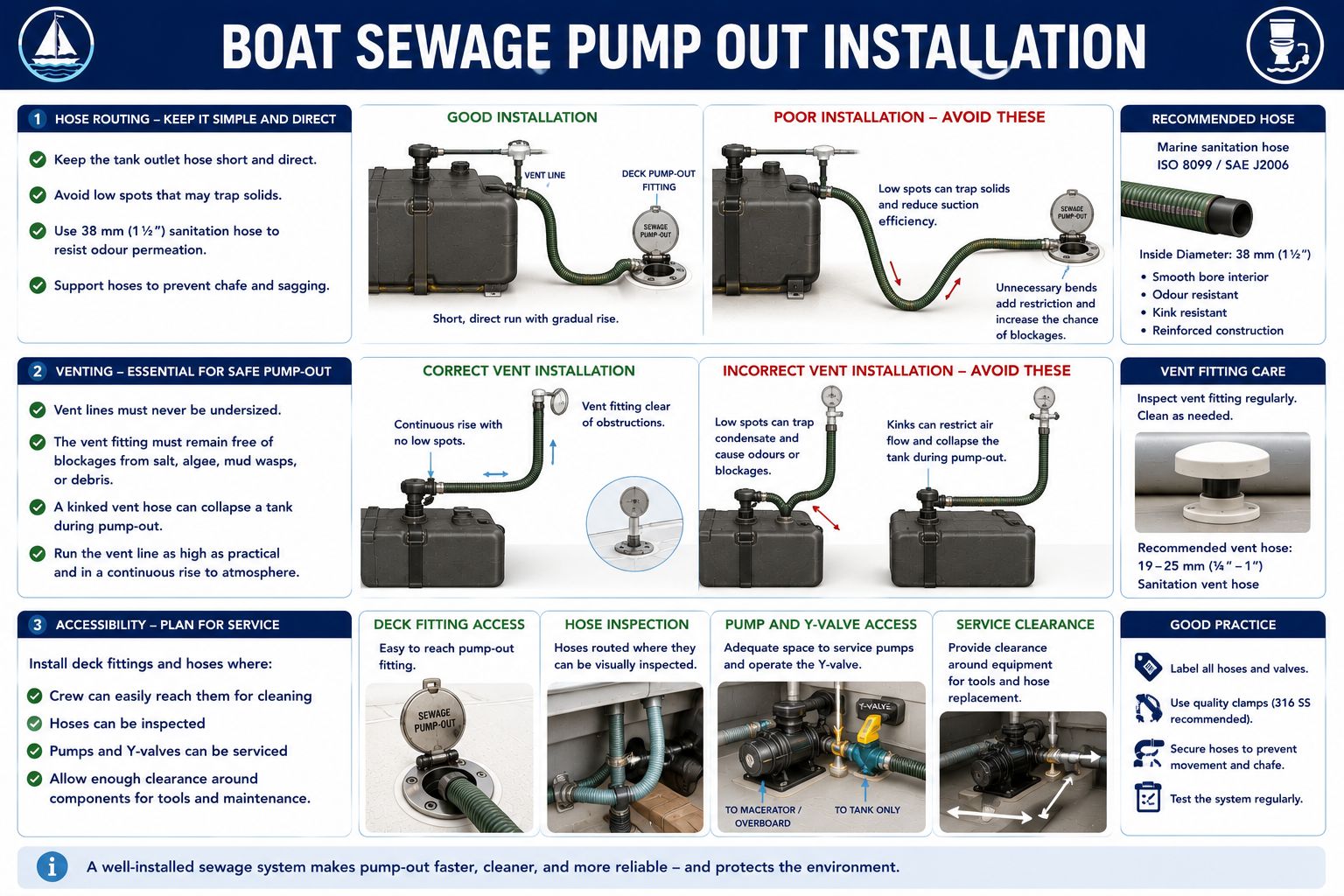
Hose Routing
- Keep the tank outlet hose short and direct.
- Avoid low spots that may trap solids.
- Use 38 mm sanitation hose to resist odor permeation.
Venting
- Vent lines must never be undersized.
- The vent fitting must remain free of blockages from salt, algae, mud wasps, or debris.
- A kinked vent hose can collapse a tank during pump-out.
Accessibility
- Install deck fittings and hoses where:
- Crew can easily reach them for cleaning
- Hoses can be inspected
- Pumps and Y-valves can be serviced
Boat Sewage Pump Out Troubleshooting
Common Problems
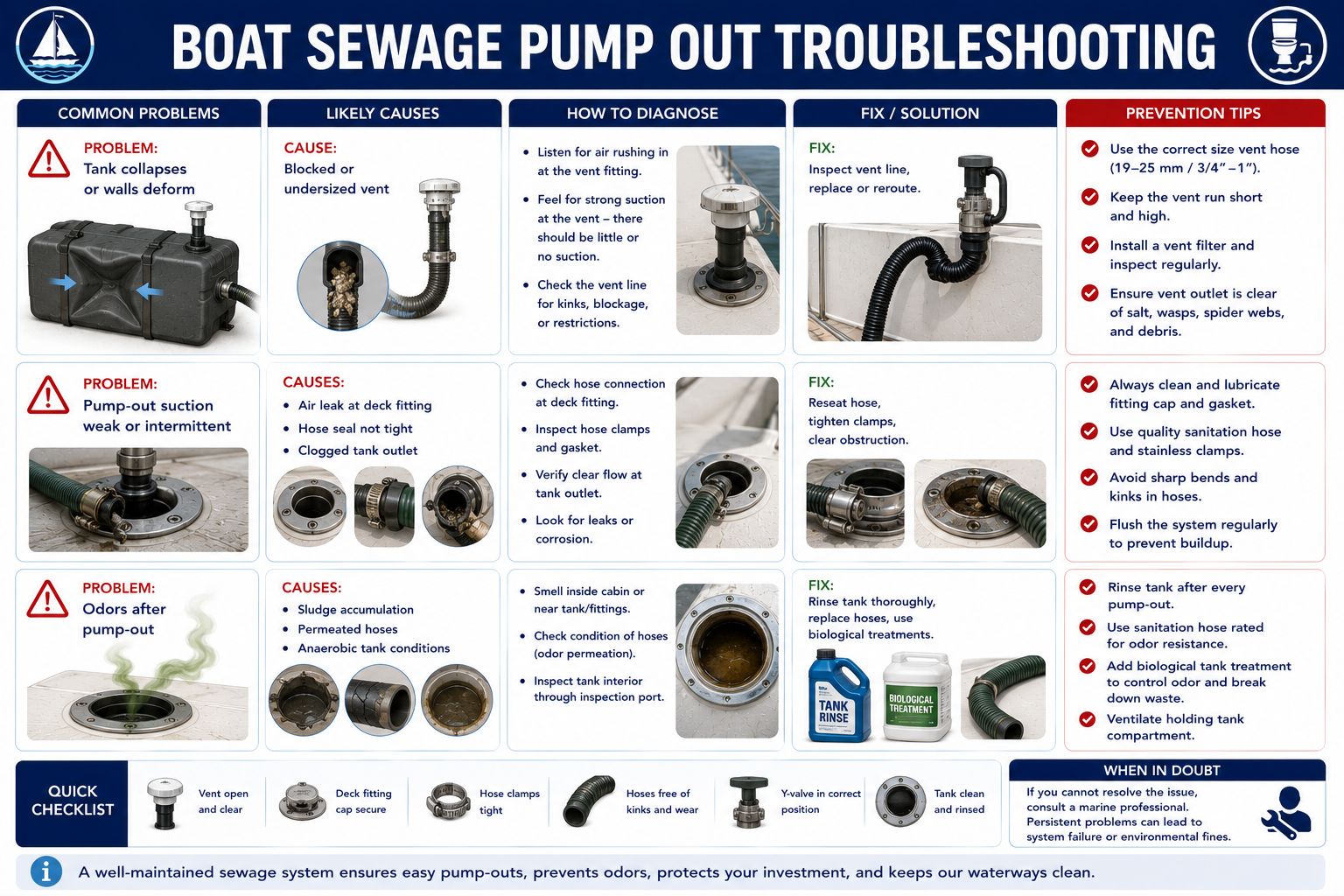
- Problem: Tank collapses or walls deform
- Cause: Blocked or undersized vent
- Fix: Inspect vent line, replace or reroute
- Problem: Pump-out suction weak or intermittent
- Cause: Air leak at deck fitting, Hose seal not tight, Clogged tank outlet
- Fix: Reseat hose, clear obstruction
- Problem: Odors after pump-out
- Causes: Sludge accumulation, Permeated hoses, Anaerobic tank conditions
- Fix: Rinsing, hose replacement, biological treatments
Boat Sewage Pump Out Preventive Maintenance
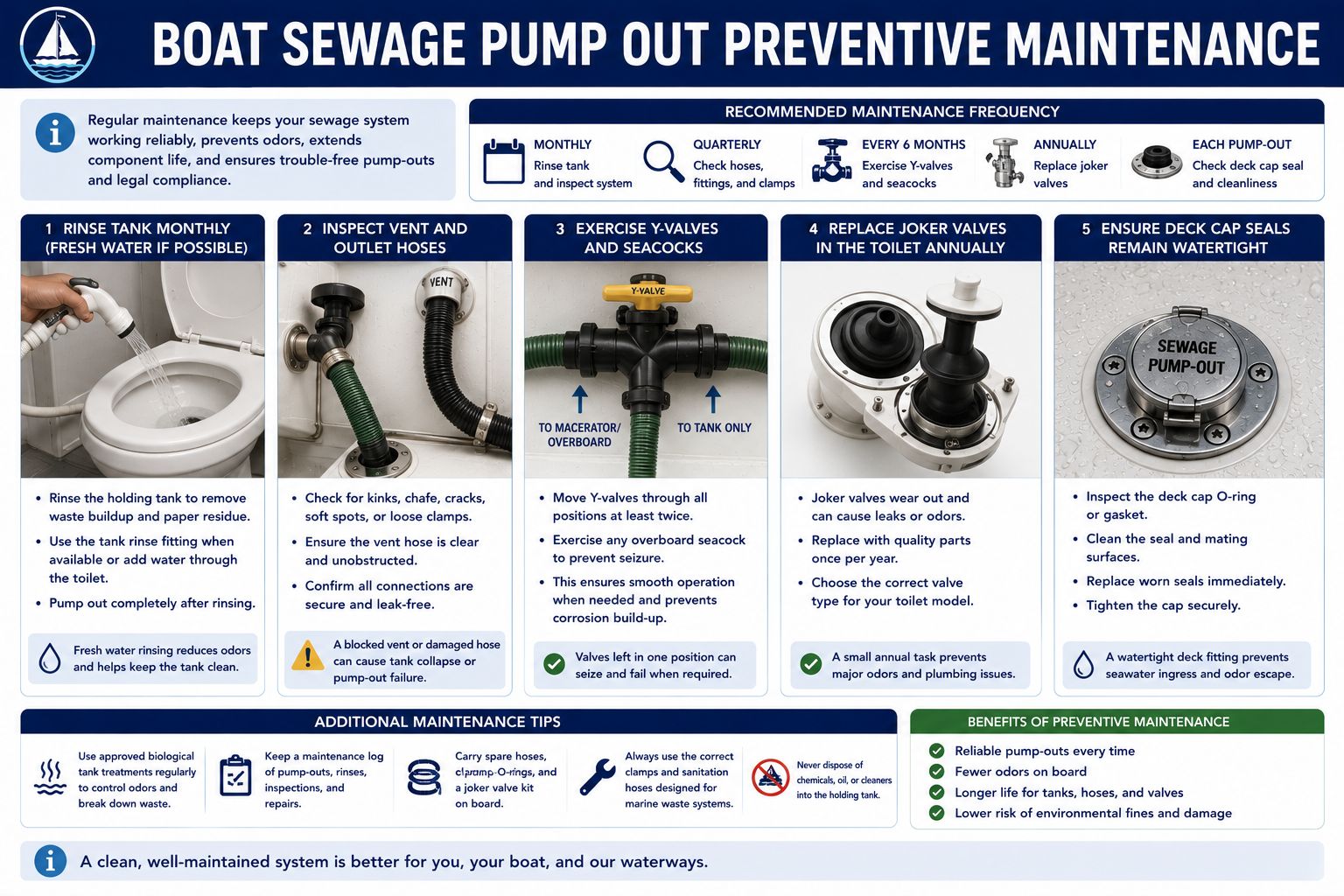
- Rinse tank monthly
- Inspect vent and outlet hoses
- Exercise Y-valves
- Replace joker valves in the toilet annually
- Ensure deck cap seals remain watertight
Safety and Environmental Considerations
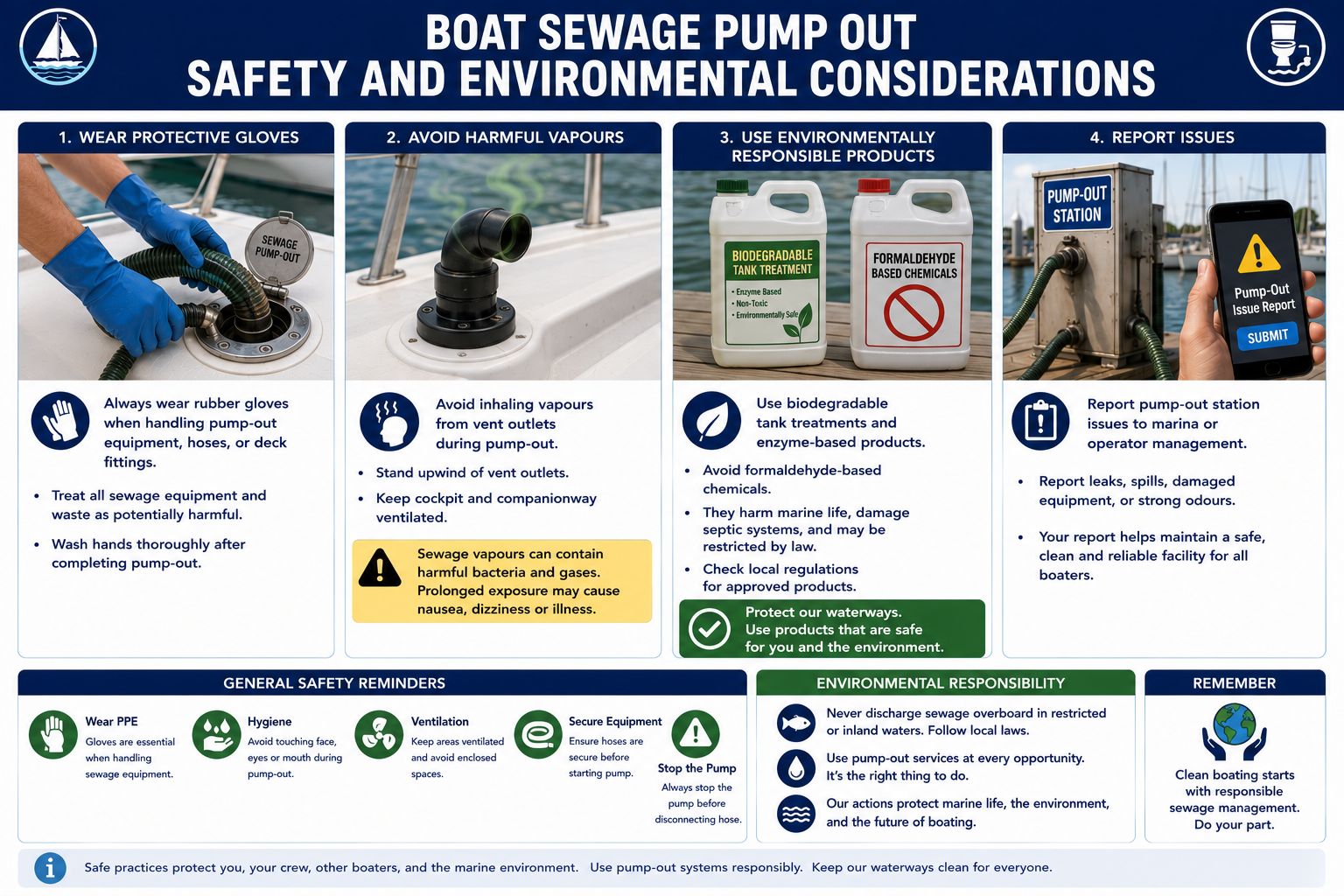
- Always wear gloves when handling pump-out equipment.
- Avoid inhaling vapors from vent outlets during pump-out.
- Use biodegradable tank treatments, avoid formaldehyde-based chemicals.
- Report pump-out station issues to marina or operator management.


Boat Sewage Pump Out
The boat sewage pump out system is pivotal to safe, hygienic, and environmentally responsible waste handling aboard boats. With proper installation, routine maintenance, and adherence to correct operating procedures, pump-out operations become predictable, clean, and trouble-free. Effective management protects onboard systems from damage, safeguards the environment, and ensures compliance with maritime sanitation laws, benefiting both individual vessels and the broader marine ecosystem. The boat sewage pump out system is part of waste management practices.