Boat High Water Alarm
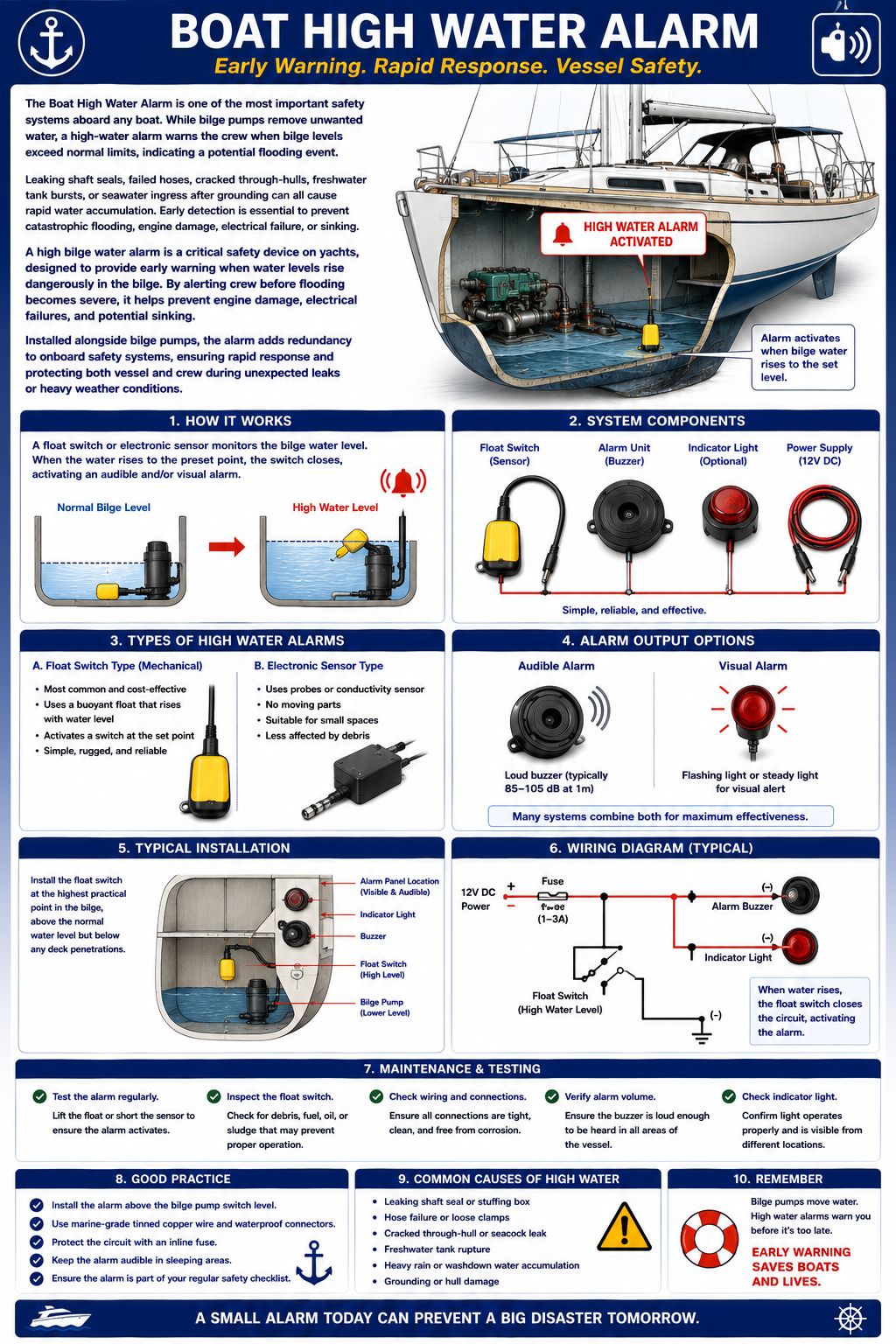
The Boat High Water Alarm is one of the most important safety systems aboard any boat. While bilge pumps remove unwanted water, a high-water alarm warns the crew when bilge levels exceed normal limits, indicating a potential flooding event. Leaking shaft seals, failed hoses, cracked through-hulls, freshwater tank bursts, or seawater ingress after grounding can all cause rapid water accumulation. Early detection is essential to prevent catastrophic flooding, engine damage, electrical failure, or sinking.
This article provides a comprehensive technical overview of high-water alarm systems, their components, installation practices, operational behavior, and maintenance requirements. A high bilge water alarm is a critical safety device on yachts, designed to provide early warning when water levels rise dangerously in the bilge. By alerting crew before flooding becomes severe, it helps prevent engine damage, electrical failures, and potential sinking. Installed alongside bilge pumps, the alarm adds redundancy to onboard safety systems, ensuring rapid response and protecting both vessel and crew during unexpected leaks or heavy weather condition
Boat High Water Alarm
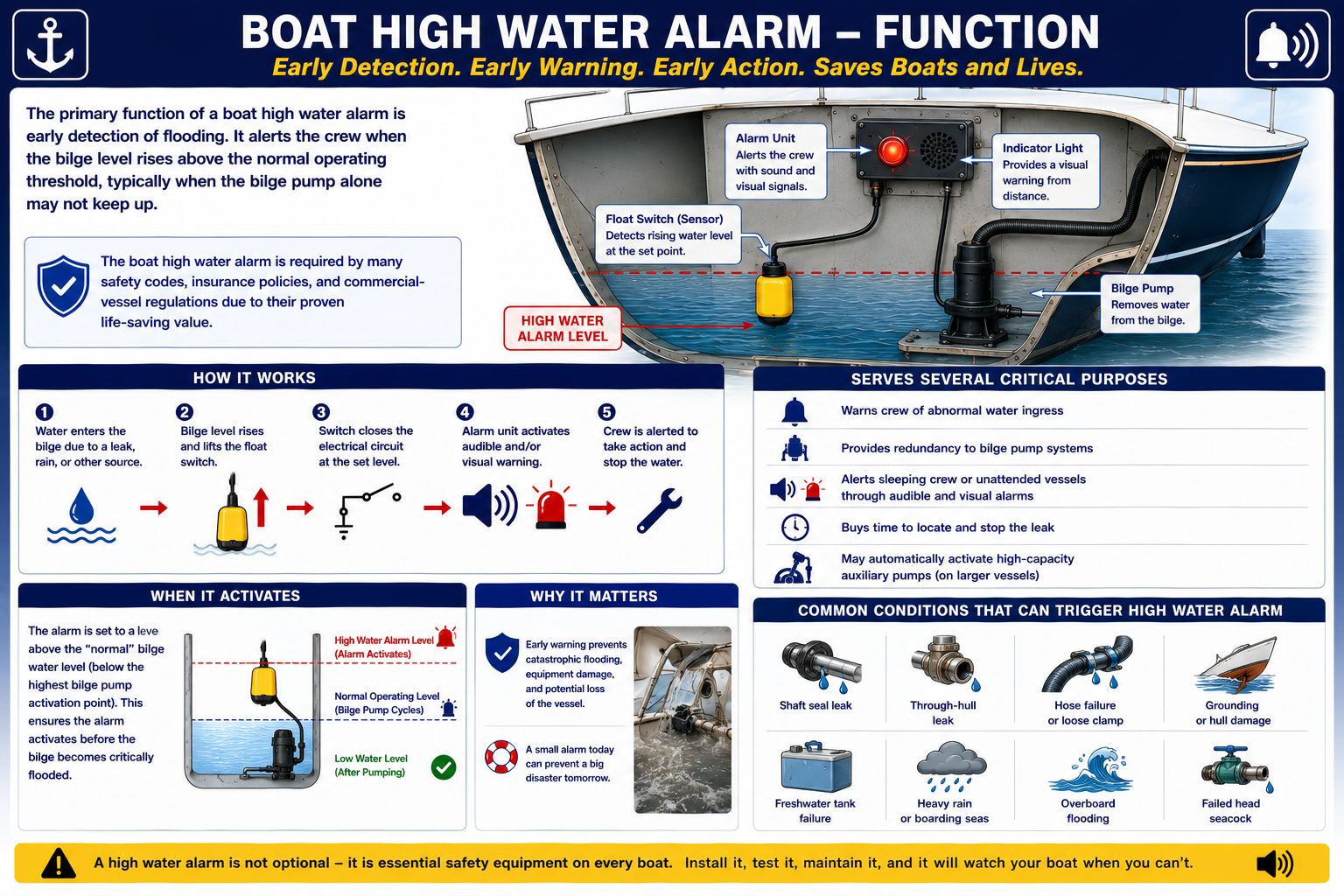
The primary function of a boat high water alarm is early detection of flooding. It alerts the crew when the bilge level rises above the normal operating threshold, typically when the bilge pump alone may not keep up. The boat high water alarm is required by many safety codes, insurance policies, and commercial-vessel regulations due to their proven life-saving value. A boat high water alarm serves several critical purposes:
- Warns crew of abnormal water ingress
- Provides redundancy to bilge pump systems
- Alerts sleeping crew or unattended vessels through audible and visual alarms
- Buys time to locate and stop the leak
- May automatically activate high-capacity auxiliary pumps (on larger vessels)
Boat High Water Alarm Systems
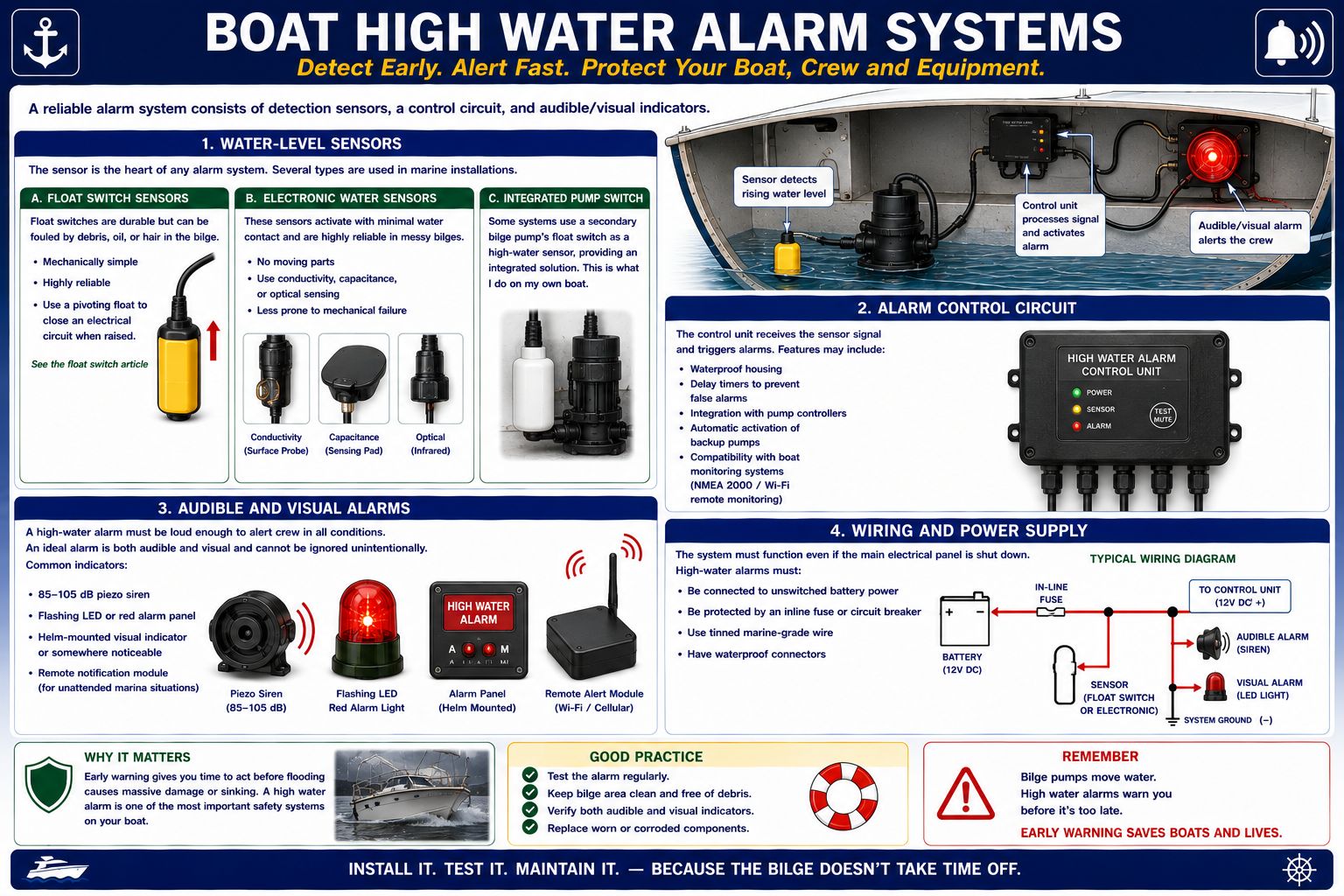
A reliable alarm system consists of detection sensors, a control circuit, and audible/visual indicators.
Boat High Water Alarm - Water-Level Sensors
The sensor is the heart of any alarm system. Several types are used in marine installations:
Float Switch Sensors. Float switches are durable but can be fouled by debris, oil, or hair in the bilge.
- Mechanically simple
- Highly reliable
- Use a pivoting float to close an electrical circuit when raised. See the float switch article
Electronic Water Sensors. These sensors activate with minimal water contact and are highly reliable in messy bilges.
- No moving parts
- Use conductivity, capacitance, or optical sensing
- Less prone to mechanical failure
Boat High Water Alarm Float Switches
Some systems use a secondary bilge pump’s float switch as a high-water sensor, providing an integrated solution. This is what I do on my own boat.
Alarm Control Circuit. The control unit receives the sensor signal and triggers alarms. Features may include:
- Waterproof housing
- Delay timers to prevent false alarms
- Integration with pump controllers
- Automatic activation of backup pumps
- Compatibility with boat monitoring systems (NMEA 2000 / Wi-Fi remote monitoring)
Audible and Visual Alarms. A high-water alarm must be loud enough to alert crew in all conditions. An ideal alarm is both audible and visual and cannot be ignored unintentionally. Common indicators:
- 85–105 dB piezo siren
- Flashing LED or red alarm panel
- Helm-mounted visual indicator or somewhere noticeable
- Remote notification module (for unattended marina situations)
Wiring and Power Supply
The system must function even if the main electrical panel is shut down. High-water alarms must:
- Be connected to unswitched battery power
- Be protected by an inline fuse or circuit breaker
- Use tinned marine-grade wire
- Have waterproof connectors
Boat High Water Alarm Locations
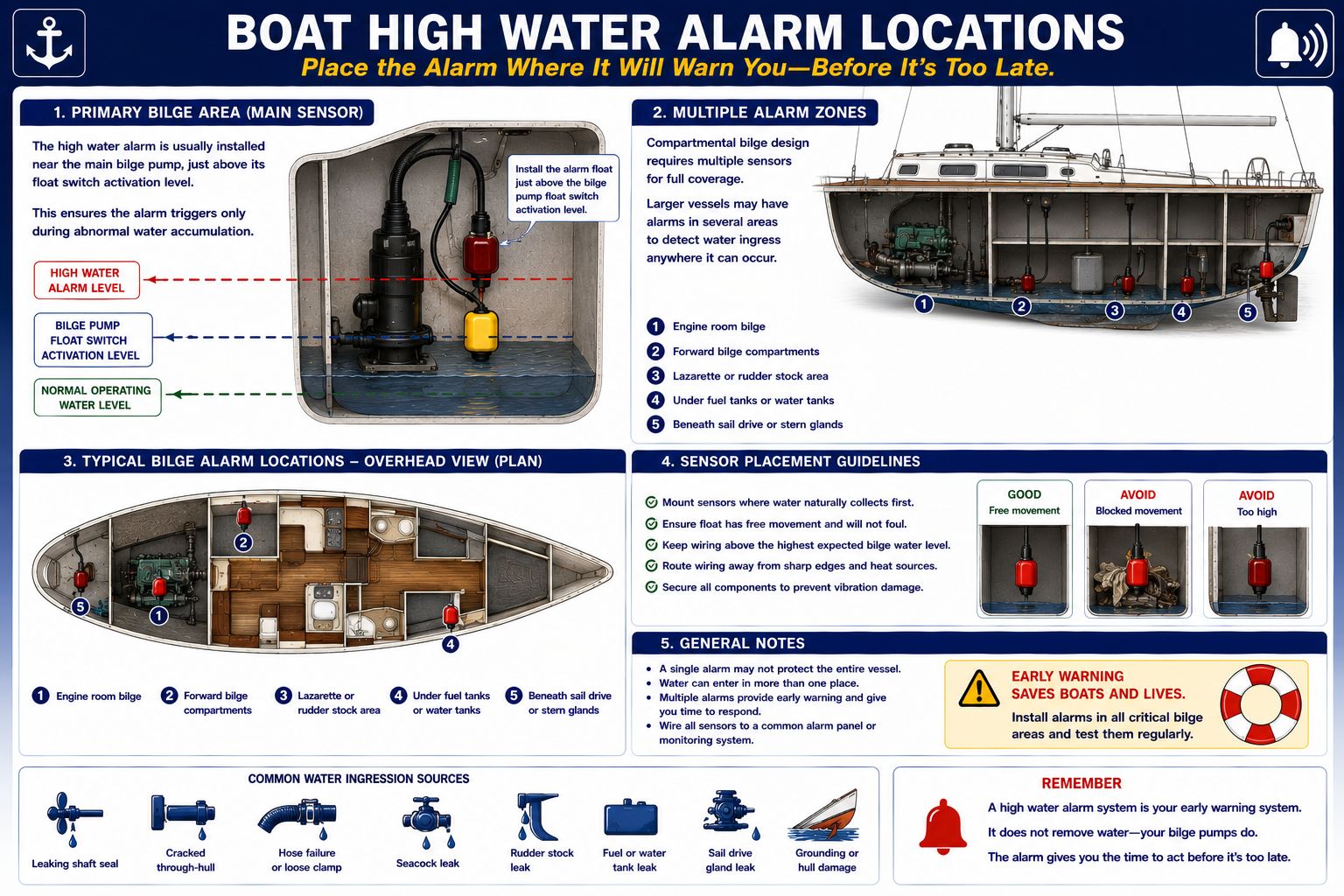
Primary Bilge Area. The alarm is usually installed near the main bilge pump, just above its float-switch activation level. This ensures the alarm triggers only during abnormal water accumulation.
Multiple Alarm Zones. Compartmental bilge design requires multiple sensors for full coverage. Larger vessels may have alarms in:
- Engine room bilge
- Forward bilge compartments
- Lazarette or rudder stock area
- Under fuel tanks or water tanks
- Beneath sail drive or stern glands
Mechanical
and Electrical Repairs Resource
If you are headed somewhere remote consider the need to expand your knowledge base or have an information resource on board. Why not get a copy of my book The Marine and Electrical and Electronics Bible 4th Edition. By and for yachties, with everything from batteries and charging, solar and wind, diesel engines and marine electronics and so much more. Your complete systems guide. 650 pages of practical advice. In Australia and New Zealand order a copy through Boat Books. UK and European boats can buy the UK Edition Here. US and Canadian boats can get the US Edition Order Here. Marine systems are my profession so let me help you. By a liveaboard boat owner for other boat owners

Installation Guidelines
Correct installation ensures accurate detection and reduces false alarms.
Sensor Mounting. Sensors should be mounted:
- At least 2–5 cm above the bilge pump’s activation float. Mounting too low causes false alarms; too high delays detection.
- On a vertical, rigid surface
- In the lowest part of the compartment
- Away from turbulence caused by pumps
Wiring Practices
- Route wiring above bilge water level
- Protect wiring with split loom where abrasion is possible
- Avoid routing near engine heat
Alarm Panel Placement. For unattended boats, alarms may integrate with GSM, Wi-Fi, or NMEA monitoring systems. Install alarms where crew can see or hear them:
- Helm station if practicable
- Navigation console or main panel
- Engine monitoring panel
- Master cabin (for night detection) is a nice to have
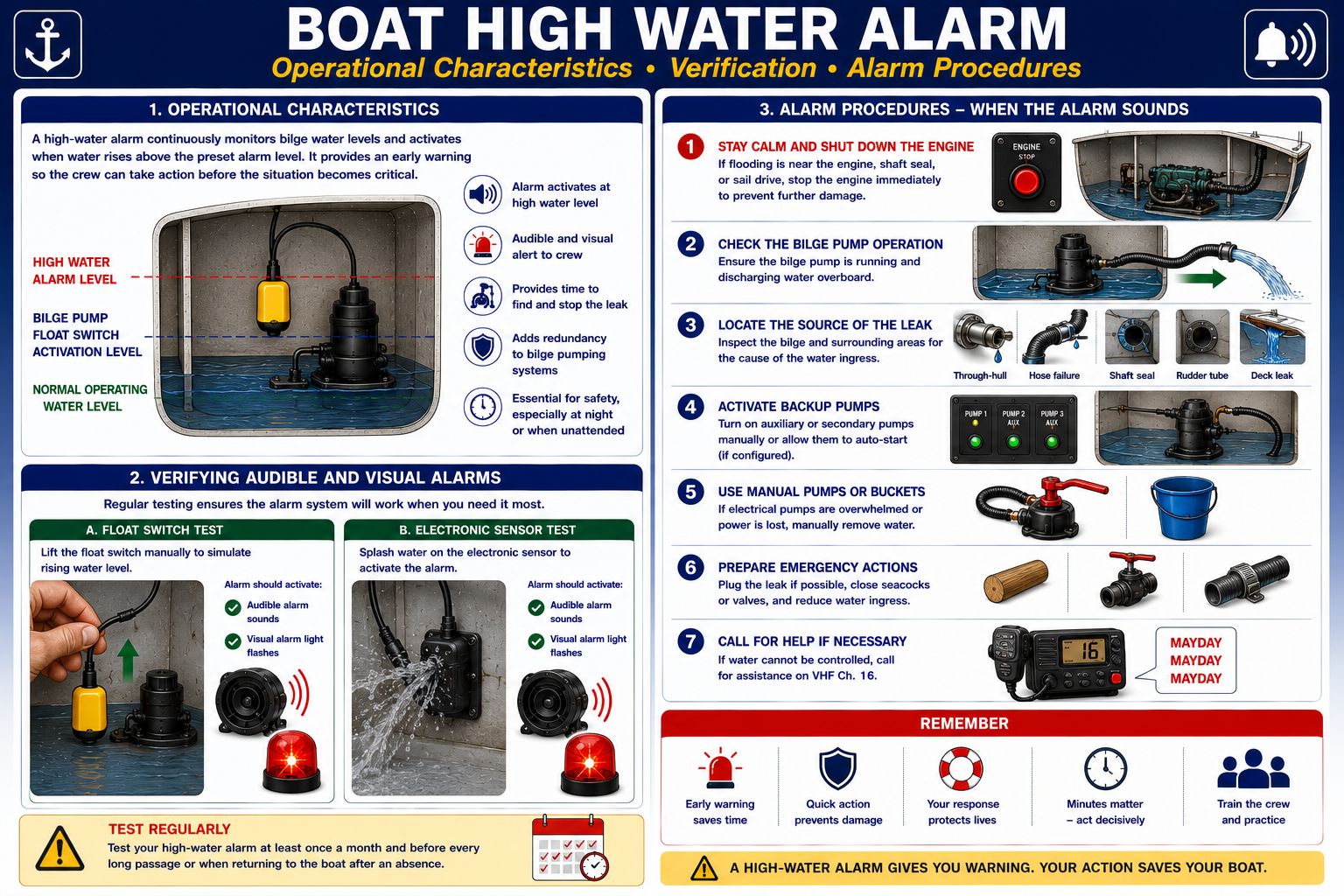
Boat High Water Alarm Operational Characteristics
Verifying audible and visual alarms function correctly, regularly test alarms by:
- Lifting the float switch manually
- Splashing water on electronic sensors
Alarm Procedures
High-water alarms provide precious minutes that may save a vessel. When an alarm sounds:
- Stay calm and shut down the engine (if flooding near shaft or engine).
- Check the bilge pump operation, ensure it is running.
- Locate the source of the leak (through-hull, hose failure, shaft seal, rudder tube, deck leak).
- Activate backup pumps, if available.
- Use manual pumps or buckets as temporary measures.
- Prepare for emergency actions (plugging, closing valves, emergency call if severe ingress).
Boat High Water Alarm Maintenance Requirements
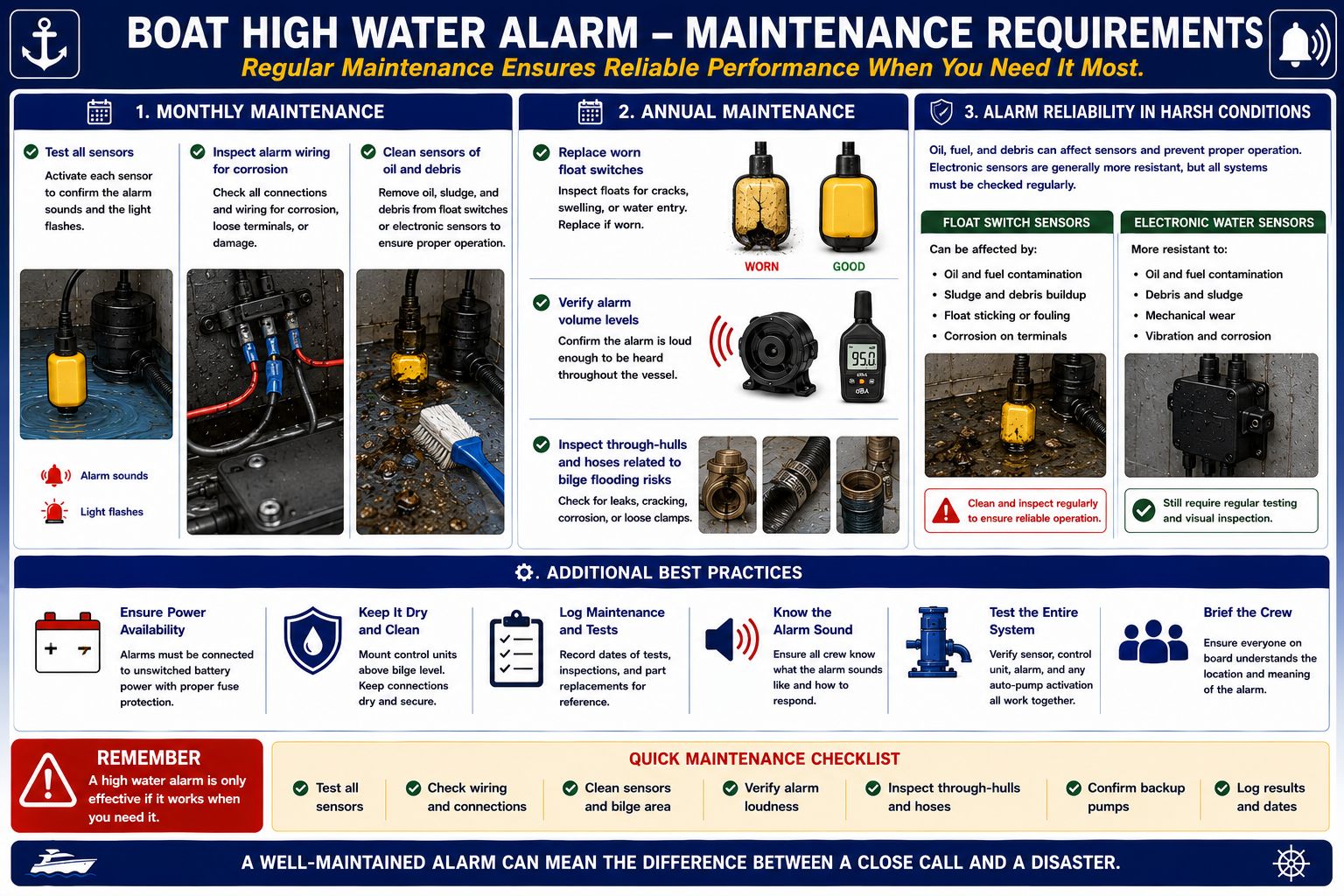
Monthly Maintenance
- Test all sensors
- Inspect alarm wiring for corrosion
- Clean sensors of oil and debris
Annual Maintenance
- Replace worn float switches
- Verify alarm volume levels
- Inspect through-hulls and hoses related to bilge flooding risks
Alarm Reliability in Harsh Conditions. Oil, fuel, and debris can affect sensors. Electronic sensors are generally more resistant, but all systems must be checked regularly.
Boat High Water Alarm Troubleshooting
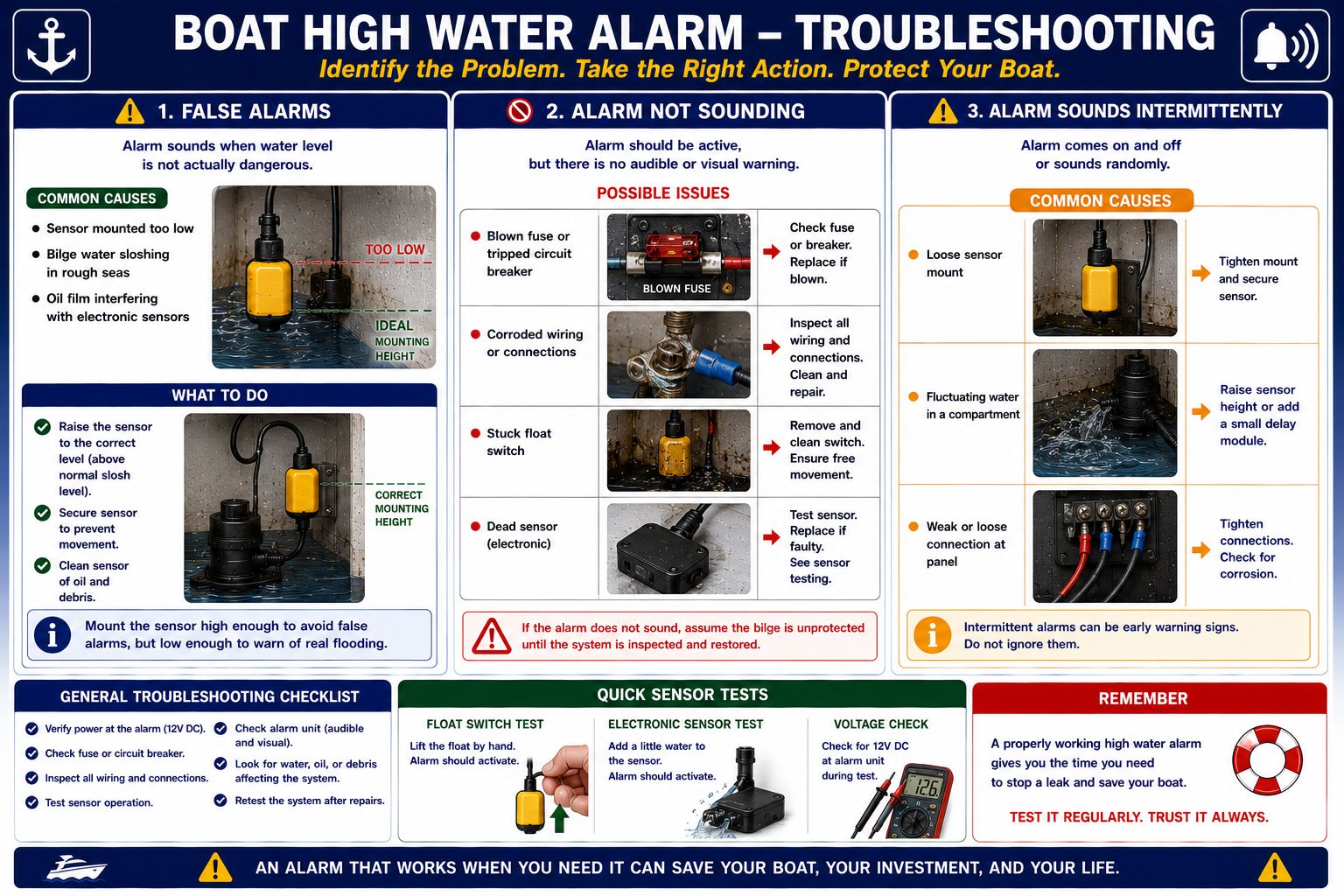
False Alarms. Causes include:
- Sensor mounted too low
- Bilge water sloshing in rough seas
- Oil film interfering with electronic sensors
Alarm Not Sounding. Possible issues:
- Blown fuse or tripped circuit breaker
- Corroded wiring
- Stuck float switch
- Dead sensor
Alarm Sounds Intermittently. Often due to:
- Loose sensor mount
- Fluctuating water in a compartment
- Weak connection at the panel
Integration with Advanced Vessel Monitoring. These systems can send real-time alerts to a smartphone,, critical for boats kept at moorings or in marinas. Modern high-water alarms can integrate with:
- NMEA 2000 networks
- Onboard computer systems
- Satellite or cellular monitoring platforms


Boat High Water Alarm
A Boat High Water Alarm is an essential safeguard for any vessel, providing early warning of unexpected water ingress and allowing corrective action before flooding becomes critical. Proper installation, regular testing, robust components, and integration with bilge pumps and monitoring systems ensure that a high-water alarm functions reliably when needed most. On small cruising sailboat, the Boat High Water Alarm is a low-cost, high-value investment that significantly enhances vessel safety and survivability at sea.