Boat Grey Water System
The boat grey water system and grey water refers to wastewater generated from galley and head sinks, showers, galley drains, air-conditioning condensate, washing machines and dishwashers on larger boats. Unlike black water, which contains human sewage, grey water is largely composed of soaps, fats, food particles, detergents, and organic matter from cleaning and cooking. Although less hazardous than sewage, grey water still contributes to marine pollution through nutrient loading, suspended solids, and chemical contaminants. As environmental regulations evolve, particularly in sensitive cruising grounds, modern boats increasingly rely on dedicated grey water systems that collect, route, and sometimes treat this waste stream before discharge.
This article provides an in-depth technical overview of grey water handling on boats, covering system components, operational behavior, installation considerations, and maintenance practices. Grey water systems on boats manage wastewater from sinks, showers, and laundries, keeping it separate from black water. These systems reduce pollution, improve onboard hygiene, and comply with marine regulations. By filtering or storing grey water, boats minimize environmental impact while ensuring safe disposal at shore facilities, supporting sustainable cruising and responsible maritime operations.
Boat Grey Water System Properties
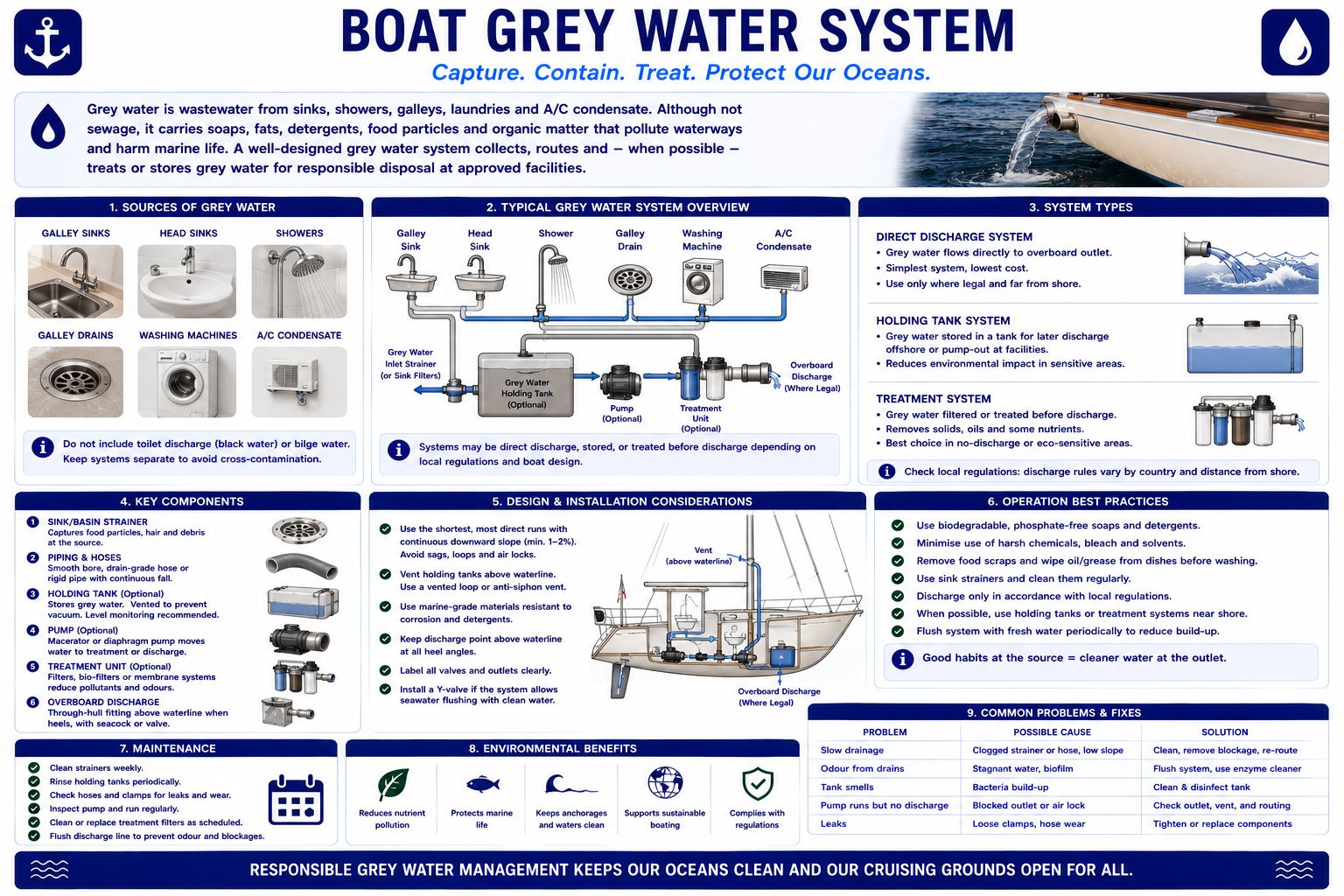
Grey water has unique fluid properties that differentiate it from black water and require dedicated management strategies:
- Contains oils, grease, fats, and detergents which can accrete in hoses and pumps.
- High organic load allows bacteria to proliferate and create odors.
- May include hair, food particles, and soap residues that easily clog traps and strainers.
- Variable temperature due to dishwashing and showers, which affects material compatibility.
Because of these factors, grey water is rarely routed directly overboard through simple gravity drains on modern vessels. Instead, sump systems, pumping stations, and filtered discharge lines are standard practice.
Boat Grey Water System Basics
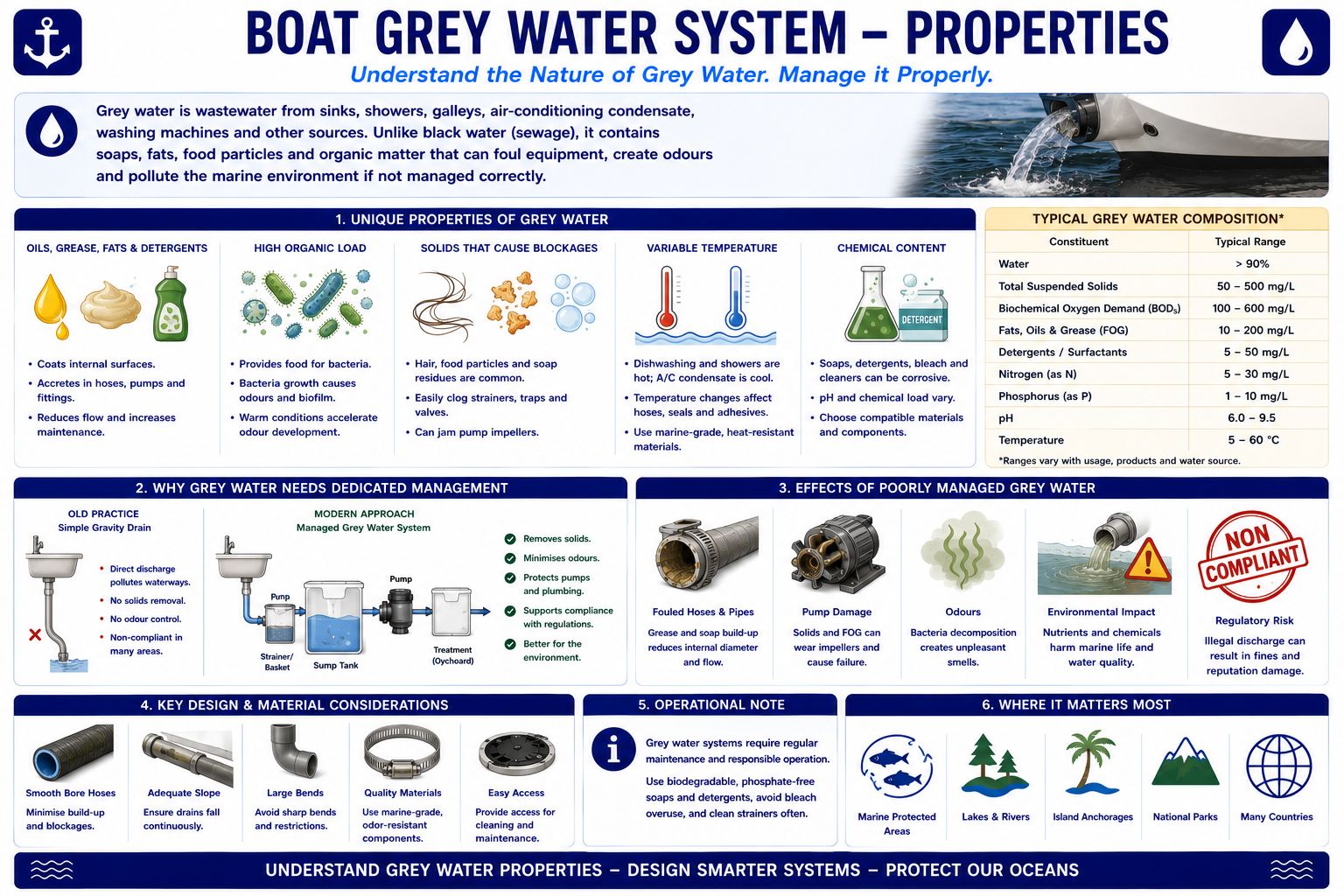
Each source requires a dedicated drain line into the collection system. Grey water originates from several onboard systems:
- Bathroom sinks
- Showers
- Galley sinks
- Washing machines and dishwashers (on larger vessels)
- Air-conditioning condensate drains
- Ice maker discharge
Boat Grey Water System Collection
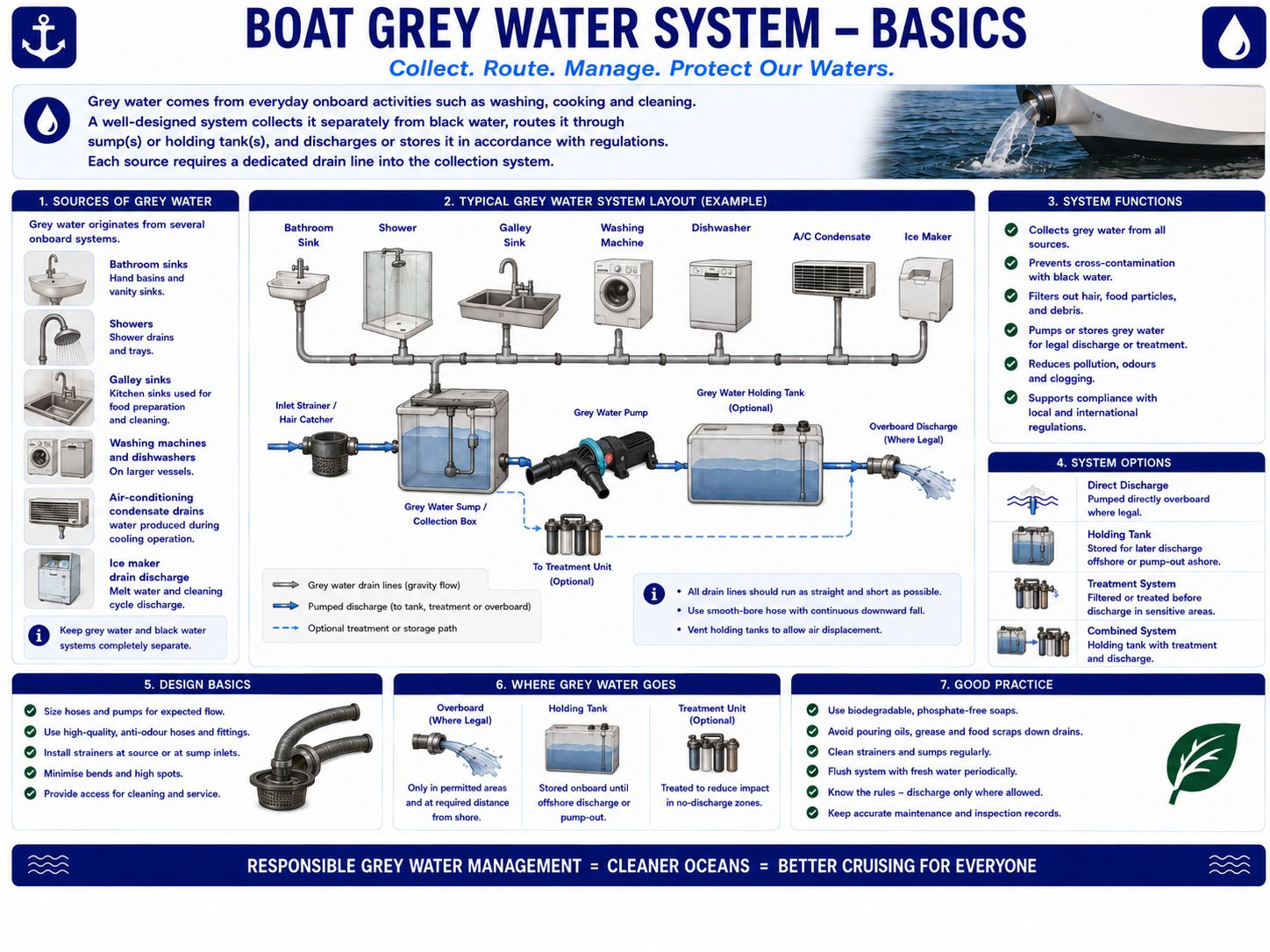
Most vessels use a grey water sump, also called a “shower sump” or “drain sump box,” to collect shower wastewater before pumping it overboard. For larger motor yachts or live aboard vessels, a full grey water holding system may be installed, especially where discharge regulations prohibit direct release. Typical sump features include:
- Sealed plastic housing
- Removable lid for inspection
- Float switch to activate a pump
- Pre-filters or strainers to catch debris
- Anti-siphon discharge line
Sump Pumps and Transfer Pumps
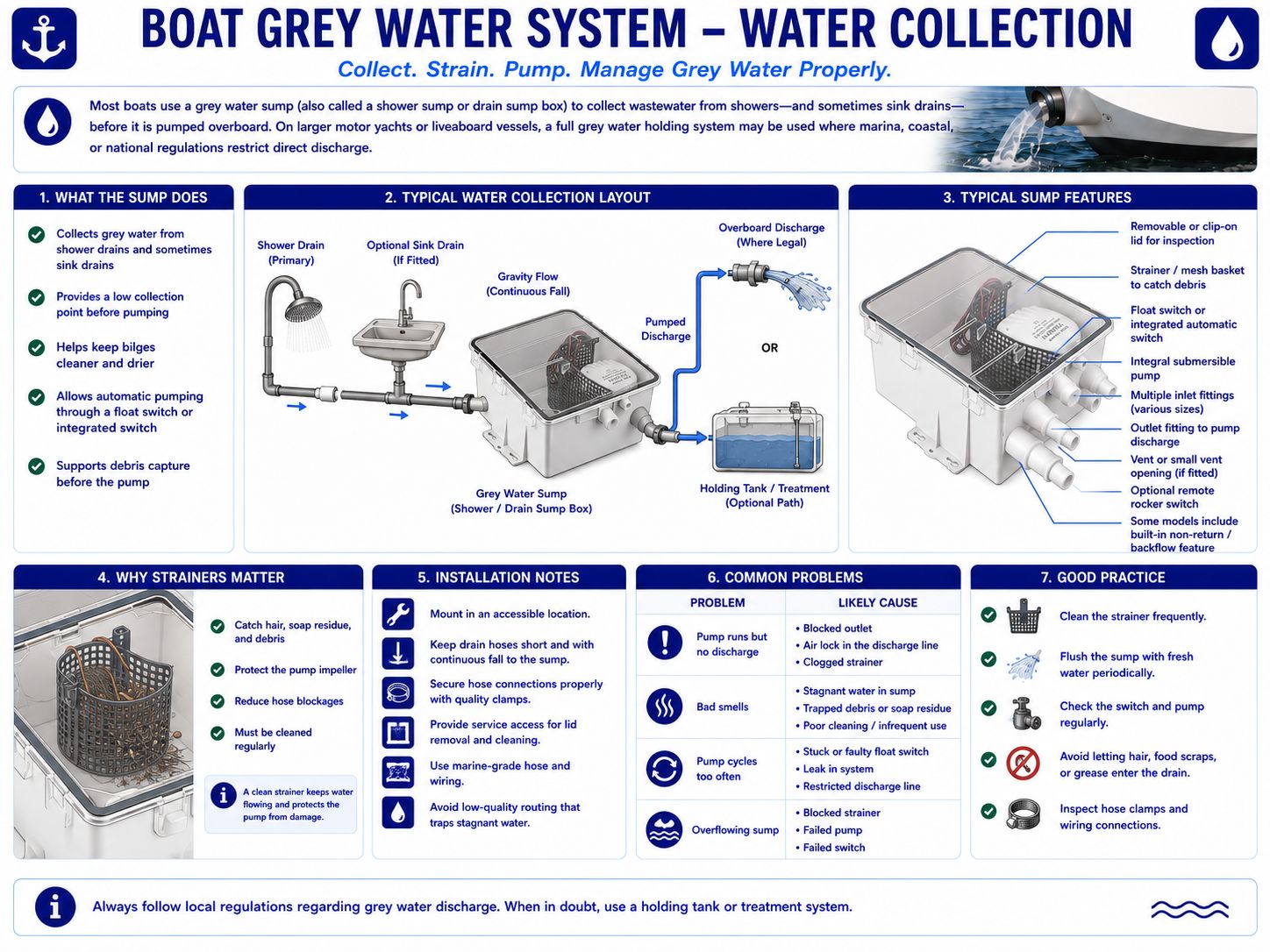
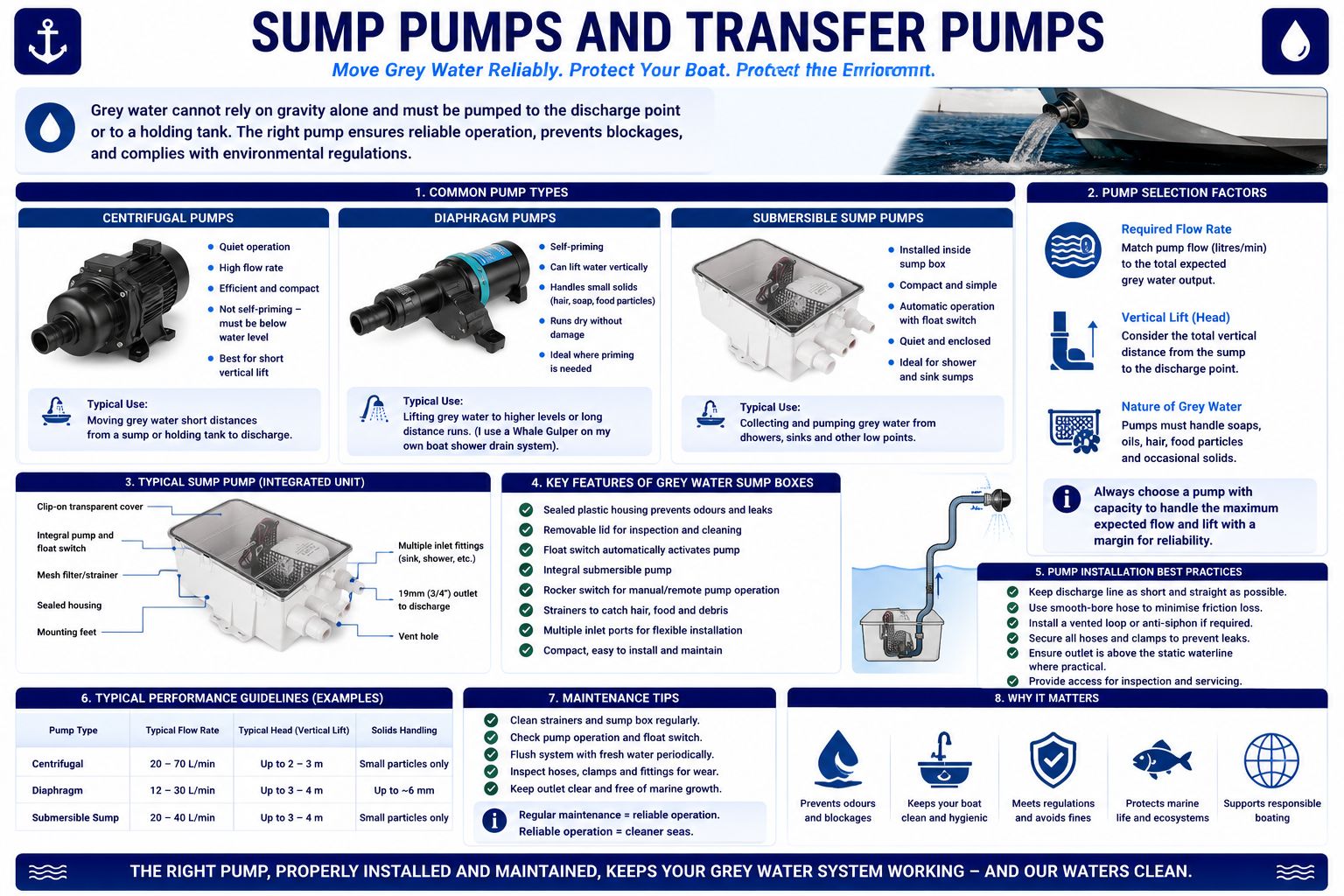
Grey water cannot rely on gravity alone and must be pumped. Common pump types include:
- Centrifugal pumps: quiet, high flow, but not self-priming
- Diaphragm pumps: good for lifting water and handling small solids (I use a Whale gulper on my own boat shower drain system)
- Submersible sump pumps: installed inside sump boxes; compact and simple
Pump selection depends on the following:
- Required flow rate
- Vertical lift from sump to overboard outlet
- Nature of grey water content
Mechanical
and Electrical Repairs Resource
If you are headed somewhere remote consider the need to expand your knowledge base or have an information resource on board. Why not get a copy of my book The Marine and Electrical and Electronics Bible 4th Edition. By and for yachties, with everything from batteries and charging, solar and wind, diesel engines and marine electronics and so much more. Your complete systems guide. 650 pages of practical advice. In Australia and New Zealand order a copy through Boat Books. UK and European boats can buy the UK Edition Here. US and Canadian boats can get the US Edition Order Here. Marine systems are my profession so let me help you. By a liveaboard boat owner for other boat owners

Boat Grey Water Plumbing Hoses and Fittings
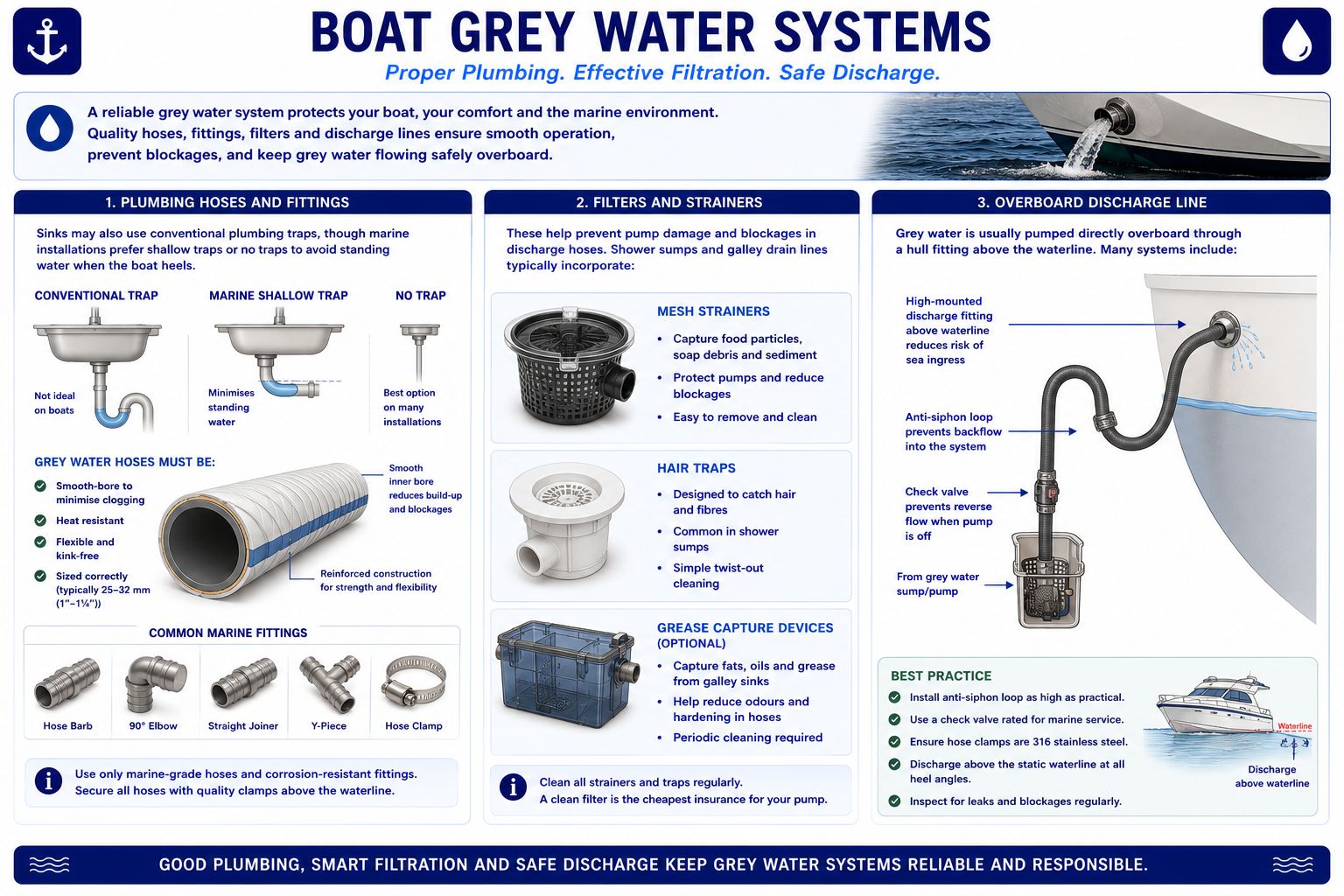
Sinks may also use conventional plumbing traps, though marine installations prefer shallow traps or no traps to avoid standing water when the boat heels. Grey water hoses do not require sanitation-rated odor barriers, but they must be:
- Smooth-bore to minimize clogging
- Heat resistant
- Flexible and kink-free
- Sized correctly (typically 25–32 mm
Filters and Strainers
These help prevent pump damage and blockages in discharge hoses. Shower sumps and galley drain lines typically incorporate:
- Mesh strainers
- Hair traps
- Grease capture devices (on some installations)
Overboard Discharge Line
Grey water is usually pumped directly overboard through a hull fitting above the waterline. Many systems include:
- Anti-siphon loops to prevent backflow
- Check valves
- High-mounted discharge points to reduce sea ingress
Boat Grey Water System Configurations
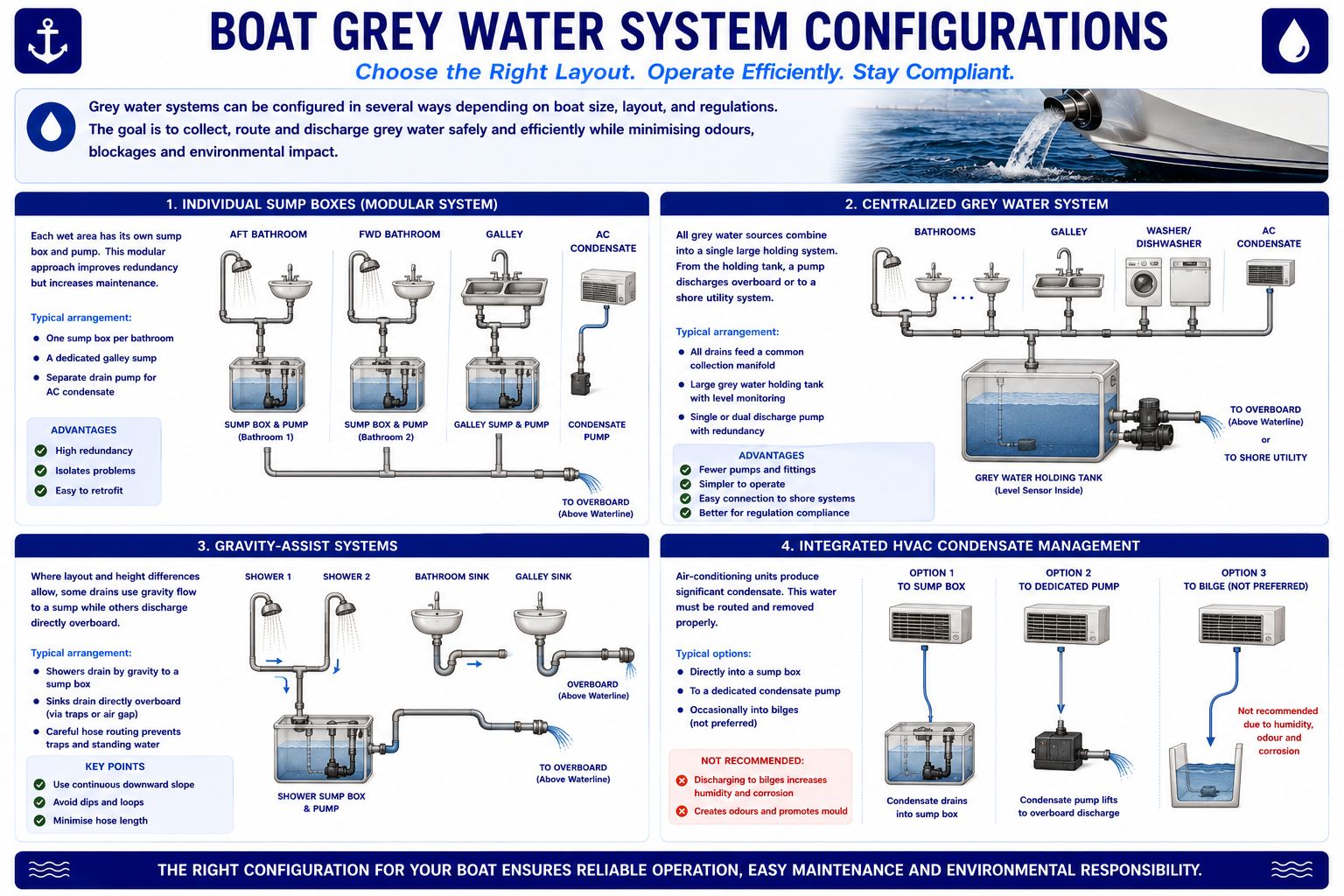
Individual Sump Boxes. This modular approach improves redundancy but increases maintenance. Smaller boats may have:
- One sump box per bathroom
- A dedicated galley sump
- Separate drain pumps for AC condensate
Centralized Grey Water System. Larger yachts combine all grey water into a single large holding system. From the system, a pump discharges overboard or to a shore utility system.
Gravity-Assist Systems. Where layout allows, some installations leverage gravity from showers to a sump while sinks drain directly overboard. These require carefully considered hose routing to avoid traps that hold stagnant water.
Integrated HVAC Condensate Management. Air-conditioning units produce large amounts of condensate. This water is typically routed:
- Directly into a sump box, or
- To a dedicated condensate pump
- Occasionally into bilges (not preferred due to humidity and smell)
Boat Grey Water System Operational Considerations
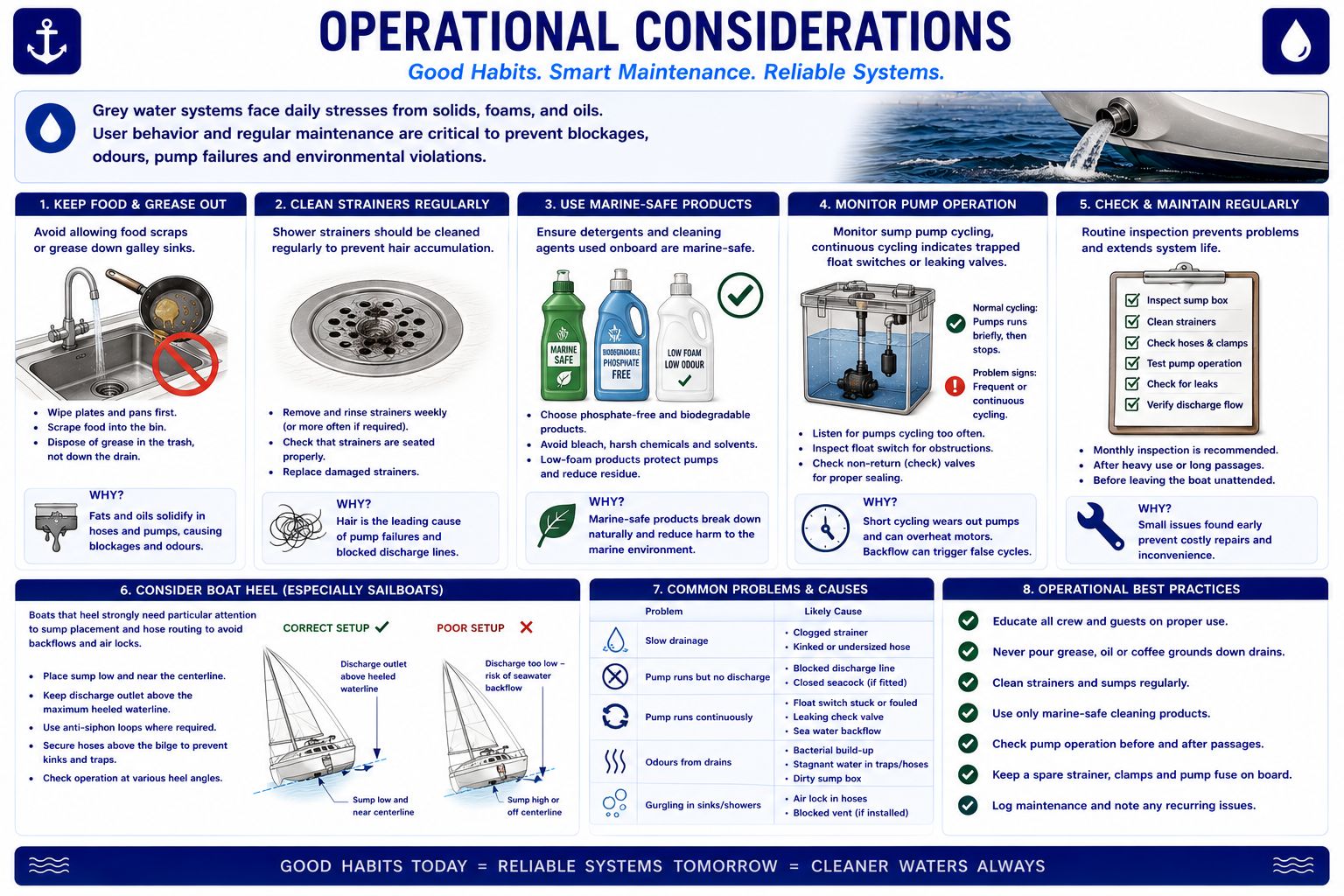
Grey water systems face daily stresses from solids, foams, and oils. User behavior significantly affects reliability. Key operational factors:
- Avoid allowing food scraps or grease down galley sinks.
- Shower strainers should be cleaned regularly to prevent hair accumulation.
- Ensure detergents and cleaning agents used onboard are marine-safe.
- Monitor sump pump cycling, continuous cycling indicates trapped float switches or leaking backflow valves.
Boats that heel strongly (e.g., sailboats) need particular attention to sump placement and hose routing to avoid backflows.
Boat Grey Water System Maintenance
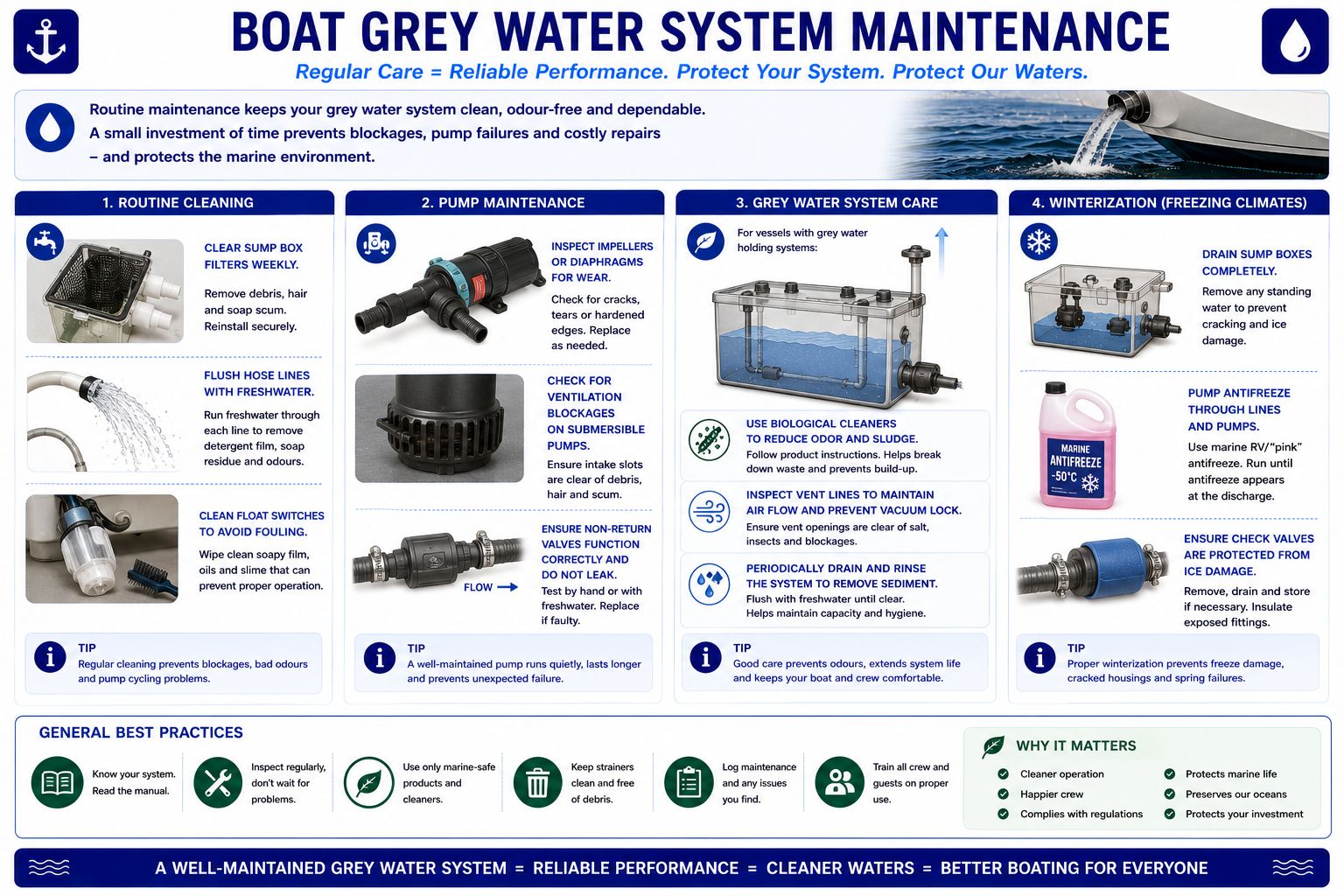
Routine Cleaning
- Clear sump box filters weekly.
- Flush hose lines with freshwater to remove detergent film.
- Clean float switches to avoid fouling from soaps and oils.
Pump Maintenance
- Inspect impellers or diaphragms for wear.
- Check for ventilation blockages on submersible pumps.
- Ensure non-return valves function correctly and do not leak.
Grey Water System Care
For vessels with grey water holding systems:
- Use biological cleaners to reduce odor and sludge.
- Inspect vent lines to maintain air flow and prevent vacuum lock.
- Periodically drain and rinse the system to remove sediment.
Boat Grey Water System Winterization. In freezing climates:
- Drain sump boxes completely.
- Pump antifreeze through lines and pumps.
- Ensure check valves are protected from ice damage.
Boat Grey Water System Troubleshooting
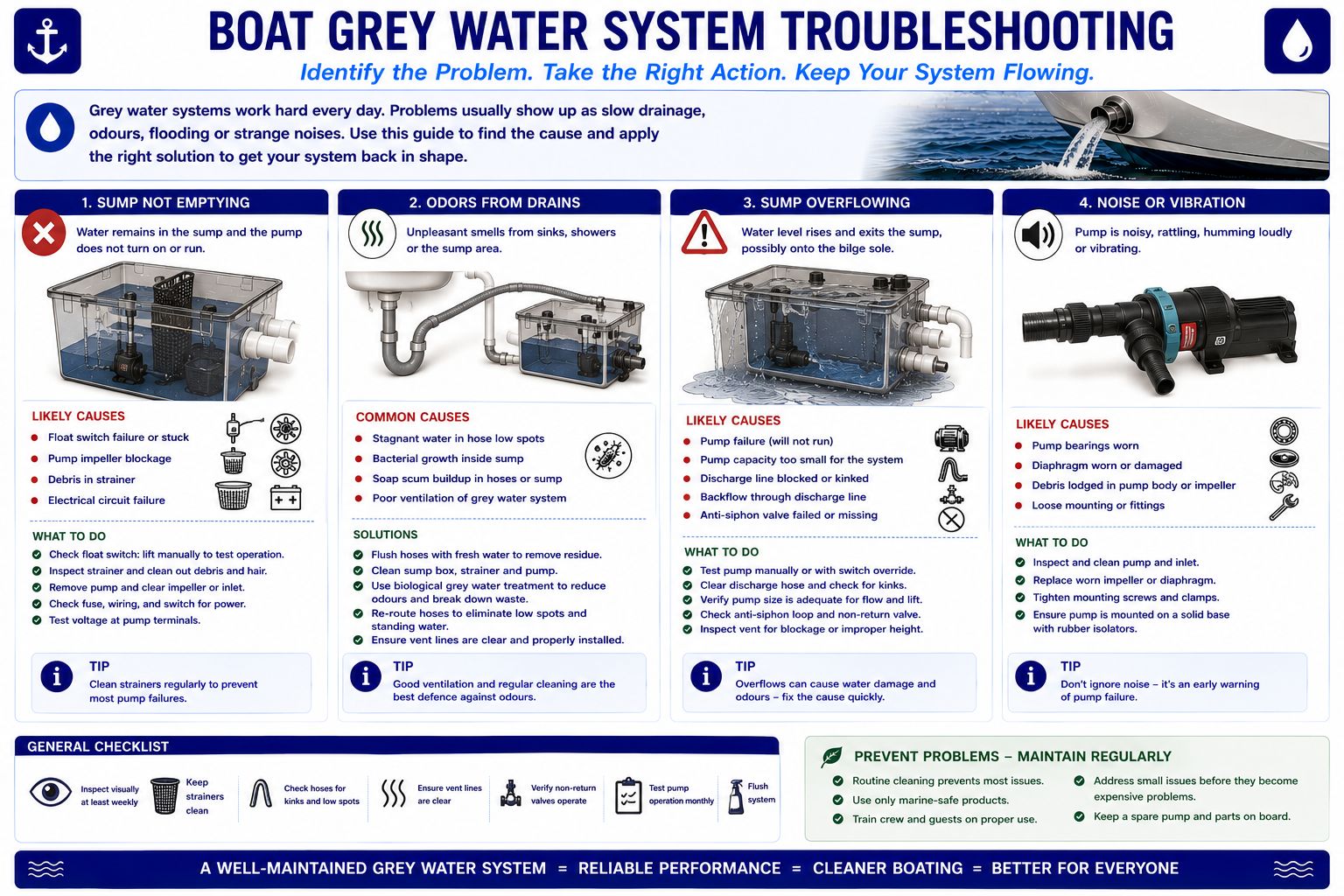
Sump Not Emptying. Likely causes:
- Float switch failure
- Pump impeller blockage
- Debris in strainer
- Electrical circuit failure
Odors from Drains. Common causes:
- Stagnant water in hose low spots
- Bacterial growth inside sump
- Soap scum buildup
- Poor ventilation of grey water system
Solutions include cleaning, hose rerouting, and biological treatments.
Sump Overflowing. Indicates pump failure or inadequate pump capacity. Backflow through the discharge line may also cause overflow if the anti-siphon valve fails.
Noise or Vibration. Pump bearings or diaphragms may be failing, or debris may be lodged in the pump body.
Environmental and Regulatory Considerations
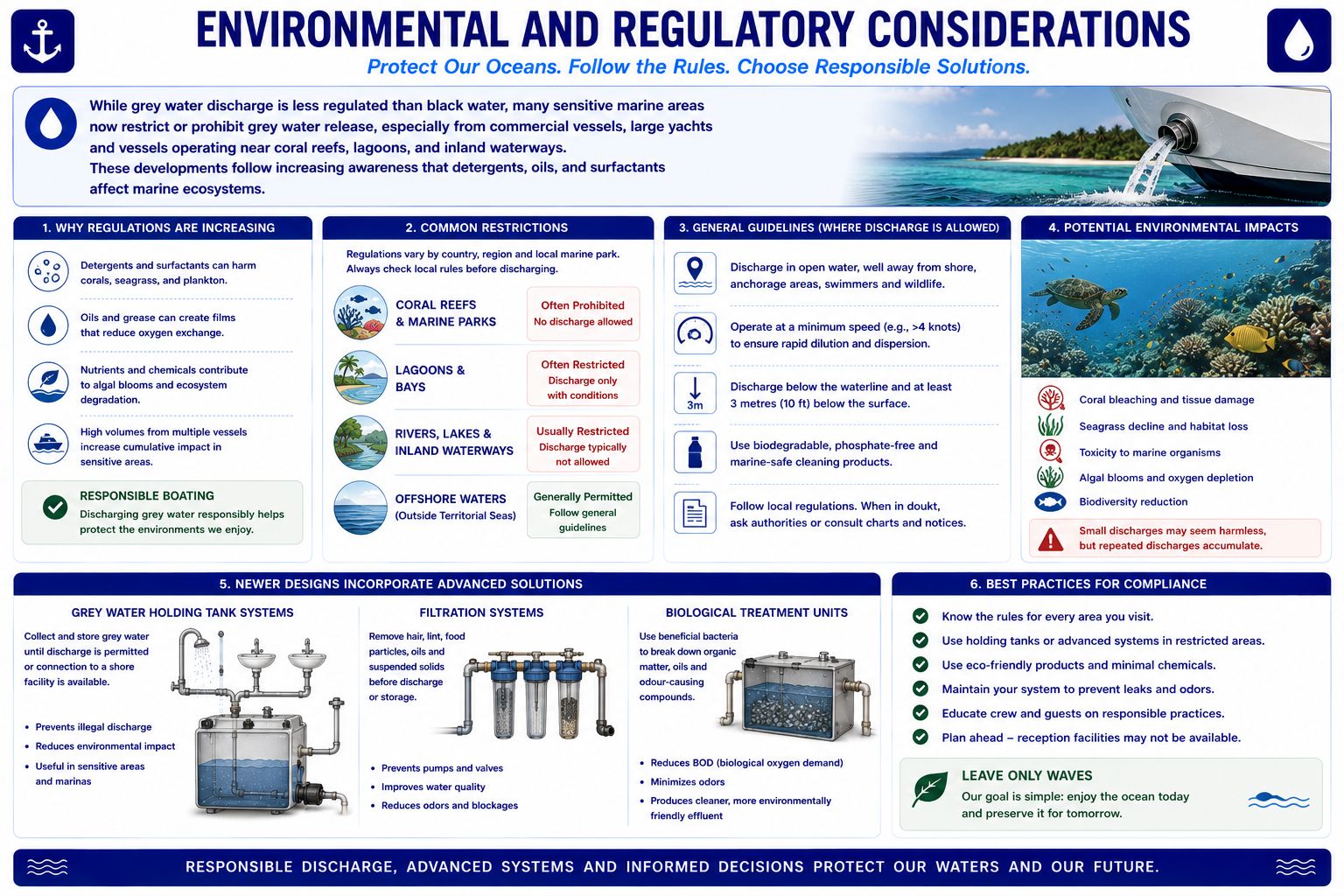
While grey water discharge is less regulated than black water, many sensitive marine areas now restrict or prohibit grey water release, especially from commercial vessels, large yachts and vessels operating near coral reefs, lagoons, and inland waterways. These developments follow increasing awareness that detergents, oils, and surfactants affect marine ecosystems. Newer designs incorporate the following:
- Grey water holding tank systems
- Filtration systems
- Biological treatment units


Boat Grey Water System
The boat grey water system forms a crucial component of onboard wastewater management, ensuring hygiene, operational safety, and environmental compliance. Whether based on small sump boxes or large integrated holding systems, the system must efficiently collect, filter, pump, and discharge grey water without leaks, odors, or pump failures. Proper installation, routine maintenance, and user awareness ensure these systems function reliably under the demanding conditions found at sea. As regulations evolve and boat designs advance, grey water systems will continue to grow in complexity and importance, making them a key area of knowledge for boat owners. What are your boat grey water system arrangements like?