Bilge Pump Float Switch
A bilge pump float switch is one of the most critical components in a boat’s dewatering system. Its purpose is simple, to automatically activate the bilge pump when the water level rises above a preset height. Despite its simplicity, the float switch must operate in one of the harshest environments on a vessel, an oily, dirty bilge subjected to vibration, moisture, corrosion, and debris. Because bilge pumps often serve as the first line of defense against flooding, a reliable float switch is essential for vessel safety.
This technical article provides a comprehensive overview of float switch types, mechanisms, installation practices, maintenance, and common failure modes. Float switches are vital components in boat bilge pump systems, automatically activating pumps when rising water threatens safety. They provide continuous monitoring, ensuring bilges remain dry without constant crew attention. By preventing flooding, protecting electrical systems, and reducing manual workload, float switches safeguard vessel integrity and crew safety. Reliable operation is critical, as failure can lead to water ingress, equipment damage, or even loss of seaworthiness in challenging marine conditions.
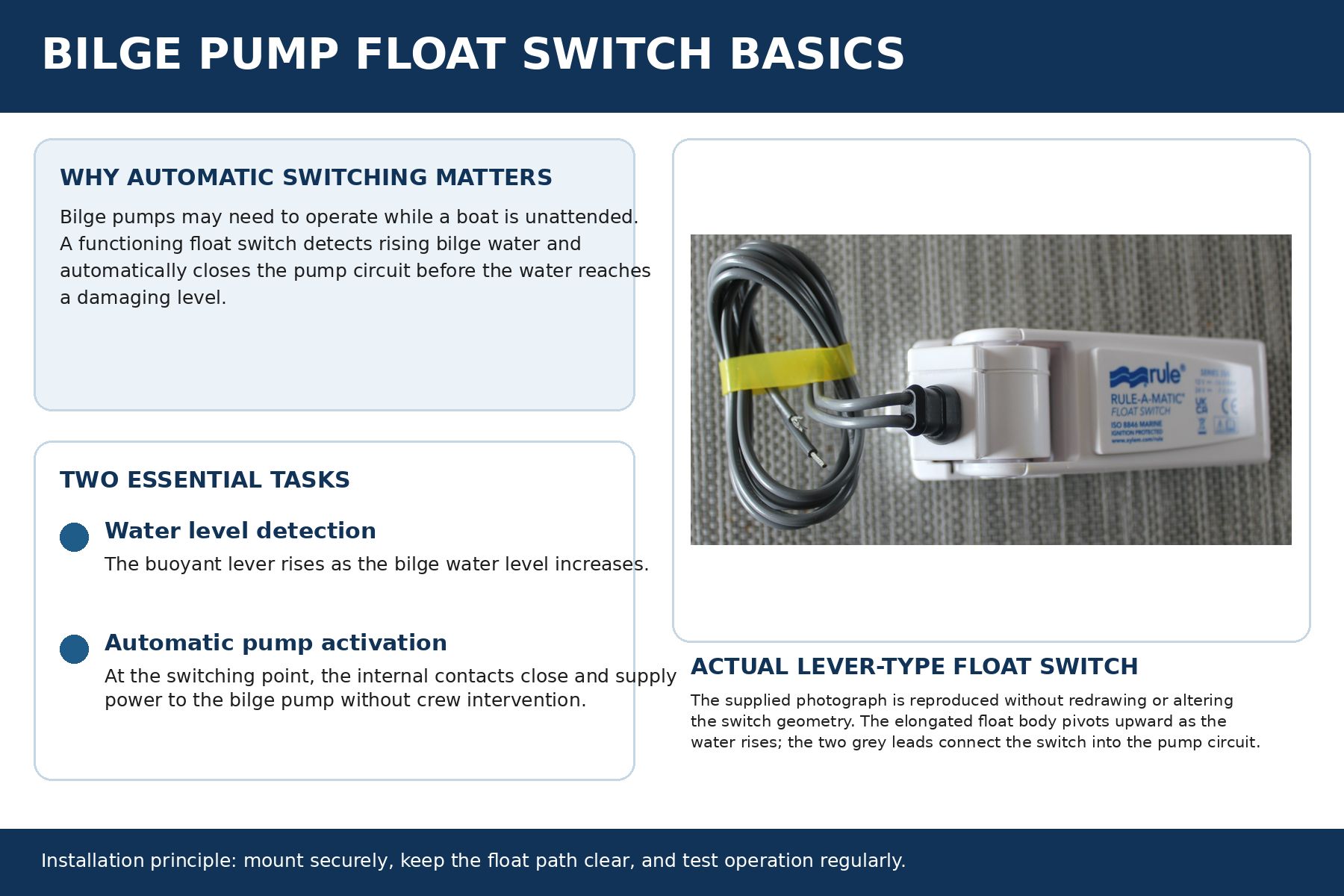
Bilge Pump Float Switch Basics
Bilge pump systems often run unattended while the boat is moored, making automatic switching indispensable. Without a functioning float switch, rising water may go unnoticed, leading to flooding, electrical damage, or vessel loss. The float switch performs two essential tasks:
- Water level detection, identifying when bilge water rises to unsafe levels.
- Automatic pump activation, closing an electrical circuit to power the pump without crew intervention.
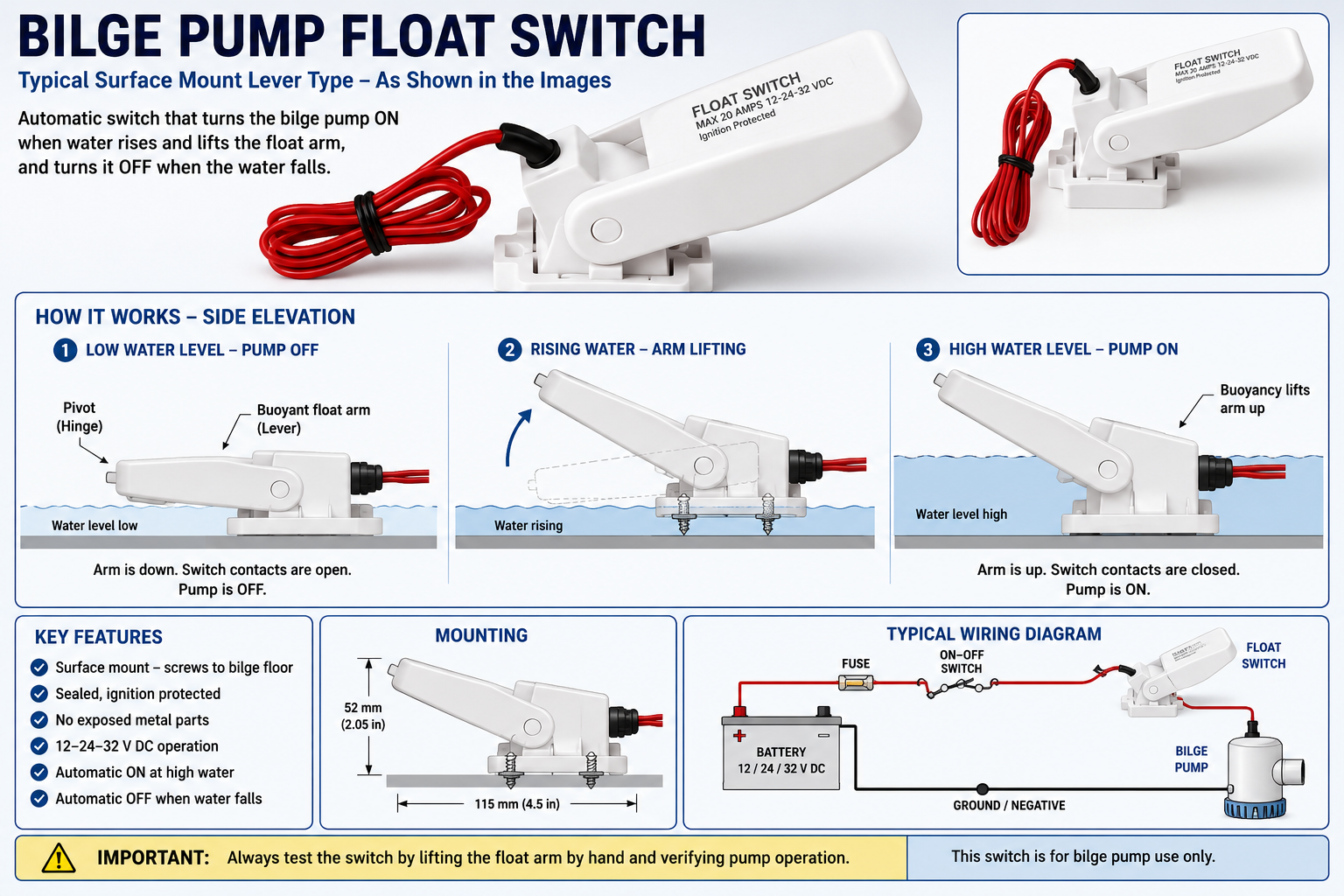
Bilge Pump Float Switch Types
Several types of float switches are used in marine installations. Each has specific strengths and weaknesses depending on the vessel and bilge environment. How Different Bilge Pump Float Switches Work.
Mechanical Lever Float Switches. These are the most common type and feature a sealed buoyant float attached to a pivoting arm. Operation is as follows:
- As water rises, the float lifts and closes an internal micro-switch to activate the pump. The advantages are:
- Simple and proven design
- Inexpensive and widely available
- Easy to inspect and replace
Disadvantages:
- Moving parts can foul with debris
- Susceptible to sticking due to oil, hair, or sludge
- Mechanical wear over time
- Mechanical switches must be installed in a clean, obstruction-free space.
Electronic Float Switches. These switches use solid-state water sensing, either conductivity, optical, or capacitive detection, to activate the pump. Electronic switches are increasingly popular for bilges prone to debris. Generally, more reliable in dirty bilges
Advantages:
- No moving parts
- Highly resistant to fouling
- Compact and easy to mount
Disadvantages:
- More expensive
- Sensitive to installation orientation (depending on design)
- Some conductivity sensors may false-trigger in oily bilges
Integrated Automatic Pumps. Many bilge pumps now include built-in float switches or electronic sensors. These are commonly found on small vessels or secondary bilge pump installations.
Advantages:
- Simplifies installation
- Fewer external components
- Reduced wiring complexity
Disadvantages:
- Entire pump must be replaced if sensor fails
- Sensor is located very low, which may cause frequent cycling
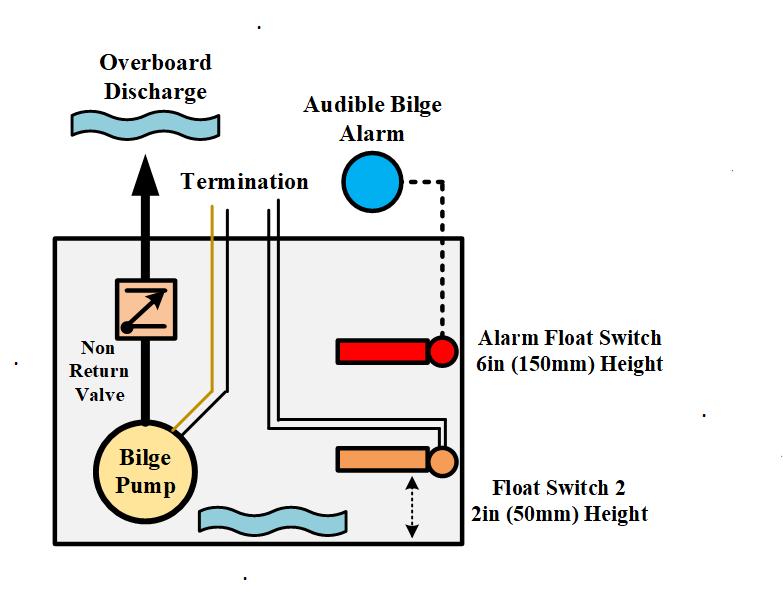
Multi-Level Float Switches for Alarms. This provides redundancy and early warning of pump failure or excessive water ingress. Large vessels may employ float switches with two activation levels:
- Low level: Standard pump activation
- High level: Alarm trigger or second pump activation
Electrical and Mechanical Design
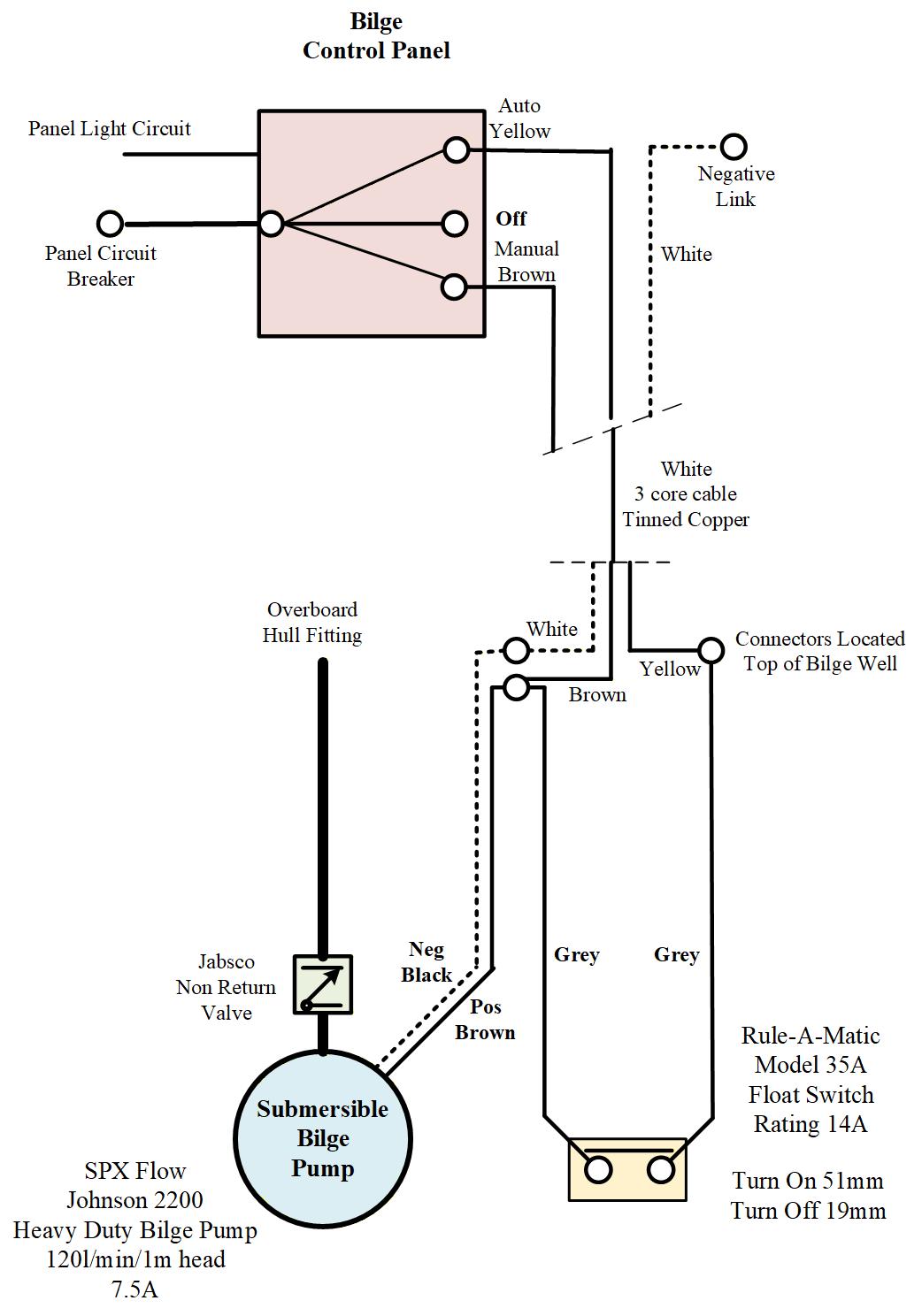
A float switch is part of a critical electrical circuit, so proper installation is essential. Float switches must be wired:
- In series with the bilge pump’s positive supply
- Fed from an unswitched, fused protective power source
- With parallel manual override via control panel switch
- This ensures pumps will run even when the main battery switch is off.
Current Capacity
Most float switches control pumps directly. They must be rated for the pump’s full current draw. Undersized switches overheat and fail prematurely. Check the rating when you buy them and compare to the pump nameplate load rating.
- 4–8 A for small pumps
- 12–20 A for large pumps
Corrosion Resistance
Corrosion is a major cause of false alarms, failures, and intermittent operation. Marine float switches must feature the following:
- Tinned copper wiring
- Sealed housings
- Waterproof connectors
Mechanical
and Electrical Repairs Resource
If you are headed somewhere remote consider the need to expand your knowledge base or have an information resource on board. Why not get a copy of my book The Marine and Electrical and Electronics Bible 4th Edition. By and for yachties, with everything from batteries and charging, solar and wind, diesel engines and marine electronics and so much more. Your complete systems guide. 650 pages of practical advice. In Australia order a copy through Boat Books. UK based boats can Order Here. US based boats can get the US edition Order Here. Marine systems are my profession so let me help you. By a liveaboard boat owner for other boat owners

Sensor Placement
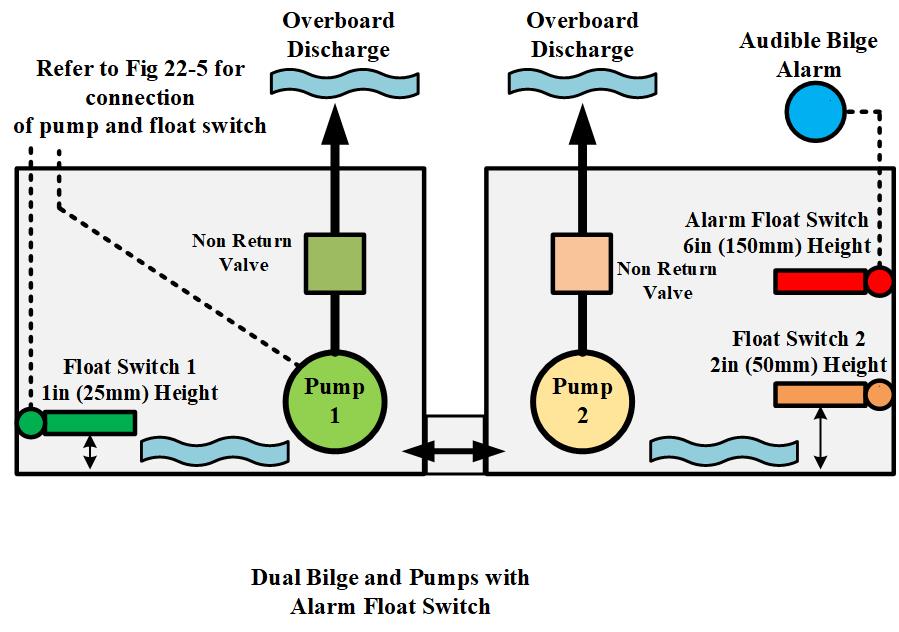
Avoid installing switches where bilge water sloshes excessively, causing false cycling. Mechanical switches must be installed level and oriented per manufacturer instructions. Electronic sensors may require vertical or horizontal placement depending on type. Install the float switch:
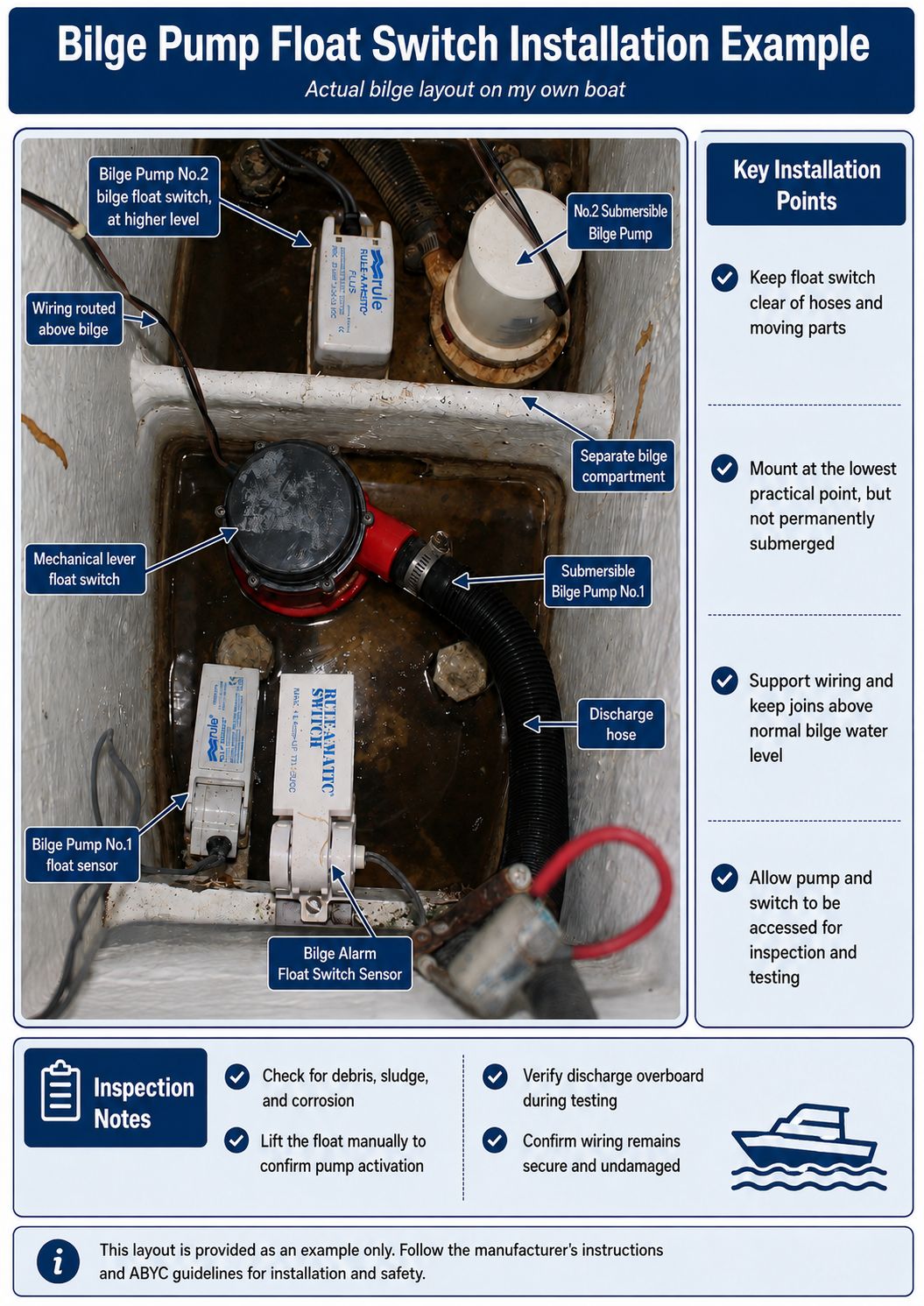
- In the lowest part of the bilge (but not submerged permanently)
- Clear of hoses, wiring, and moving parts
- Positioned so pump fully evacuates bilge without rapid cycling
- Mounted above pump intake strainer
Strain-Relief and Wiring Routing
Wiring should be as follows:
- Be secured above the waterline
- Avoid sharp edges
- Be routed away from engine heat
- Include drip loops to prevent water intrusion
Redundancy
Redundant systems increase survivability in serious flooding. Best practice for larger vessels but have similar on my smaller boat:
- A second float switch for backup activation
- A high-water alarm switch at a higher level
- Independent circuits for primary and secondary pumps
Maintenance and Inspection
Even the best float switch requires routine care.
Monthly Testing
- Lift the float manually or test electronic sensors
- Verify pump activation and proper discharge
- Confirm manual override also functions
Bilge Cleanliness
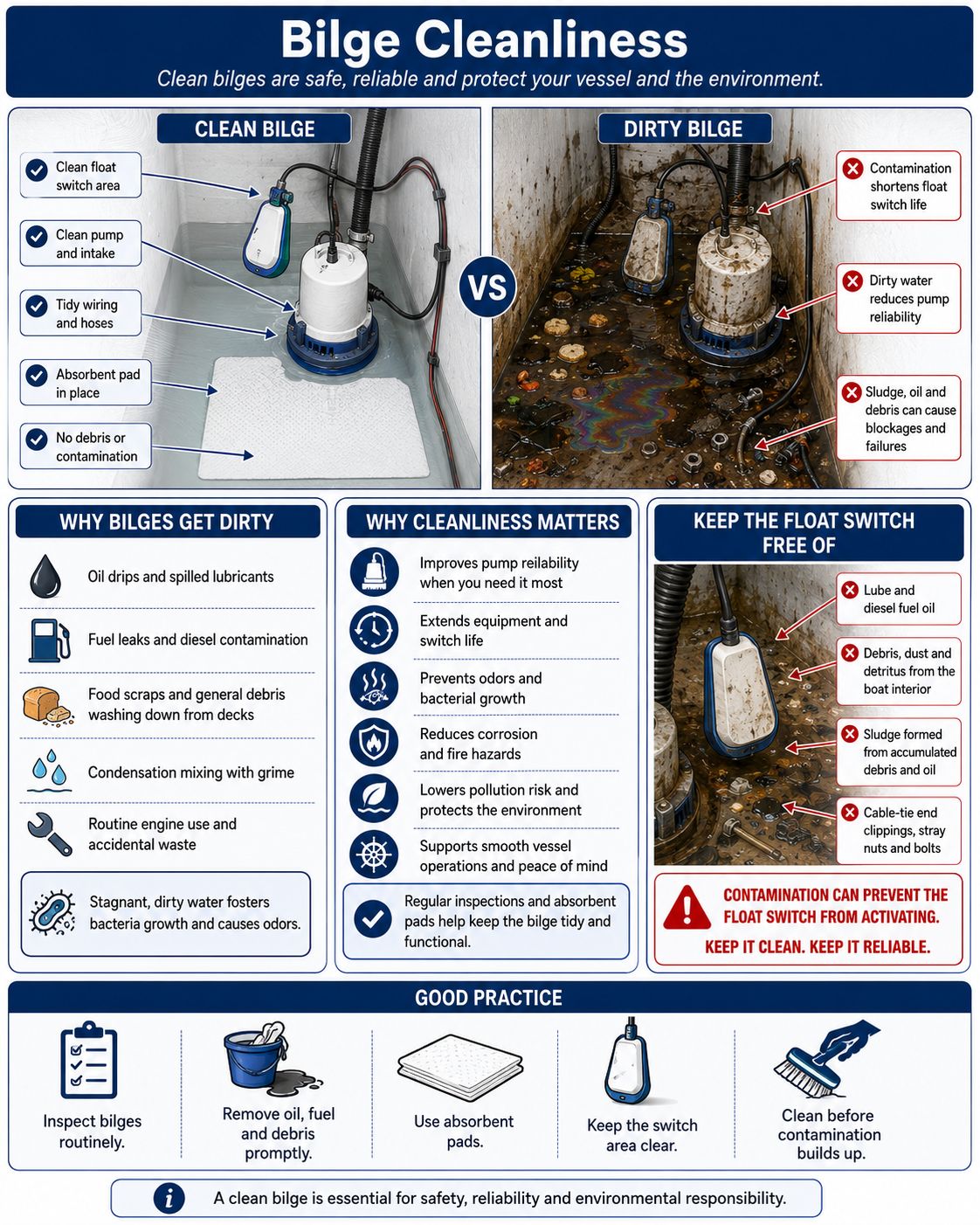
Bilges should not be dirty! Maintaining clean bilges is vital for safety, efficiency, and environmental protection. Regularly removing oil, fuel, and debris prevents odors, corrosion, and fire hazards. Clean bilges reduce pollution risks, improve pump reliability, and extend equipment life. Routine inspections and absorbent pads ensure a tidy, functional bilge system supporting smooth vessel operations. Bilges get dirty from oil drips, fuel leaks, food scraps, and general debris washing down from decks. Condensation mixes with grime, creating stagnant water that fosters bacteria and odors. Routine engine use, spilled lubricants, and accidental waste all accumulate, making bilge cleaning essential for safety, hygiene, and environmental protection. I am always amazed at how must dust and dirt manages to migrate and find its way into the bilge no matter how much boat cleaning we do. Dirty bilges dramatically shorten switch lifespan. The bilge switch must be free of:
- Lube and diesel fuel oil
- Debris, dust and detritus from the boat interior
- Sludge formed form accumulated debris and oil
- Various cable ties end clippings, stray nuts and bolts
Annual Bilge Switch Maintenance
Remove switch and clean thoroughly
- Inspect wiring for corrosion
- Check for cracked housings or sticking pivots
- Replace at the first sign of unreliability. Float switches are low-cost compared to the risk of failure.
Bilge Pump Float Switch
Troubleshooting
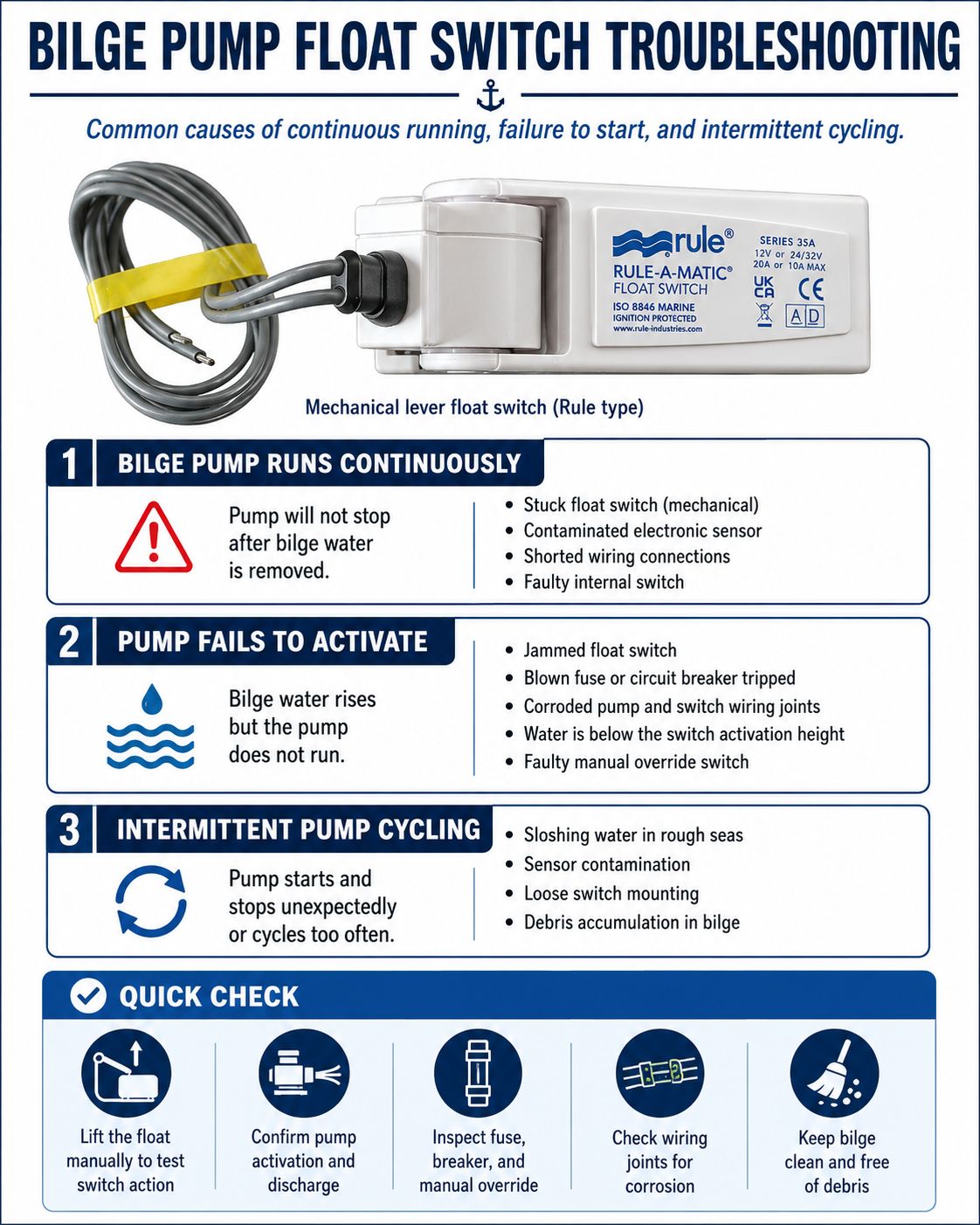
Bilge Pump Runs Continuously. Probable causes are:
- Stuck float switch (mechanical)
- Contaminated electronic sensor
- Shorted wiring connections
- Faulty internal switch
Pump Fails to Activate. Probable causes are:
- Jammed float switch
- Blown fuse or circuit breaker tripped
- Corroded pump and switch wiring joints
- Water is below the switch activation height
- Faulty manual override switch
Intermittent Cycling. Probable causes are:
- Sloshing water in rough seas
- Sensor contamination
- Loose switch mounting
- Debris accumulation in bilge


Bilge Pump Float Switch
A bilge pump float switch is a deceptively simple yet vital component of a boat’s safety system. Its ability to reliably detect rising bilge water and activate the pump may prevent damage, flooding, and even vessel loss. By selecting the appropriate type of switch, installing it correctly, maintaining it regularly, and understanding its potential failure modes, boat owners can ensure dependable automatic dewatering performance in any conditions. Have you checked your bilge pump float switch and confirmed operation.