Anchor Chain Snubber
An anchor chain snubber on a sailboat is a load‑management tool that takes shock loads off the windlass and chain by transferring the strain to a nylon line with controlled elasticity. In any anchorage with swell, gusts, or tide‑against‑wind motion, the snubber absorbs the dynamic load spikes that would otherwise transmit directly into the bow fittings and chain, reducing gear fatigue and preventing the “chain‑snatch” that can cause a yacht to sheer unpredictably. The anchor chain snubber is an essential component of effective anchoring. Anchoring is one of the most critical seamanship skills for any cruising sailor, and beyond selecting the right anchor and scope, the proper use of a snubber, also commonly called a shock absorber, bridle, or snubber line, is essential for both safety and comfort at anchor.
A snubber is a length of stretchable nylon rope that connects the yacht’s strong points, cleats, samson post or bow rollers, to the anchor chain, transferring load from the windlass and creating elasticity in an otherwise rigid anchoring system. Understanding how snubbers work, their construction, sizing, rigging methods, and operational considerations greatly improves holding, reduces mechanical stress, and protects both vessel and crew. Correct use of a snubber depends on adequate line length, proper chafe protection, and a secure attachment point that can handle full anchor loads. The hook or chain‑grabber must fit the chain size cleanly, and the line must be set with enough slack in the chain to ensure the snubber, not the chain, is carrying the load. A well‑set snubber stabilises the yacht, protects the windlass, and turns a noisy, jerky ride at anchor into a controlled, predictable load pattern.
Anchor Chain Snubber Purpose
Most modern cruising yachts anchor on an all-chain rode for durability, chafe resistance, and superior holding in deep or abrasive seabeds. Although anchor chain is strong, it has almost no elasticity. When a yacht yaws or surges due to wind gusts, waves, or swell, the chain goes taut abruptly. These shock loads can exceed several tonnes, transmitting instantaneous force to:
- Windlass gears and shafts
- Bow roller brackets
- Stem fittings
- Deck cleats
- The anchor itself
Repeated shock loads accelerate fatigue, cause discomfort on board, and can even lead to equipment failure. The chain alone cannot absorb this energy, instead it behaves like a rigid rod. This is especially pronounced in short scopes, shallow anchorages, and windy conditions. A snubber solves this by introducing a high-stretch nylon element into the system. Nylon can stretch 10–15% under load, transforming dangerous jerks into smooth, progressive motion.

Mechanical
and Electrical Repairs Resource
If you are headed somewhere remote consider the need to expand your knowledge base or have an information resource on board. Why not get a copy of my book The Marine and Electrical and Electronics Bible 4th Edition. By and for yachties, with everything from batteries and charging, solar and wind, diesel engines and marine electronics and so much more. Your complete systems guide. 650 pages of practical advice. Order a copy through Barnes and Noble or check out Amazon. Marine systems are my profession so let me help you. By a liveaboard boat owner for other boat owners.

Anchor Chain Snubber Function
The primary mechanical function of the anchor chain snubber is elastic energy absorption. When the yacht is pulled backward by wind or wave forces, instead of the chain loading instantly, the snubber stretches, distributing load gradually. This increases holding because the anchor remains buried rather than being snatched or jolted out. The key dynamic functions include:
- Load Transfer Away from Windlass. When rigged correctly, the windlass becomes unloaded. Windlasses are not designed to take sustained anchoring forces as their gears, motor, and shaft bearings are designed only for lifting, not mooring.
- Shock Absorption. Stretching nylon line acts as a spring-damper, smoothing motion and preventing violent pulls.
- Noise Reduction. Without a snubber, chain grinds, rattles, and clanks against the bow roller. A snubber quietens the system, greatly improving comfort.
- Improved Anchor Holding. Smooth application of load prevents shock-loading that can pluck the anchor free.
- Prevention of Bow Roller Damage. The chain no longer gouges or hammers against the roller cheeks.
Anchor Chain Snubber Design
A snubber consists of three main components:
Nylon Rope. The rope must be three-strand nylon, double-braid nylon, or specialised marine elastic line. Nylon offers:
- High stretch under load
- Excellent energy absorption
- Good UV and chafe resistance
- Ability to regain shape after elongation
Typical nylon rope sizes:
- Boats 25–35 ft: 12–14 mm nylon
- Boats 36–45 ft: 14–16 mm nylon
- Boats 46–55 ft: 16–20 mm nylon
Length is equally important. A snubber must be long enough to stretch, generally:
- 6–10 metres for typical cruising
- 10–15 metres for heavy weather or exposed anchorages
Longer snubbers reduce peak loads dramatically.
Boat Attachment Points. Snubbers must be secured to dedicated bow cleats, bollards, or strong points designed for mooring loads. Do not attach to stanchions, pulpits, or the windlass base.
Anchor Chain Snubber Hook Types
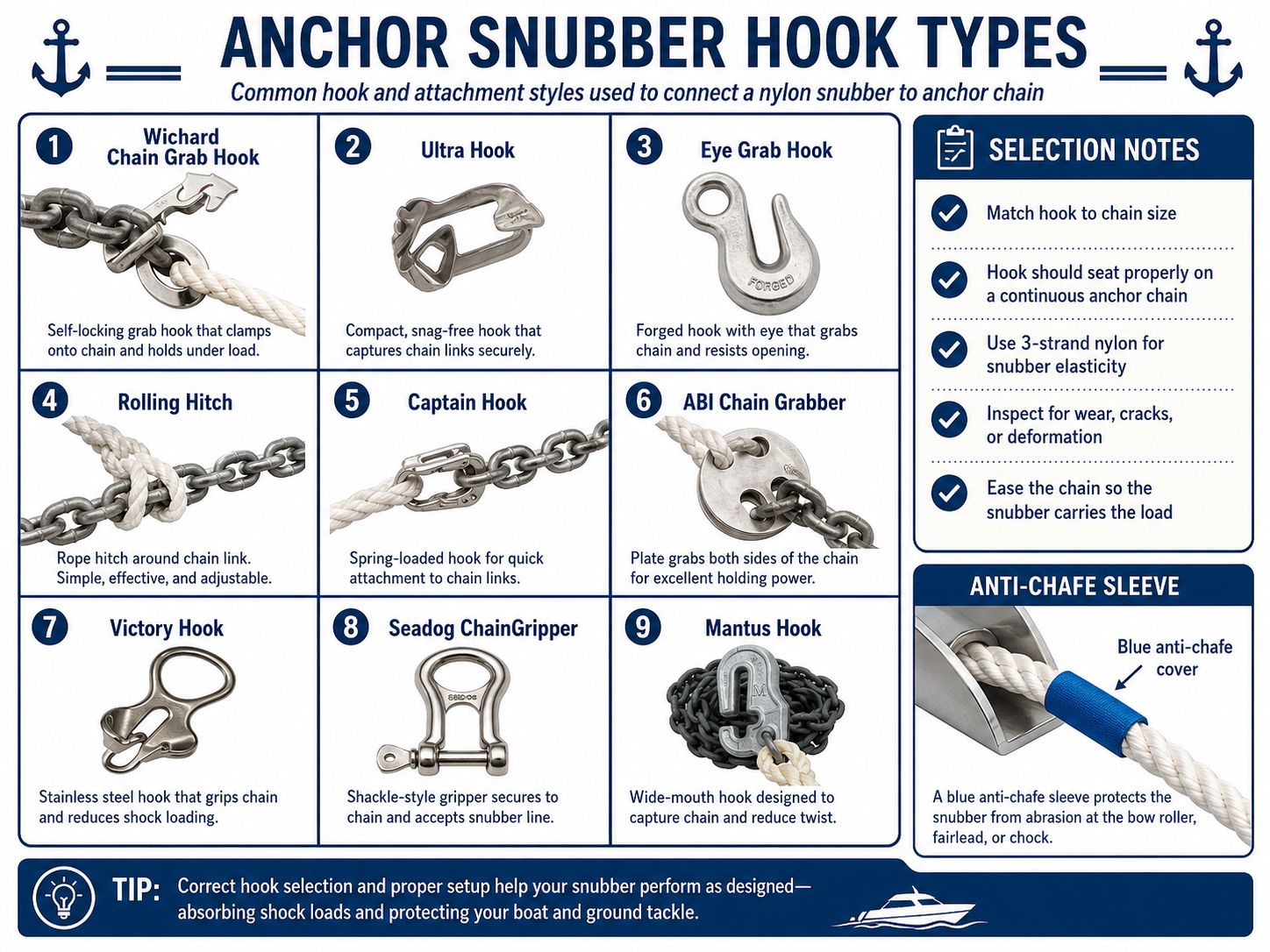
Most snubbers use a chain hook, claw, or rope-chain grab. On my boat I use a chain hook. The principal requirements are as follows:
- Stainless steel construction
- Ability to grip chain links securely
- No tendency to slip under load
- Wide throat to accommodate chain size
- Smooth profile to avoid twisting the snubber
- Some sailors prefer soft shackles or Dyneema loops for redundancy.


Rigging a Snubber Correctly
Rigging a Snubber Correctly. Proper rigging ensures the system works as intended:
- Deploy the anchor and chain to desired scope.
- Attach the chain hook to the chain’s working link.
- Pay out extra chain (typically 0.5–1 m) so that the snubber takes the load completely.
Secure the snubber’s bitter end to the yacht’s cleats using:
- A cleat hitch
- Bowline
- Spliced eye (preferred)
- Ensure the snubber hangs freely without rubbing on sharp edges.
- Set a chafe guard (hose, fabric sleeve) if the line passes over chocks or through fairleads.
- Re-check tension after the yacht settles.
For catamarans, a bridle is used instead of a single-line snubber, distributing load between two bow cleats and stabilising yaw.
Factors Influencing Snubber Performance
- Length and Stretch Capacity. Longer snubbers are more effective. Double the length yields significantly more energy absorption, reducing peak loads by up to 60%.
- Diameter vs flexibility. Oversized rope reduces stretch, while undersized rope may overload. Use manufacturer recommendations or anchor load tables for sizing.
- Chafe Resistance. Any snubber is only as strong as its weakest chafe point. Abrasion is the most common failure mode. Regular inspection is essential.
- Weather Conditions. In strong wind or surge, increasing snubber length is more effective than increasing diameter.
Anchor Chain Snubber Operational Practices
- Always use a snubber with all-chain rode. This is non-negotiable for windlass and deck safety.
- Use a backup snubber in extreme weather. Two independent snubbers increase redundancy.
- Deploy a longer snubber in swell or exposed anchorages. Prevents the boat from jerking violently.
- Regularly inspect for chafe, UV damage, and stiffness. Nylon becomes less elastic over time.
- Use a chain stopper or locking pawl only after the snubber is loaded. Retrieve the snubber before retrieving the anchor.
- Never winch the snubber through the windlass.
Anchor Chain Snubber Summary
Snubbers are a vital, often under-appreciated, element of a safe anchoring system on any sailing yacht equipped with an all-chain rode. By introducing controlled elasticity into the anchoring load path, they protect the anchor, the windlass, deck fittings, and the vessel’s structure, while also improving comfort and anchoring security. Properly designed, sized, rigged, and maintained, a snubber transforms the anchoring experience, turning a rigid, shock-prone system into a resilient, robust, and far safer arrangement suitable for all conditions from calm bays to exposed anchorages. The Anchor Chain Snubber is essential to safe anchoring.