Sailing to the Cook Islands - A Yachtsman’s Guide to a Remote Polynesian Haven
Sailing to the Cook Islands is one of the great joys of a westbound Pacific passage: a blend of traditional Polynesian culture, remote atolls, turquoise lagoons, and a cruising environment that rewards preparation, patience, and a love of wild, unpolished beauty. Scattered across more than two million square kilometers of ocean, the Cook Islands remain lightly visited by yachts compared to French Polynesia or Tonga and that’s precisely what makes them so compelling. For sailors seeking authenticity, solitude, and a sense of voyaging heritage, few destinations feel as timeless as Sailing to the Cook Islands.
Positioned between French Polynesia to the east and Samoa and Tonga to the west, the Cook Islands form a natural stepping stone for yachts crossing the South Pacific. Most cruisers approach from Bora Bora or Maupiti, making the 500–600 nm passage to Rarotonga, the main island and primary port of entry. Others arrive from the north via Penrhyn or Suwarrow, or from the southwest after exploring Niue or Tonga. Despite their strategic location, the Cook Islands see only around 150 visiting yachts per year a fraction of the traffic that flows through Tahiti or Fiji. This low density means anchorages are rarely crowded.

The Sailing Season - Tradewinds and Clear Skies
The best time to sail the Cook Islands is during the dry season from May to October, when the southeast trades settle into a reliable rhythm. Expect:
- 15–25 knot Tradewinds on most days
- Cooler, drier air than the humid summer months
- Stable seas and predictable weather windows
- Minimal cyclone risk
From November to April, the region becomes hotter, wetter, and more volatile, with tropical lows and cyclones forming across the wider Pacific. While some experienced sailors do transit during the shoulder months, the Cook Islands are overwhelmingly a winter cruising destination.

Rarotonga - First Landfall and Cultural Heartbeat
Nearly all yachts clear into Rarotonga, a dramatic volcanic island ringed by a fringing reef and backed by steep, jungle‑covered peaks. The harbor at Avarua is small and can be lively in swell, but it remains the administrative and social hub for visiting yachts. What to Expect in Rarotonga:
- Med‑mooring to the wharf is common; fenders and long lines are essential.
- Customs, immigration, and biosecurity are efficient and friendly.
- Fuel, water, and provisioning are available, though not in the abundance of Tahiti.
- Local markets offer fresh produce, artisanal goods, and a warm introduction to island culture.
- Onshore facilities include cafés, repair contacts, and a small but helpful marine community.
Rarotonga is also a superb place to stretch your legs after a long passage. Trails crisscross the island’s interior, beaches are postcard‑perfect, and the lagoon offers excellent snorkeling

Aitutaki - A Lagoon of Impossible Blues
If Rarotonga is the Cook Islands’ beating heart, Aitutaki is its dreamscape. Famous for its luminous lagoon, a mosaic of blues so vivid they seem unreal and Aitutaki is a must‑visit for sailors who can navigate its narrow, shallow pass.
Navigational Notes
- The pass is tight, shallow, and tide‑dependent.
- Drafts over 1.8 m may struggle; many yachts anchor outside and enter by dinghy.
- Once inside, the lagoon offers calm, turquoise anchorages perfect for swimming, paddleboarding, and exploring remote motus.
Aitutaki is also culturally rich, with warm hospitality, traditional dance, and a relaxed pace that encourages sailors to linger.

The Northern Group - Wilderness Cruising
For sailors seeking true remoteness, the Northern Cook Islands offer some of the most untouched cruising grounds in the Pacific. There are 15 islands to choose from. These coral atolls including Suwarrow, Manihiki, and Tongareva are sparsely populated, difficult to reach, and utterly unforgettable. Visit the Cook Islands tourism site.
Suwarrow: A Legendary Stop for Bluewater Sailors. Suwarrow (or Suvarov) is a national park and one of the most storied atolls in the Pacific. Made famous by Tom Neale’s book An Island to Oneself, it remains a major stop for long‑range cruisers.
- Park rangers live on the island during the season.
- Anchorage is excellent in settled trade wind conditions.
- Wildlife is abundant, including sharks, seabirds, and pristine coral.
- No services exist, so yachts must be fully self‑sufficient.

Sailing to the Cook Islands - Manihiki & Tongareva (Penrhyn)
Manihiki & Tongareva (Penrhyn). These northern atolls are known for black pearl farming, crystalline lagoons, and communities that welcome visiting sailors with genuine warmth. Reaching them requires careful planning, as distances are long and weather windows narrow.

Sailing to the Cook Islands - Clearance,
Regulations
The Cook Islands are straightforward for visiting yachts, but preparation is key. Yachts must clear into an official port (usually Rarotonga). Agencies Involved: Cook Islands Customs, Biosecurity Authority, Health Department Immigration. Entry Requirements
- Advance Notice of Arrival (ANA) Form Required: Form 29 – Advance Notice of Arrival (Small Craft) Deadline: Submit at least 48 hours before ETA. Send To: Email: customs.craft@cookislands.gov.c Subject Format: ANA, [Vessel Name], [ETA Date] Include: Vessel registration, Crew list. Voyage details Passport biodata pages. Vessel Photo.
- Fly the “Q” flag until cleared.
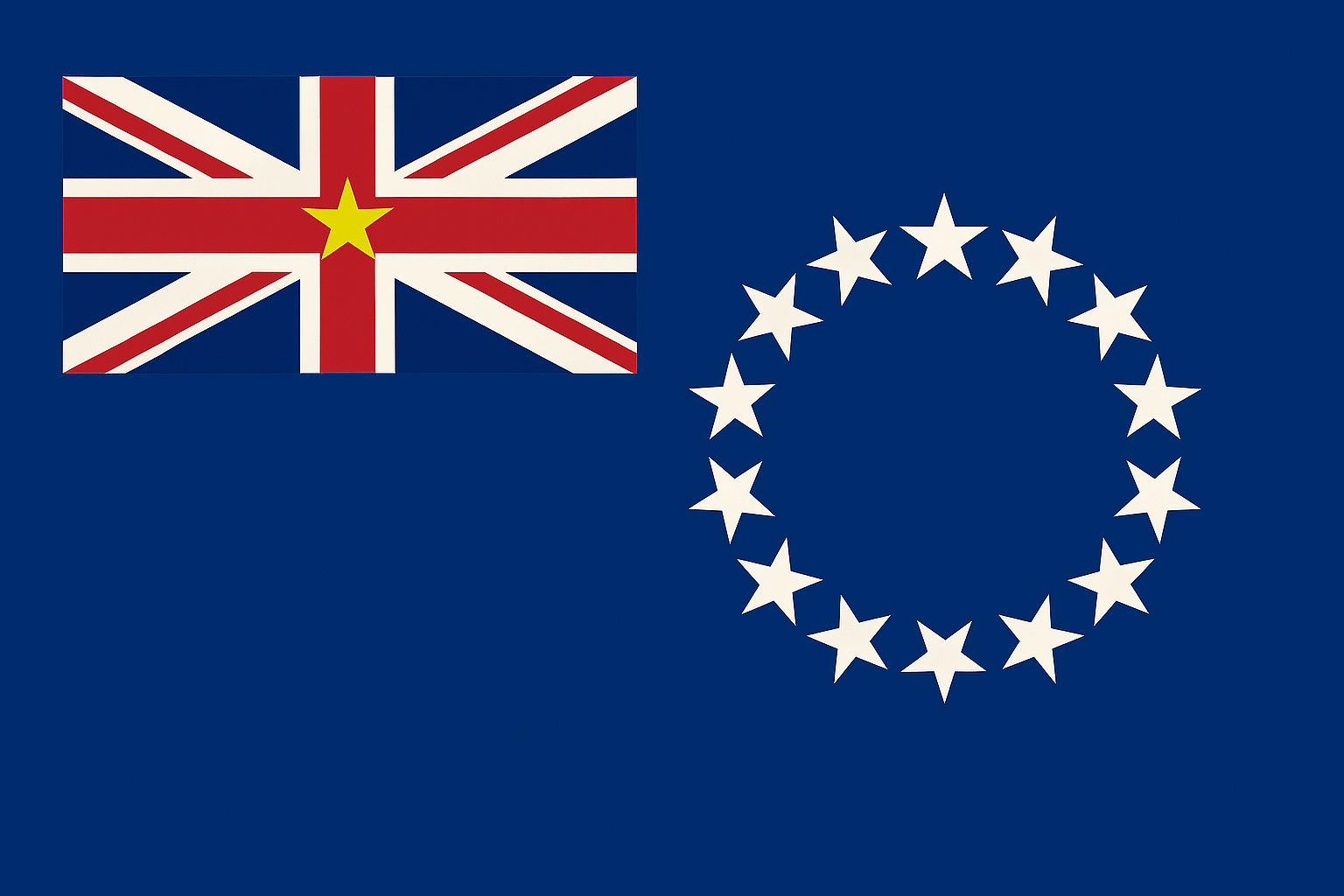
- Fly the correct Courtesy Flag on arrival. See below!
- Notify Biosecurity of arrival port and date. Prohibited or Restricted Items include Fresh fruits, vegetables, meats, dairy Live animals or pets (require import permits). Soil, untreated wood, pot plants. Bee products, honey, pollen. Unprocessed seafood or fish. Best Practices: Declare all biological items Store food in sealed containers. Avoid bringing untreated timber or natural souvenirs. Contact Biosecurity for pet import permits: biosecurity@cookislands.gov.ck
- Fees are modest compared to many Pacific nations.

Sailing to
the Cook Islands – Provisioning
Cook Islands cuisine is rooted in fresh, local ingredients and simple island traditions. Dishes often feature ika mata (lime‑marinated raw fish), rukau (taro leaves cooked in coconut cream), grilled seafood, and tropical fruits like pawpaw and breadfruit. Coconut is used in nearly everything, from desserts to savory dishes. Food is often shared at umu earth‑oven feasts, where slow‑cooked meats and root vegetables showcase the warm, communal spirit of Cook Islands cooking.
Supermarkets. The CITC Supermarket is the largest in Rarotonga, with a large range of products including meat, vegetable and essentials. Wigmore’s Superstore is located at the southern end of Rarotonga, and is open 24/7. Prime Foods in Avarua is a more upmarket supermarket with higher quality products. Much is imported from New Zealand is relatively expensive as a result. On Aitutaki there are no large supermarkets and quite a few convenience stores. Some include the Heineken Store in Amuri with fresh and frozen produce. The Aquila Store in Amuri has a basic range. Tina & Co stocks the basics. Maina Traders has everything from produce to hardware. Naibaa’s Store on the east side of Aitutaki has the basics. Out on Atiu the Super Brown, Aire Mai Grocery, the Ezra Grocery Store are best options. On Mangaia Babe’s Store, Akeke Trading are best options. On Mauke the Makatea General Store, Kato’s General Store are best options. On Mitiaro the only convenience store is Pa’s Store in Mangarei.
Markets. The Punanga Nui Market in Rarotonga is the most well-known. Diverse offerings including fresh produce and opens every Saturday morning until midday. The Opuanga Ra Roadside Market is worth a visit. Roadside stalls are a great source of fresh fruit, vegetables and fish. The Mangaia Friday Morning Market is worth visiting if out at this island. It opens at 05:30 and get in early for the best fresh fruit and vegetables.
Seafood Market. Ocean Fresh Seafood is the place for fresh seafood from yellowfin tuna to wahoo. Open M-F and Sat mornings but go early for fresh and best.

Cold Chain Awareness
The Cook Islands relies heavily on imported meat, dairy, and frozen goods, a known risk factor for cold‑chain breaks in small island nations. Risk points are overseas cold‑chain handling, trans‑shipment through NZ or Fiji and local distribution from Rarotonga to outer islands. Outer islands (Aitutaki, Mangaia, Penrhyn, etc.) have much higher risk of partial thaw/refreeze. Avoid frozen goods in outer islands unless recently delivered
Cold storage is limited on most Pacific Islands. Frozen goods are common, but freezer reliability varies, power outages happen and cold chain is inconsistent. Inspect frozen items carefully before purchasing. Visual signs of product that has partially thawed and refrozen are ice crystals inside packaging: Indicates moisture loss and refreezing. Discolored patches such as grey, brown, or greenish areas suggest oxidation or bacterial growth. Frost burn or dry edges: Caused by repeated freezing cycles. Uneven coloration: May signal partial thawing and refreezing. Give it the smell test. A sour or ammonia-like odor is a clear sign of spoilage. Any “Off” smell even when frozen: Indicates bacterial activity during thawing. Do a texture check, mushy or slimy surface is due to cell breakdown from thawing. Sticky or tacky feel indicates early spoilage, especially in poultry. Excess liquid in packaging suggests previous thawing. Frozen chicken-specific Red Flags are a pale or translucent skin: Indicates moisture loss. Blood pooling or dark spots which may signal partial thawing. Bone darkening is often seen in refrozen chicken.
The health risks from refrozen meat are bacterial growth, especially if thawed above 5°C. Foodborne illness from Salmonella, Campylobacter, and Listeria risks increase, you really don’t want a dose of any of these. Additionally, there is nutritional loss as vitamins and proteins break down and lastly there is texture degradation and who likes tough, dry, or rubbery meat which even making into a curry cant improve.
Always buy from high-turnover vendors as fresh stock is less likely to be refrozen. Ask about delivery schedules: Time your purchases after restocking. Use touch and smell before buying: and vendors often allow inspection. Avoid bulk frozen packs as individual wrapping helps spot issues. Bring a cooler with ice packs, especially for remote provisioning runs.
Sailing to the Cook Islands - Communications
- Starlink. Starlink is now officially licensed to operate in the Cook Islands, following a wave of Pacific‑wide approvals. Local regulators have also confirmed that residents using New Zealand‑registered Starlink accounts must switch to Cook Islands based accounts to avoid service cut‑off.
- SIM Cards. Local SIM cards are inexpensive.
Mechanical
and Electrical Repairs Resource
If you are headed somewhere remote consider the need to expand your knowledge base or have an information resource on board. Why not get a copy of my book The Marine and Electrical and Electronics Bible 4th Edition. By and for yachties, with everything from batteries and charging, solar and wind, diesel engines and marine electronics and so much more. Your complete systems guide. 650 pages of practical advice. In Australia and New Zealand order a copy through Boat Books. UK and European boats can buy the UK Edition Here. US and Canadian boats can get the US Edition Order Here. Marine systems are my profession so let me help you. By a liveaboard boat owner for other boat owners


The Sailing
Experience: Why the Cook Islands Matter
What makes the Cook Islands special isn’t just the scenery though the lagoons, reefs, and volcanic silhouettes are breathtaking. It’s the feeling of voyaging through a region where traditional navigation, ocean culture, and community still shape daily life. Sailors often describe the Cook Islands as:
- Authentic. Tourism exists, but it hasn’t overwhelmed local identity. Not many places left like that.
- Remote. You feel the distance, in the best possible way.
- Welcoming. Locals greet sailors with warmth and curiosity.
- Rewarding. Anchorages may be few, but each one is memorable.
For yachts crossing the Pacific, the Cook Islands offer a rare combination of challenge and charm: enough infrastructure to feel supported, but enough remoteness to feel like a true ocean passage.
Sailing to
the Cook Islands
Sailing to the Cook Islands is not a casual detour, it’s a commitment to exploring one of the Pacific’s most culturally rich and geographically scattered archipelagos. But for those who make the journey, the rewards are immense: quiet anchorages, luminous lagoons, deep Polynesian heritage, and the satisfaction of navigating a region that still feels wild. For blue water sailors, the Cook Islands remain one of the South Pacific’s most meaningful landfalls a place where voyaging tradition and natural beauty converge in a way that stays with you long after you sail westward toward Tonga or Samoa. Sailing to the Cook Islands is well worth the effort.