Sailing to Tonga: A Complete Passage
Planning Guide
Most yachts sailing to Tonga arrive as part of a seasonal circuit (often from NZ/Fiji/Niue). Plan your passage around a conservative weather window and aim to arrive with daylight for pilotage, reef-strewn areas and unfamiliar leads are not where you want to be learning at dusk. Have a “dirty weather plan” for the last 30 miles: reduced sail choices, engine readiness, and a clear crew brief for landfall. If you’re using GRIBs, also cross-check with human forecast commentary where possible; the biggest mistakes are over-trusting one model and underestimating squalls. Of course if possible compare Windy and PredictWind forecasts to derive a forecast you are comfortable with.
Sailing to Tonga remains one of the most rewarding passages in the South Pacific. With its protected anchorages, friendly communities, and well‑established yacht services, especially in Vava’u, Tonga is a natural stopover for cruisers heading west from French Polynesia or north from New Zealand. This guide focuses on the practical realities: clearance procedures, yacht resources, provisioning, markets, and local food culture. The main cruising season runs May to October, when the weather is dry and stable. Cyclone season runs November to April, during which time many yachts either haul out in Vava’u or leave the region entirely.
Sailing to Tonga: Overview &
Passage Context
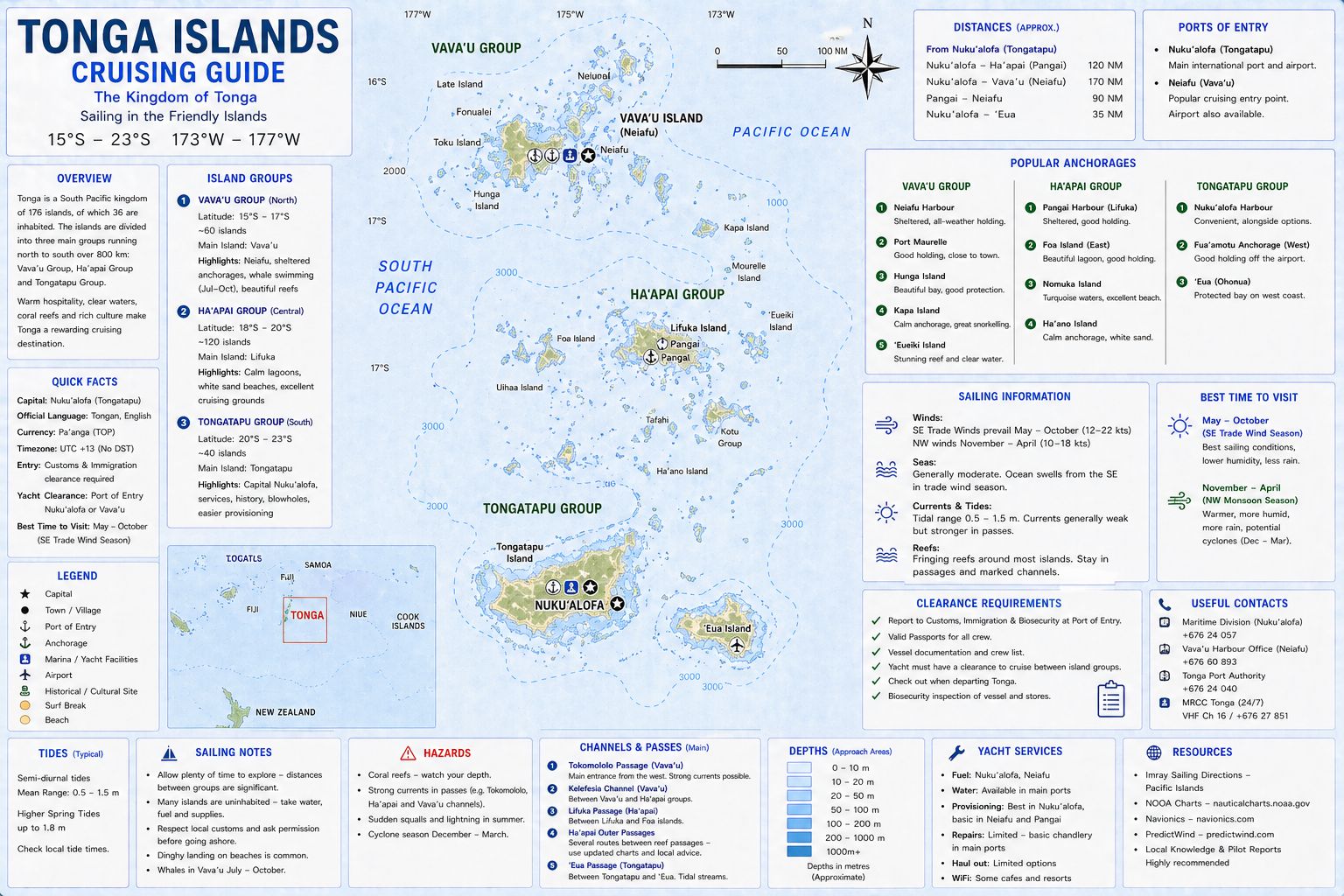
Sailing to Tonga is one of the South Pacific’s classic cruising stops: friendly villages, clear anchorages, and a cruising scene that’s set up, enough to support visiting yachts. The key to an easy visit is to treat Tonga like a logistics exercise first (paperwork, timing, fuel/water, spares), then enjoy the islands. The three main island groups for most cruisers are Tongatapu (Nuku’alofa), Ha’apai (often via Pangai), and Vava’u (Neiafu and the surrounding anchorages
Sailing to Tonga: Arrival, Check‑In, and Port Logistics
Tonga’s clearance procedures are straightforward but must be followed carefully. According to recent cruising guidance, yachts must submit an Advance Notification of Arrival before entering Tongan waters, followed by international check‑in at designated ports such as Nuku’alofa, Neiafu (Vava’u), or Pangai (Ha’apai). Expect visits from Customs, Immigration, Health, and Quarantine officials. Visa extensions are available if you plan to stay beyond the initial entry period.
- Neiafu, Vava’u: The most yacht‑friendly port with moorings, fuel, water, and provisioning options.
- Nuku’alofa, Tongatapu: The capital and primary commercial port, currently undergoing major upgrades to improve cargo and maritime infrastructure.
- Pangai, Ha’apai: A quieter, more remote option with limited services.
Once cleared, yachts are free to explore Tonga’s three main cruising regions: Vava’u, Ha’apai, and The Niuas. Vava’u is the most popular due to its maze of protected anchorages and well‑developed yacht support network
Customs and
Immigration Advice
Official customs guidance for private craft emphasizes advance notification and sets expectations for how authorities manage arrivals. Tonga tourism’s recent yachting handbook also notes common paperwork and the concept of a time-limited stay for visiting yachts (often described as an initial multi-month allowance) and the need to report movements between island groups.
- Documentation: Have printed copies of passports, crew list, vessel registration, insurance, and last port clearance. I always have multiple copies on hand of everything.
- Lock down your food plan: Biosecurity rules can be strict; assume some fresh foods may be inspected or restricted. Eat all of this on the passage inbound as it is simpler
- Arrive clean: Do the work, make sure the cockpit is tidy, the garbage contained (bags of recyclables and other separated into types), and absolutely no “mystery bags” of produce, this speeds inspection and keeps the tone friendly and shows respect to the country. Dress properly and conservatively to match the country, you can't overdo this! Make sure you are ship-shape as this will get respect.
Sailing to Tonga - Wind and Weather
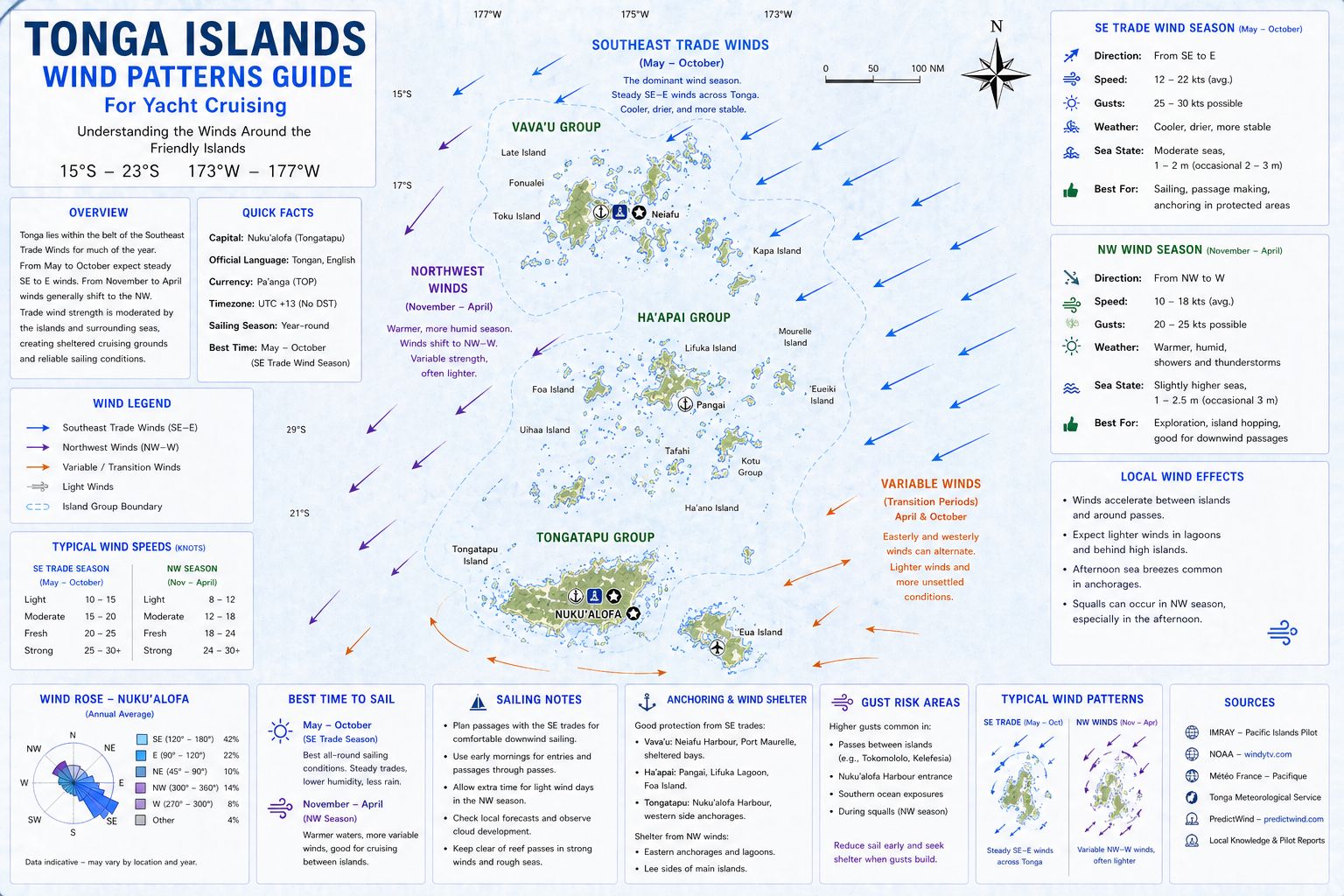
Wind and weather in Tonga are dominated by the South Pacific trade wind system, producing generally reliable easterly to southeasterly winds for much of the year. From May to October, the southeast trades typically blow at 10–20 knots, bringing relatively dry air, moderate seas, and stable sailing conditions—this is widely regarded as the best cruising season. During the summer months (November to April), winds become more variable as the monsoon trough shifts south, with lighter periods interspersed with squalls, heavy rain, and the risk of tropical cyclones. Local effects around the island groups can create wind acceleration zones between islands and gusty conditions near high terrain, while sheltered anchorages often experience reduced wind and calmer seas. Sea breezes may develop on warmer days, particularly in more enclosed areas, adding to daytime variability. For passage planning, sailors should remain alert to forecast changes in the cyclone season and expect short-lived but intense squalls at any time of year.
Sailing to Tonga - Ocean Currents
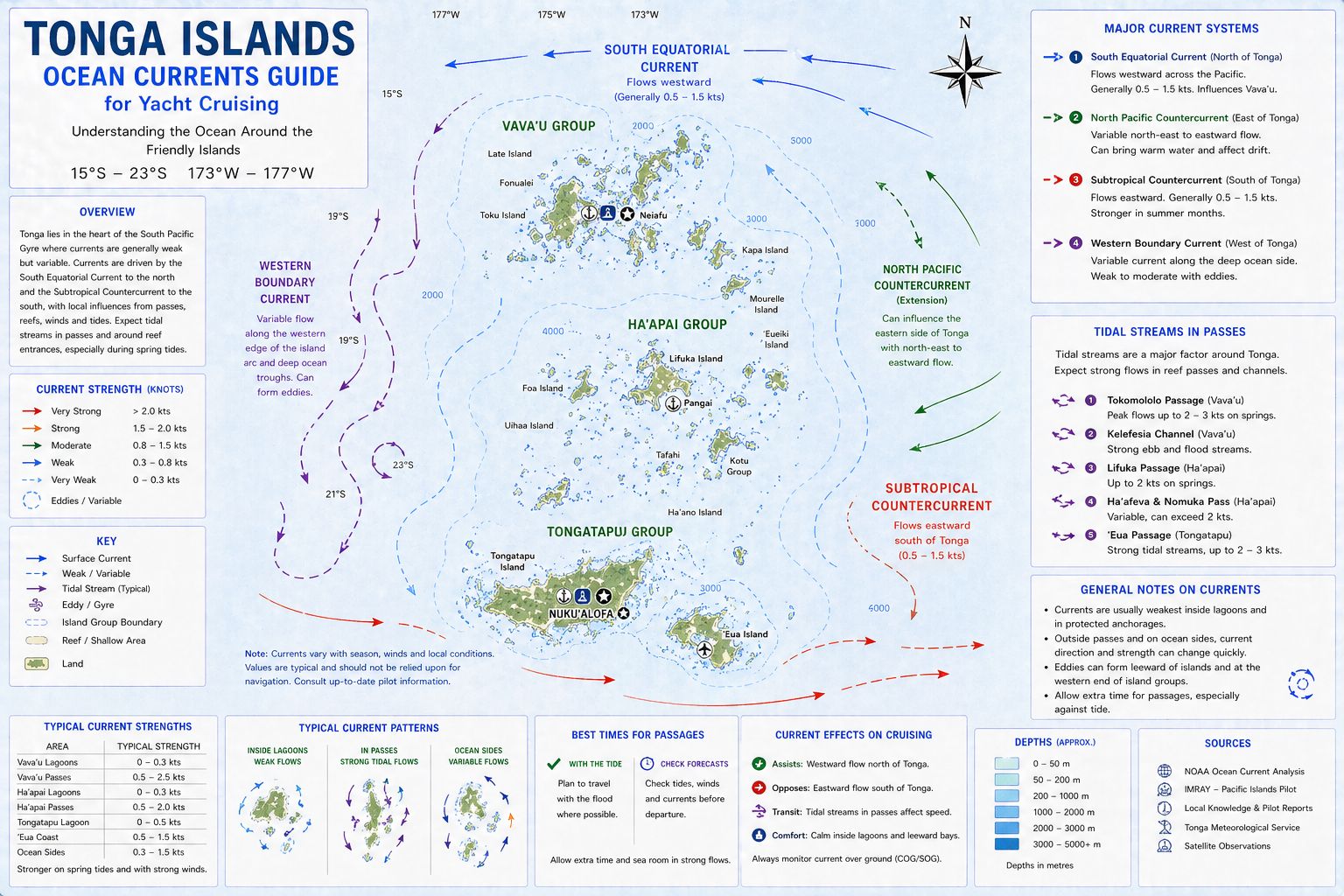
Ocean currents around Tonga are influenced by the westward-flowing South Equatorial Current, which generally sets across the region at about 0.5–1.5 knots. This broad flow is modified by island topography and deep ocean bathymetry, creating localized eddies, counter-currents, and areas of acceleration—particularly around the passages between island groups such as Vavaʻu, Haʻapai, and Tongatapu. In confined channels and reef passes, tidal streams can become significant, often running 1–3 knots and producing overfalls or standing waves when opposing wind and swell. The influence of tides is more noticeable close inshore and within lagoons, where current direction may reverse with the tidal cycle, while offshore flow remains more consistent. Seasonal wind changes can slightly strengthen or weaken surface currents, especially during the trade wind season when prolonged easterlies reinforce westward drift. For yacht navigation, the key considerations are current set when making inter-island passages and the timing of reef pass transits near slack water to avoid strong, turbulent flows.
Sailing to Tonga - Services and
Resources
Moorings and Anchorages. Vava’u’s Port of Refuge is one of the safest natural harbours in the Pacific, offering mooring balls, dinghy docks, and easy access to town services. During cyclone season, many yachts haul out here due to its protection.
Fuel: Diesel and petrol are available in Neiafu and Nuku’alofa. Fuel docks can be busy during peak season (May–October).
Water: Potable water is available at marinas and some wharves. Many cruisers still prefer to filter or treat water taken from shore.
Repairs: Vava’u has small workshops capable of handling basic mechanical, electrical, and sail repairs. For major work, Nuku’alofa offers more options due to its commercial port infrastructure. If it is an engine starter or alternator find an auto electrical shop, quicker and cheaper.
Haul‑Out Facilities. For many cruisers, the single most important facility is The Boatyard Vava’u in Neiafu, widely described as Tonga’s only dedicated yacht haul-out/service facility. Even if you don’t haul, it’s a critical node for: local trades, hard-to-source repairs, and “make-do” fabrication that keeps a voyage on schedule. Booking ahead is recommended during cyclone season.
Communications & ATMs. Neiafu offers reliable mobile data, SIM cards, and several ATMs for cash withdrawals. Smaller islands may have limited connectivity.
Can You Use Starlink in Tonga?
(Latest Regulations & Coverage)
As of late 2024, you can legally use Starlink in Tonga. The Tongan government granted full approval for Starlink to operate nationwide on 20 December 2024, following a provisional permit earlier in July 2024. Local resellers such as WanTok Tonga, Digicel Tonga, and TCC are now authorised to sell and support Starlink services. Starlink provides full Tonga coverage, including Vava’u, Ha’apai, Tongatapu, Niuatoputapu & Niuafo’ou, most remote anchorages and outer islands. Connectivity is typically strong enough for weather routing, video calls, and high‑bandwidth crew communications.
Iridium (GO! / GO! Exec / Iridium
Certus)
Iridium remains the gold standard for reliable, global, safety‑oriented communication. It works everywhere in Tonga, offshore and inshore, regardless of weather or anchorage. Speeds are slow compared to Starlink, but Iridium excels at what matters most offshore: dependable text messaging, email, GRIB downloads, and emergency communication. Many cruisers use Iridium as their backup to Starlink, a belt‑and‑suspenders approach that ensures you can still get weather or call for help if your primary system fails. It’s more expensive per megabyte, but far more robust in a true emergency.
HF Radio (SSB)
Communications
HF radio is still used by a subset of long‑range cruisers, especially those who value community nets and low‑cost communication. In Tonga, HF allows you to join regional cruising nets, listen to weather broadcasts, and maintain a sense of connection with other vessels. It doesn’t offer internet access, and reliability depends heavily on propagation, antenna tuning, and operator skill. HF is not a replacement for satellite systems, but it remains a valuable third layer for redundancy, community, and situational awareness. Many experienced sailors keep HF for its independence from satellites and subscriptions.
There is no dedicated Tonga‑only SSB net listed in any current, verifiable directory. However, Tonga is covered by several wider South Pacific SSB/HF nets that cruisers use when sailing between Fiji, Tonga, Samoa, and New Zealand Below are the nets that do cover Tonga and are commonly used by yachts in the area:
1. Gulf Harbour Radio (New Zealand). Frequency: 8752 kHz USB, Time: 1915 UTC (morning NZ time). Coverage: Fiji, Tonga, Vanuatu, New Caledonia, and surrounding waters. Notes: The most respected passage‑weather net in the South Pacific.
2. Pacific Seafarers Net. Frequency: 14300 kHz USB. Time: 0300–0700 UTC. Coverage: Entire Pacific Basin. Notes: Long‑running safety and position‑reporting net.
3. Rag of the Air (ROTA). Frequency: 8173 kHz USB. Time: 2100 UTC. Coverage: Fiji, Tonga, and surrounding cruising areas. Notes: Informal but widely used.
4. Fiji Cruisers Net (covers Tonga regionally). Frequency: 8555 kHz USB. Time: 0800 Fiji time. Coverage: Fiji + nearby waters including Tonga. Notes: Many boats in Tonga listen in for weather and traffic.
5. Maritime Mobile Service Net. Frequency: 14300 kHz USB. Time: 24/7. Coverage: Global. Notes: Emergency and assistance net.
Provisioning
in Tonga
The national dish of Tonga is Ota ika which is a marinated raw fish salad. Much of the food is imported from Australia and New Zealand and relatively expensive. In Nuku'alofa on the main island of Tongatapu fresh fruits and vegetables are plentiful and reasonably priced. Bananas, cassava, sweet potato, taro are the most common crops, along with coffee beans and vanilla. Pork and chicken are most common and cheapest meat while the rest is imported. Fresh fish and seafood is available at the wharf, direct from the fishing boats, and is located on the southern side of Faua Harbour. Signature dishes include Ota ika: A ceviche‑style dish with raw fish, coconut cream, and citrus. Lu pulu; Corned beef wrapped in taro leaves and cooked in coconut cream. Ufi (yam) and taro: Staples of the Tongan diet and make sure you go to Tongan feasts which are often part of cultural tours, featuring roasted pig, seafood, and root crops. Neiafu has the best selection of restaurants catering to cruisers, offering everything from local dishes to Western comfort food. Smaller islands may have only one or two eateries, often attached to guesthouses.
Up in the Vav'au Island group, supplies are less plentiful and more expensive if imported, but are available due to local yacht charter operations. Tonga has developed a great vanilla bean industry and well worth trying. They have survived the Hunga Ha’apai volcano eruption with the ash and subsequent tsunami and getting back on their feet.
Supermarkets and Markets
Supermarkets. Nuku'alofa supermarkets include Molisi Supermarket, China Fortune, Neaifu Shopping Centre and Si'i Kae Ola Supermarket. The Tonga Cold Store has frozen meat available.
Markets. Sunday planning: stock Friday/Saturday, because many services and shops reduce hours or close. Sunday is for a quiet day and absolutely sitting outside any church and listening to the singing. Daily market in Nuku'alofa is best place at Meketi Talamahu with so much fresh produce. On Friday the main market transforms into a night market and is open all night when all the fresh supplies arrive from the outer islands. Saturday is the main market day. Neiafu Market (Vava’u) is the main provisioning hub for cruisers, offering fresh vegetables, fruit, eggs, and local staples. Ha’apai Markets. In Ha'apai check out the Pangai Market, a lot of local produce. Smaller and more sporadic, but excellent for fresh coconuts, papaya, and taro.
Seafood Market. Visit the fish market on the waterfront every morning. In Vava'u the Utukalungalu Market is open Monday thru Friday 08:00 to 16:00 and Saturday until 12:30. Fresh fish and crayfish is often sold by the locals. If you are in the vicinity of the main wharf listen for the whistle which indicates fresh fish is available. Tongan fish names are emperor (hoputu), coral trout (ngatala pulepule), snapper (palu), red snapper (fangamea), giant grouper (popo), dolphin fish (mahimahi), trevally (lupolupo), skipjack tuna (atu), yellowfin tuna (kahikahi), flying fish (sikota tahi), grey mullet (kanahe).
Mechanical
and Electrical Repairs Resource
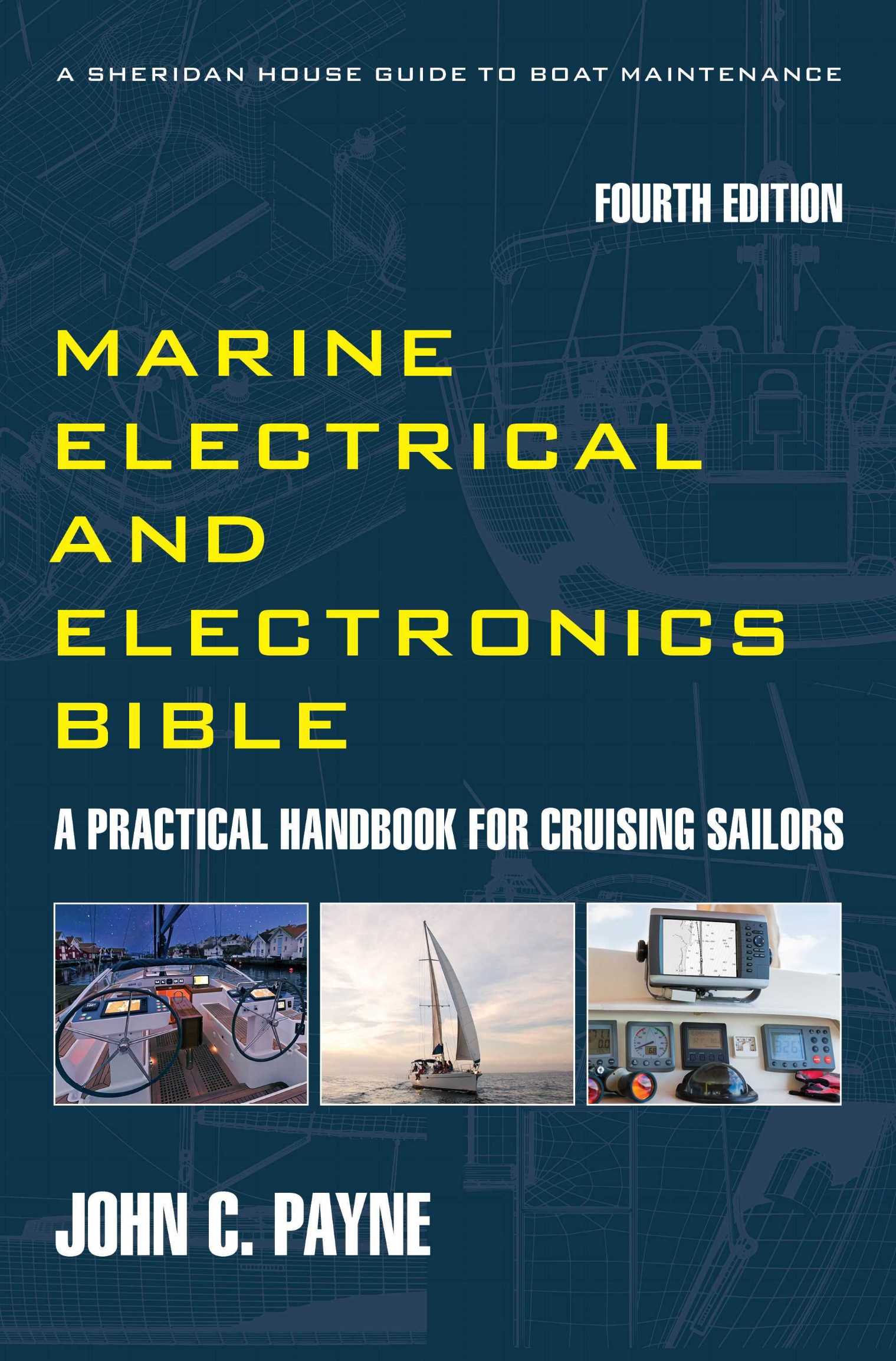
If you are headed somewhere remote consider the need to expand your knowledge base or have an information resource on board. Why not get a copy of my book The Marine and Electrical and Electronics Bible 4th Edition. By and for yachties, with everything from batteries and charging, solar and wind, diesel engines and marine electronics and so much more. Your complete systems guide. 650 pages of practical advice. In Australia and New Zealand order a copy through Boat Books. UK and European boats can buy the UK Edition Here. US and Canadian boats can get the US Edition Order Here. Marine systems are my profession so let me help you. By a liveaboard boat owner for other boat owners


Sustainable
Cruising and Local Etiquette
Tonga’s marine environment is fragile. Cruisers are encouraged to avoid anchoring on coral, reduce plastic waste, support local growers and small businesses, dress modestly in villages, ask permission before taking photos. Tonga’s nickname, the Friendly Islands, reflects its warm hospitality, respectful behaviour goes a long way.
Why Sailing to Tonga Is a
Must‑Stop for Sailors
With its combination of safe harbours, provisioning options, cultural richness, and world‑class cruising grounds, Tonga remains one of the most rewarding destinations in the Pacific. Whether you’re preparing for a long westward passage or settling in for a season of exploration, Sailing to Tonga offers everything a cruiser needs, plus unforgettable Tongan experiences both on land and at sea.