Sailing to Pohnpei -Everything You
Need to Know
Sailing to Pohnpei is one of the most rewarding passages in Micronesia. With its dramatic volcanic peaks, deep lagoon, and rich cultural history, Pohnpei offers a rare combination of safe anchorage, reliable services, and genuine remoteness. This guide provides practical, SEO‑optimized information for cruisers planning a passage to Pohnpei, including weather patterns, routing strategies, reef‑pass navigation, anchoring, and clearance procedures. Pohnpei (formerly known as Ponape or Ascension, from Pohnpeian: "upon (pohn) a stone altar (pei)") is an island of the Senyavin Islands which are part of the larger Caroline Islands group.
Pohnpei sits at 6°52’N, 158°13’E in the Federated States of Micronesia. Unlike the low atolls of the Marshall Islands or Kiribati, Pohnpei is a high volcanic island surrounded by a barrier reef and a large, protected lagoon. The mountainous interior makes it visible from 25–35 nm offshore in clear conditions and makes a welcome sight when closing in. Pohnpei is pronounced "PONE-peh" with emphasis on the first syllable and "PONE" rhymes with “stone” and "peh" sounds like the “pe” in “pet” but softer. Locals and officials are happy that you make the effort to get the name right. The island has been through the proverbial colonial washing machine. The native period is prior to 1825, the Pre-Spanish Period is from 1825 to 1886. The Spanish Period is 1886 to 1899. The German Period is 1899 to 1914. The Japanese Period is 1914 to 1945. The US Period was 1945 to 1986 and an Independent Pohnpei since 1986.
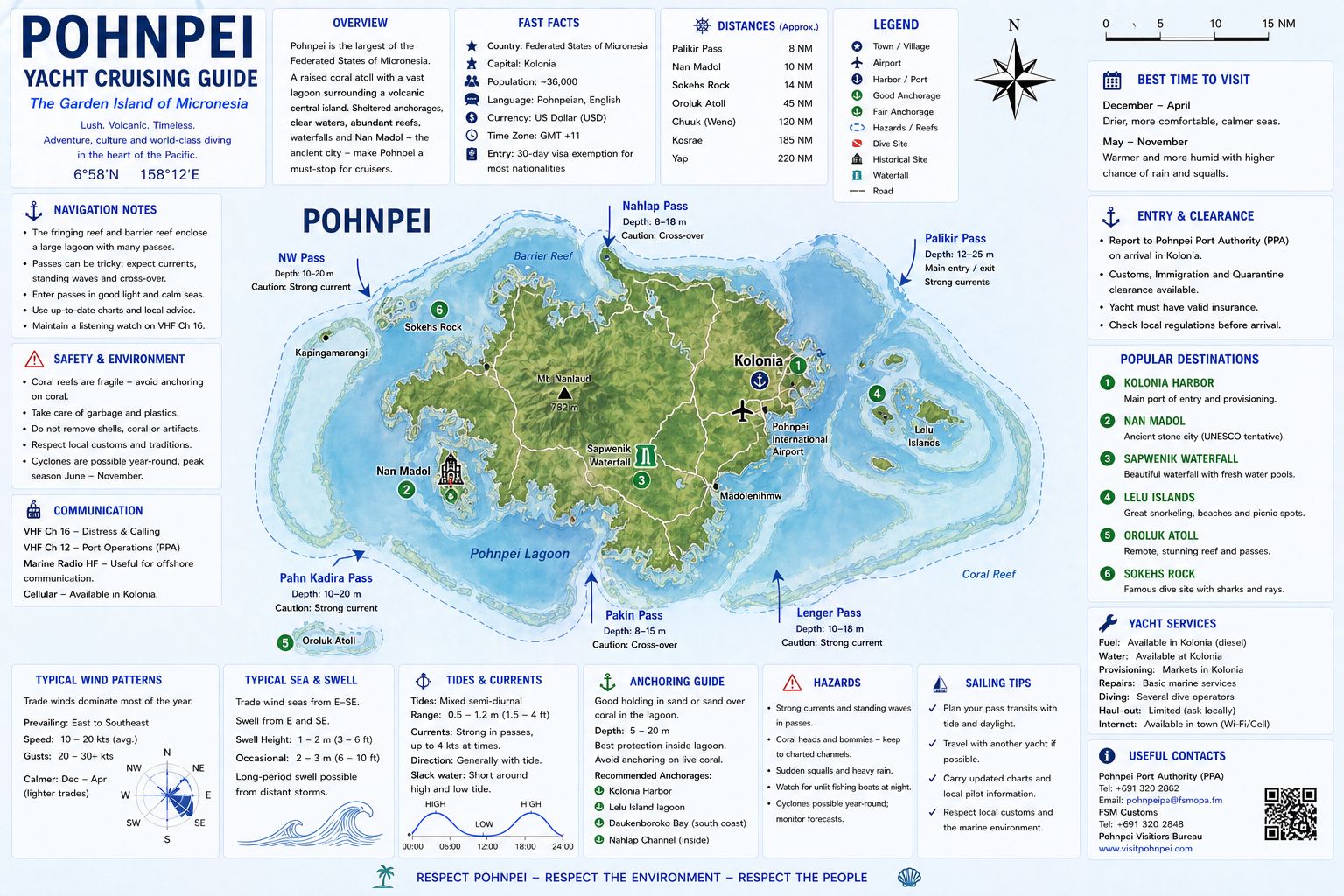
Sailing to Pohnpei - Common Routes
These passages are generally straightforward but influenced heavily by equatorial currents and squall activity.
- Majuro → Pohnpei: 450–550 nm
- Kosrae → Pohnpei: 300 nm
- Chuuk → Pohnpei: 400 nm
- Guam → Pohnpei: 600 nm
- Tarawa → Pohnpei: 1,000 nm
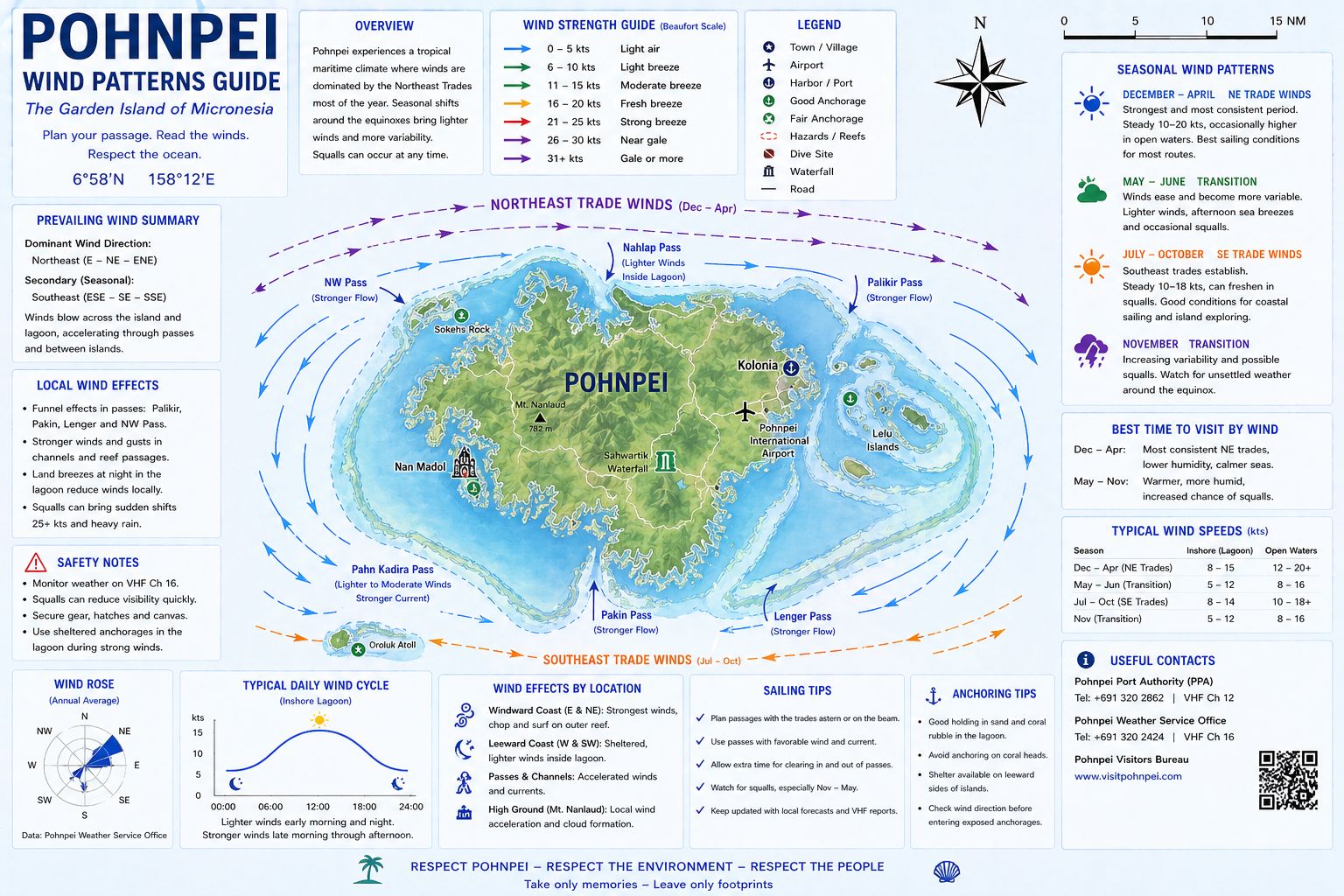
Sailing to Pohnpei - Weather & Passage Planning
Squalls. Squalls are common year‑round. Heavy rain, 25–35 knot gusts and short duration. As always consider throwing a reef or two in at night or as the old adage goes "The first time you think about it!" and that is generally considered as too late.
Trade Wind Season (Dec–Apr). This is the most predictable time to sail to Pohnpei.
- 12–20 knots NE–E
- Moderate seas
- Frequent squalls near land
Convergence Season (May–Nov)
- Variable winds
- Westerly systems possible
- Higher rainfall and instability
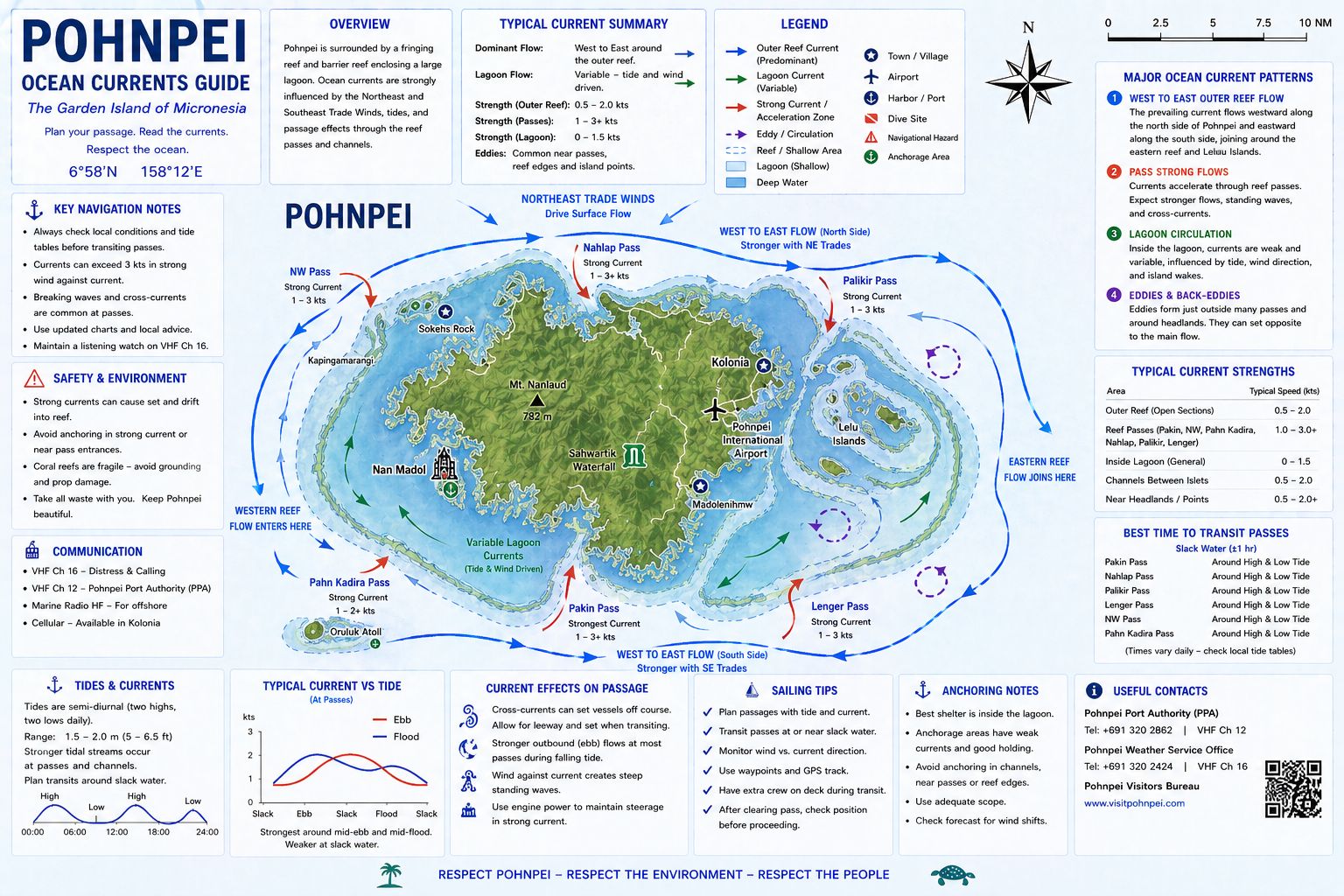
North Equatorial
Countercurrent (NECC)
NECC. The NECC is the single biggest factor affecting your passage. It flows eastward, often at 1–2 knots, but can exceed 3 knots. Expect a significant loss of VMG on westbound routes. Expect confused seas where currents meet trade‑wind swell and consider the need to route around strong current bands. Use satellite current charts before departure to avoid the worst of it.
Approaching Pohnpei
Landfall. Pohnpei’s high peaks make it easy to identify, but cloud cover can obscure the island until you’re close. Expect reduced visibility in rain and stronger winds near the island due to topographic acceleration
Chart Accuracy. Charts are generally reliable, but satellite imagery overlays (SASPlanet, Ovital, Google Earth) are strongly recommended for reef confirmation. How accurate are Navionics charts? best carry corrected paper charts as a back up.
Sailing to Pohnpei - Navigating the Passes
Kepin Keil / Dekehtik Pass (Primary Yacht Pass)
- This is the safest and most commonly used pass for cruising yachts. It is wide and deep, well‑marked and has direct access to the commercial harbor and yacht anchorage.
- Expect 1–3 knots of tidal flow, watch the stronger ebb after heavy rain and occasional standing waves. Enter with good overhead light and a bow watch.
- Other secondary passes exist but are narrow, poorly marked and subject to cross‑currents. Avoid attempting these without local knowledge.
Anchoring in Pohnpei
Dekehtik Anchorage (Primary Yacht Anchorage). Most cruisers anchor near Dekehtik Island, just outside the commercial harbor. Depths in the range 10–20 m and very good holding in mud. It is sheltered from most wind directions. It is close to customs, fuel, and Kolonia. Note that it can be a bit rolly in strong westerlies, Limited space is available during peak season.
Other Lagoon Anchorages. There are scenic spots around the lagoon, but many are near villages or marine protected areas. Always ask permission before anchoring outside the main yacht area.
Sailing to Pohnpei - Clearance Procedures
Pohnpei is one of the most organized ports in Micronesia. Expect visits from the usual Customs, Immigration. Quarantine and the Port Authority. You’ll typically Anchor at Dekehtik, call Port Control on VHF 16 and wait for instructions. Fees vary by vessel size and length of stay but are generally reasonable. Make sure you have the right courtesy flag flying.

Sailing to Pohnpei – Fuel, Water, Supplies
Pohnpei is one of the better provisioning stops in Micronesia, but it’s not a full-service yachting hub like Fiji or Tahiti. Think of it as a solid mid‑ocean resupply point, you can restock most basics, refresh your produce, and pick up hardware essentials, but you won’t find specialty items or major marine inventory. The key is knowing what’s available, where to find it, and what to bring from home or last good port.
Kolonia has several supermarkets, all within easy taxi distance from the anchorage. Stock varies week to week depending on shipping schedules, but you can reliably find the usual staples of rice, pasta, noodles, canned meats (Spam, corned beef, tuna), flour, sugar and so on. Also available is frozen chicken, pork, and sometimes beef. What you won’t reliably find are specialty cheeses, fresh dairy and high‑quality cuts of meat or gluten‑free or health‑food items, or organic anything, although most local produce is effectively organic. Cruisine Tip: Stock up heavily on specialty items before leaving Majuro, Guam, or Fiji as it will be unavailable or very expensive.
Micronesia
Language Cheat Sheet
Pohnpei / Chuuk / Kosrae / Yap (FSM)
Always worth the effort when visiting a new place, these are some basic words to learn and use.
- Hello: Kaselehlie (kah-seh-lel-yee)
- Thank you: Kalahngan (kah-lang-an)
- Yes / No: Ie / Souw
- How much?: Ia men?
- Good / Fresh: Mwahu
- Water: Nahn
- Chicken / Fish: Kikin / Mwi
Sailing to Pohnpei – Provisioning Sources
Supermarkets. The A-One is a grocery store on Main Street. The Ace Commercial Center has provisions. The Palm Terrace Store is the largest. Isamu Nakasone Store is a long‑standing local grocery store in Kolonia for everyday groceries, Blue Nile Store. Another Kolonia grocery store with good reviews for groceries. Black Sand Corp. (Nett) is located in Kahmar, Nett, slightly outside Kolonia but still accessible for groceries
Markets. The Pohnpei Public Market is worth visiting. Ellens Market on the waterfront is a small farmers market with local produce and fresh fish. Simon’s Market is great for fresh vegetables and seafood. Gourmet pepper is wonderful here, so do stock up. Pohnpei is lush, rainy, and agricultural but the produce scene is more local and seasonal than supermarket‑style. What’s usually available are bananas (many varieties), Papaya, Breadfruit (in season), Taro and taro leaves, Sweet potato, Cucumbers, Local greens, Limes and coconut (young and mature). Roadside stands also offer cheap and fresh fruit and vegetables. Local eggs are available but sell out quickly. Imported eggs appear irregularly.
Seafood. PMK Fish Market is one of the best places in Pohnpei to buy fresh, line‑caught reef fish and mangrove crabs. PMK is centrally located, making it easy for cruisers anchored at Dekehtik to reach by taxi. Reef Fish include Parrotfish, Grouper, Snapper, Unicornfish, Trevally. The nearshore Pelagics include small tuna, Mahi‑mahi (seasonal) and Wahoo (occasional). Being a sashimi tragic I am always after good tuna.
Refrigeration & Cold Storage
Cold storage is limited on most Pacific Islands. Frozen goods are common, but freezer reliability varies, power outages happen and cold chain is inconsistent. Inspect frozen items carefully before purchasing. Visual signs of product that has partially thawed and refrozen are ice crystals inside packaging: Indicates moisture loss and refreezing. Discolored patches such as grey, brown, or greenish areas suggest oxidation or bacterial growth. Frost burn or dry edges: Caused by repeated freezing cycles. Uneven coloration: May signal partial thawing and refreezing. Give it the smell test. A sour or ammonia-like odor is a clear sign of spoilage. Any “Off” smell even when frozen: Indicates bacterial activity during thawing. Do a texture check, mushy or slimy surface is due to cell breakdown from thawing. Sticky or tacky feel indicates early spoilage, especially in poultry. Excess liquid in packaging suggests previous thawing. Frozen chicken-specific Red Flags are a pale or translucent skin: Indicates moisture loss. Blood pooling or dark spots which may signal partial thawing. Bone darkening is often seen in refrozen chicken.
The health risks from refrozen meat are bacterial growth, especially if thawed above 5°C. Foodborne illness from Salmonella, Campylobacter, and Listeria risks increase, you really don’t want a dose of any of these. Additionally, there is nutritional loss as vitamins and proteins break down and lastly there is texture degradation and who likes tough, dry, or rubbery meat which even making into a curry cant improve.
Always buy from high-turnover vendors as fresh stock is less likely to be refrozen. Ask about delivery schedules: Time your purchases after restocking. Use touch and smell before buying: and vendors often allow inspection. Avoid bulk frozen packs as individual wrapping helps spot issues. Bring a cooler with ice packs, especially for remote provisioning runs.
Sailing to Pohnpei – About the Pepper
Pohnpei is famous for producing some of the highest‑quality black pepper in the world. Its pepper is often described as richer, more aromatic, and more complex than pepper grown elsewhere and there are good reasons for that. The island’s volcanic soil, constant rainfall, and humid tropical climate create ideal growing conditions for Piper nigrum, the pepper vine.
Pepper production isn’t industrial here; it’s small‑scale, organic by default, and deeply tied to local culture and land stewardship. For visiting sailors, it’s one of the best local products to buy and bring aboard.
The peppercorns are picked by hand and dried naturally, which preserves their essential oils and flavor
Black Pepper. The most common export and has a flavor profile of bold, earthy, slightly smoky and high in essential oils
White Pepper. Made by soaking and removing the outer husk and has a flavor profile of milder, more floral and popular with chefs
Red Pepper (Rare). Fully ripe peppercorns dried whole. Has a flavor profile of fruity, complex and hard to find outside Pohnpei. Red pepper is often considered the “champagne” of Pohnpei pepper. Make sure you buy some. Cruisers can buy pepper at local markets in Kolonia, directly from small farms, at souvenir shops and occasionally from roadside stands. Buying tips include buy early as supplies vary week to week., look for whole peppercorns, not pre‑ground. Store in airtight containers to preserve aroma or vacuum pack if you have this aboard. Ask the locals as many families grow pepper and sell small batches. Pepper is one of the most authentic, high‑quality local products you can bring aboard from Pohnpei. You can also buy direct but the US Postal Service charges obscene amounts to post anything. Jadesa is one supplier I use who ship worldwide.
Mechanical
and Electrical Repairs Resource
If you are headed somewhere remote consider the need to expand your knowledge base or have an information resource on board. Why not get a copy of my book The Marine and Electrical and Electronics Bible 4th Edition. By and for yachties, with everything from batteries and charging, solar and wind, diesel engines and marine electronics and so much more. Your complete systems guide. 650 pages of practical advice. In Australia and New Zealand order a copy through Boat Books. UK and European boats can buy the UK Edition Here. US and Canadian boats can get the US Edition Order Here. Marine systems are my profession so let me help you. By a liveaboard boat owner for other boat owners


Sailing to Pohnpei – Transport & Logistics
Taxis are cheap and plentiful. Provisioning runs are easy, no need to rent a car, drivers are friendly and helpful and most stores are within 5–10 minutes of the anchorage
Fuel. Diesel is available at the commercial wharf. Quality is good, but filtration is recommended. Why fuel polishing systems or Racor filters are essential out here.
Water. Pohnpei has abundant rainfall and excellent municipal water. Jerry‑can filling is easy; dockside filling may require coordination.
Repairs & Services. Pohnpei is not a full‑service yacht hub, but you can find mechanical assistance, welding, fiberglass repairs and outboard servicing. Plan to be self‑sufficient for major repairs.
What to Do in Pohnpei
Pohnpei is rich in culture, history, and natural beauty. Dress modestly and respect local customs. The main highlights are as follows. Check out the Pohnpei website.
- Nan Madol. The ancient stone city is a highlight, absolutely visit here
- Sokehs Ridge. Panoramic hike with WWII relics
- Waterfalls. Numerous and spectacular
- Local culture. Warm, welcoming, and community‑oriented
Key Tips for Sailing to Pohnpei
Key Tips for Sailing to Pohnpei
- Plan for east‑setting countercurrents
- Enter passes in good light
- Keep a bow watch for bommies (Bomboras). Bommies is a common cruising term (especially in the Pacific and Australia) referring to isolated coral heads that rise abruptly from the seabed, often from deep water to just below, or just above, the surface. Bommies are one of the biggest navigational hazards in reef environments because they can be hard to see in poor light, they are scattered unpredictably across lagoon floors, they are steep‑sided, rising from 20–30 m to 1 m in seconds, they are uncharted or inaccurately charted. A single bommie can ruin a keel, rudder, or prop.
- Expect squalls and reef early
- Bring your own spares, you’re far from all major supply chains
Sailing to Pohnpei – Summary
Visiting Pohnpei by sailboat is a rewarding landfall in Micronesia, offering a deep, protected lagoon, a well‑marked main pass, and reliable anchorage near Dekehtik. Cruisers can expect lush scenery, friendly officials, and easy access to fuel, water, and provisioning in Kolonia. With frequent squalls, strong countercurrents, and scattered bommies, good light and careful navigation matter but the island’s culture, waterfalls, and ancient ruins make the sailing to Pohnpei a passage that is unforgettable.