Australia Customs and Biosecurity for
Yachts
Australia Customs and Biosecurity for Yachts. Australian Customs and Biosecurity procedures are designed to protect the country’s borders, environment and agricultural industries, and they apply to every yacht arriving from overseas. Skippers must report their approach before landfall, enter only through an approved Port of Entry, and ensure all crew, documentation and vessel details are ready for inspection. Officers may board on arrival, and yachts should expect checks on passports, visas, vessel papers and any declared equipment or stores.
Biosecurity is equally strict, with a strong focus on preventing pests, diseases and contaminants from entering Australian waters. Fresh food, plants, animal products, wooden items, dive gear and even certain cleaning products may be inspected, seized or treated. Understanding these requirements in advance makes clearance smoother and helps protect Australia’s unique marine and terrestrial environments.
Australia Customs and Biosecurity for
Yachts. - Advance Notice
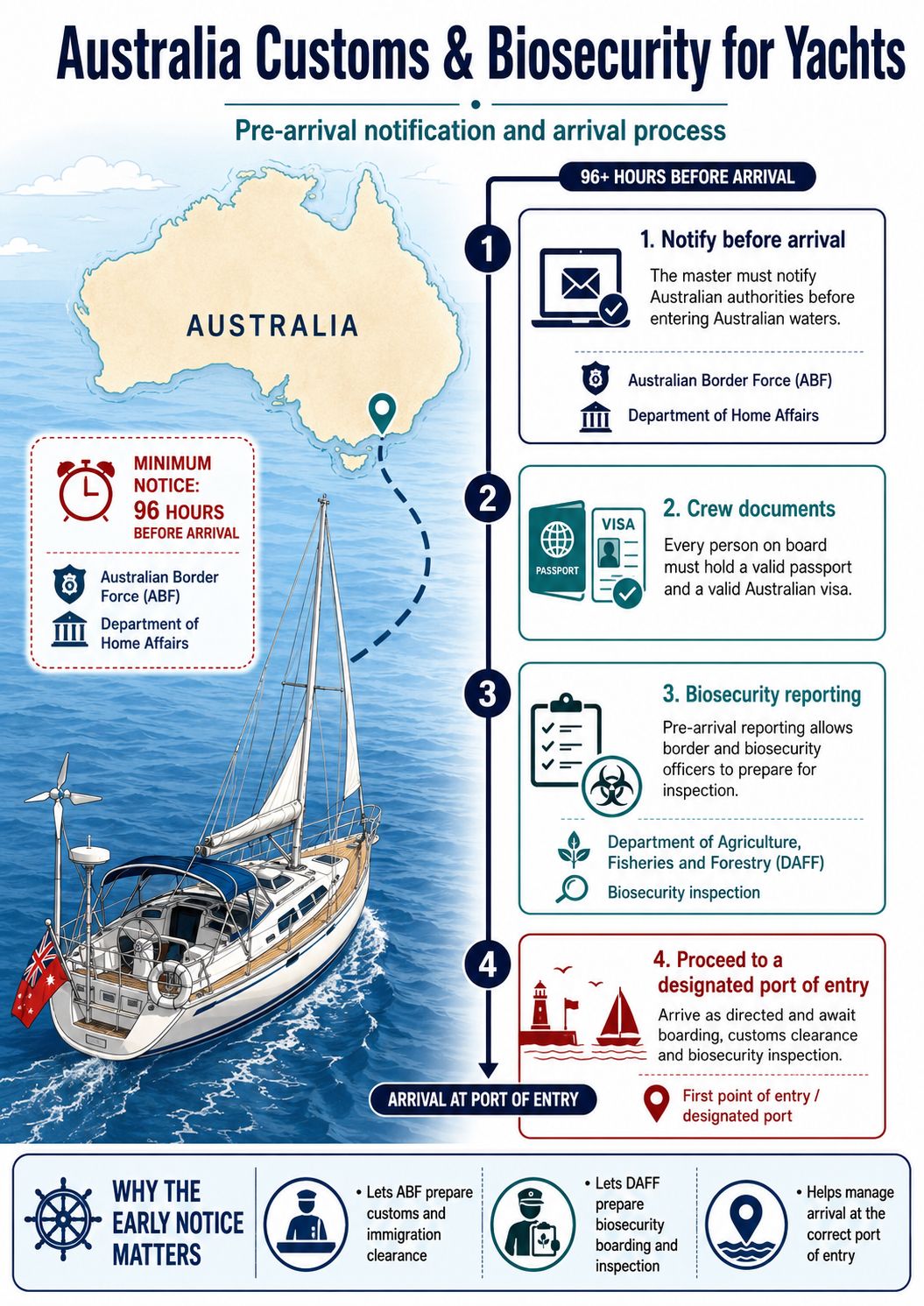
Australia Customs & Biosecurity for Yachts. Australia requires yachts to make contact well before arrival, and the process begins with a mandatory notification to the Australian Border Force (ABF) and the Department of Home Affairs. The ABF states that all pleasure craft must notify authorities before entering Australian waters and that every person on board must hold a valid visa and passport . Rivergate Marina’s official guidance reinforces this requirement, noting that vessels must contact Customs and Quarantine at least 96 hours before arrival, a timeframe that applies regardless of the vessel’s last port . This early notification allows ABF and the Department of Agriculture, Fisheries and Forestry (DAFF) to prepare for boarding and biosecurity inspection at the designated port of entry.
Australia Customs and Biosecurity for
Yachts. Documentation
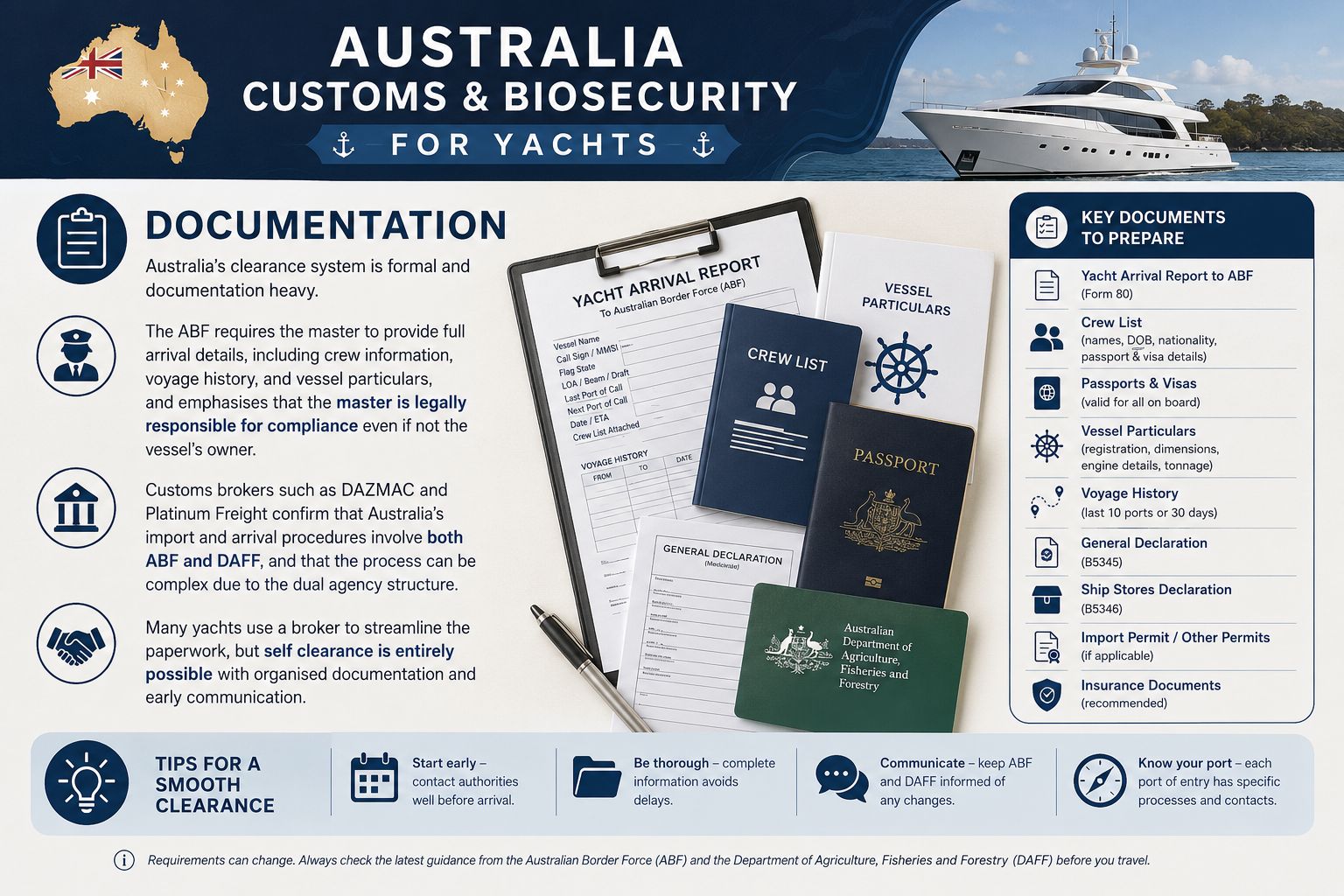
Australia’s clearance system is formal and documentation‑heavy. The ABF requires the master to provide full arrival details, including crew information, voyage history, and vessel particulars, and emphasises that the master is legally responsible for compliance even if not the vessel’s owner. Customs brokers such as DAZMAC and Platinum Freight confirm that Australia’s import and arrival procedures involve both ABF and DAFF, and that the process can be complex due to the dual‑agency structure. Many yachts use a broker to streamline the paperwork, but self‑clearance is entirely possible with organised documentation and early communication.
Australia Customs and Biosecurity for
Yachts. Vessel Presentation
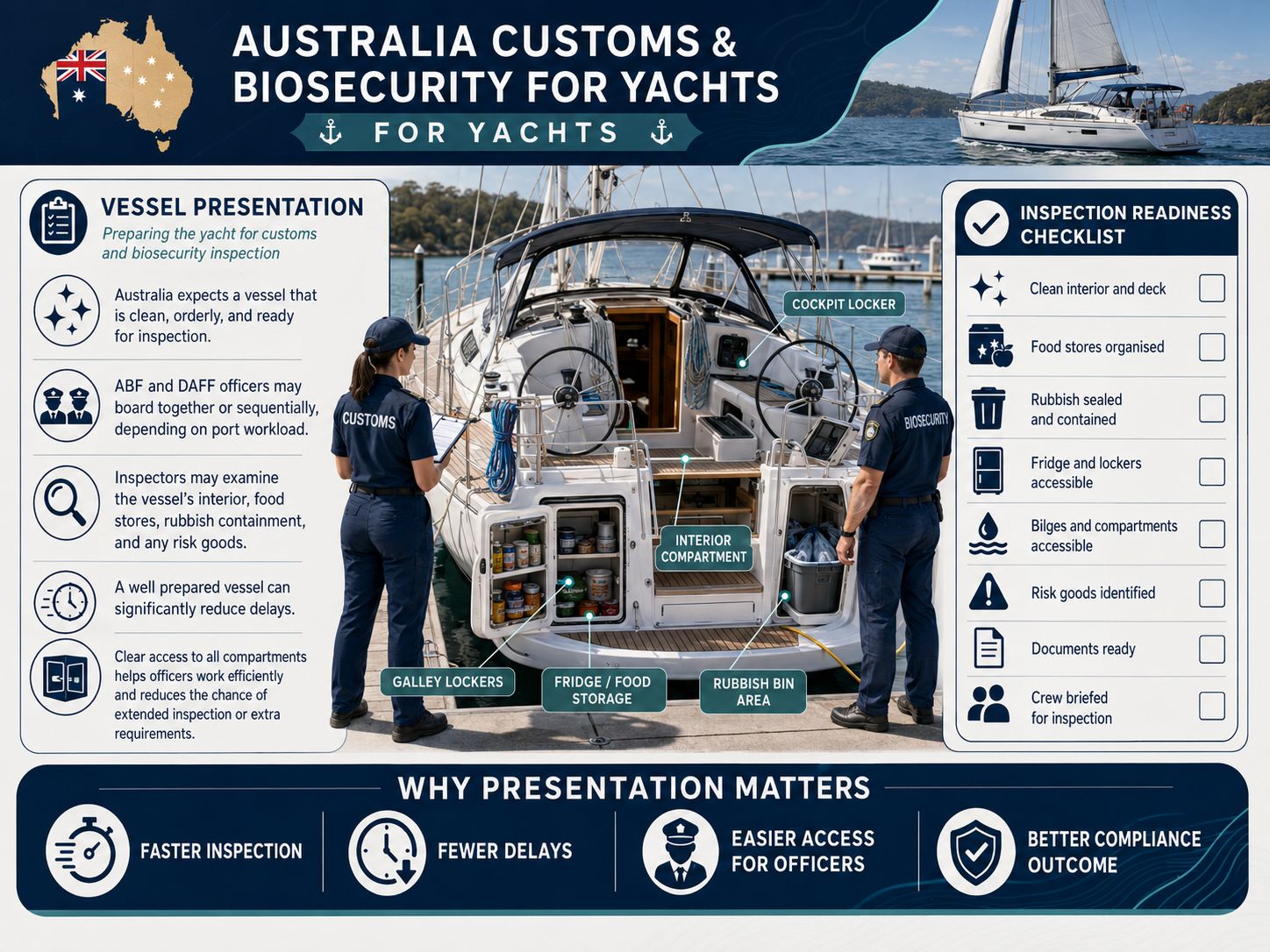
Australia expects a vessel that is clean, orderly, and ready for inspection. ABF and DAFF officers may board together or sequentially, depending on port workload, and will examine the vessel’s interior, food stores, rubbish containment, and any risk goods. Rivergate Marina notes that the clearance process can be complex and that a well‑prepared vessel significantly reduces delays . A tidy yacht with clear access to all compartments helps officers complete their work efficiently and reduces the likelihood of extended inspection or additional requirements.
Australia Customs and Biosecurity for
Yachts. Communication & Behaviour
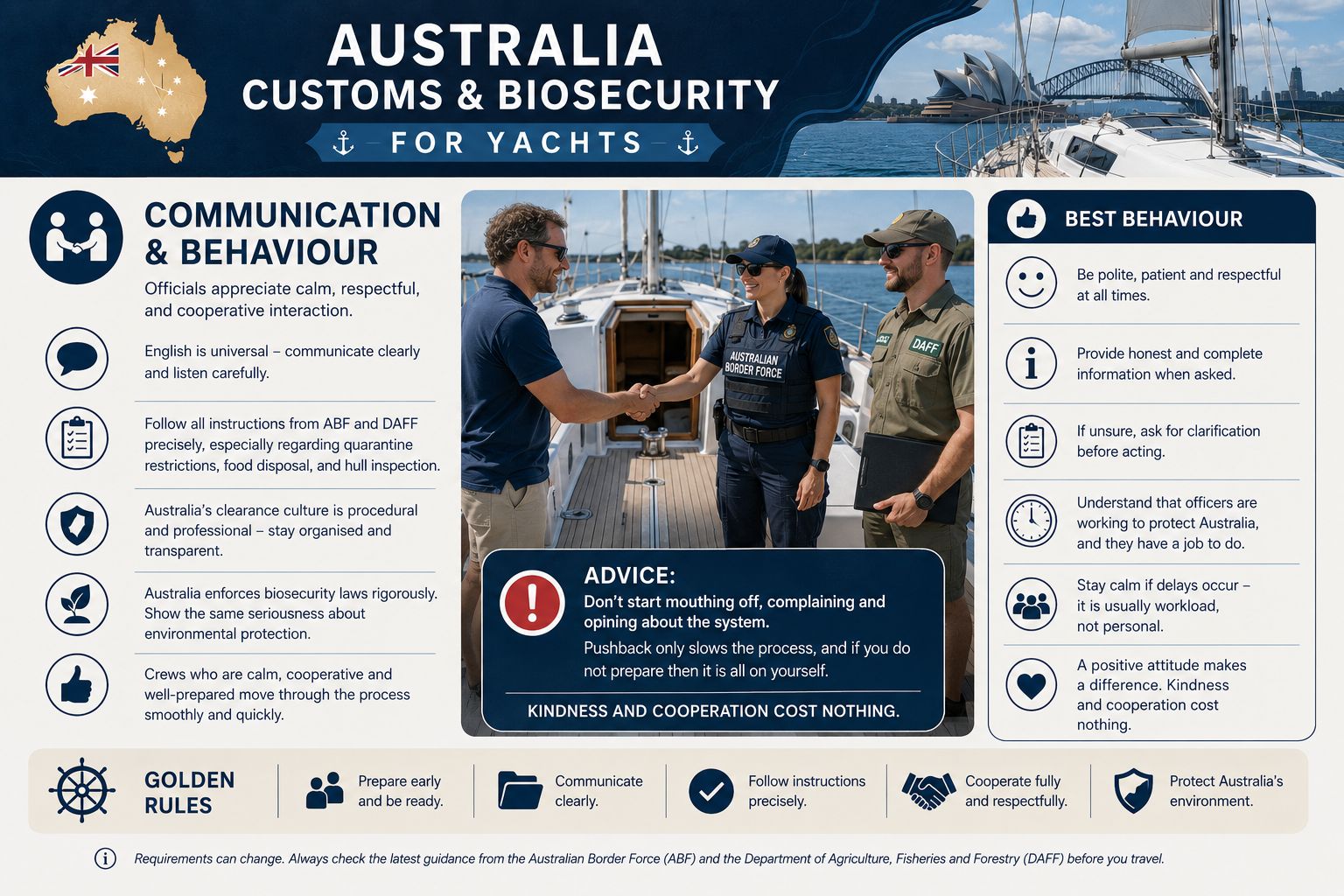
Officials appreciate calm, respectful, and cooperative interaction. English is universal, and instructions from ABF and DAFF must be followed precisely, especially regarding quarantine restrictions, food disposal, and hull inspection. Australia’s clearance culture is procedural and professional, and crews who remain organised and transparent move through the process smoothly. Because Australia enforces its biosecurity laws rigorously, officials expect visiting yachts to demonstrate the same seriousness about environmental protection.
Australia Customs and Biosecurity for
Yachts. Agency Procedures
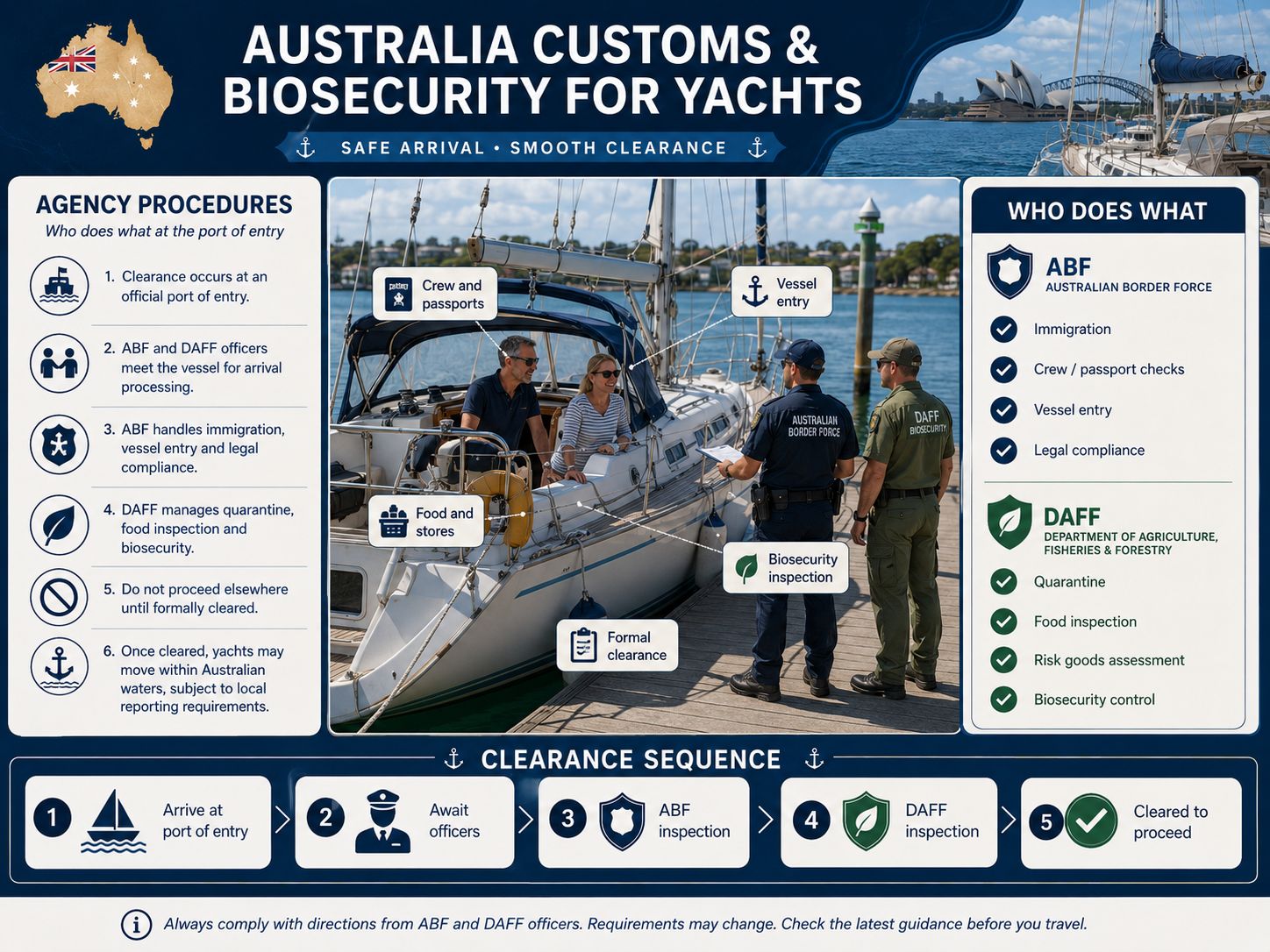
Clearance occurs at an official port of entry, where ABF and DAFF officers will meet the vessel. ABF handles immigration, vessel entry, and legal compliance, while DAFF manages quarantine, food inspection, and biosecurity. Rivergate Marina confirms that both agencies conduct their inspections at the port of entry and that vessels must not proceed elsewhere until formally cleared. Customs brokers such as Aurora Yacht Transport emphasise that Australia’s import requirements are detailed and that quarantine inspection is a core part of the arrival process. Once cleared, yachts may move freely within Australian waters, subject to local reporting requirements.
Australia Customs and Biosecurity for
Yachts. Quarantine: Fruit & Vegetables
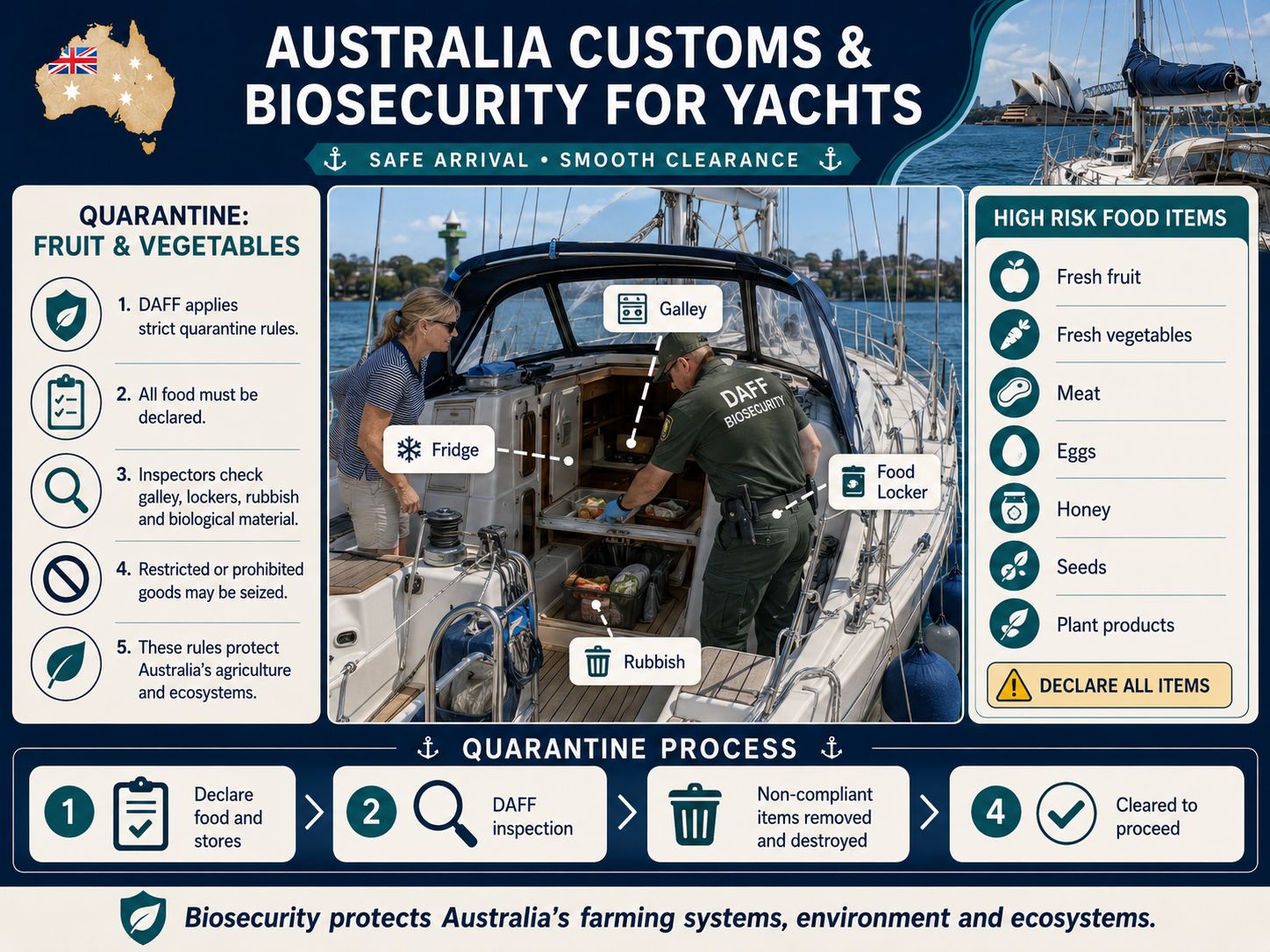
Australia enforces strict quarantine rules through DAFF. Fresh fruit, vegetables, meat, eggs, honey, seeds, and many plant products are restricted or prohibited. All food must be declared, and non‑compliant items are removed and destroyed by quarantine officers. DAFF’s inspection includes the galley, food lockers, rubbish, and any biological material. These rules are designed to protect Australia’s agriculture and ecosystems, and compliance is taken extremely seriously.
Hull Biofouling
Rules & Requirements (Australia)
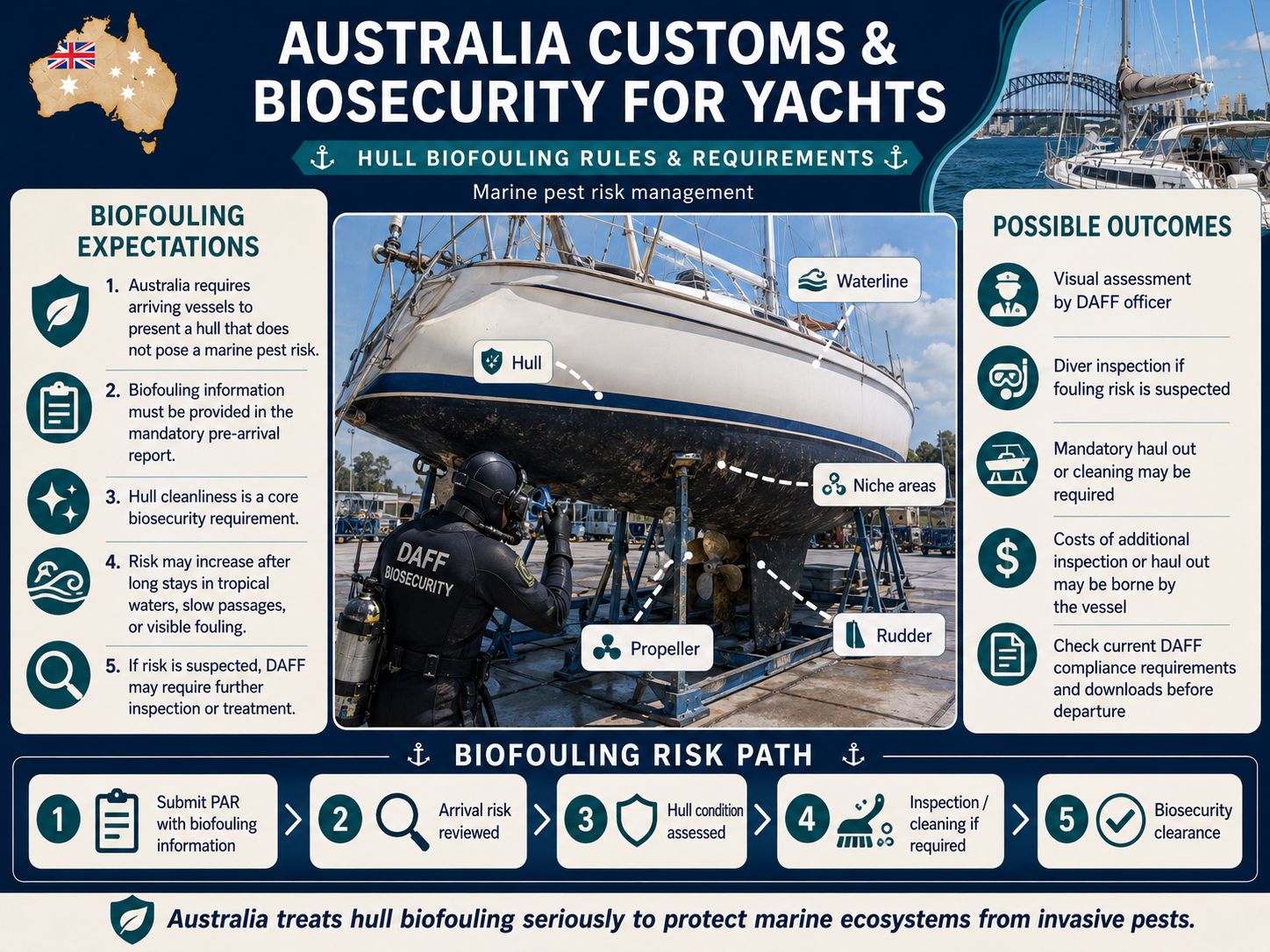
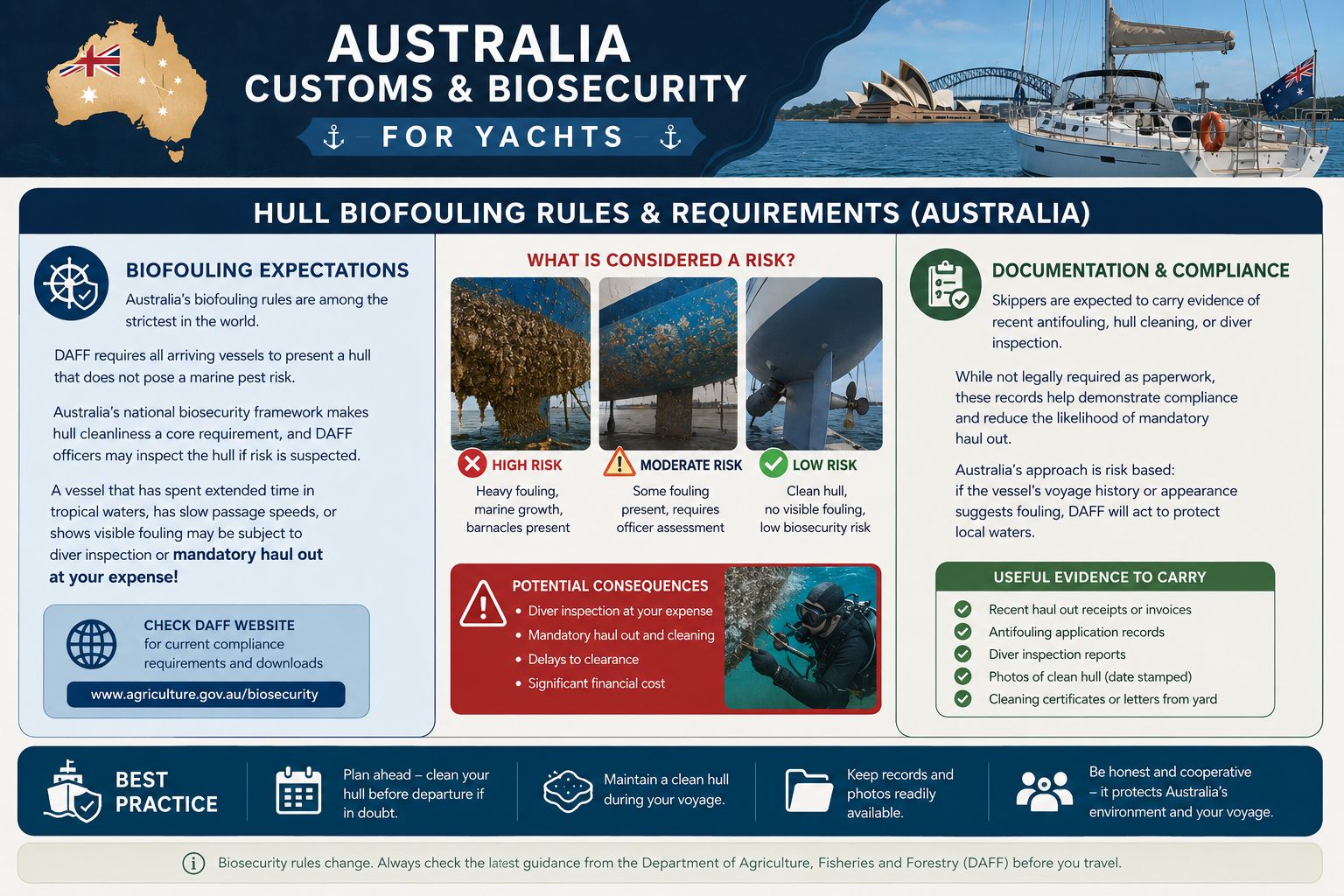
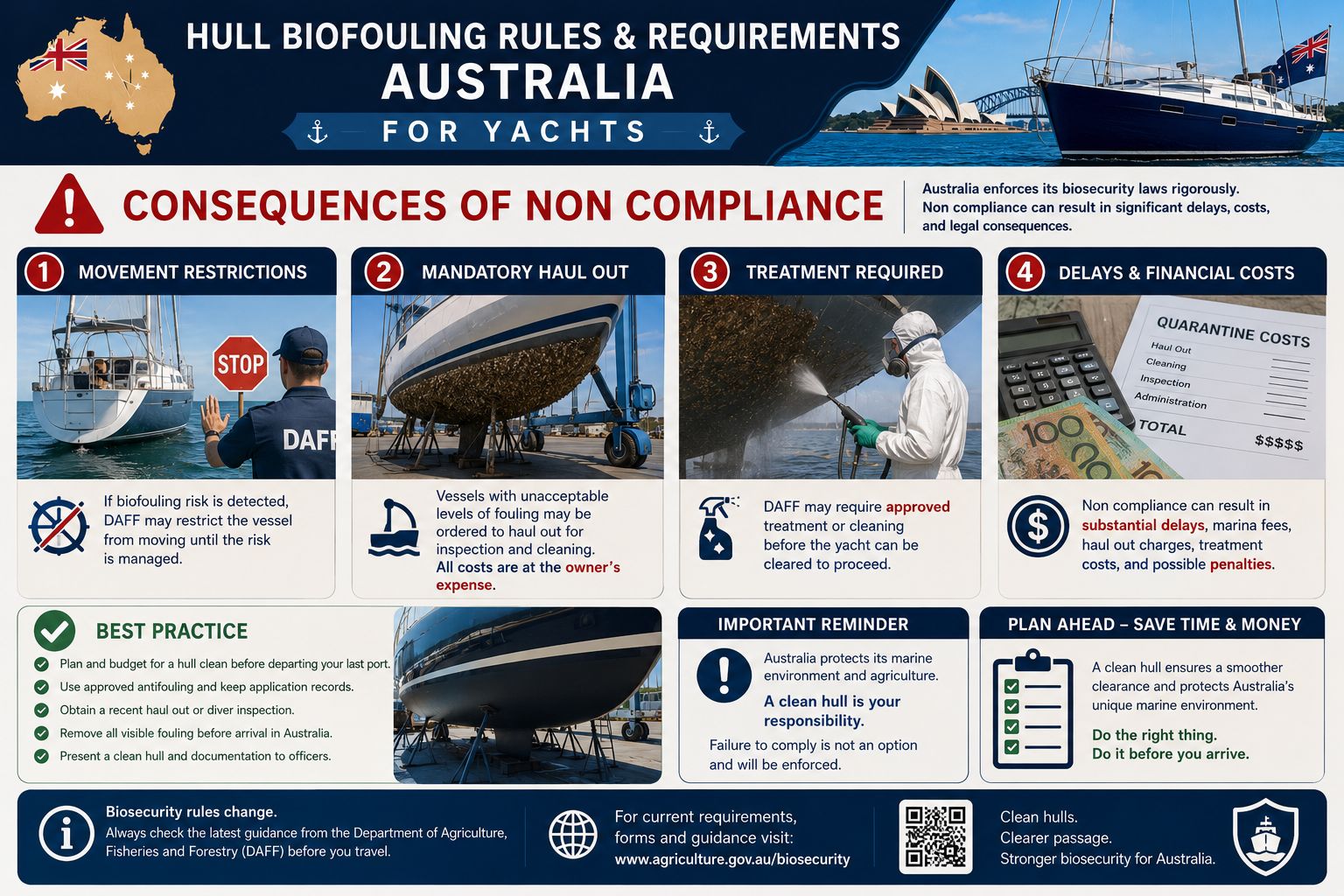
Australia’s biofouling rules are among the strictest in the world. DAFF requires all arriving vessels to present a hull that does not pose a marine‑pest risk. Although the search results you triggered did not include a dedicated biofouling factsheet, Australia’s national biosecurity framework makes hull cleanliness a core requirement, and DAFF officers may inspect the hull if risk is suspected. A vessel that has spent extended time in tropical waters, has slow passage speeds, or shows visible fouling may be subject to diver inspection or mandatory haul‑out. Go to the DAFF WEBSITE for information and downloads about requirements.
Documentation & Compliance
Skippers are expected to carry evidence of recent antifouling, hull cleaning, or diver inspection. While not legally required as paperwork, these records help demonstrate compliance and reduce the likelihood of mandatory haul‑out. Australia’s approach is risk‑based: if the vessel’s voyage history or appearance suggests fouling, DAFF will act to protect local waters.
Consequences of Non‑Compliance
If the hull is fouled beyond acceptable levels, DAFF may restrict vessel movement, require immediate haul‑out at the owner’s expense, or impose treatment before the yacht may proceed. Australia enforces these rules rigorously, and visiting yachts should plan a hull clean before departure from their previous port to ensure compliance.
Making Clearance
Easy
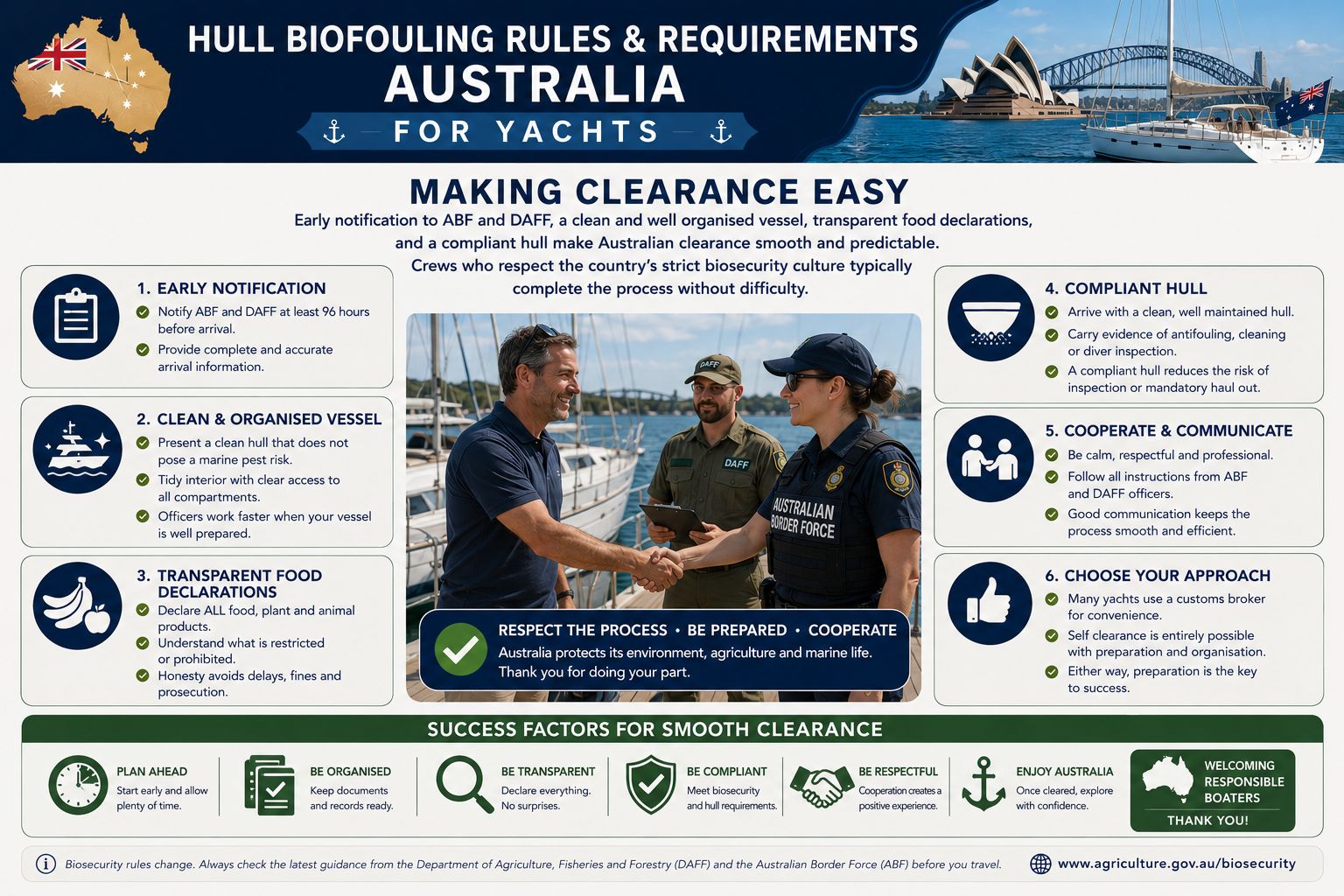
Early notification to ABF and DAFF, a clean and well‑organised vessel, transparent food declarations, and a compliant hull make Australian clearance smooth and predictable. Crews who respect the country’s strict biosecurity culture typically complete the process without difficulty. Because Australia’s rules are detailed and strictly enforced, many yachts choose to work with a customs broker, but a well‑prepared skipper can self‑clear with confidence.
Mechanical
and Electrical Repairs Resource
If you are headed somewhere remote consider the need to expand your knowledge base or have an information resource on board. Why not get a copy of my book The Marine and Electrical and Electronics Bible 4th Edition. By and for yachties, with everything from batteries and charging, solar and wind, diesel engines and marine electronics and so much more. Your complete systems guide. 650 pages of practical advice. Order a copy through Boat Books or Amazon. Marine systems are my profession so let me help you. By a liveaboard boat owner for other boat owners.


Australia Customs and Biosecurity
for Yachts - Summary
Australian Customs and Biosecurity rules are strict and apply to every yacht arriving from overseas, requiring advance reporting, entry through an approved Port of Entry and full documentation checks on arrival. Officers may inspect the vessel, crew papers and any equipment or stores, while Biosecurity focuses heavily on preventing pests and diseases, meaning fresh food, animal products, plants, wooden items and dive gear may be seized, treated or restricted. Understanding these requirements before landfall ensures a smoother clearance and helps protect Australia’s environment and primary industries. The Australia Customs and Biosecurity for Yachts regulations are strict but do the prep and it is easy.